Drone project helping to restore ravine woodlands

 LIFE in the Ravines / Natural England
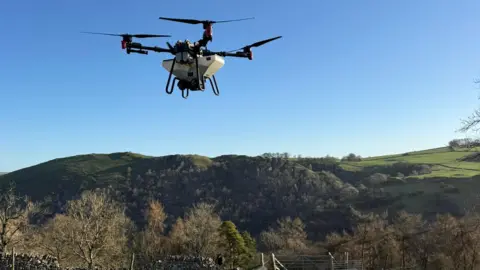
A trial in which drones are used to sow seeds to help restore ravine woodlands in Derbyshire badly damaged by ash dieback disease is making positive progress, says Natural England.
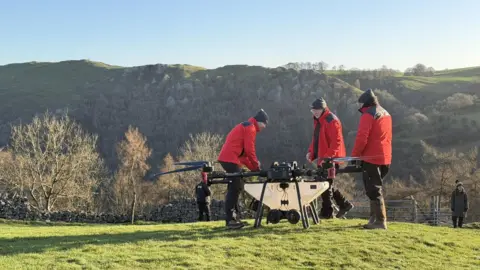
In March, a mix of native tree seeds were spread on hard-to-reach slopes across two plots, each about the size of a football pitch, at Dovedale and Lathkill Dale, as part of the five-year, £5m LIFE in the Ravines project.
To monitor progress, trays were placed in various areas to check how much seed is landing where it should.
Katie Brownbill, from Natural England, said recent observations had shown the drone "successfully dispersed the seeds well" and they would soon start looking at how the seedlings were growing.
 LIFE in the Ravines / Natural England
Brownbill said the woodlands in both areas were almost entirely ash trees.
"That's actually down to human activity over the centuries. So if you went back far enough, you'd find a much more varied mixed species," she said.
"However, over time that diversity was lost and ash ended up being a dominant species within the area.
"So when ash dieback arrived... you're potentially losing the majority of the woodlands in these areas and everything that lives in these woodlands.
"That's why our team at National Trust and Natural England have been trying something a bit different.
"These are really steep, rocky ravines in both Dovesdale and Lathkill Dale, and there are plenty of spots that are just too difficult for planting teams to reach safely on foot."
'Looking positive'
Brownbill said drones have been successfully used within woodland restoration forestry across the world, but they believed their trial was unique as they were using drones within areas "that still have canopy cover and on a steep ravine woodland site".
She said the drones have been spreading seeds including field maple, wych elm, alder, small-leaved lime, birch, rowan, yew, goat willow, crab apple and holly, adding the plan was to reintroduce "some of those species should have been there all along, historically".
"We've only just seen the seed dispersal at the minute and the trays have shown that we've successfully dispersed the seeds well," she said.
"It's really it's looking really positive. It's still early days, but it could be really exciting for the future."
Natural England has been working with the National Trust and drone specialists from Quadrosa Limited to carry out the trial, said Brownbill.
Listen to BBC Radio Derby on Sounds and follow BBC Derby on Facebook, on X, or on Instagram. Send your story ideas to eastmidsnews@bbc.co.uk or via WhatsApp on 0808 100 2210.