'Some of these guys wouldn't be here' if not for football chats

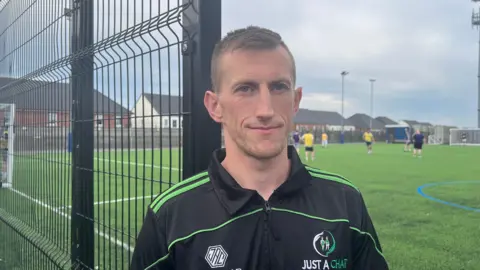 BBC
BBCChatting about football is nothing new, but using soccer to talk about what's really going on in your life is proving to be even better for some.
On a Friday evening in summer, about 20 men have gathered for a kickabout in Craigavon, in County Armagh.
It may look like any other weekly kickabout but there's a difference - the men here are encouraged to talk openly.
The beautiful game is their first step towards opening up about addiction, isolation and mental health.
For participant Ben Terry, the meetup was never just about the game.
"I came to get myself out of the house and play a game of football because I didn't want to be staying in the house too long on my own head - it wasn't safe," he told BBC NI.
He turned to Just A Chat's weekly football sessions after completing residential treatment for drug, alcohol and gambling addiction.
"People might think you go into treatment, you do a 12-week programme, you walk out and you're fixed.
"You're not," he said.
Before and during treatment, Ben experienced suicidal thoughts and said leaving the residential programme was only the beginning of his recovery.
"I came out of treatment with a lot of fears and a very messy head, you're isolated away for 12 weeks. You learn a lot about yourself."
Ben has now been in addiction recovery for nearly four years.
"I found my love of football again... through Just a Chat I came back to the pitch," he said.
"They gave me that place where I could go and just tell them my deepest darkest secrets, it's a safe place... you talk if you want to talk," he added
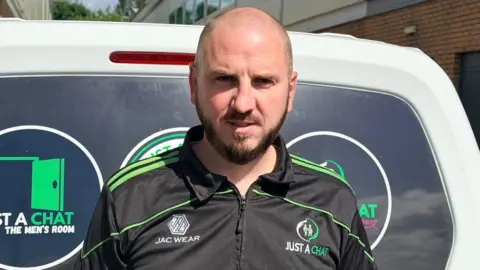 Conor Hegerty
Founders Conor and Amy Hegarty set up the charity four years ago after they came across a young person in distress and realised that getting support was "very difficult".
"We've had people come out of A&E with a support plan, and we don't think that's enough to change someone's life," Conor said.
He said Just a Chat creates opportunities for people to connect - for example through football - before encouraging them to seek support.
"Once you're in through the door and stand alongside other people in your group, you feel comfortable enough to say I need support."
The Department of Health said people presenting to A&E with suicidal thoughts or mental health crisis are assessed by specialist teams and leave with an agreed care and safety plan, with follow up support depending on their needs.
It added that a planned regional mental health crisis service will strengthen crisis care but needs additional funding.
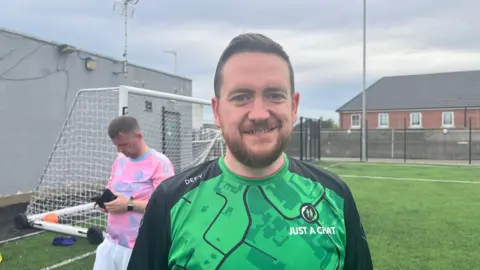
The Just a Chat approach also helped Neil Cochrane.
Working from home, he says his days became repetitive and lonely, and he was drinking more than he should.
"I was just waking up, going downstairs, working, going to the sofa, going to bed. I was feeling very isolated," he said.
Neil said that previous attempts to get support often felt short term, but the community he found through Just a Chat was different.
"It got me running around and having a bit of craic and mingling with people, reconnecting with people."
Since joining the charity, Neil has rebuilt his confidence, working on productions like Blue Lights and Say Nothing.
He now teaches drama classes and encourages some of his own acting students to attend Just a Chat.
Neil believes the charity has made a life-changing difference for many of the people who attend.
"I don't think it's overly dramatic to say that some of these guys wouldn't be here if it wasn't for Just a Chat."
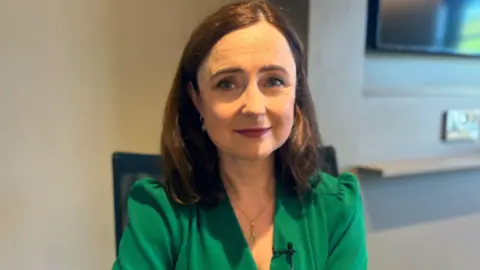
Northern Ireland's Mental Health Champion, Professor Siobhan O'Neill, said the men's experiences described reflected wider pressures on mental health services.
Figures from the Public Health Agency's self-harm registry show emergency department presentations for suicidal ideation have increased by 74%.
The Department of Health said people who present to emergency departments with suicidal thoughts or in mental health crisis receive an assessment by professionals to determine immediate needs and the most appropriate care pathway
She said evidence from Scotland suggested community-based crisis support could reduce pressure on emergency departments.
"If we introduced that type of model into Northern Ireland, we would save £9m every year."
Professor O'Neill says creating opportunities for men to connect can help people before they reach crisis point.
For Ben, that sense of community has helped transform his life.
He says he has reunited with his partner and son, become debt-free and found happiness again.
"I don't have a lot in life, but I'm happy and content with what I have," he says - before turning back to his football and his friends.
If you have been affected by any of the issues in this story, help and support is available at BBC Action Line.