High spring tides could affect nurdle clean up

 BBC
BBCTidal changes could hamper efforts to clean up beaches after a spillage of millions of plastic pellets, an environmental charity has warned.
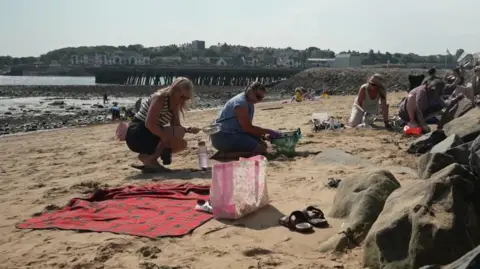
Tonnes of the pieces of plastic, known as nurdles, washed up across north-east England after a crash between two vessels at the Port of Tyne damaged two shipping containers.
Environmental officer Rowan Stanforth, from charity Fidra, said high and low spring tides could drag nurdles further out to sea distributing them along the coastline.
However, a spokeswoman for the volunteers said the tides would help clean-up efforts by depositing more nurdles to collect "before they wash back out to sea or bury themselves in the sand".
So-called spring tides occur twice every month and bring both the highest and lowest tides, according to the Met Office. This month, they are expected on Saturday and 30 August.
Stanford said they would make them "harder to clean up" for groups of volunteers who have been out in force since the spillage.
Spring tides are caused by the strong gravitational force which occurs when the Sun, Moon and Earth are aligned, according to the Met Office.
At North Shields Fish Quay beach, Surfers Against Sewage organiser Gabe Davies said his network of 2,000 volunteers - who answer the call to arms via Whatsapp - were "phenomenal".
"They come down in all the high tides and low tides, but the more [nurdles] we get out now, the less impact we're going to have in years and decades to come," he said.
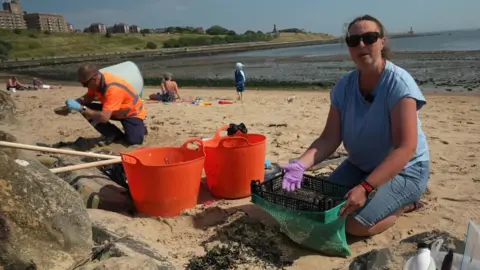
Volunteer Sally Brecken, who has been regularly attending clean-ups, said they were dealing with "row after row after row" of the plastic pellets.
"As fast as the volunteers and workers were sweeping them, there was another row forming, and we just couldn't keep up - there were thousands last night," she said.
Fellow volunteer Elaine Wilson said removing nurdles from the beach could be challenging because they were mixed in with seaweed, which she explained needed "to go back because it's part of the local ecosystem".
She said they used special sieves to sort between what needed to stay in the sea and what needed to go.
Both South Tyneside and North Tyneside councils said there would be extra monitoring over the weekend.
 Andy Watson/BBC
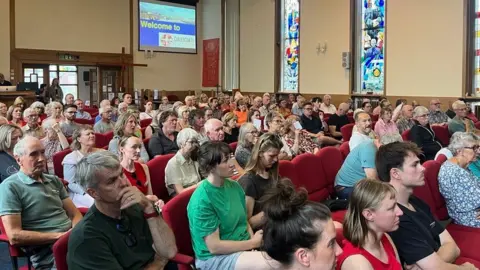
Community volunteers met with North Tyneside councillors and environmental charity Fidra at Cullercoats Methodist Church on Thursday to discuss potential long-term solutions.
The Port of Tyne previously said it acted quickly to contain the spill, and the Environment Agency said it was "actively involved from the outset" and "working closely" with local authorities, the port, and other groups.
Nurdles have also been washing up on beaches further south, although Sunderland City Council said it had seen a "significant reduction" this week.
However, it said it was "gearing up for this weekend's high tides which may see more washing up along our coastline".
It added it would have teams monitoring beaches, "ready to respond as needed" and thanked those participating in clean-up efforts.