Traders back plan to ban masks in town centre

 BBC
BBCMore traders in Stafford are backing plans for a potential ban on face coverings, as part of new measures to tackle antisocial behaviour in the town centre.
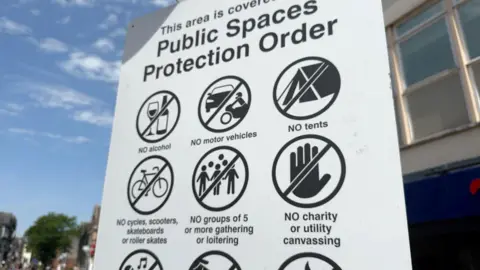
The proposals, which go out to public consultation today, are part of a Public Spaces Protection Order (PSPO).
This would allow police to ask people to remove masks if they were suspected of using them to hide their identity while causing trouble.
Staffordshire Police has not commented directly on the plan, but said it was already targeting antisocial behaviour more widely.
Tim Sandy, owner of French and Byrne cafe bar, said businesses backed action to improve safety.
"Town centres have changed a lot... especially since the pandemic, and it is tough to trade," he said.
"I think most traders really just want a safe environment for people to come and spend time in Stafford."
He described issues during busy periods, especially in school holidays when larger groups gathered.
"There's been climbing on roofs, throwing things, and large groups can be intimidating," he said.

Sandy said some customers had avoided parts of the town after witnessing shoplifting or disorder.
"I've spoken to families who've seen that atmosphere and moved away from areas because of it," he added.
He said police powers used last summer had helped.
"If the intention of a group wearing face coverings is to intimidate the public, then it should be dealt with," he said.
Under the plans, police could ask someone to remove a face covering if they believed it was linked to antisocial behaviour. Refusal could lead to a £100 fine.
Exemptions would apply on religious, cultural and medical grounds.
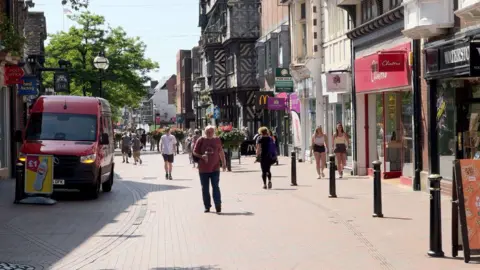
Staffordshire Police said officers were carrying out daily patrols in the town centre in response to concerns from residents and businesses.
The force said activity was focused on antisocial behaviour, nuisance bikes and e-scooters, and breaches of existing PSPO rules.
A dispersal order was also put in place over a recent weekend, allowing officers to move on people believed to be causing problems.
"We continue to work with partners in Stafford to prevent crime and protect our communities from harm," Ch Insp Saqib Butt said.
"By providing increased visibility patrols and using dispersal powers, we are showing we will not tolerate antisocial behaviour and the distress it causes.
"We will continue to do all we can to ensure Stafford town centre remains a safe place to visit, work and live."
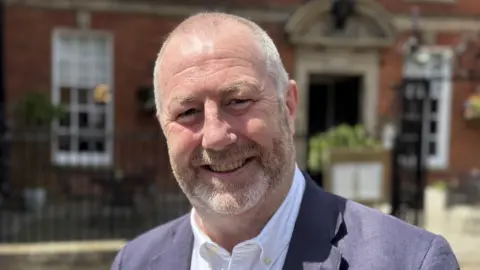
Martin Lennon, chairman of the Elm Group and chief executive of Stafford Rugby Club, said while issues were emerging, prevention was key.
"I don't think it's a major issue at the moment, but it's something we want to nip in the bud," he said.
He pointed to a wider loss of youth activities.
"A lot of towns have lost youth groups and youth provision," he said, adding that clubs could play a big role.
"At the rugby club we've got dozens of teams and hundreds of young people there every weekend.
"If you build great facilities and create a positive environment, young people will come and be part of it."

Independent borough councillor Jill Hood said the PSPO was designed to address concerns raised by residents and traders.
"We want people to feel safe and secure," she said.
Intimidation - including people moving quickly through the High Street while wearing face coverings - had been a key issue, she added.
"If you see someone coming towards you with their face completely covered, the fear of crime is intimidating in itself," she said.
"This is about those showing intent to intimidate."
How would it be enforced?
Under the proposed order, police and authorised council officers would be able to approach someone if they believed a face covering was being used to help carry out antisocial behaviour.
They could ask the person to remove it so they can be identified. If they refuse, they could face a £100 fixed penalty notice.
Hood said enforcement would rely on judgement and local intelligence, supported by CCTV.
"We can pick people up very quickly who are acting in an antisocial manner," she said.
"Officers will use common sense... but if someone refuses to remove a face covering when asked, they can be issued with a penalty."
She added that exemptions would apply, and the rules would be kept under review.
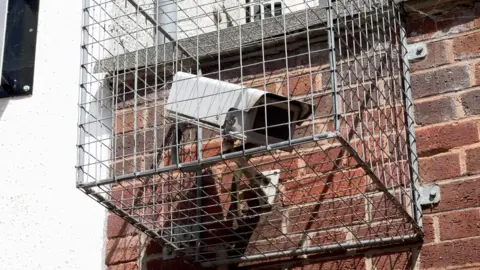
Some business leaders say the growth of CCTV in town centres has influenced behaviour, with more people covering their faces to avoid being identified.
Similar rules are already in place in other areas, including Wolverhampton, Hammersmith and Fulham and parts of Solihull, where councils say they have helped tackle antisocial behaviour.
Follow BBC Stoke & Staffordshire on BBC Sounds, Facebook, X and Instagram.