Was the weekend really invented in Greater Manchester?

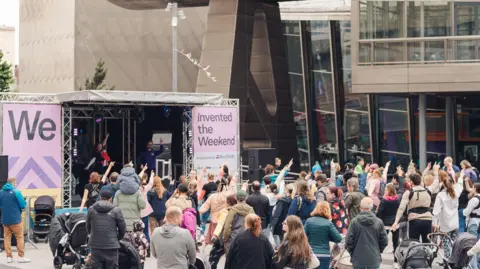 We Invented The Weekend
The suitability of the traditional Monday to Friday, '9 to 5' working week is a conversation topic that has been routinely tabled in both the political and public sphere over the last five years.
But four day working week discussions aside, it's hard to picture the standard working week as ever having been different from the five days on, two days off pattern many of us are used to.
Yet the idea of Saturday and Sunday being the 'weekend' is not quite as old as one might expect, and its origins actually begin in Greater Manchester.
As a free festival celebrating the weekend kicks off in Salford from 6 to 7 June, BBC Radio Manchester has looked at how the origins of the modern weekend are rooted in Salford and Manchester.
 Getty Images
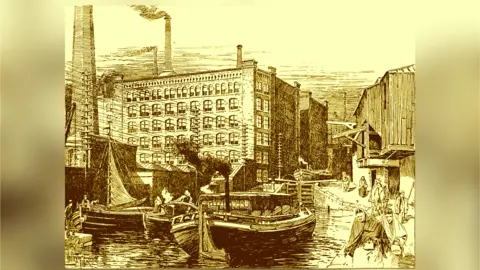
Greater Manchester, as we now know it, was an epicentre of production during the Industrial Revolution of the 19th century - with a booming cotton trade and hundreds of factories.
Across the nation, the working week was generally accepted at six days, from Monday to Saturday - with Sundays reserved as a day of rest to allow time for worship in church.
The days were long, with daily shifts of 12 hours often resulting in 72 hour weeks.
But in 1843 - two men, one from Manchester and the other working in Salford, successfully secured signatures from 400 employers, pledging to give their workers a half-day holiday on Saturdays.
It was the first place in the country to enforce this change - and even so, the Saturday half-day holiday did not become protected by law until almost a century later.
As a result, it's often claimed that the modern weekend was invented in Manchester.
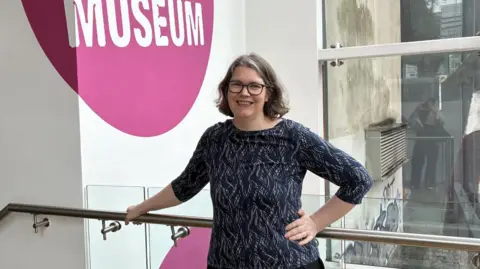
Clare Barlow, director of the People's History Museum in Manchester, said: "Previously it had been quite common for workers to have their Sunday off and go to church," Barlow said.
"But then quite often they would take Mondays off an unofficial day - Saint Monday as it was known, and to not turn up at work."
Barlow said Saint Monday had become a problem for factory owners, with large numbers of people not attending work or coming into work hungover, which would make the day unpredictable, affect productivity and increase workplace injuries.
"There's all sorts of concerns as to what regularising the workplace would be like," Barlow said. "And campaigners that pop up all over the place.
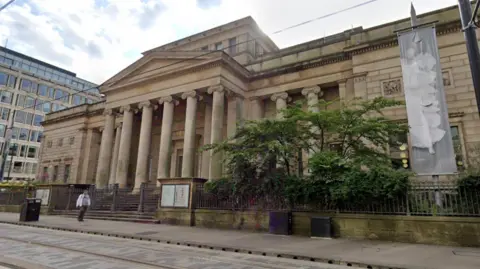
"But what I think makes it different in Manchester and Salford is that there's this committee that is set up at Manchester Athenaeum."
 Google
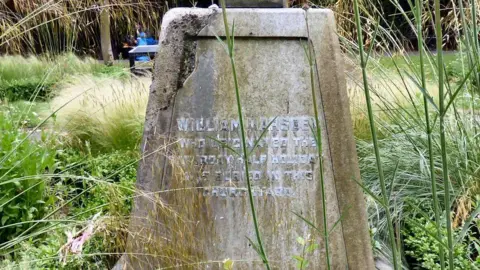
It was there that William Marsden, the son of a wealthy cotton merchant, met a clerk named Robert Lowes - at a society for the 'advancement and diffusion of knowledge'.
Lowes, who is incidentally the great-great-grandfather of actor Sir Ian McKellen, had come from Carlisle to work in Salford.
Marsden and Lowes were in their 20s, and had different backgrounds - but had come together with a joint understanding of the potential benefits of the Saturday half-day holiday, and had founded the 'Committee for the Saturday half-day holiday' - chaired by Marsden, with Lowes as the Honorary Secretary at the club at the time.
Their idea gained traction with more than 400 employers - bankers, merchants, printers and manufacturers - signing a scroll granting a new half-day holiday that would begin on Saturday 4 November 1843.
"From the employer's perspective, trading uncertain labour on Monday for certain labour on Saturday morning is quite a good deal," Barlow explains.
"But from the worker's perspective, it means that you've got guaranteed time off, and suddenly you've got time when you aren't expected to be at church, where you can start engaging in all sorts of new leisure pursuits."
According to Peter Mulholland, volunteer researcher at the Working Class Movement Library in Salford, employers in Manchester were especially swayed towards signing the agreement as the summer of 1842, just over a year beforehand, had seen significant rioting and protests - with a majority of factories facing temporary closures at the time.
"These were quite dangerous and unstable times for employers," Mulholland said. So I think they probably made concessions like this with half an eye on the protests that they'd had, and particularly the major strikes and even the legacy of Peterloo."
The summer of 1842 saw thousands of mill workers across Greater Manchester striking - with some resorting to violence to close mills.
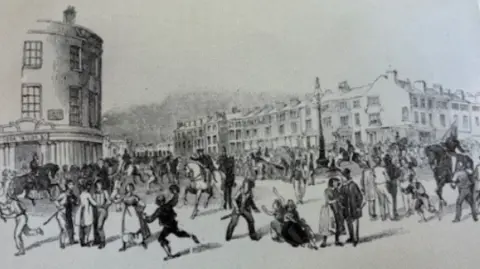 WMLS archive/ The Illustrated London News 1842
"Shops and taverns also saw the potential profitability of more leisure time, especially as most workers were paid on a Saturday morning," Mulholland continued.
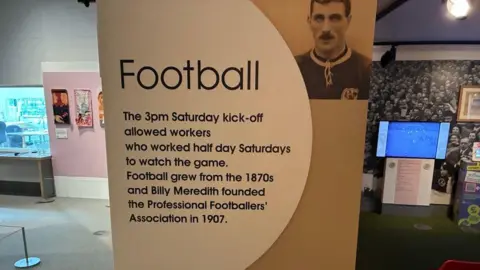
"Later, 3pm football matches and concerts were timed to attract workers who clocked off in the early afternoon.
"Manchester and Salford were certainly in the vanguard of this movement, with visitors from Birmingham and Sheffield commenting in the 1870s how 'all places were closed in Manchester on a Saturday afternoon'."
Barlow said: "It is no coincidence this happened in Manchester.
"I feel incredibly proud that this is just one of the incredible ideas that Manchester and Salford have given to the world that have had such a foundational impact on how we live our lives today.
"Radical history is built into the fabric of Manchester.
"Wherever you go in this city you'll be stumbling across these incredible achievements of ordinary people, working-class people who have stood up to fight for their rights, who have tried to make the world better for other people."
Mulholland seconded this - saying that while other committees across the country were focusing on reducing working day hours, the first push towards a Saturday half-day was very much born in Greater Manchester.
"It's so distinctive for the Manchester have just done it almost overnight," he said. "And then, and the country's working culture was built up around that."
 Gerald England
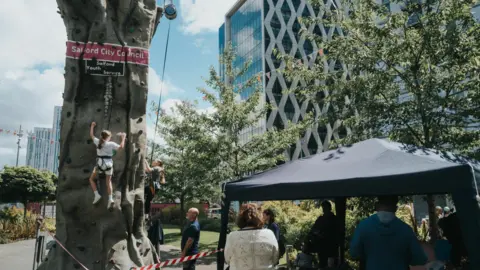
In light of Salford's historic link to the Monday to Friday working week, a festival celebrating weekends is returning to Salford for its third year across Saturday 6 June and Sunday 7 June.
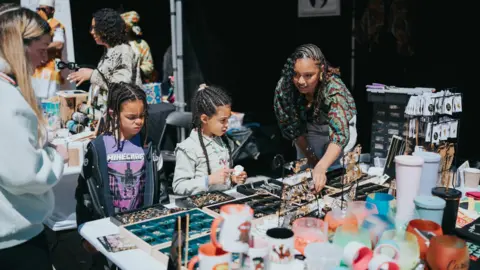
The We Invented The Weekend festival is a two day event based in Salford Quays and Media City - with more than 200 free activities and workshops.
 We Invented The Weekend
With an itinerary of events across 11 different venues - the festival events include everything from open water swimming to karaoke, gardening, music and laughter yoga.
 We Invented The Weekend
Listen to the best of BBC Radio Manchester on Sounds and follow BBC Manchester on Facebook, X, and Instagram. You can also send story ideas via Whatsapp to 0808 100 2230.