Smoke from wildfire the size of 300 football pitches can be smelt 30 miles away
Smoke from a mountain wildfire equal to the size of about 300 football pitches has been smelt 30 miles away in Cardiff.
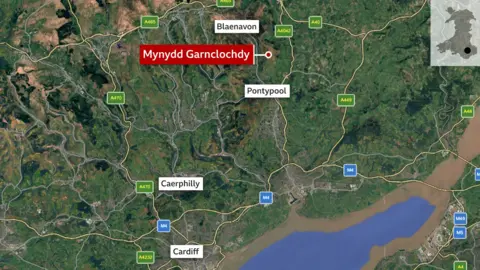
The blaze broke out on Mynydd Garnclochdy, between Abersychan and Blaenavon in Torfaen, on Sunday night.
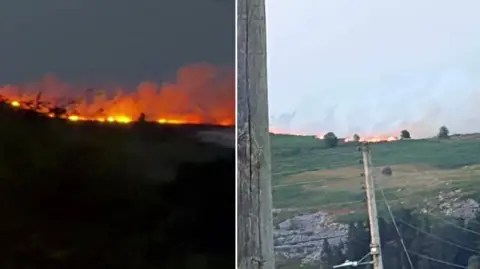
More than 40 firefighters are tackling the wildfire across more than 200 hectares of common and pastureland, with a number of properties in the path of the fire being protected.
The blaze is generating a huge amount of smoke, and South Wales Fire and Rescue Service (SWFRS) said it had received numerous calls about the incident from as far away as Caerphilly and Cardiff.
The BBC's reporter at the scene said he could "taste the smoke", adding it was "acrid in the air".

Gillian Sims, 66, who has lived in Talywain near Abersychan for 40 years, said the smoke is making her concerned for her family's health.
She said it had not been this bad since a massive fire in the 1970s.
"I had my grandchildren down with me earlier. You don't really want them out playing in it because it's so strong," she said.

"My daughter lives down in Cwmbran and she can smell it," she added.
"My partner's got COPD [chronic obstructive pulmonary disease] - anyone with any sort of asthma or anything I would recommend not going out."
Lee, who was shopping in nearby Varteg, said he was going to take his young son to the doctor because he woke up coughing because of the smoke.
"My house is stinking of smoke. It's going to take ages to get it out," he said.
On Tuesday, there were six fire appliances at the scene, along with specialist 4x4 vehicles and quadbikes.
Beaters, knapsack water sprays and leaf blowers are all being deployed to fight the fire.
 Erika Lomas
Speaking on Tuesday afternoon, Martin Ward-White, SWFRS assistant chief fire officer, said "a significant number of resources" were still dealing with the fire.
"Based on the current conditions, we're planning to be here for the remainder of this week tackling the fire.
"The advice is basic - keep windows closed, avoid the area," he said.
He added: "We have the ability to monitor the air to understand the levels of danger that may exist. Currently we have no significant reports of people suffering medical conditions as a result of that."
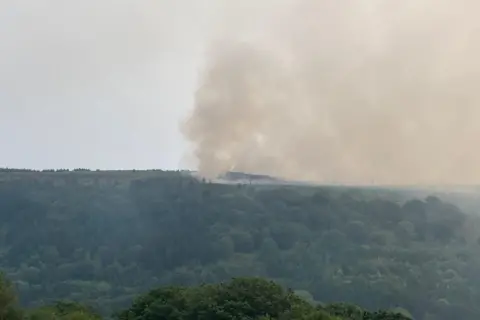
Crews are working in challenging conditions due to the terrain, access and the wind conditions, the fire service stated.
The "heel" of the fire is understood to have been extinguished, but the incident is continuing.
Meanwhile, in north Wales, the fire service has called for support from crews across Wales to assist with a number of blazes near Harlech and Conwy.
Specialist resources from Mid and West Wales and South Wales Fire and Rescue Service have attended the Rhinogydd mountain range in Gwynedd.
Mark Jat, service delivery manager at North Wales Fire and Rescue Service, said the team was "closely managing all the incidents" and wanted to "reassure residents and those visiting the area that crews remain onsite".
"I'd like to remind residents that, due to changes in wind direction throughout the day, smoke may continue to affect areas that have not previously been impacted.
"As temperatures drop, especially overnight and during the early morning, smoke can settle into lower-lying areas and become more noticeable. This is expected and does not necessarily indicate that the fire has worsened."