Help ramped up amid UK's 'worst' bluetongue outbreak

 Getty Images
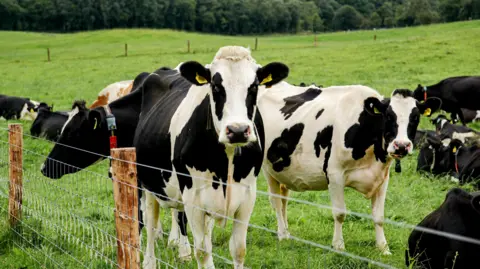
Testing and support for animals with a potentially deadly virus will be "ramped up" ahead of a projected peak in cases, the UK's chief veterinary officer has said.
Cases of bluetongue virus (BTV) - an insect-borne viral disease affecting sheep and cattle among other animals - have risen to 395 across the UK because of the long, hot summer, according to the latest government data released on Thursday.
Farmers in Exmoor, Somerset, said they had lost livestock to the disease, which was having a personal effect on families.
Christine Middlemiss, the UK's chief veterinary officer, said it was "absolutely the worst" outbreak the UK had seen, exacerbated by the "ongoing hot weather".
BTV does not affect humans but it is potentially fatal for livestock, and symptoms in animals include fever, facial swelling and lameness.
In Somerset, there are currently 47 cases of the virus.
Middlemiss said it was "very concerning" that the peak of the virus had not yet come.
"We're actively working on ramping up testing as appropriate and what measures of support might be appropriate," she said.
According to the Department for Environment, Food and Rural Affairs (Defra), midges which spread bluetongue became active again on 31 March this year.
The latest Defra data, as of Thursday, shows there are about 382 cases in England, 10 in Wales, three in Scotland, and zero in Northern Ireland.
However, there could be hundreds of more undiagnosed infected livestock as 1,657 potential cases are currently under investigation, Defra said.
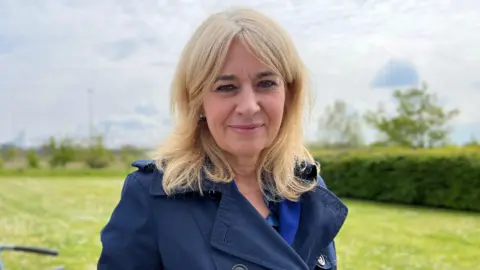
Middlemiss said the number of bluetongue cases was "absolutely the worst that we have seen" because of the ongoing hot weather which "midges love".
"It's ideal for the midge cycle and the replication of the virus in the midges, it means there's an awful lot of virus around," she added.
She urged farmers to vaccinate livestock and advised them to speak to their vets.
"It's really important people put their order in because if you vaccinate soon, you'll still help reduce that peak. That's the key message to people with livestock," she said.
Mark Taylor, a beef and sheep farmer in Exford, described the situation as "difficult".
 Ian May
"I've got a young girl. It's so difficult for her because she comes and helps me on the farm and asks 'is that one dead, daddy? Is that one dead? They're sick again, aren't they?'
"I don't want her to see that side of farming but I can't do any different at the moment," he said.
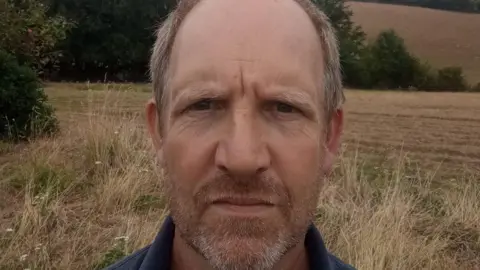
Ian May, chair of the Exmoor Hill Farming Network, urged farmers with livestock to get them vaccinated.
"Whilst there's a big cost damage hitting farmers at a particularly bad time of the year for additional bills, the overall cost of not vaccinating in the medium to long-term, in terms of mortality and loss of productivity on those livestock, feels like a no-brainer if you can do it," he said.
Defra said it funded the cost of diagnostic testing for up to three affected animals.
"We recognise this is an incredibly difficult time for animal keepers who are on the frontline of this disease, and we are monitoring the situation closely.
"We continue to work closely with industry and are putting processes in place to bring in additional vaccine supplies to help farmers to protect their livestock," a Defra spokesperson added.
Follow BBC Somerset on Facebook and X. Send your story ideas to us on email or via WhatsApp on 0800 313 4630.