'Busting stereotypes': How metal music could help mental health

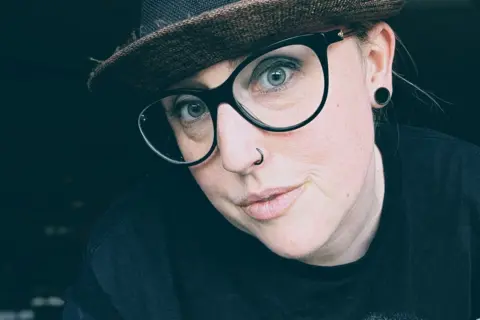 Kate Quinn
Damien Powell says music never truly resonated with him while he was growing up - until he discovered Ozzy Osbourne and Black Sabbath.
The music, he said, possessed "a darkness and an honesty to it that had eluded me up until that point".
"From then on, I leaned into metal as a way of dealing with complex emotions I had previously avoided, such as anger, sadness and isolation," he added.
"Listening to really angry music made me feel less angry."
His experiences, and those of others, will be examined as part of England's first Healing Arts event taking place in Birmingham.
A discussion between advocates of the metal community and the city's public health officials will hear the current global research on the positive links between heavy metal music and mental health.
Powell, 27, who has a diagnosis of complex post-traumatic stress disorder, said the music had allowed him to better process emotions, enabling him to control anger an deal with sadness.
"The music made me feel seen," he added.
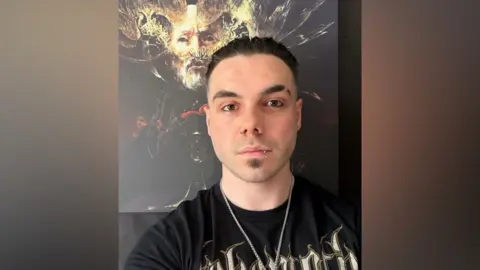 Damien Powell
The former music student from Yorkshire explored the link between mental health and heavy metal for his dissertation, focusing on how listeners use the genre to process difficult emotions.
"When I surveyed our community, the results were clear," he said.
"People told me it was incredibly helpful for emotional regulation, getting through hard times, relaxing and even falling asleep."
He now supports others through Heavy Metal Therapy (HMT), an organisation he co-founded, which runs peer-support groups and provides online resources for people seeking help with their mental wellbeing.
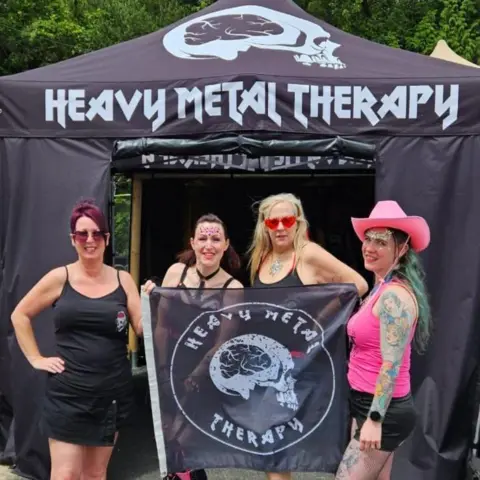 Heavy Metal Therapy
Kate Quinn, director of HMT and a clinical psychologist from Wakefield, said historically heavy metal had been associated with poor mental health, but that research may have misunderstood the relationship.
"What we think might be happening is that the direction of the relationship is the wrong way round," she said.
"People with emotional vulnerabilities may be drawn to heavy metal because it helps them process their emotions."
Quinn founded HMT as a Facebook group in 2018, collecting recovery stories from metal fans.
Many described the music as a source of comfort and catharsis, helping them cope with grief, trauma and other challenges, she said.
"Lots of people also talk about neurodiversity, including ADHD and autism and the way both the music and the community seem to help with emotional regulation," she added.
'Metal wellbeing'
The group has a presence at festivals including this year's Download Festival in Leicestershire, allowing for a drop-in service and activities such as heavy metal colouring.
Hosted by London-based Raven Records, offerings also included an alcohol-free bar, as well as mental health and addiction recovery support groups.
"Metal wellbeing if you like," added Quinn.
She added the Birmingham event was "quite exciting for us that a public health department is expressing an interest in this, because metal has been [seen as] a bit of a poor relation".
"It is great because the community's really come together to develop this, so when I set it up as a little Facebook page I didn't think I'd be doing all this."
 Adam Sharples
HMT peer support facilitator in the West Midlands, Adam Sharples, runs a monthly group at Just Dropped In Records, in Coventry's Fargo Village.
He said he enjoyed introducing craft elements to the meetings, "that I call stitching metal".
"We all turn up with our battle jackets, or denim, bring our patches and sew them onto our jackets," he explained.
"I'm also planning a badge-making session," he said.
A heavy metal zine-making event, is also set to run at The Pod cafe in the city on 17 July.
"It aims to channel creative discussion through the use of collage, colouring, writing, and simple zine‑making techniques," he said.
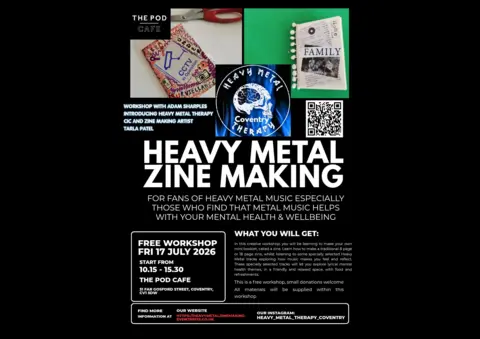 Adam Sharples
Jasmine Al-Azawie, public health registrar at Birmingham City Council, will be presenting an overview of the current evidence on the issues at the event on Monday.
"It does largely suggest that heavy metal can be quite a functional coping strategy and that fans use it quite intentionally to manage their emotional state," she said.
"People's experiences are of feeling empowered, feeling accepted, feeling that the experience is authentic, and a relief from the social isolation that they experience."
"It feels like such a prime opportunity, thinking about music and the history of Birmingham within heavy metal, to showcase that and demonstrate the health benefits that we know exist with heavy metal."
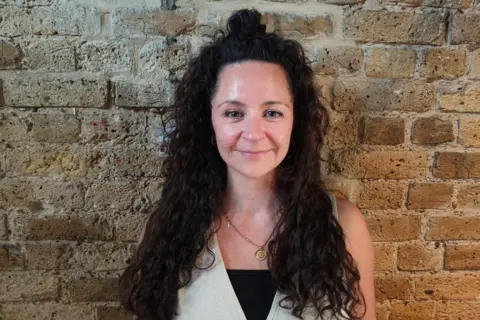 Jasmine Al-Azawie
The discussion will be chaired by Birmingham's former director of public health, Dr Justin Varney-Bennett, and will also hear from Birmingham Music Archive founder, Jez Collins.
Dr David Gange, from the University of Birmingham and Why Metal Matters will speak about metal in Birmingham and the global context, with Capsule's Lisa Meyer, co-founder of Home of Metal, considering the history of metal and how the city is moving forward.
The city was "uniquely placed to lead a new global conversation on heavy music and health," organisers said.
"Because Birmingham gave heavy metal to the world, Birmingham also has an opportunity, and responsibility, to lead the world in understanding its health impact."
The event is part of the Healing Arts festival, run by Birmingham City Council and the Jameel Arts and Health Lab , in collaboration with the World Health Organisation (WHO).
The week-long initiative from 22 to 26 June brings together arts, culture and public health sectors through a programme of events exploring the role of arts in shaping healthier communities.
Follow BBC Birmingham on BBC Sounds, Facebook, X and Instagram.