Forced adoptions 'a stain on our history' says Starmer as he gives formal apology
Sir Keir Starmer has apologised on behalf of the British state for its role in historical forced adoptions in England and Wales.
An estimated 185,000 babies were taken from their mothers in the 1950s, 1960s and 1970s, with women pressured into giving up their children because they were unmarried.
In a statement in the House of Commons, Sir Keir said what happened to "tens of thousands of mothers, children and families" was "a stain on our history".
"The shame is not yours. The shame was never yours. The shame is ours," he said.
The apology comes after years of campaigning from mothers, adoptees and their wider families, and parliamentary reports into the issue.
No compensation scheme has been put in place, but a £4 million support package over three years has been announced for better access to adoption records and improved family reunion services.
Sir Keir said: "Mothers, many young, vulnerable, and without support were coerced, bullied, or misled into feeling that they had no choice but to have their children taken away from them. What a thing to do."
Sir Keir said the forced adoptions were not isolated or accidental acts, but were practices "embedded" across local authorities, religious organisations and parts of what is now the NHS.
"All institutions that operated with power over people's lives, yet they did so without compassion, without consent, and without dignity or proper safeguards" he told the Commons.
He continued: "We are deeply and profoundly sorry to the mothers who were told they were unfit, who were prevented from caring for the children they desperately wanted to help and to keep, and who have carried this loss for decades."
During the prime minister's speech, some of the birth mothers and adoptees watching from the public gallery were seen wiping away tears, while others clapped.
Conservative shadow minister Alex Burghart agreed with Sir Keir that historical forced adoption was "a stain on our history", as he added former practices are "mercifully alien to us" today.
Speaking in the Commons, Burghart said: "those beliefs have left a permanent mark on each and every one of those lives, on children separated from their mothers and on the mothers whose children were taken away."
Support groups for mothers and adopted adults will be established by the Department of Education, Sir Keir told the Commons.
Campaigners met the prime minister in Downing Street ahead of the apology.

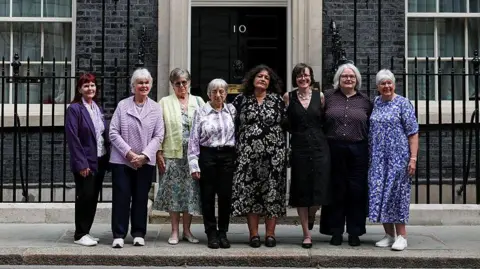 WPA Pool/Getty Images
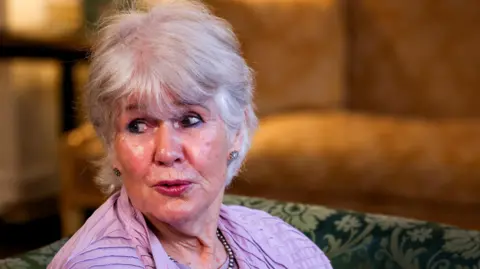
One of those was former Labour MP Ann Keen, who told BBC Radio 4's Today programme ahead of the meeting that she was looking forward to "being released from my shame" by the apology.
Keen said she "didn't have a say" in her son's adoption after she was sent to a Swansea mother and baby home in 1966, when she was 17.
"We all need this apology because we have always been accused of giving up our babies and we didn't give them up," Keen said.
The former health minister said mothers and adoptees had been "waiting a long time" for an apology, but that the government had "done the best they could, because it's so complex".
 Reuters
The formal apology recognises the "lifelong trauma" endured by mothers who had their babies forcibly adopted, campaign group the Movement for an Adoption Apology said, as it also paid tribute to the many "determined women" who had long pushed for the state to say sorry.
Affected women have said public sector employees, such as doctors, nurses and social workers, were involved in pressuring them into adoption due to social stigma around being young and unmarried.
In March, a parliamentary inquiry recommended the government urgently apologise for the state's role in the practice.
The inquiry report, from the Education Committee, found that government decisions had "shaped the environment in which unmarried mothers were often shamed and coerced into having their children put up for adoption".
It called for improved access to adoption records, as well as more support for people seeking to contact or reunite with their families.
It stopped short of recommending financial redress to victims, but called on the government to "rigorously assess" how other countries had responded to historical forced adoption, including Australia, Northern Ireland and the Republic of Ireland.
A previous report from the Joint Committee on Human Rights called for a state apology in 2022. The then-Conservative government said it was "sorry on behalf of society" in 2023, but said it did not think a formal apology was appropriate "since the state did not actively support these practices".
The apology comes three years after the devolved governments in Cardiff and Holyrood said sorry to victims of forced adoption in Wales and Scotland.
An apology is also expected in Northern Ireland, but not until after the completion of a public inquiry, following a 2021 report on mother and baby institutions, Magdalene laundries and workhouses.
Previous BBC reporting into forced adoption led to the parliamentary inquiry.
Gaynor Weatherly, whose mother was 16 when she was born in 1963, told the BBC in 2021 that while she had found happiness through her own marriage and children, she felt "cheated out of a different life".
Diana Defries, who was 16 when she became pregnant, had her baby taken from her moments after she gave birth.
Also speaking to the BBC in 2021, she said: "I yelled to bring her back, but the nurse then just walked past me and put my daughter on a table out of my reach."
The Education Committee report in March also found that the state was "aided in enacting its policies by charities and religious institutions, who were, for example, responsible for the operation of mother and baby homes".
In June, the Church of England said it was "profoundly sorry" for its role in forced adoptions.
In a formal apology, the Archbishop of Canterbury Dame Sarah Mullally said victims experienced "pain and trauma and suffering and fear when you should have received care and compassion".
She added: "You have nothing to be ashamed of. The shame is ours."