Dune project aims to aid rare toads and beetles

 Chris Dresh
A three-year project to help boost sand dune-living rare beetle and toad numbers is to start later this year.
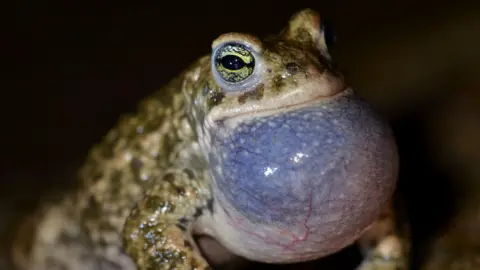
Last week the government announced several projects it was funding to protect threatened species including a scheme aiming to increase the numbers of northern dune tiger beetles and natterjack toads in Cumbria.
Amphibian and Reptile Conservation (Arc) official Jack Harper said the region was one of the "last strongholds" in Britain for the toad which is known for its loud mating call.
"There's only a few thousand left in the whole of the UK," he said.
Arc's project involves both beetles and toads because they share the same habitat - sand dunes, Harper said.
The scheme, alongside others including Nuclear Waste Services and Cumbria Wildlife Trust, will involve surveying the county's sand dune habitats which, like those in the rest of the country, have been historically degraded.
This is due to various reasons including climate change and increasing coastline development.
 Alex Hyde
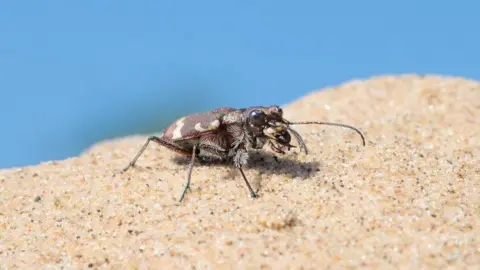
The northern dune tiger beetle is particularly fast moving and can travel at up to 2.5m a second, said Harper.
"As far we know, the rare beetles can only be found at two locations in the UK - the Sefton sand dunes between Southport and Liverpool and Drigg in Cumbria," he said.
The team plan to survey the beetle's population and try and determine whether there are other suitable sites for it to inhabit in Cumbria.
Harper said the next step would be to determine whether it was suitable for any of the Merseyside beetles to be relocated to new sites in Cumbria in order to start new populations.
"The answer to that may be no," Harper said.
Meanwhile the team's plan to aid the natterjack toad is to try and figure out how to best reverse the degradation of Cumbria's sand dunes.
This could involve artificially creating corridors in the dunes to channel wind so sand can move around more, Harper said.