Call to end 'postcode lottery' on end-of-life care

 Getty Images
An expert has called for an end to a "postcode lottery" that sees almost one in three people missing out on care at the end of their lives.
Professor Fliss Murtagh, director of the Wolfson Palliative Care Research Centre at the University of Hull, said: "Access to high quality palliative care varies widely across communities, too often arriving too late – or not at all."
The government said it was setting "clear national targets" to tackle inequalities.
Helen Hudson, from Dove House Hospice in Hull, said: "We need to have equitable investment and to recognise hospice care as a specialty, to recognise that it's what the public want and it's not just a 'nice to have'."
Minister of State for Care Stephen Kinnock said: "At the moment, palliative and end of life care can be a postcode lottery.
"That is not good enough, so through our landmark framework, which will improve the system, we will make sure every patient and family receives the quality care they deserve."
Charity shop funding
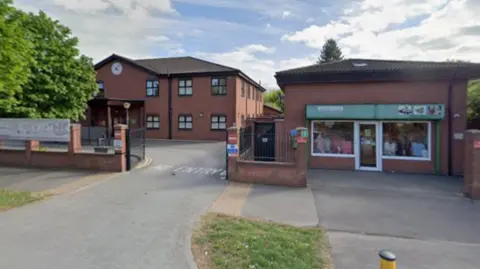
Hudson said Dove House only receives 10% of its funding from the government - while hospices elsewhere get up to 80%.
The rest of the funding currently comes from the community and charitable giving.
Hudson, who is Dove House's director of clinical services, added: "My chief executive said to me yesterday, when you look at babies that have been born, if they were being born in a ward that was purely funded on selling clothes in a shop, then there would be an outcry, wouldn't there? But that's what we do here within hospices."
As part of a review into end-of-life care, the government has said it will be "moving to sustainable contracting of hospice services", but has not yet announced how that will work.
 Google
Responding to an interim statement into the review, Murtagh said: "As a society we should be judged on how we care for our most vulnerable; those at the very beginning of their lives and those nearing the end.
"A compassionate society attends to both with equal commitment and care."
She said the government's guidelines needed to include "better integrated 24/7 community-based specialist care", and said there needed to be a "skilled workforce and teams required to make that ambition a reality".
Dr Rachael Dixon, consultant at Dove House, said local care was "a long way" from the government ambition of 24/7 access to end-of-life care and would need "huge investment".
With only four consultants in the region, none of which work full time, she said they were "miles away" in regards to staffing.
Dixon said: "We can't possibly see everyone that's dying. Even if we all worked 24/7 for the next 365 days, we couldn't physically see everyone that's dying. So I think that's just an unachievable aim."
Dying without care
In December, Murtagh was among the authors of a report which found that 170,000 people in England each year spend their final days in pain, distress, or without essential end-of-life support.
According to the report, unmet palliative care need is projected to increase by 21% over the next 25 years, meaning that, by 2050, more than 212,000 people a year in England could die without the care they require.
The Department of Health and Social Care previously said it had made the "biggest investment in hospices in a generation" and would soon set out plans to improve palliative and end-of-life care in the Modern Service Framework (MSF).
The MSF, which will be published in the autumn, is described by the DoHSC as "a clinically led, evidence-based framework" which it said would lead to improved outcomes for patients and carers.
Listen to highlights from Hull and East Yorkshire on BBC Sounds, watch the latest episode of Look North.
Download the BBC News app from the App Store for iPhone and iPad or Google Play for Android devices