Sanctuary crammed full with 1990s 'Ninja Turtles'

 Kevin Shoesmith/BBC
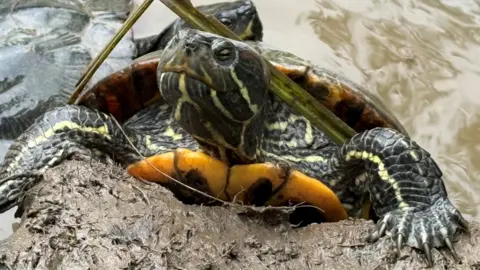
A turtle sanctuary has reached full capacity as staff continue to deal with the fallout from the Teenage Mutant Ninja Turtles craze of the 1990s.
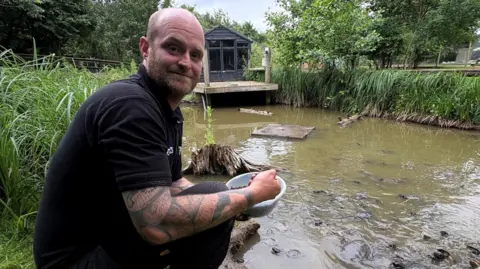
The National Turtle Sanctuary near Boston, Lincolnshire, is home to more than 400 insect and fish-eating terrapins.
Manager Andy Ferguson said: "Terrapins can live 40 or more years, and most were bought to fulfill a desire to own a 'ninja' turtle."
Ferguson revealed many of those given up had been bought in fours – mirroring the comic book franchise, which featured Leonardo, Michelangelo, Donatello and Raphael – while others were rescued from ponds, lakes and canals after owners thought they "would be happier if released into the wild".
 Kevin Shoesmith/BBC
Like the animated heroes who did battle with Shredder and his sidekicks Bebop and Rocksteady, terrapins – commonly known as "sliders" – originate from the US.
The most popular types are the red-eared, yellow-bellied and Cumberland, which are listed as "invasive alien species" under a law which came into force in 2019.
According to the RSPCA, this means there are strict restrictions on where they can be held in captivity and a licence or permit is needed to hold them for longer than six weeks.
"Their popularity soared in the 1990s," said Ferguson. "But they're not as easy to look after you'd think.
"Owners got bored of them, and I think people looked at picturesque lakes and ponds and thought, wrongly, that their terrapins would be better off in there than in an algae-covered tank in their living room.
"These creatures were used to 2ft foot of clear water, not 8ft of muddy water, however. A lot died but some adapted to the conditions."
 Mirrorpix/Contributor
Government advice is that terrapins spotted in the wild should be left alone provided they appear healthy.
If they are sick or injured, they can be taken for veterinary treatment, but they cannot be returned to the wild or rehomed to the public. They must instead be taken to a facility – such as The National Turtle Sanctuary – with a permit or licence to keep them permanently.
The sanctuary is no longer allowing the public to drop off unwanted terrapins, said Ferguson, but it is making making exceptions for those that come to them via the RSPCA or other official channels.
Ferguson said terrapins were "scavengers", adding: "They will eat insects and fish, but are inherently lazy so they prefer dead ones, even birds, as well as snails."
Terrapins can be found in ponds, lakes and canals across the country.
"Every now and then we will get a call from an angler who has caught one," Ferguson said.
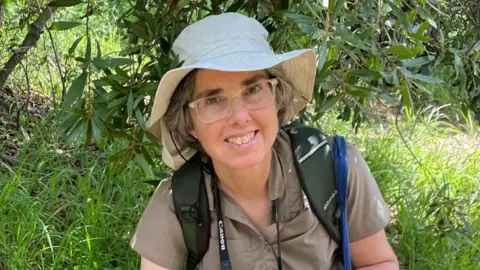
Dr Africa Gomez, a biologist at University of Hull, published a 2022 study into the terrapin population, focused on East Yorkshire, and she agreed the country was still feeling the impact of the Teenage Mutant Ninja Turtles phenomena.
 Domino Joyce
"Terrapins live perhaps 40-50 years in the wild, [although] longer in captivity, so I would expect numbers to gradually reduce over the next decade or so," she said.
When the study was conducted, she spotted nine in the boating lake at East Park, Hull, and seven at Pickering Park.
"They hibernate over winter and wake up when it starts to get warmer," she said.
Citing climate change, Gomez said terrapins could survive – and even thrive – in the UK but, certainly in Yorkshire and Lincolnshire, they did not appear to be breeding.
"They require consistently warm conditions for breeding to take place," she said.
"Further south, in the London area, eggs have been laid, but I am not aware of any evidence to suggest that they actually hatched."
Gomez said terrapins often attracted people's interest when they were spotted "basking in the sun on the edge of islands or floating on logs" and she suggested their presence may even have ecological benefits.
"It's possible they actually maintain water quality by eating dead fish and birds," she added.
Listen to highlights from Hull and East Yorkshire or Lincolnshire on BBC Sounds, and watch the latest episode of Look North.
Download the BBC News app from the App Store for iPhone and iPad or Google Play for Android devices