London Tube strikes: What you need to know

 BBC/Harry Low
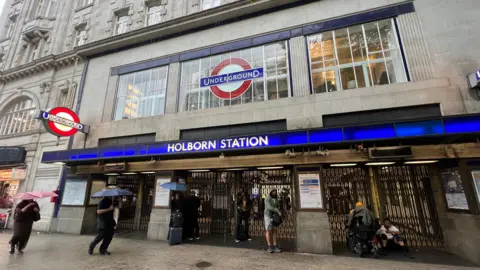
London Underground drivers are due to negotiate with Transport for London (TfL) after taking strike action four times in 2026.
Members of the Rail, Maritime and Transport (RMT) union walked out for two days in the first week of June after voting to oppose the voluntary introduction of a four-day working week with condensed hours.
More than half of Tube drivers - including those with the Aslef union - turned up to work having accepted the proposals, labelling them "exactly the sort of deal every trade union should be trying to achieve".
Industrial action on 19 and 21 May and 16 and 18 June was shelved following last-ditch talks.
When is the next Tube strike?
No dates are currently scheduled but the RMT has a strike mandate until late August.
How much disruption did these strikes cause?
During June's strikes, Transport for London (TfL) did not run a service on the Circle and Waterloo and City lines, with major disruption on the Piccadilly, Metropolitan and Central lines - but 90% of Jubilee line services operated.
Services started late and finished early with no service before 06:30 BST or after 21:00 on most lines.
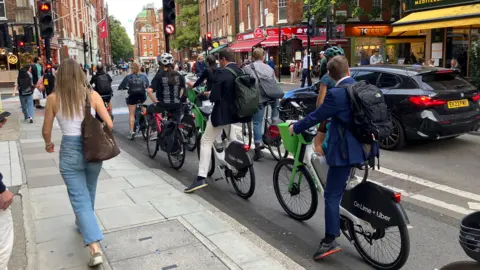
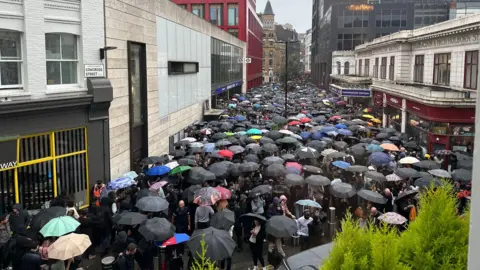
On the Thursday of June's strike, Tube journeys fell by 40%, bus usage was up 4%, London Overground journeys rose by 4% and Elizabeth line increased by 18%, according to TfL.
The DLR recorded a 7% rise in journeys, cycling increased by 22% and roads were 10% busier.
Only drivers belonging to the RMT union would walk out - that is roughly half the total number of drivers on the network.
Aslef's participation in last year's strike, alongside the RMT, halted almost all Underground services.
What are the strikes about?
The RMT union rejected an offer for drivers to voluntarily work a four-day week.
Under the proposals, most drivers would see their working week reduced from 36 hours to 35 hours. Their contractual hours would remain the same because paid meal breaks would be introduced.
This effectively means drivers would work longer days, but fewer days each week and fewer overall hours each week.
The RMT union said the working day would be too long under the plans, risking driver fatigue and compromising safety.
The union instead wants a 32-hour week over four days, meaning drivers would work three fewer hours each week for the same salary.
 BBC/Harry Low
TfL said drivers could remain on a five-day week if they wanted to, pointing out that the change was voluntary.
A spokesperson for Aslef, the union representing a slightly higher share of Tube drivers, previously said they were "surprised that the RMT has decided to take this action".
Aslef has agreed to the voluntary compressed four-day week, saying it gives participating drivers an extra 35 days off a year "in return for some fairly minor changes to working conditions".
"It will be the first strike in the history of the trade union movement designed to stop people having a shorter working week and more time off," Aslef's spokesperson added.
An RMT spokesperson said: "We have a different perspective from Aslef."
Could there be more strikes?
Possibly.
There are talks planned for the second week of June at the conciliation service Acas.
The union says TfL has refused to "engage meaningfully" on members' concerns, such as fatigue and longer shifts.
A TfL spokesperson said: "We have committed, a number of times and in a number of ways, including in writing before this most recent industrial action, to these proposals being voluntary.
"Any suggestion otherwise is misleading the public in order to justify strike action over proposals that would give Tube drivers more time off and create a more modern, efficient Tube service."
 PA Media
A TfL spokesperson apologised to customers during June's strike but added around 60% of drivers had turned up to work - more than in previous strikes.
The mayor of London said that the Tube strikes had a "serious impact on Londoners, businesses and commuters" and called for talks between TfL and RMT to resume.
London Underground drivers also went on strike in September last year in a dispute over pay and conditions.
The industrial action caused severe disruption across the capital's transport network, with many Londoners getting around by e-bike instead.
Listen to the best of BBC Radio London on Sounds and follow BBC London on Facebook, X and Instagram. Send your story ideas to hello.bbclondon@bbc.co.uk
