Solar eclipse in Lincolnshire: When and where to see it
 Getty Images
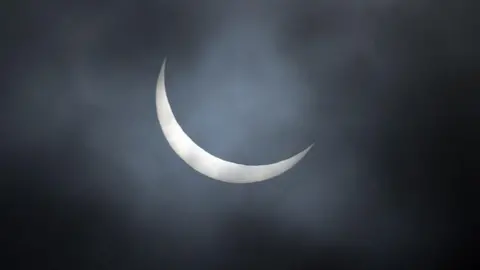
People in Lincolnshire will be able to witness a rare partial solar eclipse.
A solar eclipse takes place when the moon moves between the sun and the earth, blocking the sun's light either partially or completely, casting a shadow on the Earth.
Taking place on Wednesday 12 August, it will be the biggest coverage since the total eclipse in 1999, with the moon expected to cover 90 to 96 per cent of the sun.
After this week's event, the UK will not see another of its kind until 2050, while the next total eclipse is not due until 2090.
Here is everything you need to know about the eclipse in Lincolnshire.
When can you see it?
The partial eclipse can be seen in the county from 18:14 BST, ending at 20:03.
The deepest point, with the sun at its most hidden, will be at 19:10.
The weather will be warm with some clouds. The Met Office has issued an amber warning of extreme heat for Lincolnshire.
Where to watch
- Lincoln Observatory, Westcliffe Street, Lincoln: The Lincoln Astronomical Society is hosting the event for the public from 18:00 until 20:00
- Skegness Pier: An eclipse party will take place from 15:00, featuring music, themed entertainment and a movie night under the stars
- Grimsby Rugby Club, Springfield Road: Alongside Scartho Methodist Church, Grimsby Rugby Club is hosting a family friendly event, including a barbecue and a bouncy castle
- The South Common, Lincoln: A sunset dance will be taking place on the open green space on the southeastern boundary of Lincoln. Participants will need to purchase tickets in advance and solar glasses will be provided
- Dunston Village Green, Lincoln: A community picnic will be held from 17:00. There will be games and activities, as well as free hot and soft drinks
- Everwild Camping, Owston Ferry, North Lincolnshire: The site will be giving out eclipse glasses and hot chocolate on tap
- The Woodlands Cottages, Fotherby, near Louth: People are being invited to watch the eclipse from the picnic paddock
How to watch safely
Looking directly at the eclipse could cause damage to the retina, according to The Royal College of Ophthalmologists. This can happen without causing any pain.
Safety equipment, such as eclipse glasses or handheld solar viewers, can be used.
Legitimate pairs of eclipse glasses will have safety certification ISO 12312-2 or ISO 12312-2:2015 printed somewhere on the glasses, according to The Royal Observatory Greenwich.
The government advised not to use eclipse glasses if the lenses are scratched, torn or damaged.
Alternatively, people can watch the eclipse indirectly without any specialist equipment.
Safe options include a pinhole viewer, which can be easily made at home, through a colander or the gaps between tree leaves, or by projecting the sun's image onto a sheet of paper using a simple pinhole projector.
BBC Sky at Night Magazine also recommends ways to enjoy the eclipse without eclipse glasses.
Expect shooting stars afterwards
The day also marks the best time of the year to see the Perseids meteor shower. This occurs when the Earth passes through trials of debris from asteroids or comets.
The Perseids is active from mid-July to 23 August but the best time to catch the display is between midnight and dawn on 12 and 13 August.
Listen to highlights from Lincolnshire on BBC Sounds, watch the latest episode of Look North.
Download the BBC News app from the App Store for iPhone and iPad or Google Play for Android devices