E-bike injury payouts top £110m and push up insurance premiums
The cost of damages paid out to people injured in the UK by e-scooters and e-bikes has topped £110m, the BBC has learned.
It is only seven years since the first claim was made, with the biggest individual payout being for £20m. Such claims have also led to premiums for drivers being pushed up, to effectively cover the bill for insurers.
Alison, not her real name, suffered a broken pelvis, wrist and finger as well as cuts and bruises when she was hit by a private e-scooter while crossing a road in Coventry last year. She hopes to get compensation for her injuries.
"It was a lovely sunny day so we were all in a really good mood," she said. "Then the next thing I knew, it was just gravel and I was on the floor.
"It was instant pain, you know when the TV does grey static? That's what my eyes were doing.
"I was on a crossing. I thought it was safe, you just don't expect it."
CCTV footage shows 47-year-old Trevor Chandler, from Coventry, riding his e-scooter directly into her as she and a friend crossed a road, leaving the scene shortly afterwards.
Chandler broke his leg but escaped, before eventually being arrested and jailed for 15 months. His vehicle was destroyed.
The organisation which settles claims like Alison's, the Motor Insurers Bureau (MIB), wants the sale of such vehicles to be better regulated and in some cases banned.
The cost of payouts has been a major contributor to increases in annual premiums for ordinary members of the public, experts say.
They have become a common sight on the UK's streets, but they have also become a significant hazard.
Micromobility vehicles - which include, e-scooters, e-bikes, mobility scooters and now e-unicyles too - have become a concern for people navigating town and city centres.
Hundreds seized
E-scooters are allowed in towns and cities where official trials are taking place, but only the vehicles which are part of the operator schemes can be ridden.
Privately owned e-scooters can only legally be used on private land with the owner's permission.
Regular police enforcement operations lead to hundreds being seized and destroyed every year, along with hundreds of e-bikes that have been adapted to go faster than 15.5mph, the maximum speed at which they can be legally ridden unless the electric assist has been turned off.
The first claim paid by the MIB to a person hurt by an e-scooter was in 2019, while the first to someone hurt by an e-bike was in 2020.
The MIB is a not-for-profit organisation which pays compensation to victims of accidents involving uninsured vehicles. The main insurance companies pay a levy to it and that means higher premiums for everyone paying motor insurance.
In 2025, there were 168 claims for accidents involving both types of vehicle, the highest figure so far. In the worst single case, a child suffered catastrophic life-changing injuries and was paid £20m.
The cumulative total paid out has risen from £51m to £110m in the past 12 months.

 Handout
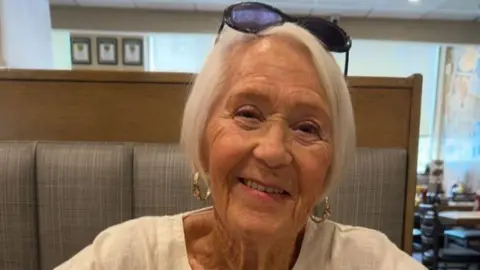
In one of the most shocking cases, Billy Stokoe, 19, was jailed for six years and nine months after killing 86-year-old Gloria Stephenson when he hit her with his e-bike in July 2025 in Sunderland.
Stokoe, who had been using a mobile phone and had taken cannabis, was convicted of causing death by dangerous driving.
His case is being reviewed under the unduly lenient sentences scheme.
In Coventry, Alison considered herself lucky not to have been killed. Her pelvis is better, but she has been told she will never have full movement in her wrist.
She said she could not understand why e-scooters were still on sale online and in stores if those that were privately owned were illegal on roads and pavements.
"It is frightening to think they are willingly handing these things over to people with no licence, no insurance, no nothing and just letting them go," she added.
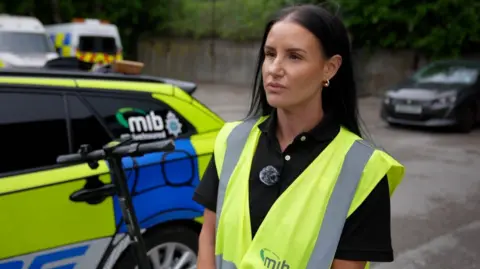
The MIB believes, at the very least, more needs to be done to raise awareness of the law.
The organisation has donated money to some police forces for vehicles that are used in enforcement.
Speaking in Stoke-on-Trent during a national police operation targeting the illegal use of micromobility vehicles, the MIB's Hayley Sutcliffe outlined how the increasing cost in claims made by those injured affected everyone.
"Whilst we will compensate victims of any injuries from e-scooters or electric motor bikes, everyone else has to pay for that," she said.
"It has a huge impact on your law-abiding citizens as well."
PC Tom Cordell regularly takes part in enforcement operations for Staffordshire Police.
He said ignorance of the law was not an excuse, but he believed most people riding e-scooters did know they should not be using them on pavements and roads.
"I think the vast majority of people do know that they're illegal," he said.
"They've been around for a long, long time now. This isn't something that's new and just come out yesterday".
In statements, the government has repeatedly reiterated the law as it stands.
However, speaking to the BBC earlier this year, Transport Secretary Heidi Alexander said the "genie was out of the bottle" and new laws could be introduced if parliamentary time became available.

Follow BBC Coventry & Warwickshire on BBC Sounds, Facebook, X and Instagram.