'I felt trapped': The hidden struggle of eating disorders facing pregnant women

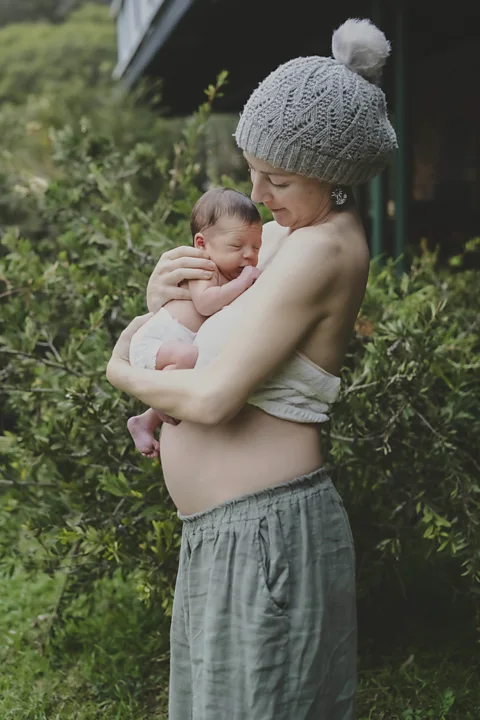 Courtney Louise
Pregnancy can be a "perfect storm" for eating disorders that is often overlooked. But researchers say it can also be a pivotal moment for healing once and for all.
When Elizabeth Claydon fell pregnant at 27-years-old, her body transformed.
As usual for a woman supporting a growing baby, her hormones fluctuated, metabolism shifted, belly expanded and weight crept up. For many people, this cascade of change feels positive, but occasionally it can trigger alarming effects on mood and mental health.
In a few, overlooked pregnant people, including Claydon, this fuels a dangerous obsession over their body image and ultimately triggers an eating disorder.
"Some days I was okay with the changes and other days it would be really difficult," says Claydon. "I would look in the mirror and I wouldn't see myself."
Claydon previously suffered from anorexia nervosa from the age 16 until she was 22, when she recovered with the help of outpatient treatment. At age 26, her eating disorder relapsed for about six months and she was in recovery when she fell pregnant.
At the time, her eating disorder thoughts were still "very much present", Claydon recalls, and they accelerated as her body changed more rapidly.
"It felt like there was a battle between my pregnancy and my eating disorder," says Claydon, who is now an assistant professor in the West Virginia University School of Public Health in the US, researching eating disorders and obesity prevention. "It was like waking up in a body that isn't yours."
Claydon's experience is relatively rare, but it's still more common than expected: about one in 20 women experience an eating disorder during pregnancy. Some people have a history of these conditions and suffer a relapse, while others experience symptoms for the first time while pregnant.
And while this comes with the risk of serious complications for the mother and baby, the issue can often go undetected in the medical system.
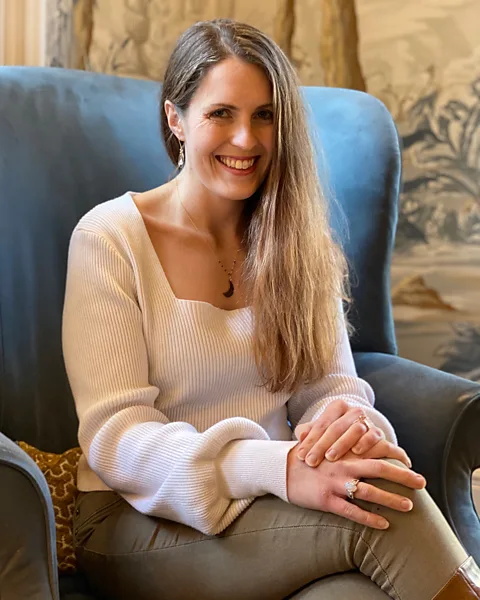 Elizabeth Claydon
"Pregnancy can be a perfect storm for an eating disorder," says Gemma Sharp, a professor, clinical psychologist and lead of the Body Image, Eating and Weight Disorders research program at Adelaide University in Australia. With the right support, however, it may also be a pivotal turning point towards recovery, she says.
The rise of 'pregorexia'
About 9% of women worldwide will have an eating disorder in their lifetime, commonly during three vulnerable periods: puberty, pregnancy and perimenopause.
These are times when women undergo profound transition over an exceedingly short window, and often experience sleep problems, brain changes, hormone fluctuations and mood swings, says Megan Galbally, a practising psychiatrist and expert on maternal and child health at Monash University in Australia.
In pregnancy, suddenly it's like "you're on a train and you can't get off", says Galbally. "Inevitably, your body is going to change and you will gain weight, so there can be a loss of control."
About 70% of pregnant and postpartum women report being dissatisfied with their body image and current data suggests 5-7.5% of pregnant people meet the diagnostic criteria for an eating disorder. These are likely underestimations, Sharp and Galbally say, given the stigma surrounding reporting, the lack of screening and few studies to date.
"There's a myth that people grow out of eating disorders," Sharp says. "So by the time someone reaches pregnancy, they also self-stigmatise, thinking, 'I'm too old to be doing this kind of behaviour', and they're less likely to disclose it."
Galbally has tracked these issues and treated people suffering from them for decades. In the early years of her career, she rarely saw pregnant women with serious anorexia nervosa admitted for nutritional support into maternity wards at her hospital. Then, in 2019, she saw intake numbers going up.
The global prevalence of eating disorders slowly rose from 3.4 to 7.8% between 2000-2018, and peaked in 2020 and 2021, likely driven by the rise of social media, better screening, and the Covid-19 pandemic.
"I suspect that there had always been pregnant women with anorexia nervosa, but they were often missed," says Galbally.
The physical toll
An eating disorder during such a delicate time can put both the mother and child in danger. Nutritionally, a mother's body prioritises the pregnancy over itself, so if there is a deficit, resources will go to the baby, which can lead to nutrient deficiency and bone or muscle deterioration of the mother.
In fact, anorexia nervosa and bulimia nervosa in pregnant mothers appear to nearly double the risk of complications, including severe nausea or vomiting, genital tract bleeding, and low levels of haemoglobin in the blood. Eating disorders may also contribute to miscarriage, low birth weight, premature birth, and potential developmental issues for the foetus, including studies that have found a correlation with ADHD and autism.
A baby's first thousand days can shape their own lifelong risks around obesity, cardiovascular health, Type 2 diabetes and a range of other health conditions, too. So birth weight is a key predictor of a child's long-term health, says Galbally, and the mother's nutrition is vital.
Still, exactly how eating disorders influence the health of mother and baby isn't clear because there is limited longitudinal data and fewer than a dozen case studies on this population. The research, as it stands, "isn't sufficient", says Sharp.
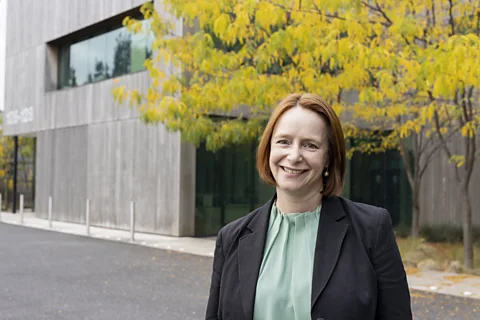 Megan Galbally
Postpartum pressures
Some women with an eating disorder manage to stave off full-blown relapses through their pregnancy, only to see it return after the baby is born. In fact, an estimated 13% of postpartum mothers suffer from clinical eating disorders. There are significant hormonal fluctuations, sleep deprivation, mood instability, new responsibilities of parenting a newborn, and the all-too-common pressure to bounce back to their pre-baby bodies.
Courtney Louise, a 37-year-old yoga instructor and personal trainer living in New South Wales, Australia, spent much of her late teens and early 20s in and out of the hospital with anorexia nervosa, then faced years of obsessively exercising through her late 20s.
When Louise first fell pregnant, she was petrified of gaining weight. Although she initially didn’t feel the need to skip meals or cut her food intake initially, her eating disorder thoughts flooded in after the birth. Spurred by sudden hormone shifts and weeks of broken sleep, Louise became, at moments, suicidal.
"I saw the beauty in it, but postpartum was very mentally painful for me," says Louise. "I would have such rage that I'd go into the car and sometimes scream. I felt trapped."
Louise worked with her doctor and therapist to avoid restricting food or excessive exercise. Ultimately, Louise's daughter and her yoga practice serve as reminders to keep her mentally healthy. "When we find something that has more power than those stories, those voices, and that darkness, that's when we really start to heal," says Louise.
Pregnant women's bodies are often under a microscope, as health professionals track their growth, weight and diet. This constant monitoring can be immensely challenging for someone with an eating disorder, says Sharp. "Pregnant women's bodies seem to be the property of the world."
Even so, eating disorders around pregnancy still go under-reported and undetected due to profound diagnostic confusion: eating disorder symptoms can overlap with those of pregnancy.
For instance, morning sickness can blur whether someone purging – one of the main signs of of bulima nervosa. Only 10% of pregnant women with bulimia nervosa are identified and only half are referred for treatment.
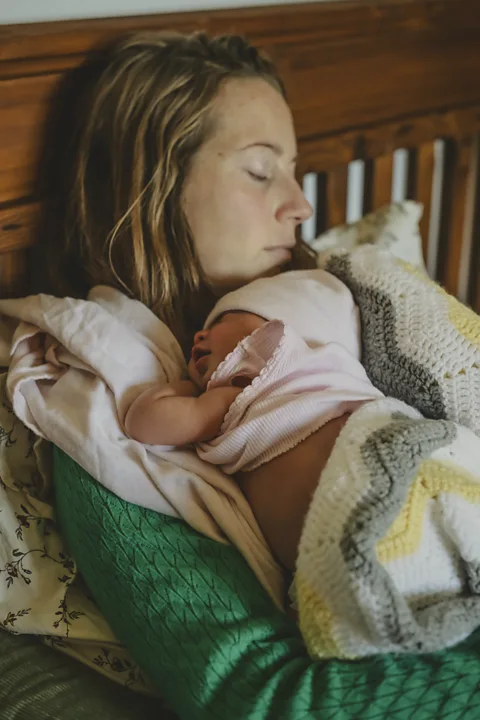 Courtney Louise
The temperament of someone with an eating disorder can often be very "perfectionistic, shame- and rejection-sensitive, and overachieving", says Linda Shanti, a psychologist based in New York and author of The Recovery Mama Guide to Eating Disorder Recovery During Pregnancy and Postpartum. So they're unlikely to tell their doctor that they have been making themselves throw up or skipping meals. That's hard enough to admit generally, she says, "much less when you are growing a baby".
Emily, a 33-year-old mother of two living in Australia whose name has been changed due protect her privacy, dealt with "all-consuming" anorexia nervosa, bulimia and binge eating disorder on and off during her teens and 20s. She was nervous about navigating pregnancy with her history, so she disclosed it to her medical team upfront. There was no action taken or support offered, she says.
During both her pregnancies, she experienced distressing thoughts as well as hyperemesis gravidarum, a severe form of nausea and vomiting. As someone who has experienced bulimia, these symptoms were very triggering for Emily, yet no additional care or concern was given, she says. "I felt like I was navigating it on my own," Emily says.
Often patients describe backlash if they share these struggles, because of it affecting two lives rather than one. "People say: 'Don't you love your baby enough?'," says Sharp, who calls these attitudes "a broader reflection of society's version of what a mother should be – incredibly selfless and self-sacrificing".
As a result, they keep their issues hidden.
Fighting for recovery
Historically, this issue "hasn't been on the radar" of obstetricians, midwives or mental health professionals, says Galbally. In turn, pregnant people are often left struggling alone, as Emily was.
To fill the gap, researchers and clinicians are creating new resources. Galbally developed the first comprehensive clinical guidelines for anorexia nervosa during pregnancy, published in 2022. Claydon, meanwhile, has set up Healing Bodies Healthy Babies, a resource to help people navigate pregnancy and eating disorders, and Sharp founded the Consortium for Research in Eating Disorders to promote further study into the issue.
Still, there aren't any scientifically tested medications or tailored behavioural interventions for this group, so clinicians are often in the dark about treatment options. They resort to generic eating disorder treatments like therapy, support groups and family-based treatment, as well as antidepressant medication in certain cases, says Sharp.
More like this:
"Non-judgmental and collaborative" support is critical, Galbally says. In her practice, she works with obstetricians specialising in higher-risk pregnancies, dietitians and mental health professionals to support patients. "When women are given the right support, this can be a time of great motivation. If we can help forge that path around recovery, it's an extraordinary, hopeful thing."
For clinicians, small changes could help, they add, such as withholding weight numbers during pregnancy monitoring or avoiding fixating on body size. For patients, experts encourage people to share their history with a trusted loved one or health professional.
"Everybody has an eating disorder alone, but nobody recovers alone," says Shanti.
* If you're struggling with an eating disorder or related issues, you can find help and support via BBC Action Line for pregnancy-related issues and for mental health and self-harm. For queries specific to eating disorders, visit the US National Eating Disorders Organisation.
--
For trusted insights on health and wellbeing, sign up to the Health Fix newsletter by senior health correspondent Melissa Hogenboom who also writes the Live Well For Longer and Six Steps to Calm courses.