Why The Odyssey has caused so much controversy

 Universal Pictures
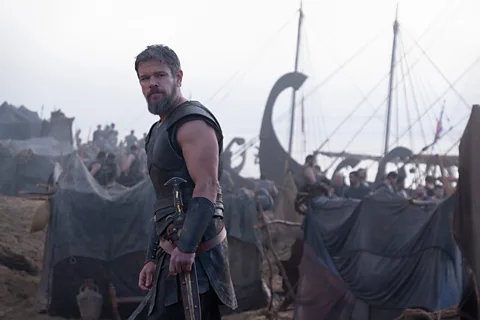
Chrisopher Nolan's adaptation of Homer's Ancient Greek epic, starring Matt Damon, Zendaya and many more, is the most anticipated film of 2026 – but also the most contested. Here's why.
Christopher Nolan's last film, the Oscar-winning Oppenheimer, was about the invention of the atomic bomb, and the ethics of killing tens of thousands of civilians in a global conflict. All things considered, he must have thought that his next film would be a lot less controversial.
After all, The Odyssey is based on Homer's ancient poem about warriors and kings, gods and monsters. What is there for anyone to grouse about? The height of Polyphemus the Cyclops? The wood used to make the Trojan horse? Well, maybe not. But it turns out that people have groused about pretty much everything else.
The Odyssey, released in July, has become the most contentious film of the year – a lightning rod for all kinds of political and cultural grievances. What is it about a swords-and-sandals fantasy epic that is so upsetting?
Casting controversies
Much of the grumbling has consisted of conservative fears that the film might be too liberal. Not everyone approved when Nolan hired a transgender actor, Elliot Page, and a rapper, Travis Scott, to play a so-far-unidentified male character and the poet Demodocus, respectively.
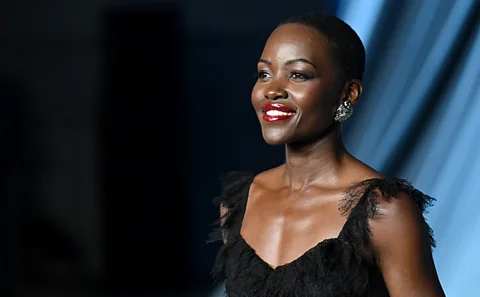
People have also objected to his choice of black actress Lupita Nyong'o to play Helen of Troy – described by Homer as "white-armed". Wolfgang Petersen's Homer adaptation, Troy (2004), loosely inspired by The Iliad, didn't have a vocal fanbase a year ago, but recently it's been held up by some on social media as superior to Nolan's, at least in its casting of Brad Pitt as Achilles and Diane Kruger as Helen.
One right-wing blogger, Matt Walsh, declared that Nolan had cast a woman of Kenyan heritage as Helen because he was afraid of being called a racist. Elon Musk also chimed in with agreement.
Then other people disagreed. Prof Daniel Mendelsohn, whose translation of Homer's poem was published last year, said at the UK's Hay Festival in May that he was amused by "all of these bros suddenly worrying about Greek literature". According to a report in The Telegraph, Mendelsohn said: "What's so funny is that Helen has the tiniest role in The Odyssey… so the debate is particularly silly." But he proposed that Nyong'o's casting was "consonant with the concern of the Troy myth, which is how to think about beauty… I think [Nolan's] choice of this very beautiful actress who happens to be African lands you squarely in the middle of a very old discussion."
In Elle magazine, Nyong'o gave her own pithy response to the attacks. "This is a mythological story," she said. "Our cast is representative of the world." But some people have pointed out that this isn't wholly true, lamenting the lack of Greeks among the actors. Greeks had been "left out by Hollywood, again and with no explanation, from our foundational mythologies and epics", wrote a Greek-British journalist, Chris Cotonou, in The Guardian. "If your film sets out to represent the world, wouldn't it be obvious to fill one space at this large, wonderfully multicultural table with the people who are most authentically connected to the source?"
Not every criticism of The Odyssey has been explicitly conservative, then. When the first trailer was released in December, people sniped that the dark armour worn by Agamemnon (Benny Safdie) resembled Batman's costume, and that Odysseus's boat looked like a "Viking ship" – the implication being that films with giants and witches in them should nonetheless be as true-to-life as possible.
 Getty Images
"I wonder whether we have become inclined to treat mythological material as though it were historical material," Prof Susan Deacy, the author of The Greek Gods and Their Worlds, tells the BBC. "Yet the Odyssey is continually being reimagined, with pretty well every age producing its own Homer."
The accents issue
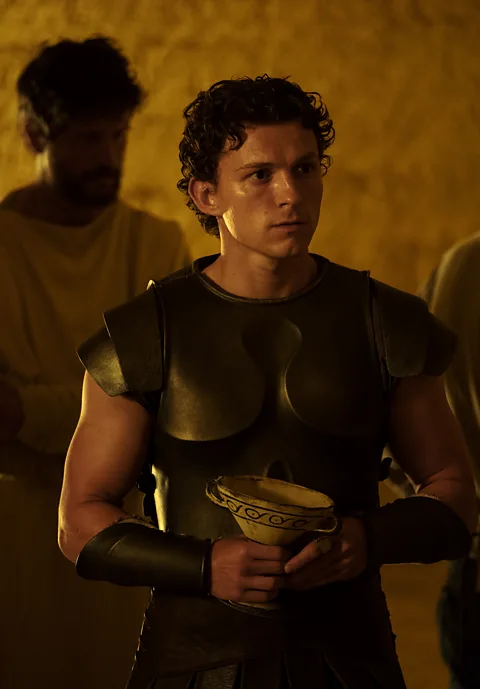
Another fuss arose from a trailer in which the actors – even the British ones – were heard to use American accents and modern colloquialisms. Exhibit A was Tom Holland saying, "My dad is coming home," in his Spider-Man voice, instead of intoning "father" in a manner befitting the Royal Shakespeare Company.
"It sounds like they're trying to have an epic conversation on the sidewalk outside the Starbucks," cracked one commenter. "It felt so out of place," said another. "I'm hoping the dialogue isn't too contemporary and pulls the viewer out of the period."
This doesn't quite makes sense. Considering that the "place" is Greece and the "period" is thousands of years ago, the dialogue still wouldn't be true to Homer even it was slightly more pompous and old-fashioned. The fact is that the Ancient Greeks, whether real or mythological, didn't talk like 21st-Century American actors or 20th-Century British ones. But it's a time-honoured Hollywood convention that sword-wielding Greeks and Romans, much like wizards, Norse gods – and even some Nazi officers – should sound grandiose and English.
"British accents in historical epics can feel right because of a long cinematic tradition," says Deacy, "not because they're any closer to ancient Greek speech." For that matter, she adds, formal dialogue isn't any closer to Homer than informal dialogue is. "More colloquial dialogue could even be closer to the spirit of Homeric storytelling than the elevated language that can be associated with antiquity – especially as the Odyssey was oral performance and popular entertainment, not just canonical text."
Why this film has become a target
So what's the problem? One answer is that people love to protest on social media if a film isn't exactly how they wanted it to be, and The Odyssey offers the biggest imaginable target. Nolan's films are significant cultural events – massively expensive, highly publicised and endlessly discussed – so anyone who gripes about them knows that someone will listen. And this one is adapted from one of the most important works of literature ever written, so anyone with even the vaguest knowledge of Greek mythology can have a view on it.
 Universal Pictures
Certainly, when Emily Wilson published her translation of The Odyssey in 2017, she was subject to what she has described as "misogynist trolling" for her modern wording, among other things. "I find it quite baffling. It's people who don't care about the poem, yet when it comes to this culture-war internet discourse, they perform anger about it and a protectiveness of it," she told Vulture this week. "It has to do with an idea of a totally stable notion of greatness and masculinity… Anything that challenges that interpretation of what ancient history is threatens their identity in terms of their gender and racial identities."
More like this:
It's significant, too, that Nolan is an unusual figure in the culture wars, says Tom Shone, the author of the definitive book on the director, The Nolan Variations. One quality that separates Nolan from his peers, Shone tells the BBC, is that his films' ideologies aren't always simple. "He's a Rorschach director. He makes films in which the left can find endorsement as easily as the right, and frequently at the same time."
Imagery and rhetoric from his Batman trilogy, for instance, have been adopted by the right, so people of that political persuasion might feel betrayed that The Odyssey appears to be more progressive. "I think of all the blockbusters that provoke anti-woke sentiment – from Star Wars to The Little Mermaid – The Odyssey is the most painful for [conservatives] because on the surface at least Nolan films feel like they might skew rightward not left," says Shone.
Nolan also makes films his own idiosyncratic way. Whether he's taking on Batman or World War One or outer space, Nolan doesn't follow genre rules – and his defiantly distinctive approach can seem sacrilegious when he's taking on a text as revered as Homer's Odyssey. Still, the things which have prompted complaints about his new film are the things which should ensure that it's a hit. The Odyssey is already known for its colossal scale, its complexity, its literary pedigree and its uncompromising individuality. That's why people are criticising it, and that's why they will go to see it, too.
The Odyssey is released on 17 July in US and UK cinemas.
--
If you liked this story, sign up for The Essential List newsletter – a handpicked selection of features, videos and can't-miss news, delivered to your inbox twice a week.