Pupils bring WW1 stories to life with AI films

 Kresen Kernow
History students at a school have been using Artificial Intelligence (AI) to make films bringing World War One diaries to life.
The pupils at Penair School in Truro have been using diaries of soldiers from Cornwall as the basis of their work, as part of a winning competition entry.
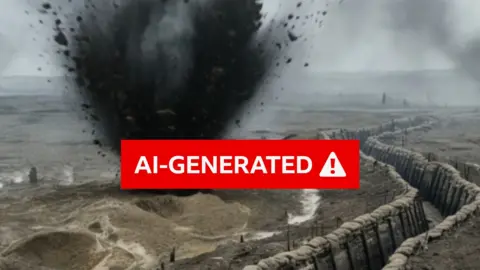
Many tin and copper miners from Cornwall were sent to the front lines to use their experience to dig tunnels underneath German positions and plant explosives.
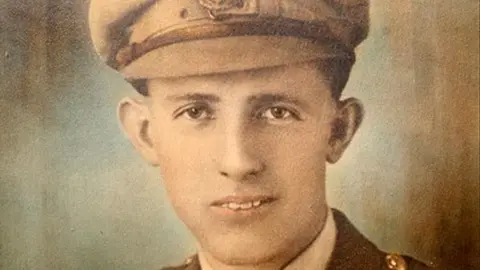
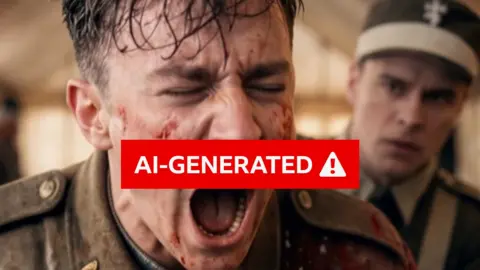
John French, from Redruth, wrote extensive diaries about his experiences of war and pupils fed the story into an AI generator to make the film - his descendants described it as "incredibly moving".
 Tony Smith
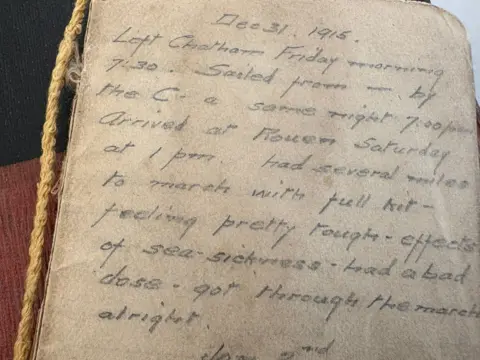
John French's diaries were discovered in the loft of a family member's house many years after he died of tuberculosis in 1929, and are now stored at the Cornish archive centre Kresen Kernow in Redruth.
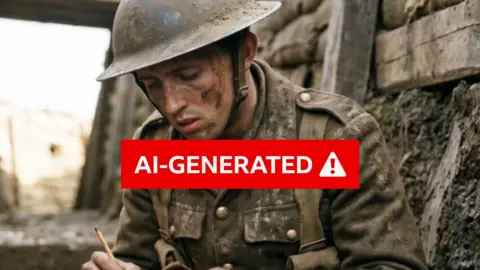
Pupils fed the stories from the diaries as well as visual descriptions of the trenches into a generative AI programme to make the film.
His niece Penny Picton was invited to the school to tell the story of her uncle and the discovery of the diaries.
She said: "For someone who left school at 14 to work in a mine his writing was amazing - he was well loved by his 10 siblings and because of these diaries he'll be well remembered."
Picton said she was moved to tears when she watched the film.
The films formed part of the school's entry for the Malcolm Doolin Prize for Local History research awarded by The Western Front Association, which it won.
 Kresen Kernow
 Tony Smith
The pupils were supported by local historian and film-maker Tony Smith, who learned about the diaries of John French at a local history talk.
He said: "There's a lot of bad press around AI and rightly so, it will probably take lots of people's jobs.
"I wanted to find uses that can be beneficial and what could be a better use than bringing history to life.
"Schools don't have the resources like actors and special effects to make films but AI gives pupils those tools."
 Tony Smith
Year 11 pupil Riley was part of the project.
He said: "He was a miner from Redruth but moved to Arizona in 1913 when the price of tin fell but war broke out he came back to Cornwall to enlist.
"In 1915 he was posted with the 251st tunnelling regiment - it was full of Cornish miners because they had the experience of tunnelling."
His last diary entry was in 1917, when he wrote: "Rather quiet on the lines today, no airplanes due to a thick mist."
Riley added: "There were no more entries after that and we don't know why.
"When he returned home he was awarded the military cross in 1918 but sadly he died of tuberculosis in 1929."
'Removes the distance'
Tina Turuelo is a history teacher at the school and said: "Having a local element to the stories make it feel less detached.
"If it's somebody's grandfather or it happened in the same town they live in, or if they can see a grave in a churchyard it removes the distance and brings the story home.
"When we study events like this there's often tears because there's a lot of tragedy but there's also celebrations when we find out about the ones that survived."
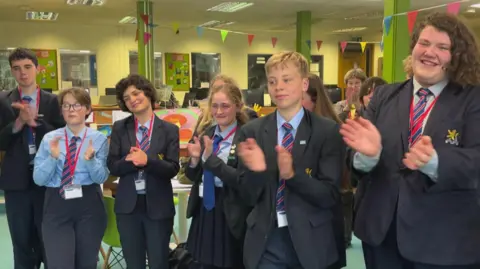
Ella Rose, 15, used the stories of Cornish woman Nanny Trembath as the inspiration for her World War One film.
She said: "We have to describe every detail in the shot, what's in the background, people's expressions and even then the AI gets it wrong sometimes.
"When I'm on social media AI is not used for good things but here we bring stories that are stuck in books and we make them in a way that brings them to more people."
Follow BBC Cornwall on X, Facebook and Instagram. Send your story ideas to spotlight@bbc.co.uk.