How failures in girl's care contributed to her death

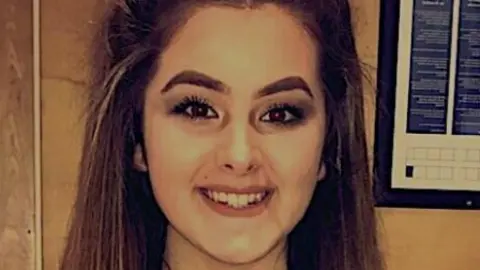 Family handout
This article contains details of suicide and self-harm
Emily Moore was in hospital to protect her from herself, but failings in her care contributed to her taking her life days after her 18th birthday. What went wrong?
Emily had been a bright and happy girl, a lover of animals and good student brimming with excitement for her future.
But in 2017, the 15-year-old from Shildon, County Durham became severely mentally ill.
Convinced she was worthless, undeserving of care and to blame for the problems faced by others, she entered a spiral of self-harm and apparent suicide attempts.
The change in their daughter was a shock for her parents, David and Susan, with therapy and medication failing to help.
By March 2019, her risk to herself was so high, detention at a mental health hospital was the only option.
Her inquest held in Crook over the past four weeks has heard there was a litany of failures over the following 11 months, all of which contributed to her death.
They began when she was admitted to her first facility, West Lane Hospital in Middlesbrough, run by the Tees, Esk and Wear Valleys NHS Foundation Trust (TEWV).
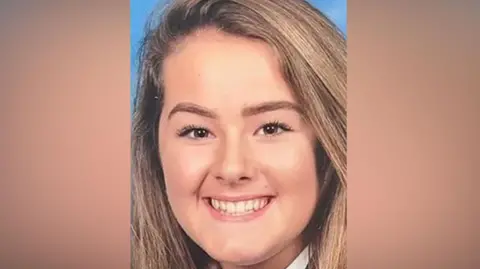 Family handout
She later complained of being treated "like dirt" during her four-month stay on the hospital's 14-bed Newberry ward.
Her father David said it was a chaotic "hell-hole" and he even held a protest outside saying the hospital was killing his daughter.
Nurses did not care, he said, teenage patients were left to sit for hours in their pyjamas watching TV while staff laughed and booked holidays in another room.
Emily, who had by now been diagnosed with emerging emotionally unstable personality disorder (EUPD), needed consistency and compassion but got neither, she and her family said.
Staff would stand by and watch as she repeatedly harmed herself, swear at her and say she was "just looking for attention" and "obviously liked being this way", she said.
- If you are affected by any issues raised in this article, help can be found at BBC Action Line
They treated her like a naughty child, her fellow patients said.
Where once there had been glimpses of a life beyond the illness, when Emily talked of being a mental health practitioner or paramedic, her recovery slipped further away and her interest in her future faded.
Other patients, who all eulogised Emily as loving and kind, said the hospital was "awful" and they had to look after each other as they did not feel the staff would.
Doctors felt Emily would benefit from certain therapies, but they were unavailable as the hospital's team of psychologists was short-staffed.
Some of West Lane's problems had been seeded years before, when Emily was still a happy child enjoying ballet and gymnastics.
A new community crisis team set up in 2014 resulted in only the most challenging of children being admitted to hospital, while experienced staff left to work on the new service.
More complex children were being cared for by less experienced nurses, and the problem worsened in 2017 when a second community team was created.
So pressure was already mounting when, in November 2018, 33 of the 49 staff from West Lane's secure Westwood ward were suspended, having ramifications for the whole site.
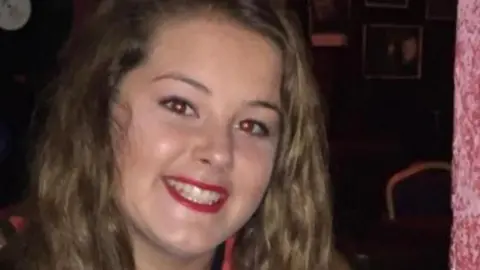 Family handout
A probe was launched after a young patient complained of being dragged across the floor by staff.
Nursing director Elizabeth Moody said footage of the incident and others identified by the investigation was abhorrent, the restraints a far remove from any training.
Staff were moved around to fill the holes along with an increase in the use of bank workers.
Amid an HR-process imposed silence, rumours circulated the workers had been suspended unfairly, lowering morale and, crucially, increasing anxiety about restraining young people.
Directors brought in managers who had successfully overseen changes at other struggling hospitals to try and improve things.
One of the troubleshooters, consultant clinical psychologist Dr Amanda Wild told Emily's inquest she repeatedly flagged concerns to bosses.
There was no sense of organisation or there being a culture of care, she said, with every day spent just trying to hold things together.
 Family Handout
The issue was not so much staffing levels but rather staffing skills sets, fellow problem-solver matron Alison McIntyre said, with Emily not getting the care she deserved.
Some early improvements were noted but, in May 2019, the service took several steps backwards when 29 of the suspended staff returned.
While some accepted they had been at fault about half did not, with the narrative they had been harshly treated permeating further through the workforce.
Uncertainty about when and how to restrain young people, especially when they were actively hurting themselves, remained.
One of Emily's complaints was about staff just watching as she self-harmed, saying they would wait for her to tire herself out.
Even experienced doctors said it was a traumatic place, and then in June 2018, Emily suffered another blow - the death of her 17-year-old friend Christie Harnett.
Inquests into the death of Christie and another patient Nadia Sharif, who died on the ward two months later, will be held at a future date, but her friend's death had a huge impact on Emily.
As well as incalculable sadness, Emily also felt guilty about it, one of the insidious symptoms of her illness.
 Family handouts
In July 2019, Emily was moved to a psychiatric intensive care unit at Ferndene in Prudhoe, run by Cumbria, Northumberland Tyne and Wear NHS Foundation Trust (CNTW).
When she arrived she was quiet and nervous, traumatised from her time at West Lane.
The following month, the Care Quality Commission, which had rated West Lane as "good" a year before, ordered it be shut down as unsafe.
Emily was 100% happier at Ferndene, her family and friends said.
She had a timetable offering structure and routine, education sessions which she enjoyed and, vitally, the feeling people actually cared about her.
She was still deeply unwell and a big risk to herself, but the depression she had developed at West Lane disappeared and steps were being taken to help her understand and manage the complicated and unpredictable triggers for her self-harm.
 Family handout
But her anxiety began to intensify again as her 18th birthday loomed, when she would leave children's services and come under the auspices of adult care.
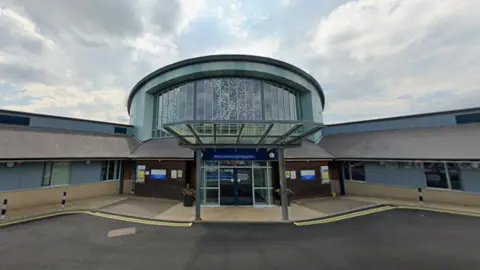
She was not well enough to return home or move into a supported community-based placement, with a transfer to TEWV's Lanchester Road Hospital in Durham ultimately ruled the "least worst option".
Neither Emily nor her family wanted a return to TEWV's care but they had no choice, and she moved into the 20-bed female only Tunstall ward on 6 February 2020, two days after her birthday.
Dr Francesca Denman, a psychiatrist who reviewed Emily's care after her death, said the move was done too quickly and at the wrong time, completed purely because of her age and not for the right clinical reasons.
For a person with EUPD, any change is risky, new therapeutic relationships have to be formed and it needs to be carefully managed.
Nevertheless, Emily's first week at Lanchester Road was incident-free, but then came 13 February.
 Google
Emily's observation level had been reduced from constant to regular check ins, and a plan was made the day before that she should be out in the ward's communal areas rather than alone in her room.
She needed to be distracted with activities, left alone she would ruminate, the voice in her head telling her to harm herself crescendoing until she acted.
But on the morning and early afternoon of 13 February, staff did not follow her care plan, with some later confusion about whether they even knew of it, and she was allowed to stay in her room on her phone.
As well as being left to develop her thoughts, the neglect of her plan also fuelled her EUPD-driven perception that people did not care about her and everyone wanted her dead.
It was already an emotional day for Emily as it would have been the 18th birthday of her West Lane friend Christie.
Emily had posted a moving tribute to Christie on Facebook that morning with the final line alarming her father.
"Until we meet again," Emily had written.
 Family handout
David called the ward to ask them to keep an extra eye on her, a nurse telling him they would and not to worry.
The call was not recorded in her care log as it should have been, but the nurse did tell colleagues and went to check on Emily, finding her settled and not upset.
Emily was last seen alive in her room at about 14:10 GMT.
Ten minutes later, a healthcare assistant looked through the window of her bedroom door but could not see her.
Because she was not concerned about Emily, the teenager having appeared "bright" earlier, the worker went to see if she could find Emily in any of the communal areas.
It was only when she could not that she returned and actually went into Emily's room.
Emily was discovered unconscious in the en suite bathroom and declared dead two days later.
It is impossible to say whether she actually intended to take her life or if it was a self-harm attempt gone tragically too far.
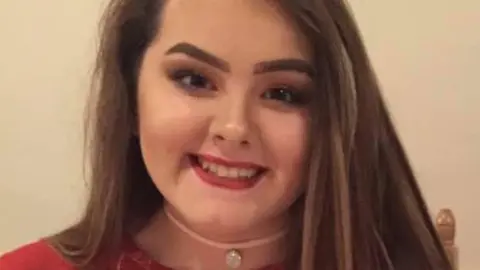 Family handout
Emily's illness was "extremely unpleasant" and severe, Denman said, and her chance of dying from it was always more likely than not.
Treatment is always complex, admission to a hospital brings as many risks as trying to treat someone at home and is a "desperate last resort", she said.
Even if Emily's care had been optimal, on the "balance of probabilities" she "would have taken her life when she did and the way she did", the expert said.
But her traumatic experiences at West Lane, the death of her friend Christie, the move to a new hospital and the failure to follow her care plan at Lanchester Road were also all factors which made her death even more likely, the expert concluded.
David and Susan, who sat through every day of the inquest, are adamant their daughter was failed by the services meant to protect her.
With their conclusions, the jury clearly agreed.