Summary

  1. Trump considering resuming strikes in Iran - Wall Street Journalpublished at 01:53 BST 13 April

    Trump is reportedly considering resuming airstrikes in Iran after talks over the weekend in Pakistan failed to bring a lasting end to the war.

    The Wall Street Journal reports, citing unnamed US officials, that the president is considering strikes in addition to other measures including the blockade on the Strait of Hormuz, which Trump announced on Sunday.

    The White House told the BBC all options are on the table when asked about the newspaper's report.

    "The president has already ordered a naval blockade on the Strait of Hormuz, ending the Iranian extortion, and wisely keeps all additional options on the table. Anyone who is telling the Wall Street Journal that they know what President Trump will do next is purely speculating," White House spokesperson Olivia Wales says.

  2. Who is still connected to the internet in Iran?published at 01:21 BST 13 April

    Ghoncheh Habibiazad
    Senior reporter, BBC Persian

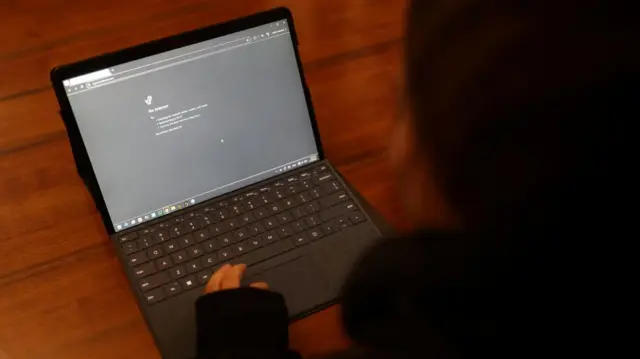
    Iran has been under a near-total internet outage since the war began on 28 February.

    Iranian authorities often cite reasons such as protecting the country from cyberattacks to restrict internet access.

    But these measures also limit the flow of information among citizens and make it harder for those who rely on the internet to provide for themselves and their families.

    Those who remain connected can be broadly divided into two groups: those who have been granted access, and those paying a lot.

    The BBC understands that the first group mainly consists of officials, pro-establishment users, journalists, and more recently, some academics and university students.

    Some in the first group stay connected with authorised SIM cards and selective institutional access.

    The second group is mostly ordinary citizens paying a lot to keep their connections, using satellite internet such as Starlink, or connections routed through it.

    Internet access via Starlink is being sold at around $6 (£4.50) per gigabyte - a high price in a country where the average monthly salary is estimated to be between $200 and $300.

    Using Starlink in Iran can lead to up to two years in prison, and authorities have reportedly confiscated hundreds of devices since the war began.

    An Internet error is displayed on a laptop placed on a timber table.Image source, Reuters
  3. Iranian parliamentary speaker taunts Trump in blockade postpublished at 00:56 BST 13 April

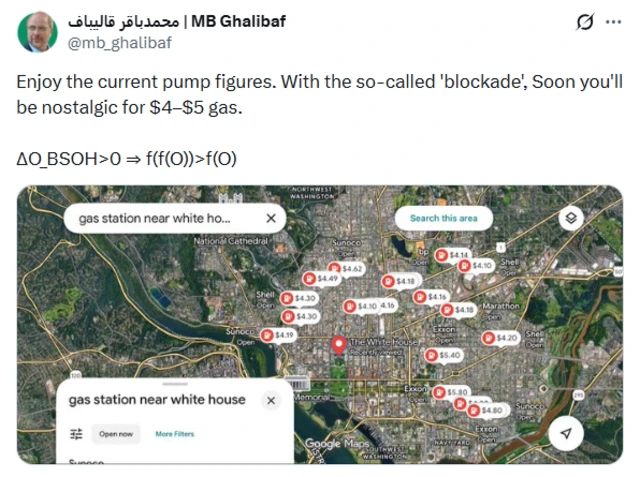
    Mohammad Bagher Ghalibaf, the Iranian parliamentary speaker who led negotiations in Islamabad, has mocked Donald Trump in a post on X referencing US plans to blockade the Strait of Hormuz.

    "Enjoy the current pump figures. With the so-called 'blockade', Soon you'll be nostalgic for $4–$5 gas," the post says, accompanied by a map appearing to show petrol prices around Washington DC.

    In an earlier statement carried by Iranian outlets Ghalibaf said Iran will not "surrender under threats".

    A screenshot of a post on X by Mohammad Bagher Ghalibaf that reads "Enjoy the current pump figures. With the so-called 'blockade', Soon you'll be nostalgic for $4–$5 gas" and is accompanied by an aerial street map that shows petrol station prices in Washington DC.Image source, X
  4. Analysis

    Trump's next move poses risks for US after failed talkspublished at 00:48 BST 13 April

    Anthony Zurcher
    North America correspondent

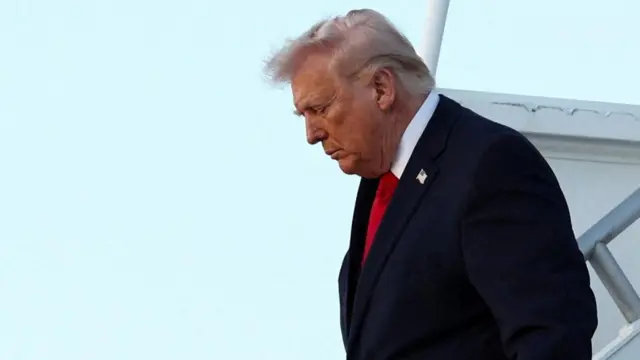
    U.S. President Donald Trump arrives at Miami International AirportImage source, Reu

    After a diplomatic team led by Vice-President JD Vance tried, and failed, to reach a negotiated agreement to end the US war with Iran on Saturday, President Donald Trump had to decide his next move.

    That came on Sunday morning, in a series of Truth Social posts.

    The US will impose a naval blockade, he wrote.

    "No one who pays an illegal toll will have safe passage on the high seas."

    He also said that the US would continue clearing mines from the Strait of Hormuz in order to ensure a safe passage for allied shipping.

    The US military, he added, was "locked and loaded" and prepared to resume attacks against Iran at an "appropriate moment".

    He went on to say that while progress had been made in the 20-hour negotiations in Islamabad, Iran would not meet the US demand that it abandon its nuclear ambitions.

    While his posts didn't have the apocalyptic bluster of last week's threat to end Iranian civilisation, they pose a number of new challenges – and risks – for the American side.

    You can read more of Anthony's analysis here

  5. Oil prices climb above $100 as tensions escalatepublished at 00:40 BST 13 April

    Peter Hoskins
    Business reporter, Singapore

    Oil prices jumped above $100 a barrel as energy markets reopened after talks between the US and Iran ended without a new deal and Donald Trump said he would blockade Iranian ports.

    Global benchmark Brent crude is up by 7.5% at $102.37, while West Texas Intermediate is 8.3% higher at $104.56.

    The failure of negotiations at the weekend raises concerns that the war will continue to deepen the energy crisis.

    Read more here.

  6. US says it will blockade Iranian ports on Mondaypublished at 00:31 BST 13 April

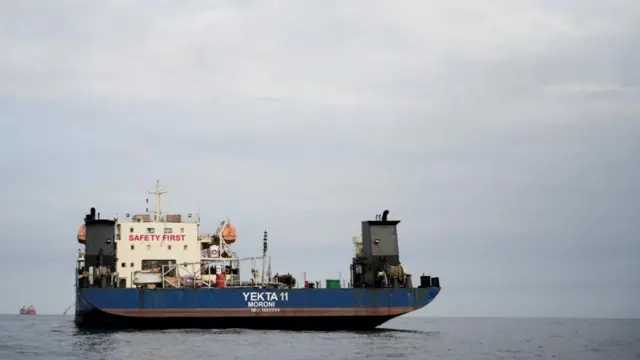
    Vessel at the Strait of Hormuz, off the coast of Oman’s Musandam provinceImage source, Reuters

    The US military says it will start a blockade of Iranian ports on Monday, but that it will "not impede" vessels transiting the Strait of Hormuz travelling to or from other countries.

    Here are the latest developments:

    • US Central Command says the blockade of traffic entering and exiting Iranian ports will begin at 10:00 ET (14:00 GMT) on Monday
    • US President Donald Trump says his order is in response to Iran "knowingly failing" to reopen the Strait of Hormuz. He also warns the US Navy will "blow to hell" any Iranians that attack them and will interdict any ship found paying transit tolls to Iran
    • Oil prises rise above $100 following the escalation, which follows the collapse of peace talks in Pakistan this weekend
    • Trump says direct talks with Iran in Islamabad failed because "Iran is unwilling to give up its nuclear ambitions"
    • Iranian Foreign Minister Abbas Araghchi says Tehran engaged in "good faith" with the US during peace talks, while the speaker of Iran's parliament, Mohammad Bagher Ghalibaf, who led the negotiations, says Iran will not "surrender under threats"
    • Iran’s Revolutionary Guard says military vessels approaching the strait will be considered a violation of the current ceasefire