Summary

  1. Starmer sets up new cabinet committee for impacts of warpublished at 08:39 BST 14 April

    Henry Zeffman
    Chief political correspondent
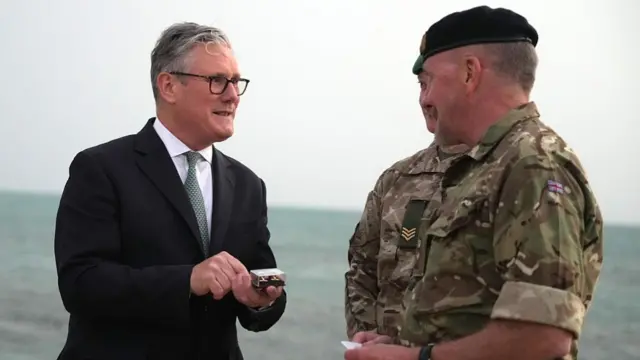
    Keir Starmer stood on a beach talking to two UK military personnel, in camouflage military uniformImage source, Getty Images
    Image caption,

    Keir Starmer spoke with military personnel and Middle Eastern leaders on a three-day trip to the Gulf earlier in April

    Keir Starmer has set up a new cabinet committee to deal with the fall-out from the war in the Middle East, in a sign that the government expects the conflict to have a lasting impact on the British economy.

    The prime minister is chairing the first meeting of the Middle East Response Committee today. Its formation is seen within government as a recognition that the crisis is likely to last for some time.

    It is fairly rare for the government to form new cabinet committees to handle specific crises. Under Boris Johnson cabinet committees were formed to handle the response to the coronavirus pandemic and to plan for a possible no-deal Brexit.
  2. Oil back under $100 a barrel - but things could get much worse, warns IEApublished at 08:26 BST 14 April

    Dearbail Jordan
    Senior business and economics reporter

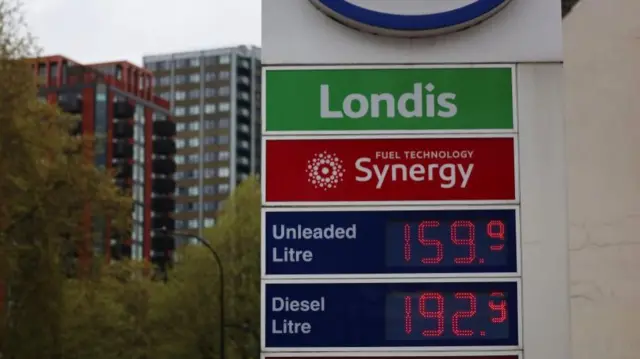
    Petrol price board showing petrol at 159.9 pence and diesel at 192.9 penceImage source, EPA
    Image caption,

    Petrol prices have risen in the UK, and across the world, since the war began

    While oil prices have retreated from over $100 a barrel, the cost of crude is still 36% more expensive than it was before the Iran war began on 28 February – and it could get worse, according to the International Energy Agency (IEA).

    IEA executive director Fatih Birol suggests that current prices do not reflect the severity of what is going on in the Middle East.

    "April may well be even worse than March, because during the month of March, we have already received cargoes which were loaded well before the crisis started... and during the month of April, nothing is being loaded," he says.

    "The longer the disruption is, the more severe the problem becomes."

    Last month, all 32 members of the IEA agreed to release 400 million barrels of their oil stocks to ease supply constraints and Birol signalled that the agency would be prepared to act again.

    "400m barrels is only 20% of our resource," he says. "We have still 80% in our pocket. We are assessing the decision. If and when we decide it is the time, we are ready to act and act immediately."

  3. No legal basis to block the Strait of Hormuz - UNpublished at 08:13 BST 14 April

    The UN's maritime agency, the International Maritime Organisation, says no country has a legal right to block shipping in straits used for international transit.

    Secretary-General Arsenio Dominguez tells BBC Radio 4's Today programme it's a dangerous precedent to set.

    "I do understand there is a conflict going on there, but there is still no legal basis in international law to take any actions to block any strait used for international navigation," Dominguez says.

    "The more retaliation measures that take place, the more the concern grows for the 20,000 seafarers still trapped in the Persian Gulf and of course everyone else around the world who continues to be impacted economically.

    "The longer this goes, the longer we all will feel this impact."

    This Flourish post cannot be displayed in your browser. Please enable Javascript or try a different browser.

  4. Tanker passes through Strait of Hormuz, according to tracking datapublished at 07:23 BST 14 April

    On Sunday, President Donald Trump said the US navy would block "any and all ships trying to enter, or leave, the Strait of Hormuz".

    He later said the US would blockade ships "entering or exiting Iranian ports" from Monday.

    US Central Command confirmed the blockade of "all maritime traffic entering and exiting Iranian ports". But it said it "will not impede freedom of navigation for vessels transiting the Strait of Hormuz to and from non-Iranian ports".

    On Monday four vessels crossed the strait in the hours before the blockade came into force at 14:00 GMT (15:00 BST). All four were tankers carrying either oil, gas or chemicals, according to tracking data provided by MarineTraffic.

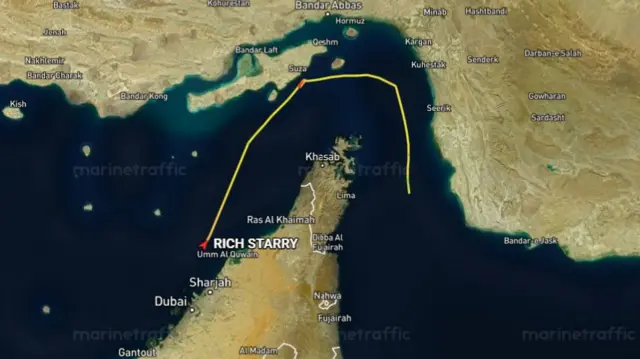
    On Tuesday, another tanker passed through, according to shipping data. The Rich Starry's last port of call was in the UAE and its reported destination is China., external

    The Rich Starry tanker passed through the Strait of Hormuz, according to tracking from MarineTraffic on TuesdayImage source, MarineTraffic
    Image caption,

    The Rich Starry tanker passed through the Strait of Hormuz, according to tracking from MarineTraffic on Tuesday

  5. US blockade of Iranian ports is 'grave violation' of sovereignty - Iran's UN ambassadorpublished at 06:50 BST 14 April

    Iran's ambassador to the United Nations has condemned the US blockade on Iranian ports as a "grave violation" of its sovereignty.

    In a letter to the UN Secretary General Antonio Guterres, Amir Saeid Iravani says the "unlawful" blockade "constitutes a serious violation of the fundamental principles of the international law of the sea".

    On Monday, Guterres called on "all parties" to respect freedom of navigation in the Strait of Hormuz - a critical waterway for global oil shipping.

    The US military imposed the blockade on Iranian ports from 10:00 ET (14:00 GMT) on Monday, after peace talks with Iran in Pakistan broke down.

    The US Central Command said the blockade will be enforced "impartially against vessels of all nations entering or departing Iranian ports or coastal areas", but it will "not impede" vessels in the Strait of Hormuz travelling "to and from non-Iranian ports".

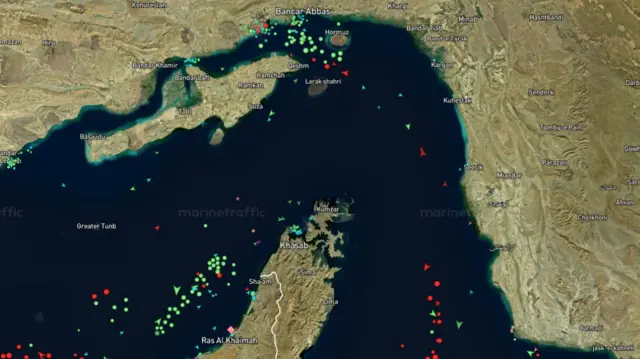
    A screenshot of tracking data on MarineTraffic on Tuesday morningImage source, MarineTraffic
    Image caption,

    Tracking data on MarineTraffic, as of 06:45 BST on Tuesday, shows very few ships passing through the Strait of Hormuz

  6. Israeli and Lebanese envoys to hold rare talks in USpublished at 05:58 BST 14 April

    Yolande Knell
    Middle East correspondent, in Jerusalem

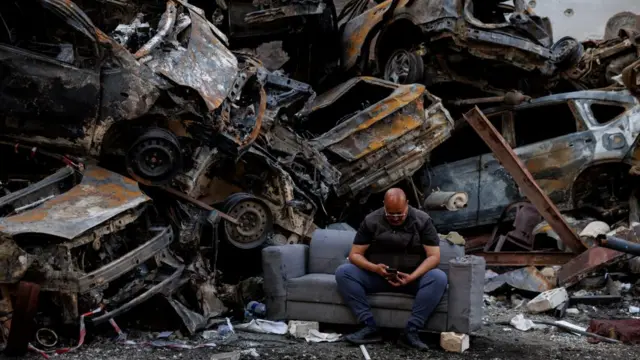
    A man sits beside piled damaged cars at the site of an Israeli strike in BeirutImage source, Reuters

    Talks between Lebanese and Israeli ambassadors to the US are expected to take place in Washington later today.

    It will be the first time in decades that officials from the two countries – which don’t have diplomatic relations – meet face-to-face for direct negotiations.

    The US top diplomat, Marco Rubio, is expected to join these rare direct talks at the State Department. They come just days after the US and Iran failed to reach an agreement to end the broader Middle East war.

    The Lebanese and Israeli ambassadors are due to discuss the possibility of higher-level direct talks between their countries.

    The Lebanese authorities first want to broker a ceasefire in Israel’s ongoing war with Hezbollah. However, Israel has ruled that out, insisting that the Iran-backed group must be disarmed. And Hezbollah has rejected the talks and said it won't abide by anything that's agreed.

    The latest fighting between Israel and Hezbollah has been devastating for Lebanon. More than a million people have been displaced and more than 2,000 killed – including about 500 women, children and medical workers.

  7. US says 'ball is in Iran's court' as blockade of Iranian ports comes into effectpublished at 05:52 BST 14 April

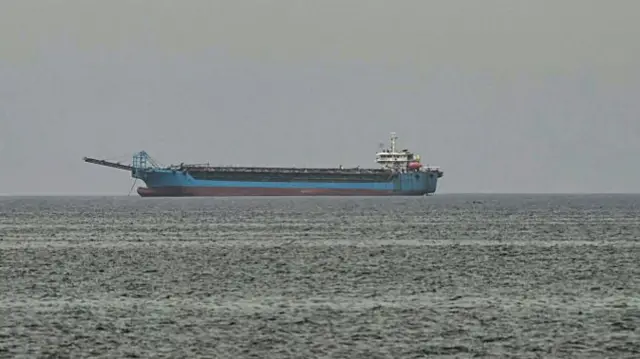
    A ship is seen off the coast of SharjahImage source, Getty Images

    With the US blockade of Iranian ports now under way after weekend talks failed to reach a peace deal, Vice-President JD Vance says "the ball is in Iran's court" and Tehran has to be flexible to Washington's demands.

    Here are the latest developments:

    • Vance has accused Iran of "economic terrorism" over its blockade of the Strait of Hormuz in an interview with Fox News
    • "Well, as the president of the United States showed, two can play at that game,” he said. "If the Iranians are going to try to engage in economic terrorism, we’re going to abide by the simple principle that no Iranian ships are getting out, either"
    • The New York Times reports that Iran has proposed suspending its nuclear activity for up to five years - an offer that was rejected by the US which insisted on 20 years. The BBC has reached out to the White House for comment
    • US Secretary of State Marco Rubio will take part in Tuesday's meeting between the Lebanese and Israeli ambassadors to Washington in discuss the conflict in southern Lebanon
    • The Israeli military says one of its soldiers was killed during combat in southern Lebanon, while three others were injured
    • Oil prices dipped in early Asian trade as hopes of further peace talks between the US and Iran eased concerns about the war's escalation
    • New polling by the Hebrew University of Jerusalem points to a war-weariness among Israelis, read our full story

    Stay with us as we bring you more updates.

  8. Israeli military reports death of soldier in Lebanonpublished at 04:52 BST 14 April

    The Israel Defense Forces (IDF) says one of its soldiers was killed during combat in southern Lebanon, while three others were injured.

    "In the incident in which Sergeant Major (Res.) Ayal Uriel Bianco fell, a reservist was moderately injured, and two additional reservists were lightly injured," the IDF wrote on Telegram.

    It added that the wounded soldiers have been taken to hospital and their families have been notified.

  9. Israelis war-weary but most oppose Iran ceasefire, poll suggestspublished at 03:53 BST 14 April

    Nick Beake
    Reporting from Jerusalem

    New polling by the Hebrew University of Jerusalem points to a war-weariness among Israelis.

    But it also suggests two thirds oppose the current tentative truce between Washington and Tehran.

    The pollsters say they spoke to 1,312 Israelis (1,084 Jews, 228 Arabs) on 9 and 10 April.

    The vast majority surveyed said they believed neither Iran nor Hezbollah in Lebanon had been severely weakened by the recent US and Israeli bombardment.

    Some 39.5% said attacks on Tehran must continue and 41.4% said the ceasefire should be respected.

    "Despair" was the word a third of respondents chose when asked to describe their current emotion, followed by "confusion" and "anger".

    "Hope" was fourth.

  10. Iran proposes suspending nuclear activity for up to five years - reportpublished at 02:51 BST 14 April

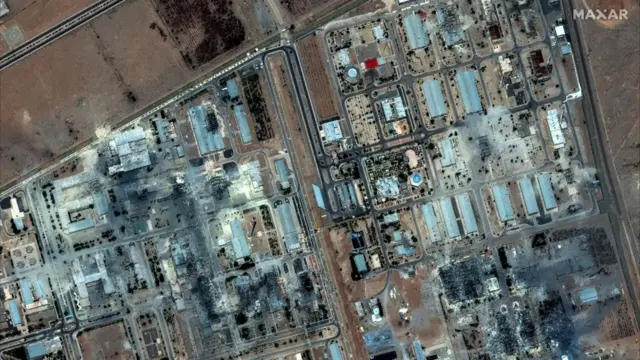
    Maxar satellite imagery shows extensive building damage across the Isfahan nuclear technology center in June 2025Image source, Getty Images

    Iran has proposed suspending uranium enrichment for up to five years, an offer rejected by the US which insisted on 20 years, according to the New York Times citing senior Iranian and US officials.

    The report adds that the US and Iran traded proposals for suspending Tehran's nuclear activity during talks in Pakistan, but remained far apart from agreement.

    But discussions suggest that there may still be a path to a peace deal, with a possible second round of face-to-face talks.

    The BBC has contacted the White House for comment.

    Iran's nuclear ambitions have been a major sticking point of the conflict, with Donald Trump reiterating on Sunday the US will ensure that Iran will not have a nuclear weapon.

  11. Oil prices edge lowerpublished at 02:18 BST 14 April

    Oil prices dipped in early Asian trade as hopes of further peace talks between the US and Iran eased concerns about the war's escalation.

    The price of global benchmark Brent crude fell by 2.2% to $97.20 (£71.93) a barrel, while US-traded oil dropped by 2.2% to around $96.90.

    Donald Trump said on Monday that Washington had "been called by the other side", adding that Iran would like to make a deal "very badly".

    Oil had jumped above $100 on Monday following Trump's order to block Iranian shipments after weekend negotiations failed.

    Asian stock markets also edged higher. The Nikkei 225 index in Japan gained by 2.4% while South Korea's Kospi exchange jumped by more than 3%.

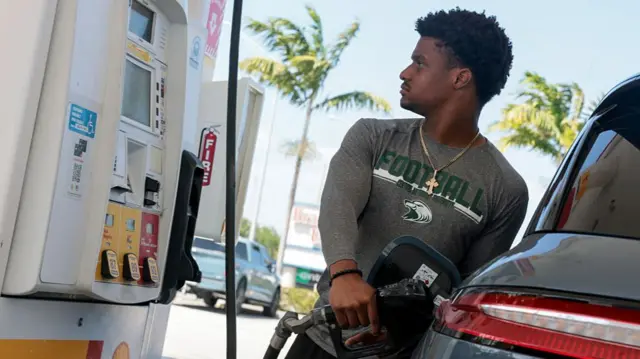
    A man watches the price meter as he fills his vehicle at a petrol stationImage source, Getty Images
  12. Australia's Qantas lifts fuel cost outlookpublished at 01:56 BST 14 April

    Osmond Chia
    Business reporter

    Australia's Qantas Airways said on Tuesday that it has raised its outlook for energy costs after jet fuel prices more than doubled since the Iran war started.

    The carrier estimated its fuel bill for the second half of its financial year to be between A$3.1bn (£1.63bn; $2.2bn) and A$3.3bn, up from its earlier forecast.

    Qantas has lifted fares and shifted flights to routes with heavy demand like to destinations in Europe, while cutting back on some domestic trips.

    Airlines have been especially hard hit by the Iran war's oil crunch as energy costs typically account for at least a quarter of expenses.

    Ticket prices of carriers across the board have risen since the war.

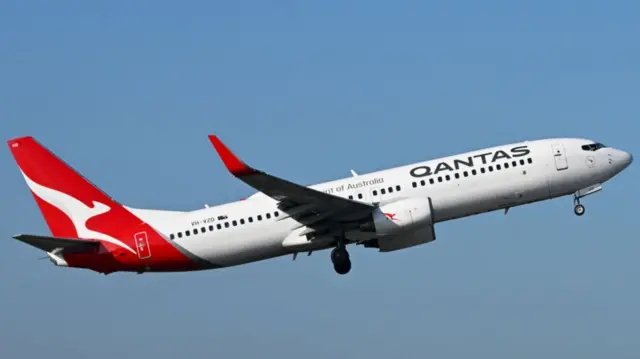
    A Qantas plane pictured in mid-air during take-offImage source, Getty Images
  13. US State Department confirms Rubio to take part in Lebanon-Israel talkspublished at 01:21 BST 14 April

    The US State Department has confirmed that Secretary of State Marco Rubio will take part in Tuesday's meeting between the Lebanese and Israeli ambassadors to Washington.

    Israel's Yechiel Leiter and Lebanon's Nada Hamadeh Moawad will join Rubio for talks set for 11:30 ET (15:30 GMT) at the State Department.

    The purpose of the talks is to end the conflict engulfing southern Lebanon where Israel is striking Hezbollah positions, forcing hundreds of thousands of civilians to flee, killing more than 2,000 and injuring more than 6,500, according to Lebanon's health ministry.

    On Monday, Hezbollah leader Naim Qassem urged Lebanon to cancel the planned meeting with Israel. The group rejects the idea of direct negotiations with Israel.

    At 14:30 ET, Rubio will also meet with Egyptian Foreign Minister Badr Abdelatty.

    You can read more about the talks and the background to the conflict between Israel and Hezbollah here: Lebanon enters talks with Israel but with no cards to play

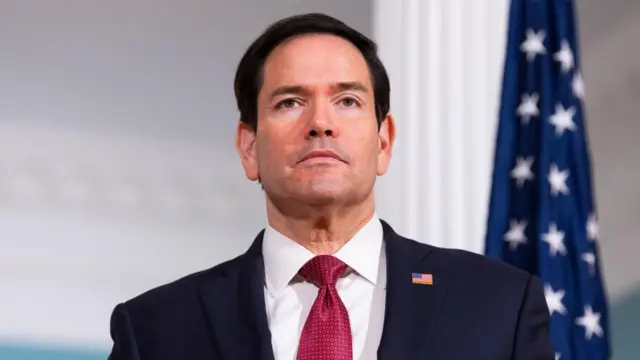
    U.S. Secretary of State Marco Rubio at the State Department in Washington, D.C., U.S., April 7, 2026Image source, Reuters
  14. BBC joins paramedics in Lebanon after Israeli strikespublished at 00:37 BST 14 April

    Warning: distressing content

    BBC Middle East correspondent Hugo Bachega is in Lebanon and joins paramedics as they sift through the rubble left from intense Israeli airstrikes.

    He says the attacks in Beirut and across the south of the country have forced one in five people to flee.

    "This is our land and we cannot give it up easily to the enemy," a woman hunkered down in her village tells him through tears.

  15. Vance accuses Iran of 'economic terrorism'published at 23:55 BST 13 April

    We've just heard from US Vice-President JD Vance who is accusing the Iranian government of engaging in an "act of economic terrorism" by blocking traffic through the Strait of Hormuz.

    Vance tells Fox News' Brett Baier that President Donald Trump has shown that "two could play at that game".

    He says if the Iranians "engage in economic terrorism" the US will abide the principle that "no Iranian ships are getting out either".

    Vance also discusses the talks with Iran over the weekend saying a lot of progress was made.

    "The ball is in Iran's court," he says.

    He says Iran has to be flexible and accept the "critical things" the US demands - US control of Iran's enriched uranium, and a verification mechanism to ensure it does not develop a nuclear weapon.

  16. Iran expert says US is trying to get leverage with blockadepublished at 23:27 BST 13 April

    In an interview with BBC Radio 4 today, Abas Aslani, a senior fellow at the Center for Middle East Strategic Studies in Tehran, was asked how Iran sees the US blockade.

    Aslani says Iran sees the US blockade as its attempt to "create leverage in order to get more compromises from Tehran at the negotiating table".

    Aslani added that the US is trying to adopt a similar tactic to one it used in Venezuela, but what makes Iran's strategy different is that if "Iranian vessels or tankers are targeted or stopped, Iran will respond in kind".

  17. US energy secretary says oil prices likely to rise more before coming downpublished at 23:01 BST 13 April

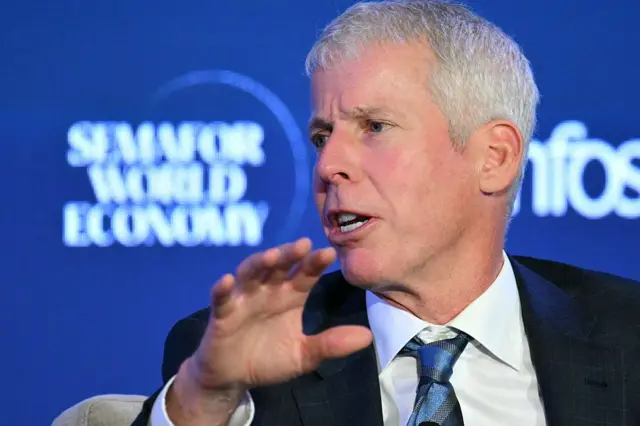
    A man with white hair, a loosely done tie and a dark suit gestures against a blue backgroundImage source, Getty Images

    US Energy Secretary Chris Wright said at an economic forum today in Washington DC that oil prices will remain high and possibly keep rising until there is "meaningful ship traffic through the Straits of Hormuz".

    We'll probably see oil prices hit their peak sometime in the next few weeks before they start coming down, he said.

    "But once the conflict ends, and energy starts flowing again, you'll start to see downward pressure, but it will take some time," he said.

    "The longer the conflict goes, the longer the rebound is."

  18. Newshour: Direct US-Iran talks could resume as early as this week, research fellow sayspublished at 22:38 BST 13 April

    Direct peace talks between Iran and the United States could resume as soon as this week, a research fellow at the University of Tehran has told the BBC World Service.

    Mohammad Eslami was speaking to Newshour's Owen Bennett-Jones after a US blockade of the Iranian coastline came into force.

    Eslami said the US blockade, which comes in the wake of failed peace talks in Pakistan over the weekend, was "a kind of pressure on the Iranian leadership while they are discussing back channels with the Americans about some kind of diplomatic settlements for the crisis".

    "However, it seems that Donald Trump and his administration cannot open the Strait of Hormuz by blockade. And also, closing the Strait of Hormuz, they cannot continue this strategy for long term," he said.

    He added that the Iranian government remains in talks with the Pakistan government, as well as the UK and France.

    "These are ongoing discussions between Iran and these countries," he said.

    Citing his own sources inside the Iranian foreign ministry, Eslami speculated that direct talks could be held in Islamabad or Geneva "maybe this week".

  19. UN Secretary General urges US and Iran to return to negotiationspublished at 22:19 BST 13 April

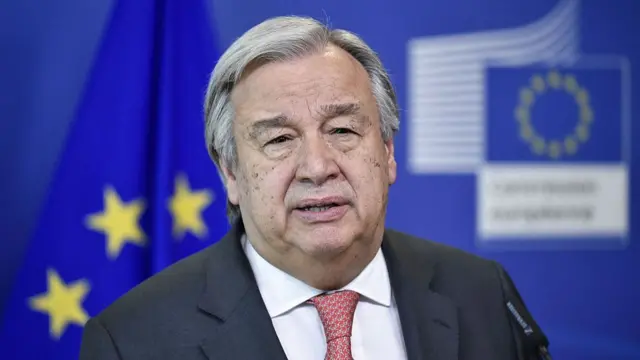
    Guterres stands in front of EU flagImage source, Getty Images

    United Nations Secretary-General António Guterres is calling for the US and Iran to resume negotiations in hopes to end the war, claiming that it is "clear" that "there is no military solution" to the war.

    Guterres says the ceasefire "must absolutely be preserved" and "all violations must cease", adding: "I call for resumption of talks for an agreement to be reached."

    The secretary-general also reminds all nations to "respect the freedom of navigation, including in the Strait of Hormuz, in line with international law."

  20. Iran warns ‘enemy’ of capabilities ‘not yet revealed’ if the war starts againpublished at 22:12 BST 13 April

    Ghoncheh Habibiazad
    Senior reporter, BBC Persian

    Iran’s Islamic Revolutionary Guard Corps (IRGC) has warned that Iran has not "revealed" many of its "capabilities" and said that "if the war continues, we will unveil capacities that the enemy has no conception of".

    According to reports by Iranian outlets, IRGC spokesperson Hossein Mohebbi says that Iran will introduce "modern" methods of warfare that the "enemy will have very limited ability" to counter.