Summary

  1. UK not supporting blockade of Iranian ports, says Starmerpublished at 09:04 BST 13 April

    Starmer says the UK is "not supporting a blockade" of Iranian ports.

    He says the UK's response is focused on getting the Strait of Hormuz opened because "that's the way we get energy prices down as quickly as possible".

    Asked if he holds US President Donald Trump personally responsible for the impact on UK energy bills, Starmer doesn't answer directly. He says the "single most important thing" he can do is to bring countries together to call for de-escalation and for the opening of the strait.

    He adds that it is Iran who has caused the restriction of traffic through the Gulf, and says the UK is not getting dragged into the war.
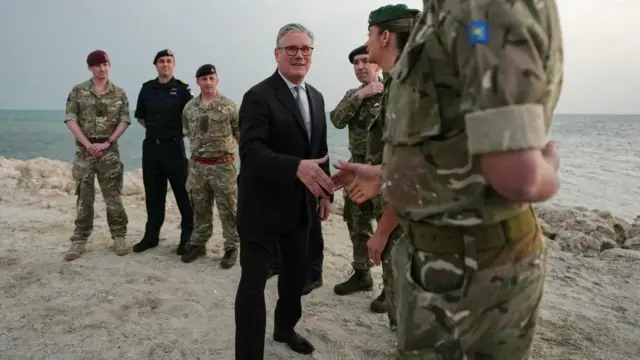
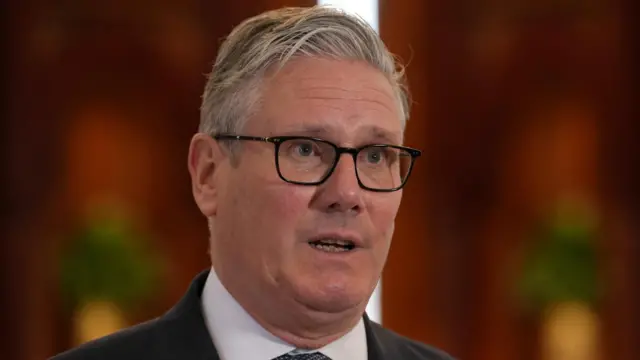
    Britain's Prime Minister Keir Starmer meets military personnel on a beach in Bahrain, April 9Image source, Reuters
  2. Starmer speaking nowpublished at 08:50 BST 13 April
    Breaking

    Starmer is speaking to BBC Radio 5 Live now.

    You can listen live at the top of the page - just tap the watch live button.

  3. Iran's armed forces say US blockade is 'act of piracy'published at 08:48 BST 13 April

    While we wait for Starmer to speak, here's an update from Iran.

    Iran's armed forces have threatened to retaliate against the proposed US blockade of its ports, calling Washington's threats illegal and describing them as an act of piracy.

    In a statement published by the state IRIB news agency, Iran says it will continue to control the Strait of Hormuz, even after the war ends, and that enemy-affiliated vessels do not have the right to pass through Iranian territorial waters.

    In a warning to other Gulf nations, Iran's military says the security of ports in the region "is either for everyone or no one" and if Iranian ports are targeted by the US, "no port in the Persian Gulf and the Sea of Oman will be safe".

  4. Starmer to speak after return from Gulf regionpublished at 08:29 BST 13 April

    Britain's Prime Minister Keir Starmer speaks to the media at the airport in Doha, Qatar, April 10Image source, Reuters

    We're due to hear from UK Prime Minister Keir Starmer shortly as he speaks to BBC Radio 5 Live, following his visit to the Gulf region last week.

    Starmer is in Greater Manchester this morning, speaking to local people about cost-of-living pressures.

    But he's expected to be asked about the UK's response to Donald Trump's latest threats to enforce a military blockade of Iranian ports, after peace talks between Iran and the US broke down.

    We'll bring you the key lines from his interview as soon as we have them.

    You can also listen live by tapping Watch Live at the top of the page.

  5. What is a naval blockade and how would it work?published at 08:19 BST 13 April

    The US Navy Commander's handbook on naval operations law from 2022 defines a blockade as a "belligerent operation to prevent vessels and/or aircraft of all States, enemy and neutral, from entering or exiting specified ports, airfields, or coastal areas belonging to, occupied by, or under the control of an enemy State".

    US Central Command (Centcom) appears to be following this guidance, saying that the operation will be: "Enforced impartially against vessels of all nations entering or departing Iranian ports and coastal areas, including all Iranian ports on the Gulf and Gulf of Oman."

    Centcom added that US forces would not impede the freedom of vessels transiting to and from non-Iranian ports, and that commercial mariners would receive a formal notice before the blockade starts.

    President Trump said other countries would be involved in blockading the strait, but did not say which ones. The BBC understands that the UK will not be involved in the blockade.

    We have more information on what the US is proposing in our article.

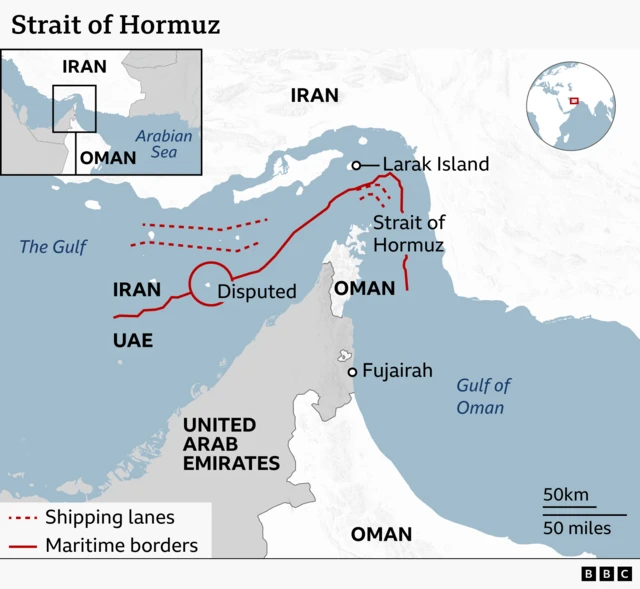
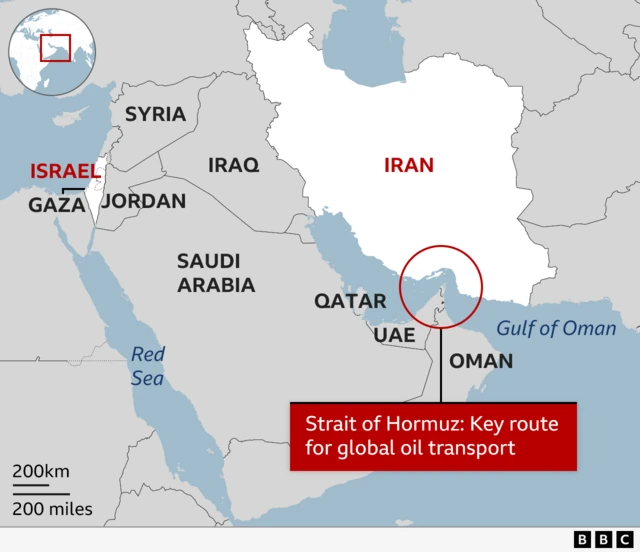
    The Strait of Hormuz, a narrow shipping route in the Gulf region, is one of the world's most important shipping routes. Bounded to the north by Iran and to the south by Oman and the United Arab Emirates (UAE), the Strait of Hormuz connects the Gulf with the Arabian Sea. The strait is deep enough for the world's biggest crude oil tankers, and is used by the major oil and gas producers in the Middle East - and their customers.
  6. How US-Iran talks unfolded in Islamabad over the weekend - recappublished at 08:11 BST 13 April

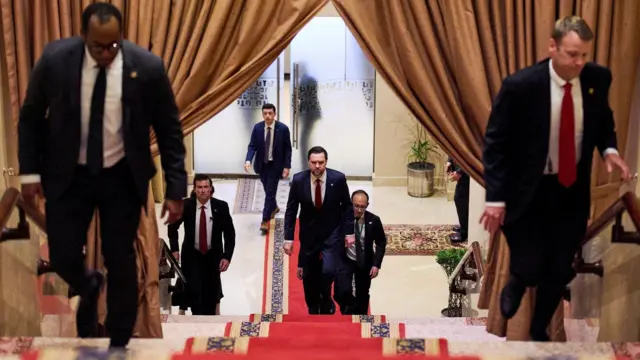
    US Vice President JD Vance arrives for a meeting with Pakistan's Prime Minister Shehbaz Sharif in Islamabad, Pakistan, for talks about Iran on Saturday, April 11Image source, Reuters

    Here's a recap of the historic peace talks between the US and Iran in Pakistan over the weekend.

    On Friday, there was still uncertainty about whether the US-Iran talks would happen at all.

    The next day, both sides first met separately with Pakistani representatives. After that, Iranian and US negotiators sat down face-to-face.

    But after 21 hours of discussions, Washington and Tehran couldn't reach a deal.

    In the early hours of Sunday in Pakistan, an Iranian foreign ministry spokesman described the talks as "intensive" and urged Washington to hold back from "excessive demands and unlawful requests".

    US Vice-President JD Vance then held a news conference, saying the US had made its red lines clear but Iran hadn't agreed to its terms.

    Vance left Pakistan, and the US began posting statements about the naval blockade of Iranian ports.

  7. Analysis

    Trump's posts present new challenges for the USpublished at 07:51 BST 13 April

    Anthony Zurcher
    North America correspondent

    After a diplomatic team led by US Vice-President JD Vance tried, and failed, to reach a negotiated agreement to end the war with Iran on Saturday, President Donald Trump had to decide his next move.

    That came on Sunday morning, in a series of Truth Social posts.

    The US will impose a naval blockade of Iran, he wrote. "No one who pays an illegal toll will have safe passage on the high seas," he wrote.

    He also said that the US would continue clearing mines from the Strait of Hormuz to ensure a safe passage for allied shipping. The US military, he added, was "locked and loaded" and prepared to resume attacks against Iran at an "appropriate moment".

    While Donald Trump's posts didn't have the apocalyptic bluster of last week's threat to end Iranian civilisation, they pose a number of new challenges – and risks – for the American side.

    Will mine-clearing activities place American naval vessels at greater risk of Iranian attacks? How would the US determine who paid Iran a toll? Will the US use force on foreign-flagged ships that ignore the blockade? How will nations that depend on Iranian oil, like China, respond? Will the move, intended to choke off Iran's primary income stream, drive the price of oil to even higher levels?

    There are no clear answers.

  8. What exactly is the US saying it is blocking?published at 07:32 BST 13 April

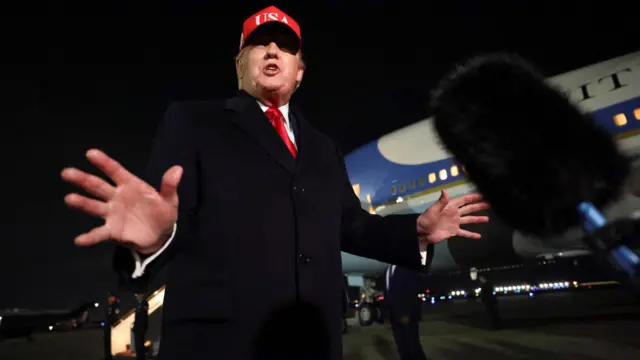
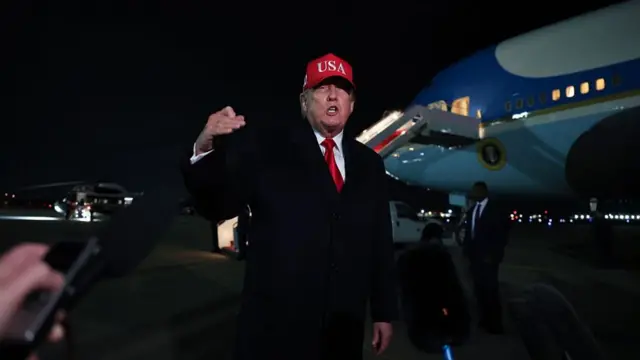
    US President Donald Trump speaks to the members of the media after disembarking Air Force One as he arrives at Joint Base Andrews in Maryland, US on SundayImage source, Reuters

    After the US and Iran failed to reach a peace deal in Pakistan, Donald Trump said the US would start "BLOCKADING any and all Ships trying to enter, or leave, the Strait of Hormuz".

    The US Central Command (Centcom) later said its forces would enforce the blockade "impartially" on vessels leaving and entering Iranian ports, including those in the Gulf and Gulf of Oman.

    However, Centcom also said US forces would not impede the freedom of vessels transiting to and from non-Iranian ports.

    In a post on Truth Social today, Trump said the US will start blockading ships entering and leaving Iranian ports from 10:00 ET (14:00 GMT, 15:00 BST) on Monday.

  9. US blockade of ports stops Iran from selling oil - defence analystpublished at 07:19 BST 13 April

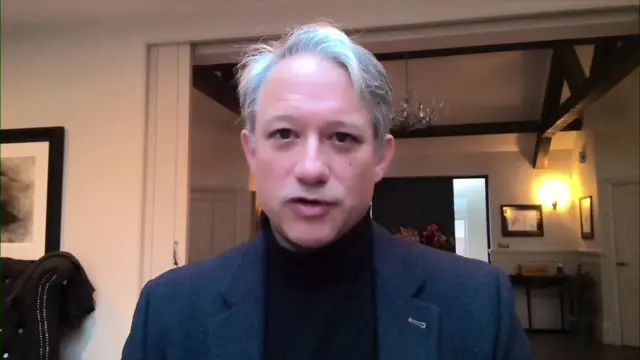
    Man with grey hair, dressed in grey jacket and black turtle-neck jumper in a house setting

    Donald Trump's plan to blockade Iranian ports is a further escalation in the war and "reflects Trump's anger" at not getting a peace deal, according to defence analyst Justin Crump.

    Speaking to BBC Breakfast, Crump says the proposals would stop Iran from selling oil to its customers such as China, which puts pressure on Iran.

    Crump thinks both the US and Iran feel they have an advantageous position over the other, and both sides are "trying to prove that it really has won to bring the other one down".

    He says that brings more tension and disruption, but feels there is a "positive undercurrent" from the weekend's talks even if they did not provide a resolution.

    "There was a lot of talking which is good, if there was nothing to discuss it would have been under very quickly," he says.

  10. UK will not join Trump's blockade of Iran's ports in Strait of Hormuzpublished at 07:02 BST 13 April

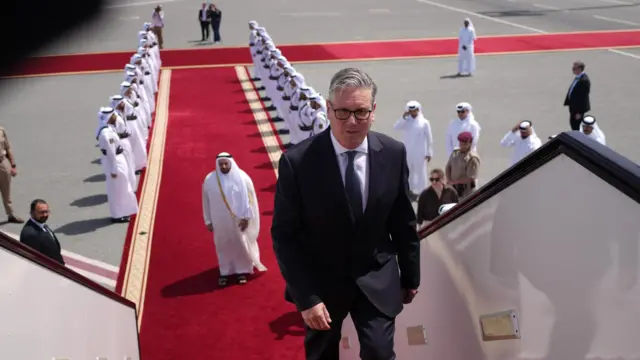
    Prime Minister Sir Keir Starmer boards a plane at the airport in Doha, Qatar, following his visit to the Gulf region to meet leaders of countries who have been in the front line and discuss diplomatic efforts to support and uphold the ceasefire for a lasting resolution to the conflictImage source, PA

    The UK will not take part in enforcing the US military blockade of Iranian ports, the BBC understands.

    British naval ships and soldiers will not be used to block Iranian ports, but UK minesweepers and anti-drone capabilities will continue to operate in the region.

    A UK government spokesperson said: "We continue to support freedom of navigation and the opening of the Strait of Hormuz, which is urgently needed to support the global economy and the cost of living back home."

  11. Recap: Trump confirms US blockade of Iranian ports will begin on Mondaypublished at 06:43 BST 13 April

    The US and Iran are still at odds after peace talks in Pakistan broke down.

    Here are the latest developments:

    • Donald Trump said that the US will start blockading ships entering and leaving Iranian ports from Monday, 10:00 ET (14:00 GMT, 15:00 BST)
    • US Central Command says the blockade will be enforced impartially against vessels from all nations - however, its forces "will not impede freedom of navigation for vessels transiting the Strait of Hormuz to and from non-Iranian ports"
    • Iran’s Revolutionary Guard says any military vessels approaching the strait will be seen as violating the current ceasefire and "dealt with severely"
    • A Wall Street Journal report said Trump is considering resuming air strikes on Iran. The White House told the BBC all options are on the table, but also said anyone telling the newspaper they know what Trump will do next is "purely speculating"
    • Trump said Iran still wants to pursue its nuclear ambitions, vowing the US will make sure "Iran will not have a nuclear weapon"
    • The collapse of peace talks and rising oil prices have hit the global economy - oil is now above $100 a barrel
  12. The Strait of Hormuz - where it is, and why it is importantpublished at 05:59 BST 13 April

    The US Navy will blockade Iranian ports, including those in the Strait of Hormuz, Donald Trump announced earlier, after talks in Islamabad failed to produce a deal between the US and Iran.

    It's a critical shipping route through which roughly 20% of the world's oil and natural liquefied gas is transported.

    The strait's geography has allowed Iran to use it as leverage throughout this war, selectively preventing vessels from passing through the narrow waterway and spiking oil prices in the process.

    Map showing where the Strait of Hormuz is in the Gulf of Oman, a key route for global oil transport. The strait lies between Iran and the peninsula of the United Arab Emirates and Oman. The map also shows countries in the wider Middle East region including Saudi Arabia, Iraq, Jordan and Israel
  13. 'Out of control' diesel prices threaten freight industrypublished at 05:25 BST 13 April

    Lana Lam
    BBC News, Sydney

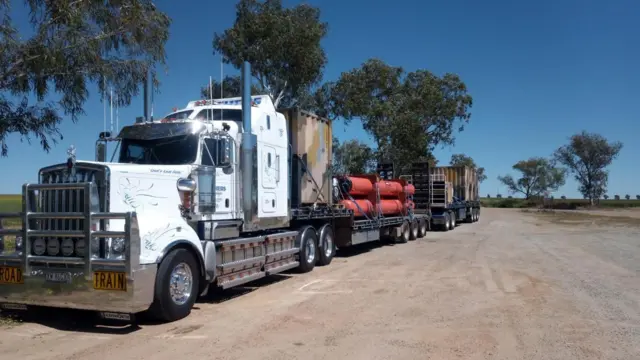
    A road train on a dirt road with trees and blue skies in the backgroundImage source, Aaron Fischer

    News that oil prices have risen once again will be a blow to those countries in the grip of a fuel crisis.

    Among those countries still struggling is Australia, which has experienced some of its biggest ever surges in petrol and diesel prices.

    The lorry industry has been one of the hardest hit, with operators reliant on diesel, often to power heavy long-haul road trains.

    Many say costs have more than doubled since war broke out in Iran.

    Aaron Fischer, an owner-operator of a lorry company, says he has spent sleepless nights trying to keep his business afloat.

    "Before all this stuff happened, it used to cost me A$3,600 (US$2,540, £1,890) to fill up a tank... now I'm spending $7,500. That's the problem: it's literally doubled my bill."

    Find out more about how "out of control" diesel prices are threatening Australia's crucial freight industry here.

  14. Analysis

    Failed talks raise concerns for global economypublished at 04:52 BST 13 April

    Suranjana Tewari
    Asia Business Correspondent

    The collapse of peace talks and the associated jump in oil prices is another shock for the global economy.

    The main concern is supply. Analysts say up to two million barrels a day of oil could be at risk if shipping through the Strait of Hormuz continues to be disrupted. Shipping data already shows tanker traffic has slowed to a trickle, and there are growing fears over the planned US blockade.

    That has pushed prices higher and increased volatility in energy markets.

    The impact on the wider economy is fairly direct. Higher oil prices feed into transport, food and other goods, adding to inflation and squeezing household budgets.

    Many major central banks have only recently started moving away from high interest rates. If oil prices stay high, they may have to delay rate cuts.

    Countries in Europe and much of Asia, which rely on imported energy, are likely to feel more pressure on growth and spending, while exporters are concerned about the drop in demand.

    Markets are already reacting with weaker shares, higher oil prices and more uncertainty - a mix that raises concerns about slower growth alongside higher inflation.

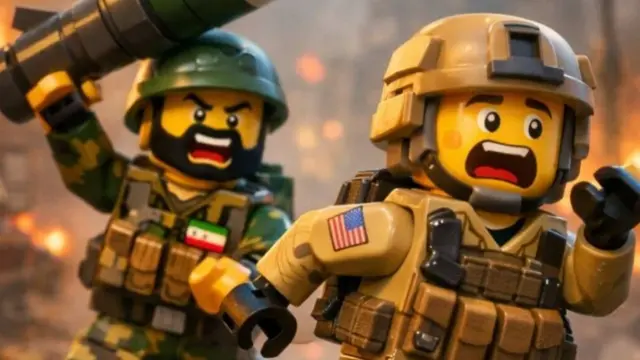
  15. We spoke to the man making viral Lego-style AI videos for Iranpublished at 04:09 BST 13 April

    For the new BBC podcast Top Comment, we spoke to one of the savvy social media operators creating viral pro-Iran propaganda using AI videos.

    They look like something out of a Lego movie and feature dying children, fighter jets and US President Donald Trump.

    Behind them is a man who wanted us to refer to him as Mr Explosive. He initially denied working for the Iranian government, he later admitted the regime is a "customer" - something he's never before confirmed publicly.

    Read our full story here.

    A screenshot from an AI-generated pro-Iran propaganda video showing an Iranian soldier chasing a US soldierImage source, Explosive Media
  16. Iran still wants a nuclear weapon, Trump sayspublished at 03:38 BST 13 April

    Donald Trump speaks to reporters in front of Air Force OneImage source, Getty Images

    We have some more comments from Donald Trump on Iran's nuclear ambitions after both sides left peace talks in Pakistan without an agreement.

    The US president says Iran still wants a nuclear weapon and expressed that intention during the meeting in Islamabad.

    "They still want it, and they made that clear the other night. Iran will not have a nuclear weapon."

    Trump has already said direct talks with Iran failed because Tehran was "unwilling to give up its nuclear ambitions".

    Iranian Foreign Minister Abbas Araghchi previously stated the two parties were "inches away" from reaching a deal but Iran was met with "maximalism, shifting goalposts, and blockade".

  17. US airmen rescued from Iran 'in very good shape', Trump sayspublished at 03:17 BST 13 April

    Donald Trump has given an update on the two US airmen who were rescued from Iran after their fighter jet was shot down earlier this month.

    "They are in very good shape and we're very proud of them," Trump told reporters at Joint Base Andrews.

    The two US crew members included the pilot, who was found shortly after ejecting from the plane, and a weapons-system officer who was rescued after spending more than 24 hours hiding in the mountains of Iran.

    Both sustained injuries from the incident.

  18. 'I don't care if they come back or not', Trump sayspublished at 02:49 BST 13 April

    Speaking a short while ago at Joint Base Andrews near Washington DC after returning from Florida, US President Donald Trump told reporters that he is "fine" if Iran doesn't return to negotiations.

    "I don't care if they come back or not. If they don't come back, I'm fine," Trump said, a day after peace talks between the US and Iran in Pakistan failed to produce an agreement.

    He added that the ceasefire between the US and Iran is "holding well".

  19. Trump attacks Pope Leo over Iranpublished at 02:32 BST 13 April

    U.S. President Donald Trump disembarks Air Force One as he arrives at Joint Base Andrews in MarylandImage source, Reuters

    Donald Trump is strongly criticising Pope Leo XIV on social media after the first American leader of the Roman Catholic Church condemned the US president's threat against Iran.

    In a lengthy post on Truth Social, the US president writes that the Pope is "terrible for Foreign Policy".

    "I don’t want a Pope who thinks it’s OK for Iran to have a Nuclear Weapon," Trump says.

    Listing a number of other complaints about the pontiff, Trump writes that Pope Leo is "Weak on Crime, Weak on Nuclear Weapons".

    Last week, Pope Leo criticised Trump's threat that "a whole civilisation will die tonight" unless Iran agreed a deal to end the war.

    Describing it as "truly unacceptable", he added: "There are certainly questions of international law, but much more than that, it is a moral question."

  20. Iran says it will not 'submit to any threat'published at 02:25 BST 13 April

    As a reminder, we've had several Iranian responses to the US announcement that it plans to blockade Iranian ports.

    Most recently, Iranian Foreign Minister Abbas Araghchi said the US and Iran were "inches away" from reaching a deal during peace talks in Pakistan, but Tehran was then met with "maximalism, shifting goalposts, and blockade".

    Mohammad Bagher Ghalibaf, the Iranian parliamentary speaker who led negotiations in Pakistan, appeared to mock the US decision, writing in a post on X: "Enjoy the current pump figures. With the so-called 'blockade', Soon you'll be nostalgic for $4–$5 gas."

    In an earlier statement carried by Iranian outlets, Ghalibaf said Iran will not "surrender under threats".

    Responding to US President Donald Trump's earlier threat to blockade "any and all ships" trying to enter or leave the Strait of Hormuz, Iran's naval forces said that any military vessels approaching the waterway will be dealt with "severely".