Summary

  1. Watch: The Israeli town on the frontline with Hezbollahpublished at 18:10 BST 14 April

    Media caption,

    Watch: The Israeli town on the frontline with Hezbollah

    On the border between Lebanon and Israel lies Metula - Israel's northernmost town.

    Surrounded on three sides by Lebanon, Metula is one of the first in the firing line when rockets are fired by Hezbollah, the Iranian-backed political and military group.

    Israeli authorities say 12 soldiers and two civilians have been killed by Hezbollah rockets over the past six weeks as the conflict continues.

    In Lebanon, more than 2,000 people have been killed in Israeli strikes, local authorities say, since fighting renewed on 2 March after a Hezbollah attack on Israel.

  2. Israel seeks 'peace and normalisation' with Lebanon, but Hezbollah issue still loomspublished at 17:50 BST 14 April

    Joel Gunter
    Reporting from Jerusalem

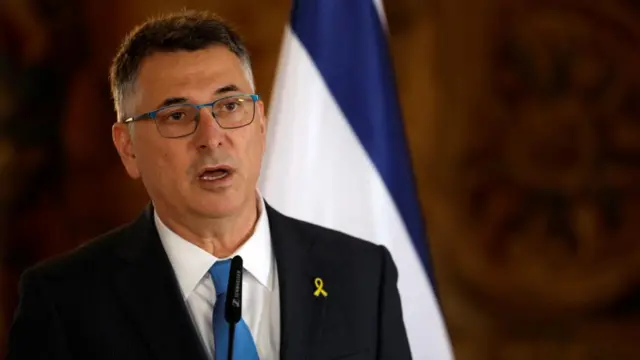
    Israel's Foreign Minister Gideon Sa'arImage source, Reuters
    Image caption,

    Israel's Foreign Minister Gideon Sa'ar said Israel’s issue was not with Lebanon but with Hezbollah

    Israeli Foreign Minister Gideon Sa’ar said today that Israel was seeking "peace and normalisation" with Lebanon.

    Sa’ar said Israel’s issue was not with Lebanon itself, but with Hezbollah - the Iran-backed political and militant group Israel is fighting.

    Normalisation would be historic, as the two countries currently have no diplomatic relations and are technically still at war.

    But that wouldn’t necessarily solve the issue of Hezbollah. Leader Naim Qassem said yesterday the group is not prepared to recognise or take part in any process that doesn’t begin with a ceasefire agreement with Israel.

    Israeli officials have been clear - they are not prepared to commit to a ceasefire with Hezbollah or to remove their troops from southern Lebanon.

    Israel’s stated goal is the complete disarmament of Hezbollah, something the group is not willing to agree to at this stage. So there is an impasse.

    Today’s talks have been described as preparatory, and it is still very early in the process, but it is hard to see a clear way forward to a peaceful outcome.

  3. Hezbollah says it has attacked 13 Israeli settlementspublished at 17:35 BST 14 April

    Talks between Israel and Lebanon continue.

    Meanwhile, Hezbollah says it has targeted 13 Israeli settlements in the north of the country with missiles.

    It says the attacks will continue until US-Israeli strikes stop.

    Earlier, an IDF spokesperson said Israeli forces expect an increase in attacks from Hezbollah, as talks between Lebanon and Israel begin in the US.

  4. BBC Verify

    Tracking data shows two Iran-linked ships change directionpublished at 17:16 BST 14 April

    By Joshua Cheetham

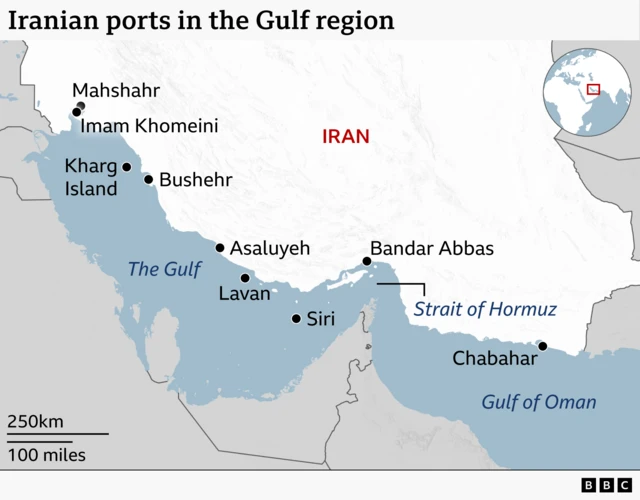
    Ship tracking data analysed by BBC Verify suggests two Iran-linked vessels that travelled through the Strait of Hormuz after a US blockade was imposed have now changed direction and appear to be heading back.

    The US-sanctioned tanker Rich Starry, which reports it is carrying cargo, sailed east from Sharjah in the UAE through the strait overnight, but has now changed direction, data shows.

    Tracking data also shows a bulk carrier, Christianna, which crossed the strait on Monday after the blockade having called at Iran’s Bandar Iman Khomeini, has now changed direction.

    The US's Central Command has claimed that six merchant vessels have been asked to turn around and have complied.

    Another tanker, the US-sanctioned Elpis, passed the strait heading east on Tuesday and may have come from the Iranian port of Bushehr, tracking shows.

    The data is still showing it stationary east of the strait. It is possible these ships have been broadcasting false position reports - known as “spoofing” - to disguise their locations.

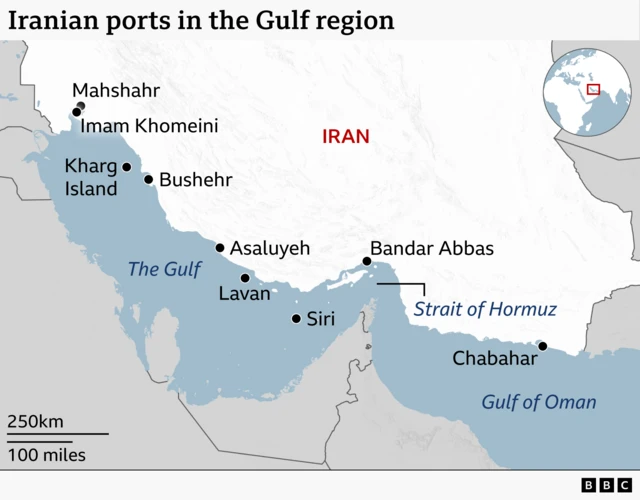
    Map titled “Iranian ports in the Gulf region” showing the southern coastline of Iran along the Persian Gulf and the Gulf of Oman. Labeled Iranian ports include Mahshahr, Imam Khomeini, Kharg Island, Bushehr, Asaluyeh, Lavan, Siri, Bandar Abbas, and Chabahar. The Strait of Hormuz is marked between the Gulf and the Gulf of Oman. Iran is highlighted in light grey, surrounding waters in blue, with a distance scale in kilometers and miles.
  5. Trump says US and Iran may hold talks in 'next two days' - reportpublished at 17:01 BST 14 April
    Breaking

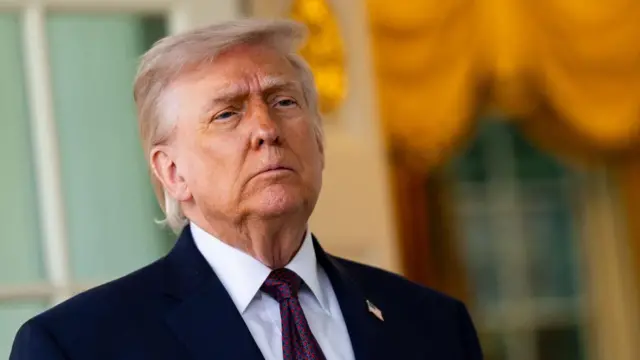
    Donald TrumpImage source, EPA

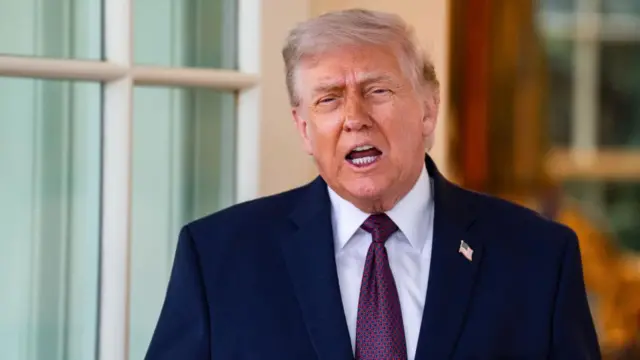
    Talks between the US and Iran could restart "in the next two days", Donald Trump has told the New York Post, external.

    "Something could be happening over the next two days, and we're more inclined to go there [Pakistan]," he tells the newspaper.

    This comes after a weekend meeting in Islamabad, Pakistan, involving US Vice-President JD Vance and Iran's Parliament Speaker Mohammad Bagher Ghalibaf, among others. The talks ended without a deal.

    Earlier today, Iran's state-run media said messages have been exchanged between Tehran and Pakistan, but there is "no information" about any agreement to hold further talks with the US.

  6. Analysis

    Lebanon wants peace, but has very little to offerpublished at 16:48 BST 14 April

    Hugo Bachega
    Middle East correspondent reporting from Beirut

    For the first time in decades, the ambassadors to the US of Israel and Lebanon, countries that do not have diplomatic relations, are meeting in Washington, in what many hope will pave the way for a ceasefire in the war here, where Israel has been fighting the Iranian-backed group Hezbollah.

    There is very little the Lebanese authorities can offer, however.

    The state is not a party to the conflict, and has almost no influence over Hezbollah, which is accused by opponents of defending the interests of Iran and dragging Lebanon into unwanted wars. This one has killed more than 2,000 people, according to the health ministry, which does not distinguish combatants from civilians, and displaced a fifth of the population.

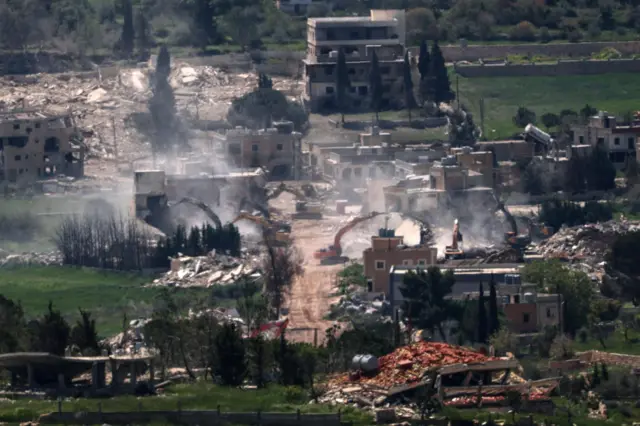
    Communities are in ruins, and many residents may never be able to go back. Invading Israeli troops continue their ground operations, to create what officials describe as a security buffer zone along the border, which has raised fears that parts of the country will remain under occupation even after the war.

    One of the roots of this conflict is Hezbollah’s arsenal. Disarmament is a demand from the US, Israel and many Lebanese, but the government in Beirut cannot deliver it without Hezbollah’s consent, amid concerns the use of force could result in violence.

    Supporters say Hezbollah is the only protection they have from Israel, and the group is already saying it will not abide by any decision.

    In a picture taken from far away, piles of rubble can be seen amongst a few houses that remain standing. Dust rises into the air as half a dozen yellow excavators look to be demolishing buildingsImage source, EPA
    Image caption,

    Israeli army excavators demolish buildings in the southern Lebanese village of Mais al-Jabal - just over 1km (0.62 miles) from Israel, after Israel warned all houses near the border would be demolished as part of its buffer zone plans

  7. Lebanon president hopes talks mark 'beginning of the end'published at 16:43 BST 14 April

    Lebanese President Joseph AounImage source, Reuters

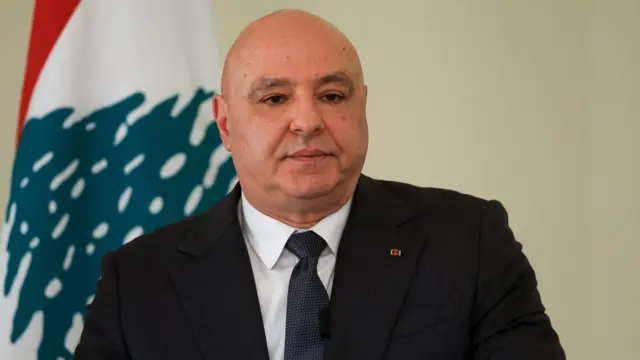
    Lebanon's President Joseph Aoun, who is not in the US, says he hopes the talks will mark the "beginning of the end" of Lebanon's suffering.

    He also says stability "will not return" to southern Lebanon if Israel "continues its occupation".

    For context, Israeli troops are carrying out ground operations in southern Lebanon to create what officials describe as a security buffer zone along the border. This has raised fears that parts of Lebanon could remain under occupation even after the war.

  8. Rubio says Israel-Lebanon talks are a historic opportunitypublished at 16:35 BST 14 April

    Nada Tawfik
    Reporting from US State Department

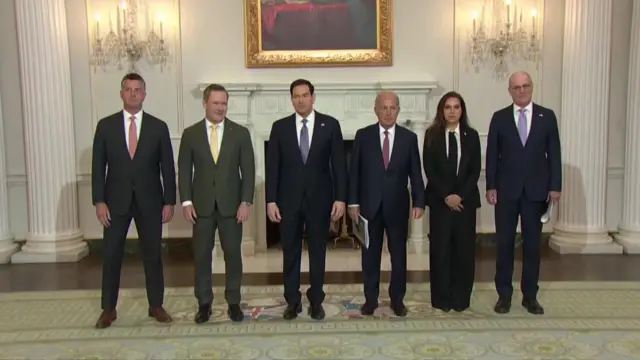
    US Secretary of State Marco Rubio (C) with State Department Counselor Michael Needham (second left) and US Ambassador to Lebanon Michel Issa (second right)Image source, AFP via Getty Images
    Image caption,

    US Secretary of State Marco Rubio (C) with State Department Counselor Michael Needham (second left) and US Ambassador to Lebanon Michel Issa (second right)

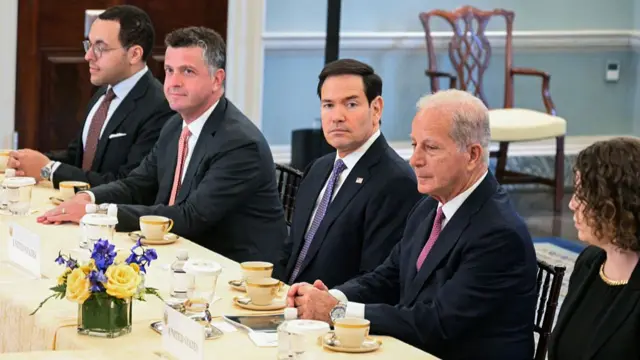
    Now let's return to Washington DC, where Israeli and Lebanese ambassadors are in talks.

    Before the talks began behind closed doors, a photo was taken in the Benjamin Franklin Room of those taking part.

    From the US side, participants include US Secretary of State Marco Rubio, US Ambassador to Lebanon Michel Issa, and US Ambassador to the UN Mike Waltz.

    Standing next to them are Lebanese Ambassador to the US Nada Hamadeh and Israeli Ambassador to the US Yechiel Leiter.

    Secretary of State Rubio has just spoken briefly, describing this as a historic opportunity.

    Rubio says this meeting is about "a lot more" than a ceasefire - it's about "bringing a permanent end" to Hezbollah's influence.

    He says they understand they are working against decades of complexities that won’t be resolved in the next one hour of talks, but the hope is to outline a framework for a permanent, lasting peace.

  9. Trump's criticism of Meloni marks a shift in tonepublished at 16:25 BST 14 April

    Davide Ghiglione
    Reporting from Rome

    Earlier, we brought you a post where US President Donald Trump said his Italian counterpart Giorgia Meloni lacks "courage" over the war in Iran.

    We can share more now from Trump's interview with Italian outlet Corriere della Sera.

    Trump said: "Giorgia Meloni doesn’t want to help us in the war, I’m shocked," and questioned Italy’s approach to securing oil supplies. "Do people like the fact that your president isn’t doing anything to get the oil?"

    He added that he had not spoken to Meloni "in a long time" and accused her of failing to support Washington within Nato and in efforts to eliminate nuclear weapons.

    "She’s very different from what I thought," he said.

    These remarks mark a shift in tone from a month earlier, when Trump described Meloni as a friend and "a great leader" who "always tries to help".

    "She's no longer the same person, and Italy will never be the same country," Trump said.

    In the same interview, Trump also criticised Pope Leo, saying the pontiff “has no idea what’s happening in Iran” and should not comment on the conflict.

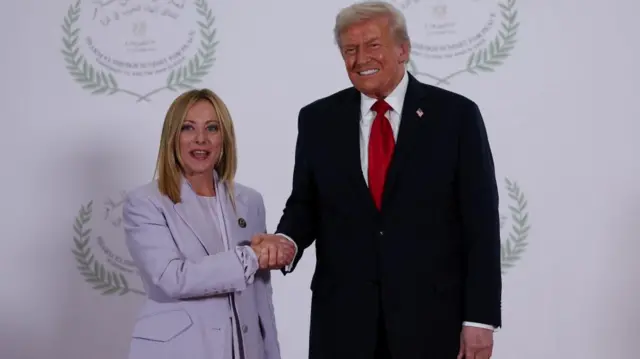
    U.S. President Donald Trump and Italian Prime Minister Giorgia Meloni in Sharm el-Sheikh, Egypt, October 13, 2025.Image source, Reuters
    Image caption,

    US President Donald Trump and Italian Prime Minister Giorgia Meloni in Sharm el-Sheikh, Egypt, pictured on 13 October 2025

  10. US says no ships passed its blockade in first 24 hourspublished at 16:12 BST 14 April
    Breaking

    The US says no ships have made it past its blockade of Iranian ports and coastal areas in the first 24 hours.

    US Central Command (Centcom) says more than 10,000 military personnel, along with dozens of warships and aircraft, are involved in the blockade.

    It says six merchant vessels "complied with direction from US forces" to turn around and "re-enter an Iranian port".

    This update follows tracking data, verified by the BBC, showing four Iran-linked ships crossed the Strait of Hormuz after the blockade began.

    Centcom says the blockade is being enforced against vessels of all nations entering or leaving Iranian ports, while it says it continues to "supporting freedom of navigation" for those not travelling to or from Iran.

  11. Israeli and Lebanese teams head into talkspublished at 16:08 BST 14 April
    Breaking

    Six people stand in a lineImage source, EBU

    The Israeli and Lebanese delegations have just gone in to talks behind closed doors, along with US Secretary of State Marco Rubio.

    Reporters shouted questions at Rubio, Israeli Ambassador Yechiel Leiter and Lebanese Ambassador Nada Hamadeh Moawad - who posed for a photograph but didn't respond.

  12. Trump urges UK to drill in North Sea as it faces biggest impact to growth from Iran warpublished at 16:03 BST 14 April

    US President Donald TrumpImage source, EPA

    Donald Trump has shared his thoughts on the IMF's earlier forecast, which predicts the energy shock from the Iran war will hit the UK hardest among advanced economies.

    "Europe is desperate for Energy, and yet the United Kingdom refuses to open North Sea Oil, one of the greatest fields in the World," the US president posted on his Truth Social platform.

    He goes on: "Tragic!!! Aberdeen should be booming. Norway sells its North Sea Oil to the UK at double the price. They are making a fortune.

    UK, which is better situated on the North Sea for purposes of energy than Norway, should, DRILL, BABY, DRILL!!! It is absolutely crazy that they don’t… AND, NO MORE WINDMILLS!"

    As a reminder, the IMF downgraded the UK by half a percentage point - the largest cut among advanced economies. The UK is now expected to see middling growth this year compared to its peers.

    For context, the UK government has banned new licences for oil and gas fields in the North Sea, saying home-grown clean power is the way forward for energy security.

  13. 'We have no security agreement with Italy,' Israeli foreign ministry sayspublished at 15:46 BST 14 April

    More news from Italy.

    Earlier, Italian Prime Minister Giorgia Meloni said the country is suspending its defence agreement with Israel.

    In response, Israel's foreign ministry says the move will not affect its security.

    "We have no security agreement with Italy," an Israeli foreign ministry spokesperson says, describing the agreement as "a memorandum of understanding from many years ago" that "has never contained any substantive content".

    The spokesperson adds: "This will not affect Israel's security."

  14. Trump says Meloni lacks 'courage' over war in Iran - reportpublished at 15:39 BST 14 April

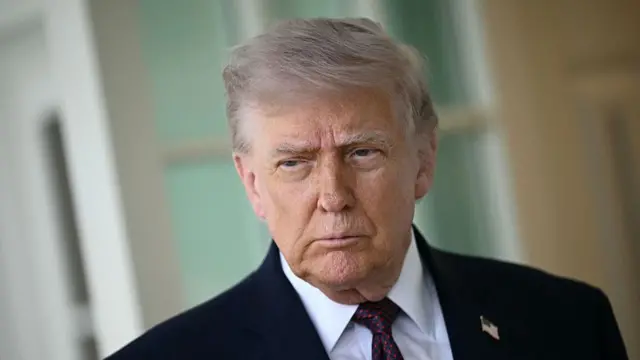
    Trump pictured looking into distanceImage source, AFP via Getty Images

    US President Donald Trump says his Italian counterpart, Giorgia Meloni, lacks "courage" over the war in Iran, Italian media reports.

    "I'm shocked by her. I thought she had courage, but I was wrong," he tells Italian newspaper Corriere della Sera, also saying that Meloni "thinks America should do the work on her behalf".

    His criticism follows Meloni calling the US president's comments about Pope Leo "unacceptable".

    In response, Trump says: "She's the one who's unacceptable, because she doesn't care if Iran has a nuclear weapon and would blow up Italy in two minutes if it had the chance."

  15. Analysis

    An inconsistent blockadepublished at 15:29 BST 14 April

    Frank Gardner
    Security correspondent

    The first 24 hours of the US naval blockade of Iran’s ports have been notable for their inconsistency.

    At least four Iran-linked vessels have passed through the narrow Strait of Hormuz, two of them having come from Iranian ports: Bushehr and Bandar Imam Khomeini.

    There are several possible explanations for this.

    One is that US naval forces were not quite ready to enforce it yet. Another suggestion is that the vessels interfered with their onboard AIS transponders to mislead others as to their true whereabouts, a practice known as "spoofing".

    Then there is the China factor. China is a major buyer of Iran’s oil and it has made no secret of its displeasure over the restrictions on energy supplies coming out of the Gulf, calling the blockade reckless and dangerous.

    China would prefer to resolve this crisis by peaceful, diplomatic means.

    But as the standoff continues there may well be discussions back in Beijing about whether it is now time to consider providing a naval escort for cargoes bound for China.

    Map titled “Iranian ports in the Gulf region” showing the southern coastline of Iran along the Persian Gulf and the Gulf of Oman. Labeled Iranian ports include Mahshahr, Imam Khomeini, Kharg Island, Bushehr, Asaluyeh, Lavan, Siri, Bandar Abbas, and Chabahar. The Strait of Hormuz is marked between the Gulf and the Gulf of Oman. Iran is highlighted in light grey, surrounding waters in blue, with a distance scale in kilometers and miles.
  16. Smoke seen rising over Lebanon as fighting continuespublished at 15:11 BST 14 April

    While talks between Israel and Lebanon are scheduled, fighting is still going on between the Israeli military and Hezbollah.

    In a statement last night, the Israel Defense Forces said it had hit around 150 "Hezbollah terrorist organization targets" in southern Lebanon in the past 24 hours.

    Hezbollah has also released several statements today, saying it is firing rockets at Israel.

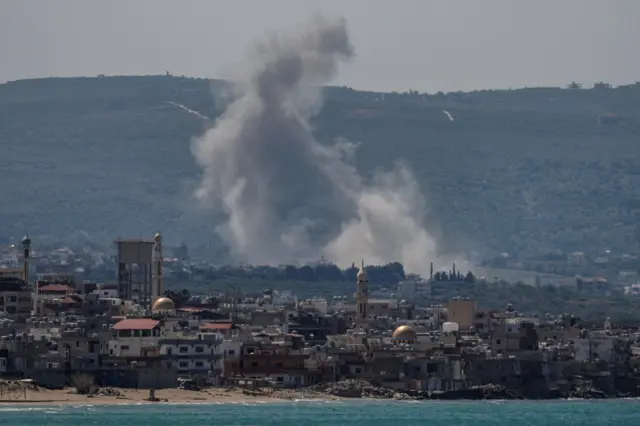
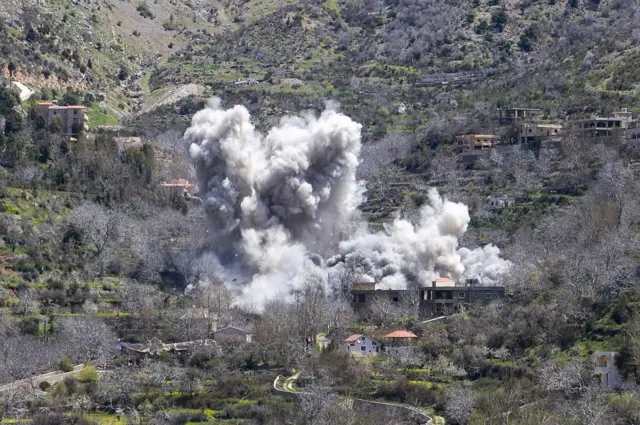
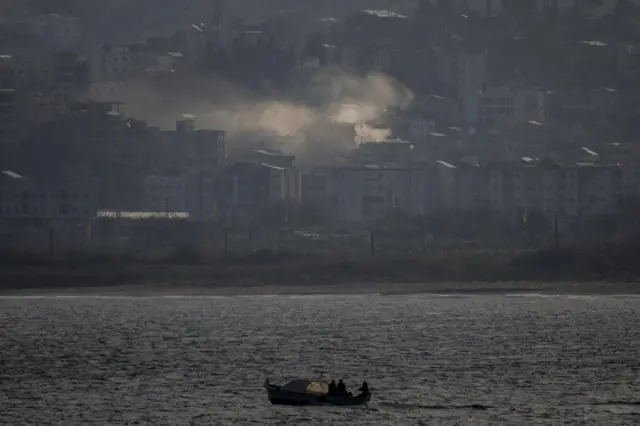
    Here are some photos from southern Lebanon, taken earlier today, where there have been reports of Israeli strikes.

    Smoke rises following an Israeli strike at QlailehImage source, Reuters
    Image caption,

    The aftermath of an Israeli strike in Qlaileh seen from the city of Tyre

    Smoke rises after a strike in wooded area with small number of scattered buildingsImage source, Anadolu via Getty Images
    Image caption,

    Smoke rises after a strike on Nabatieh

    Fishermen sail their boat as smoke from an airstrike rises in TyreImage source, Reuters
    Image caption,

    Fishermen sail their boat as smoke from an air strike rises in Tyre

  17. Israel-Lebanon talks set to begin in Washington in an hourpublished at 15:02 BST 14 April

    Talks between Israel and Lebanon are due to move forward today in Washington DC.

    They're set to start at 11:00 ET (15:00 GMT / 16:00 BST), with US Secretary of State Marco Rubio joining, according to a US State Department memo.

    Both countries' ambassadors to the US will take part - Israeli Ambassador Yechiel Leiter and Lebanese Ambassador Nada Hamadeh Moawad.

    The memo says they'll briefly speak to the press before the talks continue behind closed doors.

    We'll bring you all the key updates as soon as we have them.

  18. Is the Strait of Hormuz Iran's trump card?published at 14:57 BST 14 April

    BBC 'The Global Story' logo, a minimalist semi circle coloured red with the words 'The Global Story' written underneath

    The US started blocking all ships entering and leaving Iranian ports in the Strait of Hormuz on Monday.

    This follows 21 hours of peace talks between US and Iranian delegates over the weekend, which ended without a resolution.

    To help explain why this is happening - and what Iran wants - BBC Persian Service has put together the latest episode of The Global Story.

  19. Analysis

    China condemns US blockade, but will not want to push Trump too farpublished at 14:51 BST 14 April

    Laura Bicker
    China correspondent

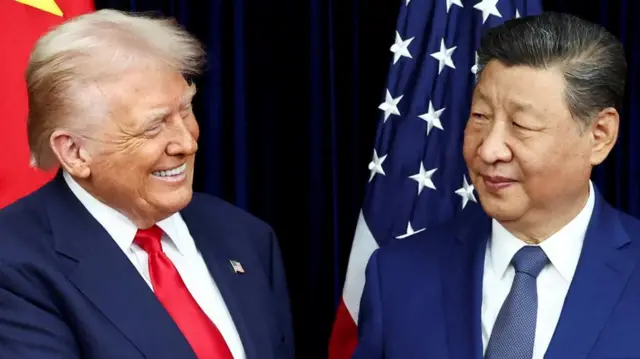
    U.S. President Donald Trump and Chinese President Xi Jinping reactImage source, Reuters
    Image caption,

    US President Donald Trump and Chinese President Xi Jinping pictured on the sidelines of the Asia-Pacific Economic Co-operation summit in October 2025

    As we've reported earlier, China's foreign ministry has condemned the US blockade of Iranian ports as "dangerous and irresponsible".

    The comments follow its support for Pakistan’s push for a peace deal and an almost daily call for a ceasefire. The BBC understands that Chinese officials also held talks behind the scenes to help nudge Tehran towards the negotiating table.

    The Chinese government has a relationship with Iran that dates back decades. It is Tehran's biggest trading partner and buys around 80% of Iranian oil. But China’s alliances, unlike those in the West, are transactional. Beijing is happy to offer business deals, but not military support and it has no mutual defence treaty with Iran.

    Instead, the Chinese government has tried to maintain a neutral stance and has called for restraint from both sides.

    The foreign ministry in Beijing may condemn Washington’s current actions but it will not want to push Donald Trump too far. China is after all preparing to welcome the US president next month as it tries to negotiate an end to a punishing trade war.

    Beijing also has a long history of non-interference in other countries' affairs, and it will not want to be dragged into this conflict.

    There are limits to China’s superpower status - politically and militarily and it is far more likely that Beijing will work on this crisis from the sidelines, not on the frontline.

  20. BBC Verify

    What could the US use to enforce the Iran blockade?published at 14:42 BST 14 April

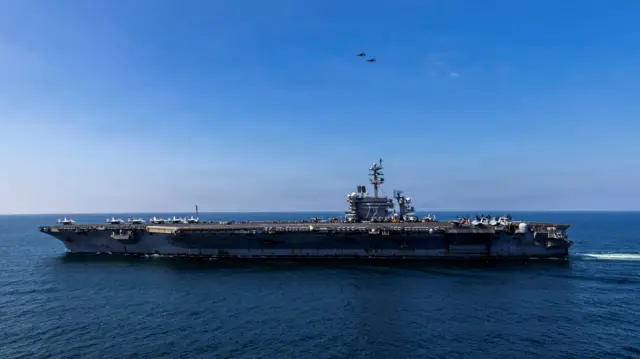
    A photo of the aircraft carrier USS Abraham Lincoln sailing, two fighter jets are flying above it and several can be seen parked on its deckImage source, Reuters
    Image caption,

    The USS Abraham Lincoln is one of 14 US Navy warships currently near the Strait of Hormuz

    By Joshua Cheetham

    Details of how the US intends to enforce a blockade of Iran remain scarce, so BBC Verify has looked into what could be used in the operation.

    At least 14 US warships are operating around the Gulf and the Arabian Sea, according to US Naval Institute’s news portal USNI News. These include the USS Abraham Lincoln aircraft carrier and an amphibious assault group made up of 2,500 marines and sailors.

    Submarines might also be deployed in the region, but this information is not publicly available.

    Military aircraft could also be involved in enforcing a blockade, but tracking data to identify which is also generally not public.

    There are other warships currently nearby, or reportedly being deployed to the region, which could be called on to support the blockade.

    The aircraft carrier USS George H W Bush, escorted by three destroyers, is currently near Namibia as it sails around southern Africa towards the Middle East, according to USNI News.

    Another aircraft carrier, USS Gerald R Ford, is also in the eastern Mediterranean with four destroyers. The Ford has reportedly played a significant role during the early stages of the US-Israel war with Iran and has recently been in Greece for repairs.