The Deep Space Network - watch the satellites in real timepublished at 23:53 BST 2 April
 Esme Stallard
Science reporter
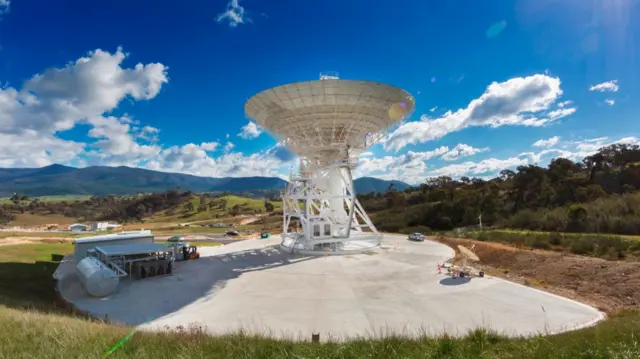 Image source, NASA
Deep Space Station 35 (DSS-35) at the Canberra Deep Space Communications Complex near Canberra, Australia
A significant risk on this journey is that the spacecraft loses contact with mission control (and loved ones).
“Reliable communications are the lifeline of human spaceflight,” says Kevin Coggins, deputy associate administrator for the communications and navigation program at NASA Headquarters.
Whilst in Earth’s orbit Orion is using the Near Space Network. It is a system of 40 satellites on Earth owned by various governments and private organisations, and satellites over the Atlantic, Pacific and Indian Oceans which are in a synchronised orbit.
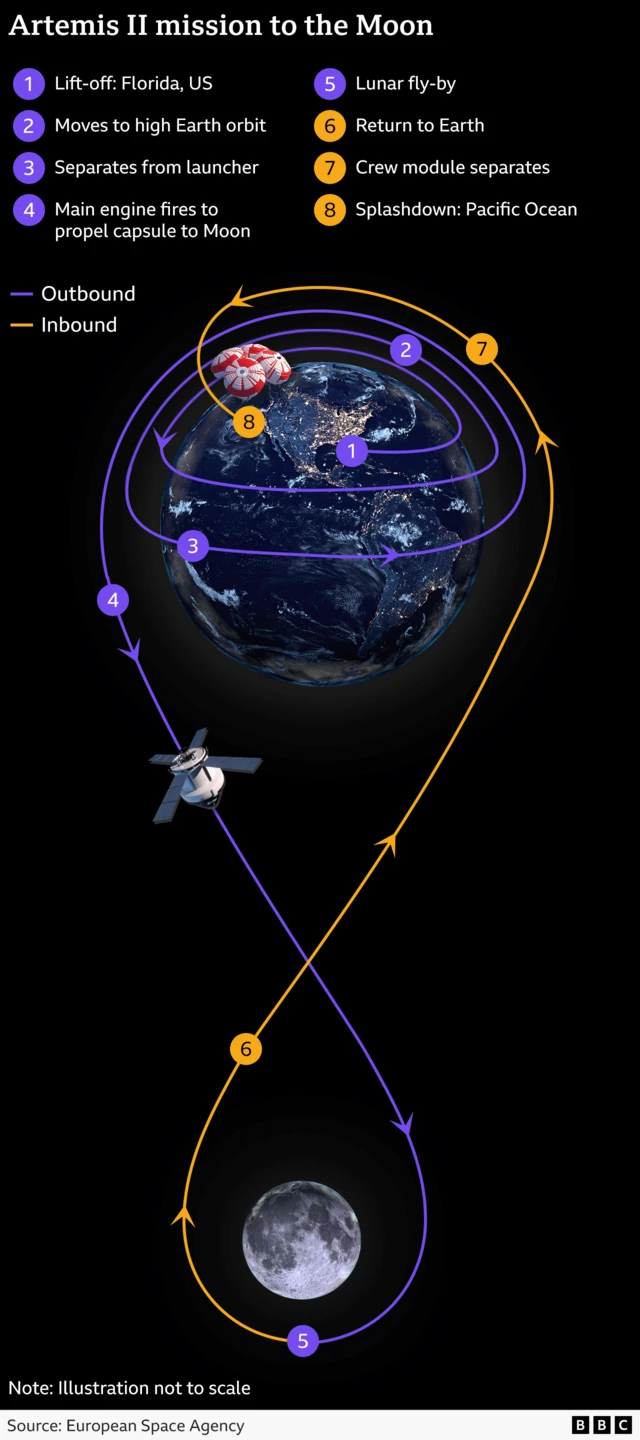
Overnight when Orion begins on its path to the Moon the crew will switch to using the Deep Space Network as the primary way to talk to mission control.
It is a series of giant radio antennas which are located in California, Spain and Australia.
You can see live which antennas are talking to the Orion spacecraft right now, external.
But there will be a 41-minute blackout when the spacecraft reaches the far side of the Moon as the radio signals to the Earth are blocked.