Summary

  1. 'We're going to try and get you to bed a little bit early' - mission control tells astronautspublished at 04:53 BST 2 April

    "It's been a great day guys, and we're going to try and get you to bed a little bit early," mission control says to the Artemis crew.

    There are a couple more operations to run through first, including troubleshooting the issue they've been having with the toilet.

    "I don't think it will take very long," mission control says.

    The astronauts' sleep will be divided into two slots. They are scheduled to get around four hours before waking to monitor something called the "perigee raise burn" - this will put Orion back in a stable orbit for the loop back towards Earth.

    After that, they are then scheduled to have another four and a half hours of sleep.
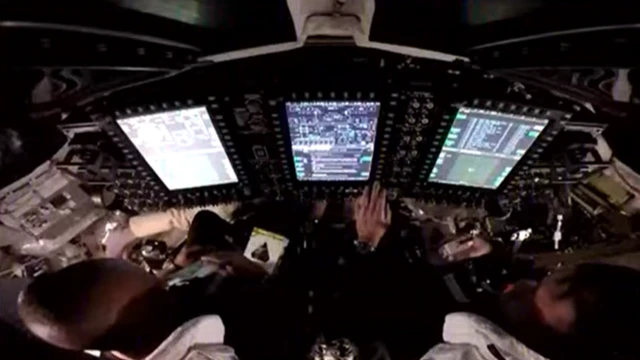
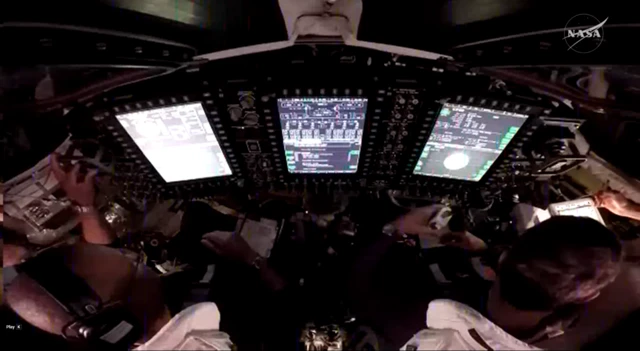
    Astronauts monitor screens inside the Orion capsuleImage source, NASA
  2. A new-look mission control to guide the astronauts on their trippublished at 04:39 BST 2 April

    Stephen Dowling
    Deputy editor, BBC science features

    The Orion Mission Evaluation Room (MER) is seen during a media tour at Johnson Space Center in Houston, Wednesday, Sept. 24, 2025.Image source, Getty Images

    You can watch live at the top of the page as the Orion crew continues tests in orbit. You'll also regularly see the view from Nasa's mission control - more on that below:

    Nasa's historic space missions succeeded or failed thanks to the help of mission control.

    Devised by Christopher Kraft for the Mercury programme of the early 1960s, the nerve centre of US space missions grew to become hives of activity by the time of the Apollo missions.

    Photos of white-shirted technicians frowning over cumbersome consoles became almost as iconic as the images of the Apollo 11 astronauts on the Moon.

    Now, Artemis mission control looks very different to those of 50 years ago. The massive consoles have given way to sleek terminals and overhead lighting that are reminiscent of tech start-up offices.

    But look behind the tech, and mission control now has the same job as half a century ago.

    "The structure that Chris Kraft put together as the first flight director has really stood the test of time," says Fiona Antkowiak, one of nine flight directors assigned to the Artemis II mission.

  3. Crew quietly trying to break their spacecraft - on purposepublished at 04:32 BST 2 April

    Pallab Ghosh
    Science correspondent, reporting from the launch

    Before Nasa commits Orion to the long burn that sends it away from Earth, the crew are spending hours quietly trying to break their spacecraft - on purpose.

    They cycle computers through different modes, switch radios between ground stations and relay satellites, and deliberately move around the cabin to see how the life‑support system copes as carbon dioxide and humidity build up.

    Engineers also command small thruster firings and check the European‑built service module responds exactly as the models predict.

    All of this is designed to answer a simple question: is the ship healthy enough to risk flying hundreds of thousands of kilometres from home with no quick way back?

    If any of these tests throws up something they do not understand, Nasa will not hesitate to call off the trans-lunar injection burn and use Orion’s engine to bring the astronauts straight back to Earth.

  4. What is a day in the life of an astronaut really like? 'Work from start to finish'published at 04:20 BST 2 April

    Leyla Khodabakhshi
    Reporting from the Kennedy Space Center

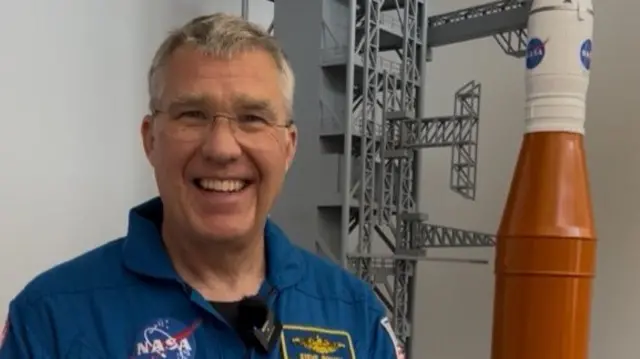
    Stephen smiling in a blue jumpsuit standing next to a model rocket

    Nasa astronaut Stephen Bowen says one of the first things you notice in space is something simple. You are floating.

    “Floating never gets old,” he told me. “And I actually sleep better in space than I do on Earth.”

    Bowen has been an astronaut for more than 25 years and has taken part in multiple missions, including 10 spacewalks.

    “On the space station, you strap yourself into a sleeping bag attached to the wall,” Bowen says. “You just float and sleep - there’s no real sense of up or down.”

    A typical day begins with breakfast and a check of the schedule. From there, Bowen says, it is work from start to finish.

    “You’re scheduled continuously from the time you wake up to the time you go to sleep,” he says. That includes hours of exercise, scientific experiments and maintaining the spacecraft.

    Even small things behave differently. Tears, for example, do not fall. “They just stay in your eyes,” he says, describing how a crewmate once found it hard to stop laughing as the tears built up.

    For Bowen, spacewalks are among the most extraordinary parts of the job. “You’re holding on to the space station, and the Earth is passing below you,” he says. “The view is absolutely unbelievable.”

  5. A few niggles on board Artemis IIpublished at 04:02 BST 2 April

    Pallab Ghosh
    Science correspondent, reporting from the launch

    The Artemis II crew are already discovering that even a trip to the Moon comes with very down‑to‑Earth plumbing problems.

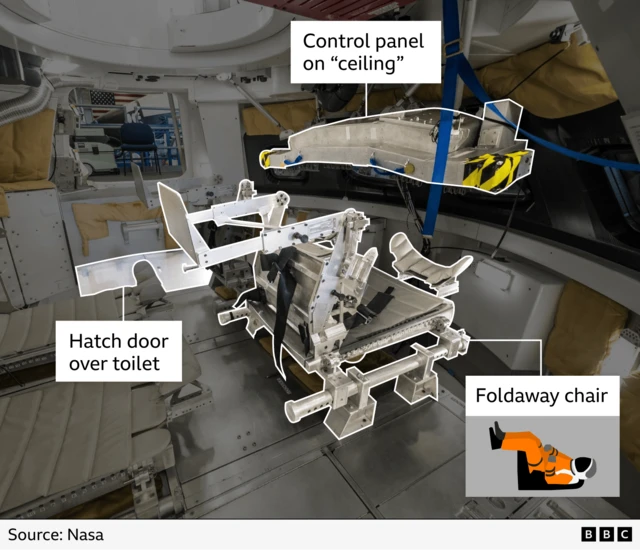
    According to flight controllers, sensors in Orion’s waste‑management system – essentially the spacecraft’s toilet and urine‑processing gear – have thrown up some readings they did not expect, and engineers are now working with the astronauts to run extra checks and reconfigure the system.

    For now, Orion has plenty of backup options, from alternative collection bags to different ways of routing liquids, so this is more about comfort and long‑term reliability than an immediate health risk.

    But with ten days in deep space ahead, Nasa wants to be absolutely sure the system is behaving before committing to the burn that will send the crew away from Earth, and they say they won’t hesitate to cut the mission short if the problem worsens.

    Interior view of the Orion crew module highlighting a metal structure in the centre, labelled as a foldaway chair, another highlight shows the control panel mounted on the “ceiling”, while a third shows a panel labelled as a hatch door positioned over the toilet. The cabin includes padded wall sections, metal flooring, and equipment mounts. A small illustration in the corner shows an astronaut demonstrating how the foldaway chair is used.

    As well as toilet trouble, the astronauts have discovered a few other niggles with their brand‑new spacecraft.

    A valve linking two sets of water tanks was found closed when it should have been open - probably jostled by the violence of launch - and has had to be reset.

    Engineers have also seen a repeat of a minor electronics hiccup from Artemis I, where a component briefly tripped after a radiation hit before automatically recovering.

    None of these issues are classed as mission‑threatening, but they underline why Artemis II is very much a test flight.

  6. Watch: 'It's a historic day' - Americans react to Artemis II launchpublished at 03:55 BST 2 April

  7. Launch attracts spectators - and not just in Floridapublished at 03:47 BST 2 April

    Space enthusiasts gather for a watch party in TorontoImage source, Reuters
    Image caption,

    People gather for a watch party in Toronto, Canada - mission specialist Jeremy Hansen is the first Canadian to join a crewed Moon mission

    Children in Mexico react to a live broadcast of the Artemis II launchImage source, Reuters
    Image caption,

    Nasa hopes to inspire a new generation - and these children in Ciudad Juárez, Mexico looked impressed

    People in New York paused to watch the launch on screensImage source, Getty Images
    Image caption,

    In busy New York, people paused to watch the launch on screens outside the News Corp building

  8. Astronauts putting Orion through its first proper manoeuvrepublished at 03:40 BST 2 April

    Pallab Ghosh
    Science correspondent, reporting from the launch

    People sit behind panel filled with screensImage source, NASA

    The astronauts are currently putting the Orion capsule through its first proper manoeuvre in space.

    The capsule fires its small steering thrusters to drift a short distance away from the spent upper stage of the rocket, then slowly slides back in again, practising what Nasa calls “proximity operations” - controlled flying close to another object.

    This is designed to help perfect the techniques they will eventually need for docking with a lunar lander once it is built, and flying as part of later Artemis missions.

    Throughout the manoeuvre, computers track the distance and closing speed between Orion and the upper stage, while the astronauts practise taking manual control using hand‑controllers, in case the automated systems ever fail.

    Proving they can do this safely in low Earth orbit helps build confidence for future dockings around the Moon.

  9. Crew conduct tests on board Orion - watch livepublished at 03:35 BST 2 April

    The crew are now orbiting Earth and conducting a number of different tests - including practising manoeuvring the capsule.

    You can watch live at the top of the page.

    Media caption,

    Watch: First live view of Artemis II crew since arriving in space

  10. What you need to be an Artemis astronautpublished at 03:22 BST 2 April

    Stephen Dowling
    Deputy editor, BBC science features

    Artemis II is just the second step in a long and challenging journey.

    Eventually, Nasa astronauts will touch down again on the Moon more than half a century after the last Apollo mission left. But this time, the intention is for them to stay.

    The Artemis programme's long-term goal is to build a permanent settlement on the Moon. All going to plan, astronauts will spend months in close proximity to a handful of colleagues, on a dusty and airless Moon base where nights can last up to two weeks.

    Dealing with all of that will require people with patience and discipline along with the technical skills.

    "It's very difficult to select an astronaut because you're not looking for superhumans in any one domain," says Sergi Vaquer Araujo, from the European Space Agency (Esa), which is part of the Artemis programme. "You're looking for someone good in all domains - and that is dramatically difficult to find."

  11. The Artemis II crew have work to dopublished at 03:13 BST 2 April

    Undated handout photo issued by NASA of the crew of NASA's Artemis II mission: NASA astronauts Christina Koch, Reid Wiseman, Victor Glover, and CSA (Canadian Space Agency) astronaut Jeremy Hansen.Image source, NASA/PA Wire

    As we've been reporting, after lift-off the Artemis II crew will be doing more than just sitting back and enjoying the view - although observation is an important part of their mission.

    Mission specialist Christina Koch has previously explained that the astronauts will be able to study the lunar surface in exquisite detail for a full three hours during the 10-day mission.

    There are other tasks too. In orbit, the astronauts test how the Orion spacecraft handles - manually flying the capsule to practise steering and lining up the spacecraft for future Moon landings.

    They will then head out to a point thousands of kilometres beyond the Moon to check Orion's life‑support, propulsion, power and navigation systems.

    The crew will also act as medical test subjects, sending back data and imagery from deep space.

    This Flourish post cannot be displayed in your browser. Please enable Javascript or try a different browser.

  12. 'God bless those four' - Trump congratulates Nasa on successful launchpublished at 02:52 BST 2 April

    Donald Trump standing behind podium with US flags waving behind himImage source, Reuters

    During a national address, US President Donald Trump congratulates the team at Nasa and "our brave astronauts" following the Artemis II launch.

    He calls the mission “quite something”, saying the rocket will travel further than any manned rocket has ever flown and “very substantially" passing the Moon.

    "God bless those four," he says.

  13. What happens now?published at 02:29 BST 2 April

    Katie Williams
    Live reporter

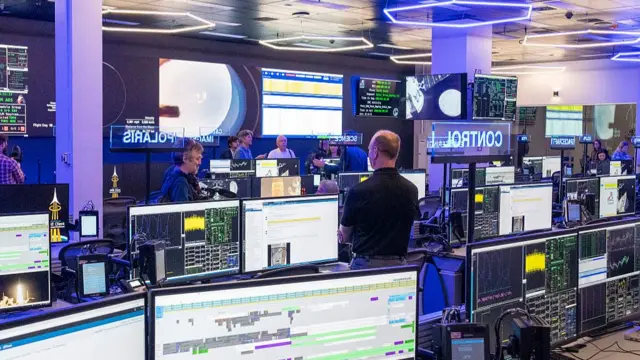
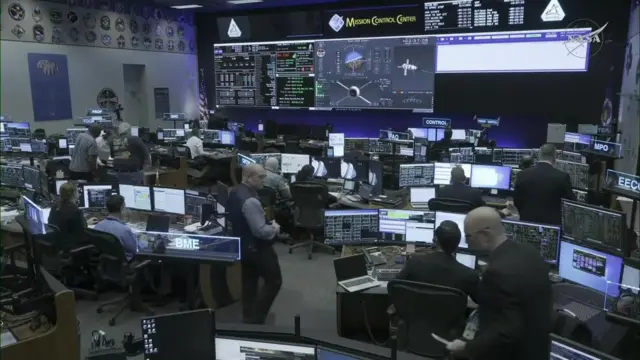
    Nasa mission control centreImage source, NASA
    Image caption,

    If all goes well over the next 24 hours, mission managers will give the astronauts the green light to leave Earth's orbit

    It's been more than two hours since the roar of lift-off, and the astronauts have been enjoying the "epic" views. But they still have work to do.

    The spacecraft will spend the next 24 hours orbiting the Earth twice to test various systems. There has already been an issue with the toilet...

    Tasks include igniting the so-called RL10 engine to place Orion in high-Earth orbit, manually piloting the spacecraft for the first time, and testing its handling to ensure it can safely dock with a lunar lander for the future Artemis IV mission.

    Everything is carefully scheduled - including when the astronauts will sleep.

    If everything is working well after a day of checks in high Earth orbit, mission managers will give the crew the green light to head to the Moon by firing something called a “trans‑lunar injection” burn.

    As our science correspondent explains, this move commits them to deep space.

  14. Full moon offers crew unique opportunity to see eclipsepublished at 02:05 BST 2 April

    Esme Stallard
    Science reporter

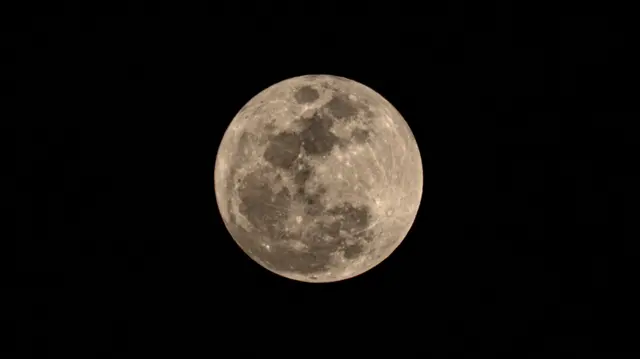
    A picture of a full moon, it appears slightly tinged yellowImage source, Kevin Church/BBC

    A full moon has risen at the Kennedy Space Centre.

    A successful launch today means that the astronauts will get to see a partial eclipse from the spacecraft.

    The moon will be blocking the sun, although they will be able to see the Sun's corona - the outer part of its atmosphere.

    "It will be a unique opportunity," Dr. Lori Glaze, acting associate administrator at Nasa, tells journalists at the press conference.

    The press conference has now finished.

  15. 'Competition can be a good thing' - Nasa administrator on space race with Chinapublished at 01:52 BST 2 April

    Nasa administrator Jared Isaacman is asked why it's so difficult to get to the Moon today.

    He says "financial resources are part of the equation", but the emergence of a new space race is seeing resources concentrated back in this area.

    "This one's going to be close", he says.

    • For context, China says it wants to get its Taikonauts to land on the lunar surface by 2030

    "Competition can be a good thing - we certainly have competition now," Isaacman says. "We're going to get back in the business of launching rockets in a regular cadence."

  16. 'It is amazing to be at this altitude' - astronautpublished at 01:46 BST 2 April

    Esme Stallard
    Science reporter

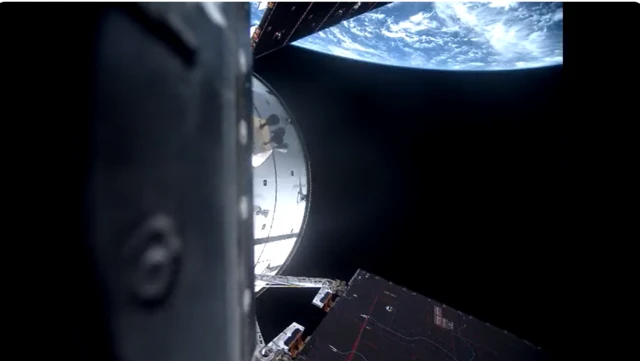
    A picture showing a black sky, the Earth visible partially in the background. Part of the spacecraft including a solar array can be seen on the left of the picture

    While the press conference is ongoing, the spacecraft is continuing to orbit Earth.

    On Nasa's live video feed on board the Orion spacecraft, the blue of Earth can be seen in the distance.

    But from the astronauts' perspective they are seeing a far more impressive sight of our planet.

    "The view of Australia was epic just now, it is amazing to be at this altitude," Reid Wiseman, the Artemis II commander says.

  17. Nasa team 'quick on their feet' in resolving pre-launch issues, official sayspublished at 01:42 BST 2 April

    Nasa's associate administrator Amit Kshatriya speaks about the two issues encountered before launch - a problem with the flight termination system, and a separate battery issue.

    The first one was resolved using old hardware from the previous Space Shuttle programme.

    Kshatriya says the Nasa team were "really quick on their feet [and] swapped to a different range receiver".

    "This is what the training is for; this is what the practice is for," he says, adding that the team "did really well".

    Earlier, Nasa said the issue with one of the batteries on the Launch Abort System would not affect the launch.

  18. Astronauts 'safe, secure and in great spirits', Nasa administrator sayspublished at 01:27 BST 2 April

    Nasa administrator Jared Isaacman kicks off the press conferenceImage source, NASA

    Nasa administrator Jared Isaacman kicks off the press conference by giving an operational update on the mission.

    He briefly references an earlier communications issue, where the team on the ground couldn't hear the crew aboard the spacecraft.

    This has since been resolved, he says, and the crew is "safe, secure and in great spirits".

    He then switches to the significance of the mission.

    "After a brief 54 year intermission, Nasa is back in the business of sending astronauts to the Moon," he says.

    "This mission belongs as much to you as it does the crew," he tells the Nasa workforce.

    The team "know the challenges ahead" and will only hold its celebrations when the astronauts splash down after the mission is complete, Isaacman says.

  19. Nasa holding press conference - watch livepublished at 01:17 BST 2 April
    Breaking

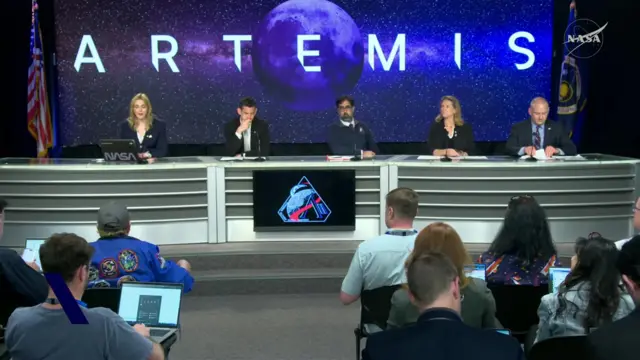
    Line of four people sitting behind table with a screen with the word 'Artemis' on it behind themImage source, NASA

    Nasa is holding a press conference following the launch.

    You can watch live at the top of the page and we'll bring you the key lines here.

  20. How the 10-day mission will unfoldpublished at 01:09 BST 2 April

    Pallab Ghosh
    Science correspondent

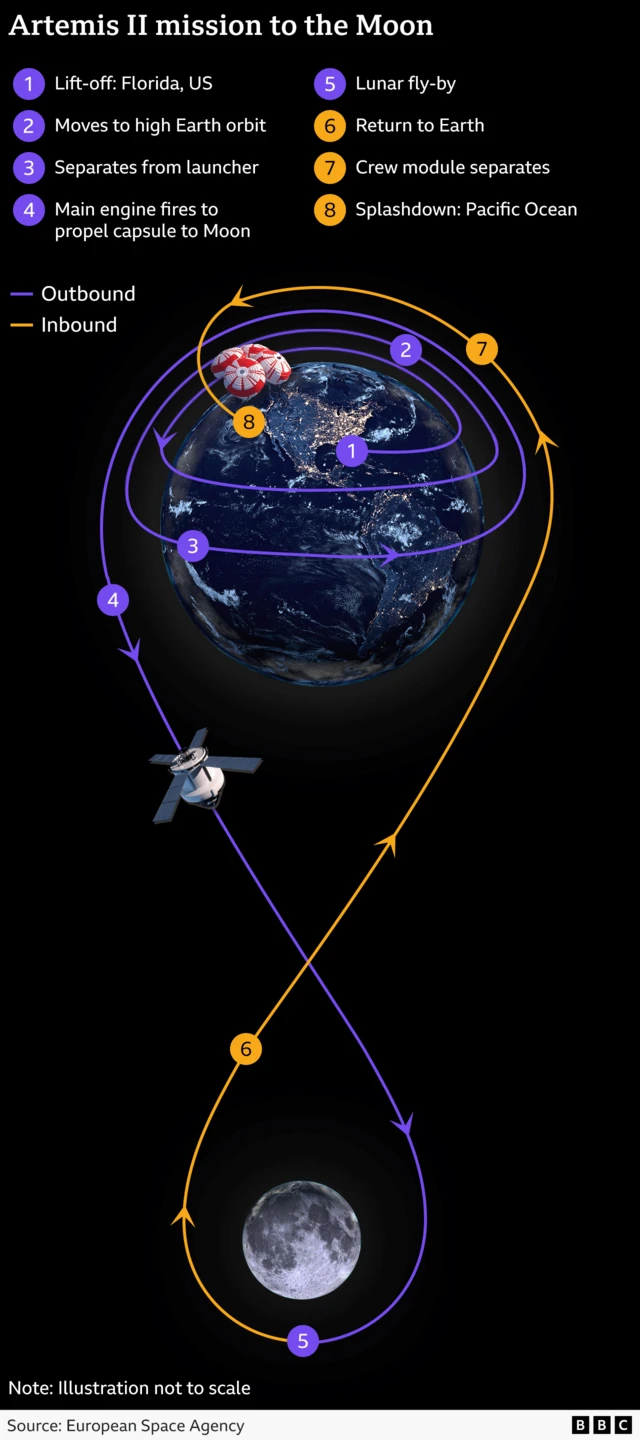
    Over the next ten days, the four astronauts will put their Orion spacecraft through its paces on a long, looping voyage that will sling them out to lunar distance before gravity guides them back to Earth.

    After a day of checks in high Earth orbit, they’ll fire the European‑built service module engine in what’s known as a “trans‑lunar injection” burn - the crucial manoeuvre that will push them away from the safety of home and commit them to deep space.

    For several minutes the spacecraft accelerates hard. This is the big shove that tips Orion out of Earth orbit and sets it on a curved path towards the Moon - the combined gravity of Earth and Moon will naturally loop the spacecraft back home without another big engine burn.

    If something serious goes wrong, the crew can effectively coast back along that track – a built-in safety feature that makes sense for a first crewed test.

    It takes about four days to cruise out to the Moon. During that time, the astronauts will work through emergency drills, including how they would ride out a major solar radiation storm.

    At its furthest, the trajectory takes the crew to around 230,000 miles from Earth, looping them behind the far side of the Moon.

    After the flyby, Orion makes a series of gentle course correction burns to line up its path for the return to Earth.

    Roughly four days later, Orion separates from the European Service Module and heads for home.

    The capsule slams into the upper atmosphere at high speed, its heatshield glowing white hot as it sheds the energy of the trip.

    Parachutes then unfurl, slowing the spacecraft for splashdown in the Pacific Ocean, where US Navy ships will be waiting to fish the crew and their capsule out of the water.

    Graphic showing the Earth and the Moon, with the spacecraft’s figure of eight orbital trajectory highlighted. Specific points are labelled. These are: 1. Lift-off at the Kennedy Space Centre, 2. Orbit around the Earth, 3. Rocket separation, 4. Main engine fires to take spacecraft to the Moon, 5. Lunar fly-by, 6. Return to Earth, 7. Crew module separates, 8. Splashdown in Pacific Ocean