Summary

  • Our live coverage of the Iran war continues on a new live page. Follow this link for the latest updates.

  • In Jerusalem, sirens sounded and there were booms in the skies above, as families celebrated the first night of Eid - Iranian state TV has confirmed it fired four salvos of missiles in quick succession, writes our correspondent there

  • Elsewhere in the region, Saudi Arabia and Bahrain both say they have intercepted and destroyed drones

  • Iran's foreign minister earlier warned that Tehran would act with "zero restraint" if there were further attacks on its infrastructure

  • Prime Minister Benjamin Netanyahu has said Israel "acted alone" in strikes on Iran's South Pars, part of the world's largest natural gas field. He added Trump was not "dragged" into the war with Iran - here's the context

  1. UK government officials concerned Strait of Hormuz situation 'too hot', as PM chairs Cobra meetingpublished at 15:18 GMT 19 March

    Harry Farley
    Political correspondent

    Prime Minister Keir Starmer chaired a Cobra meeting with ministers and officials this morning to discuss the war in the Middle East.

    Cobra meetings - named after Cabinet Office Briefing Room A - are held when senior ministers and officials need to gather to co-ordinate the emergency response to a crisis.

    The focus of the meeting was the impact of the war, particularly the Iranian strikes on oil fields, on the UK.

    Earlier Downing Street said the government was continuing discussions with the US, allies in the Gulf, and the EU over what support could be offered to reopen the Strait of Hormuz.

    Officials in government are concerned that the situation was "too hot" at the moment to send the Navy to escort vessels through the crucial shipping lane.

    The prime minister's spokesperson said ministers were working with airlines and airports to make sure tickets remained "fairly and appropriately priced".


  2. Iran's FM phoned Turkish counterpart as Tehran fired missiles at Riyadhpublished at 15:15 GMT 19 March

    Frank Gardner
    Security correspondent

    Turkey’s foreign minister revealed that his Iranian counterpart Abbas Araghchi phoned him last night in the middle of the emergency Arab and Muslim foreign ministers meeting at the exact moment that Iranian missiles were inbound to Riyadh.

    Saudi air defences were able to intercept them all.

    We're now moving away from the news conference in Doha, but we'll bring you any major developments right here on this page.

  3. Diplomacy should be based on mutual respect rather than aggression, Qatar's PM sayspublished at 15:10 GMT 19 March

    Back to the news conference in Doha.

    Asked if there is still room for diplomacy, the Qatari prime minister says "there's always space" and that his country believes it's the "first and last solution" in any conflict.

    But he says that they witness an attack "every day", and "the shock was huge" when Qatar was targeted.

    Diplomacy should be based on "mutual respect" rather than aggression, he says. Trust has been "destroyed with this aggression" from the Iranians.

    He says this a war "started by Israel, and Iran chose to attack their neighbours" in retaliation.

  4. More than 1,000 killed in Lebanon since start of conflict, health ministry sayspublished at 15:04 GMT 19 March

    Samantha Granville
    BBC News, Middle East

    Turning away from the news conference briefly, we can bring you an update from Lebanon.

    The death toll in Lebanon has surpassed 1,000 since fighting broke out earlier this month between Israel and Hezbollah, the Iran-backed armed group, according to the country’s health ministry.

    The ministry added that at least 118 of those killed are children.

  5. Iran war should not distract from 'tragedy in Gaza' - Turkish FMpublished at 15:02 GMT 19 March

    Turkish foreign minister Hakan Fidan continues, he says he thinks "Israel's attempts to white wash their own crimes" under the guise of this regional conflict should never be allowed.

    Fidan says the Iran war "should not distract the attention of the international community from Palestine and the tragedy in Gaza".

    He says that Israel "continues recklessly its ceasefire violations using the opportunity of this created chaos", adding that the situation on the ground maintains its gravity.

    Fidan also condemns Israel's attacks in Lebanon.

    "The only key to establishing true and sustainable security in the region is to establish a just and dignified peace with the Palestinian people", he says.

  6. Turkish foreign minister condemns attacks on civilian infrastructurepublished at 14:54 GMT 19 March

    Turkish foreign minister Hakan Fidan is up next at the news conference, he says his visit to Qatar is a show of solidarity.

    "We condemn and denounce the attacks that disregard the lives of civilians and target civilian infrastructure", he says.

    "These attacks can never be legitimised", he adds.

  7. Iranian attacks need to stop immediately, Qatar's PM sayspublished at 14:49 GMT 19 March

    More now from Qatar's PM who highlights "the importance of an immediate stop" of Iranian attacks on the region and the need for de-escalation.

    He gives his thanks to Turkey for supporting the state of Qatar and stability and safety in the region.

  8. Qatar's PM: 'A very dangerous escalation by the Iranians'published at 14:41 GMT 19 March

    Frank Gardner
    Security correspondent, reporting from Doha

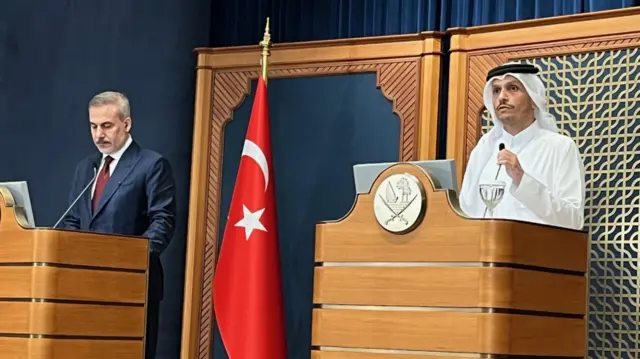
    Qatar PM and Turkish Foreign Minister stood behind podiums at a news conference.Image source, Frank Gardner/BBC

    The Qatar-Turkey news conference has just begun - you can watch live above. Our correspondent Frank Gardner is in the room:

    Israel and Iran are dragging the region into conflict, Qatar's PM Mohammed bin Abdurrahman Al-Thani says.

    He adds the attack on Ras Laffan "a very dangerous escalation by the Iranians".

  9. Alarms sound in Qatar ahead of PM's news conferencepublished at 14:31 GMT 19 March

    Frank Gardner
    Security correspondent, reporting from Doha

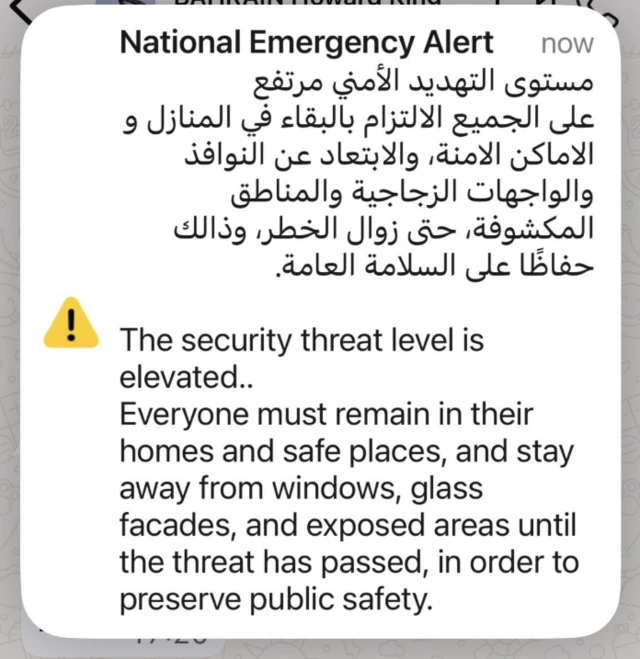
    Alarms have just gone off here in Qatar as we wait for this news conference with Qatar’s PM and Turkey’s Foreign Minister Hakan Fidan.

    This happens every time Iran launches a missile or drone in this direction.

    The conference seems to be still going ahead.

    A screenshot of a message saying 'security threat level is elevated' in Qatar.Image source, Frank Gardner/BBC
  10. Treasury Secretary Bessent says US considering waiving sanctions on Iranian oilpublished at 14:21 GMT 19 March

    Natalie Sherman
    New York business reporter

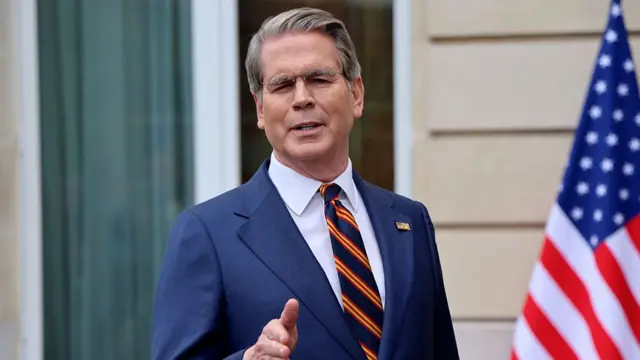
    Scott BessentImage source, Getty Images

    Treasury Secretary Scott Bessent says the US may waive sanctions on Iranian oil, as it looks for ways to keep energy prices in check.

    The move would affect about 140 million barrels of oil that are already on the water, he suggests in a Fox Business interview.

    The world consumes roughly 100 million barrels per day.

    It adds to other US efforts to boost oil supplies, including the suspension of sanctions on Russian oil and the contribution of 172 million barrels of oil to a global release of oil reserves.

    Bessent has previously said the US is also allowing Iranian oil tankers through, despite the conflict.

    How much of an impact it will have on prices is unclear.

    Asked about concerns that the US is funding its enemies, Bessent says the US would be "using the Iranian barrels against the Iranians" to keep prices down for the next 10-14 days.

  11. Iranian strikes on energy sites a 'serious escalation' - UK defence secretarypublished at 14:14 GMT 19 March

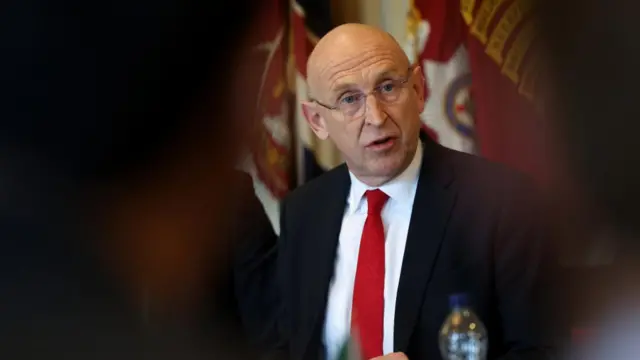
    Defence Secretary John Healey during a meeting with representatives from the UK defence industry and Gulf region countries to discuss how best to support partners in the region to defend the skies, at Wellington Barracks, central London on Wednesday.Image source, PA

    Britain will "step up" defensive support for Gulf states after Iran attacked energy sites across the region, Defence Secretary John Healey says.

    He adds that Tehran's attacks overnight are a "serious escalation" which threaten to "further destabilise the region".

    "We can see the impact here on the cost of living, the price of fuel, so it's important that we do everything we can with a lot of other countries that need to be involved in trying to reopen those straits", Healey tells PA news agency.

    The best way of taking the pressure off world oil prices, he says, is "to see a de-escalation and an end to the conflict".

  12. Strike on Qatar's Ras Laffan only employed a 'fraction' of Iran's power - foreign ministerpublished at 14:06 GMT 19 March

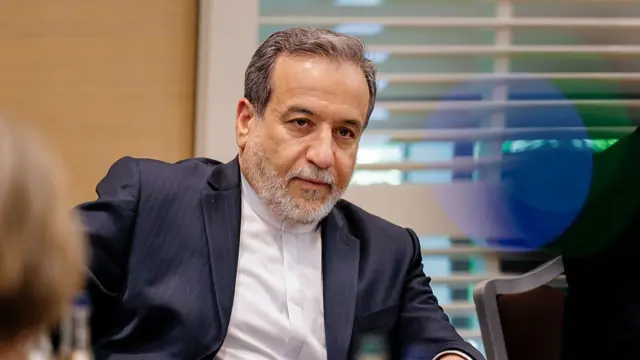
    Iran's Foreign Minister Abbas Araghchi, pictured last yearImage source, Getty Images
    Image caption,

    Iran's Foreign Minister Abbas Araghchi, pictured last year

    Iran's Foreign Minister Abbas Araghchi says the attack on Qatar's Ras Laffan energy complex only employed a "FRACTION of our power".

    "The ONLY reason for restraint was respect for requested de-escalation," he writes on X.

    In an apparent threat to the US, Israel and Gulf nations, he goes on to say there will be "ZERO restraint" if Iranian infrastructure is struck again.

    He also says any end to the war "must address damage" to Iran's civilian sites.

    We'll be hearing from Qatar's PM and Foreign Minister and the Turkish Foreign Minister shortly. Stay with us for the latest developments.

  13. Analysis

    Uncertainty about damage to Ras Laffan leaves traders worriedpublished at 14:00 GMT 19 March

    Theo Leggett
    BBC International Business Correspondent

    We'll shortly be hearing from Qatar's PM in a joint news conference after Iran's attack on the country's key gas facility at Ras Laffan.

    The jump in gas prices today comes as no surprise. The attacks on Ras Laffan could have a major impact on future gas supplies.

    QatarEnergy says there has been "extensive damage" to the plant used to convert natural gas into a liquid, so that it can be carried around the world aboard ships.

    The company suspended production at the plant two weeks ago, because vessels were unable to pass through the Strait of Hormuz and it was running out of storage capacity.

    Under normal circumstances, restarting it would have taken several weeks.

    But a severely damaged plant could be out of action for a lot longer than that. There are precedents for LNG plants that have suffered major fires being shut down for more than a year.

    Until we know more about the situation at Ras Laffan, that is the scenario traders will be worried about – and that is why prices are now at levels not seen since the early days of the war in Ukraine.

  14. Qatar PM about to hold news conference, as country reeling after Iranian strikepublished at 13:58 GMT 19 March

    Frank Gardner
    Security correspondent, reporting from Doha

    We are now at Qatar’s Amiri Diwan (Royal Court) awaiting a joint news conference by Qatar’s PM and Foreign Minister Sheikh Mohammed bin Abdurrahman Al-Thani, and Turkey’s Foreign Minister.

    Qatar is still reeling and furious after last night’s double strike by Iran on its key gas facility at Ras Laffan, 50 miles north of here up the coast.

    Qatar shares with Iran the world’s largest offshore gas field. On the Iranian side it’s called South Pars then south of the maritime border Qatar’s portion is called the North Dome.

    Ras Laffan, where the damage from Iran’s attack is "extensive", processes the feed from this North Dome gas field and so is part of this country’s Critical National Infrastructure.

    Qatar, along with other Gulf states is worried this conflict is spiralling out of control. Qatar has condemned both Israel’s attack on South Pars and Iran’s response.

  15. UK and allies ready to contribute to 'appropriate efforts' to secure Strait of Hormuzpublished at 13:48 GMT 19 March

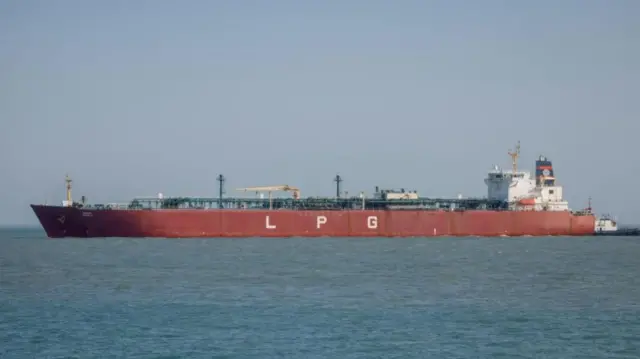
    A large vessel floating on water near the Strait of Hormuz.Image source, Reuters

    In a joint statement, the UK and allies have condemned Iran's attacks on civilian infrastructure, and have called on it to stop its threats to vessels in the Strait of Hormuz.

    "Freedom of navigation is a fundamental principle of international law," the statement from the leaders of the UK, France, Germany, Italy, the Netherlands and Japan says.

    "The effects of Iran’s actions will be felt by people in all parts of the world, especially the most vulnerable."

    The group also expresses its "readiness" to contribute to "appropriate efforts" to ensure safe passage through the vital shipping channel, which around 20% of global energy supplies pass through.

    "We welcome the commitment of nations who are engaging in preparatory planning," the countries add.

    • As a reminder: Traffic in the Strait of Hormuz, a vital shipping lane for energy supplies, has come to an effective standstill after Iran threatened to "set fire" to ships
  16. 'There's no need to attack infrastructure' and 'I'm scared there'll be nothing left': Iranians react to gas field attackpublished at 13:40 GMT 19 March

    Ghoncheh Habibiazad
    Senior reporter, BBC Persian

    Amid the internet outage imposed by the government, some inside Iran are still managing to connect to the internet.

    I asked some about their opinions on Israel’s attack on a gas field in Iran, as well as Tehran’s retaliation.

    A woman in her 20s in Tehran tells me: "They’re not really thinking about the people, and their own objectives matter more to them. But even if you want to weaken the regime, there’s no need to attack infrastructure."

    "I’m really sad about the attack on the gas field in Iran. I’m scared that after this war, nothing will be left of Iran besides burnt land," a man in his 20s in Karaj, a city near Tehran, says.

    Meanwhile, a man in his 30s in Tehran says: "Well, it’s a war. If either side ends up winning, it’s in their interest for the infrastructure to remain intact so they can make better use of it afterwards."

  17. Closer look at US military aircraft mentioned at Pentagon briefingpublished at 13:36 GMT 19 March

    Chris Partridge
    BBC News weapons analyst

    A little earlier, we heard General Dan Caine, chairman of the Joint Chiefs of Staff, talk about some of the weapons and aircraft being used by the US military in Iran.

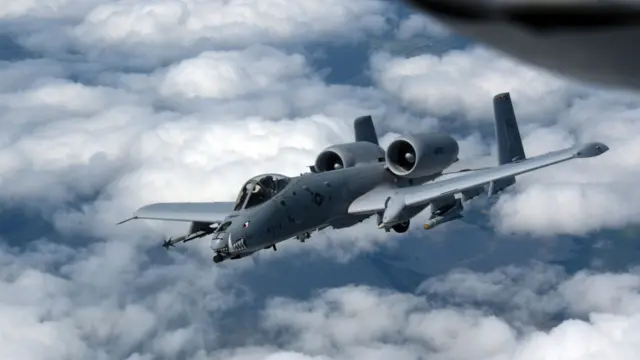
    Aircraft, he said, were penetrating deeper into Iranian airspace and A-10 'Warthogs' - specialist air-to-ground attack planes - were now striking fast-attack watercraft operating in the Strait of Hormuz, on the southern flank of Iran.

    These A-10s are armed with a variety of missiles, including AGM-65 Maverick infra-red / optical munitions.

    But the aircraft are also known for their feared, front-mounted 30mm GUA-8/A seven barrel Gatling gun, capable of firing 4,000 rounds a minute on soft targets and hardened ones, including tanks.

    A-10C Thunderbolt II flying through the cloudsImage source, USAF
  18. Analysis

    Keen to stress the US is winning the war, Hegseth was unspecific on Strait of Hormuzpublished at 13:16 GMT 19 March

    Tom Bateman
    US State Department correspondent, at the Pentagon

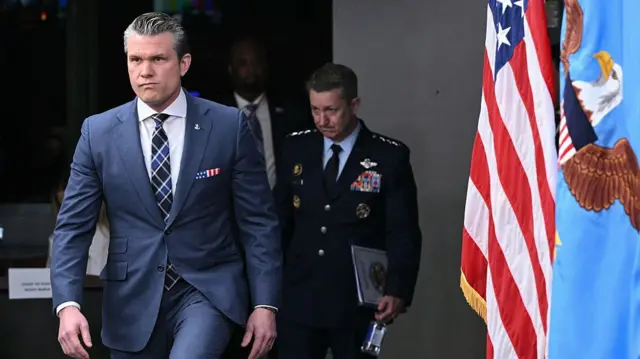
    Pete HegsethImage source, Getty Images

    Hegseth wanted to hammer one point home in that news briefing - that despite the coverage of a war appearing to slip out of control strategically, the US is winning.

    He attacked the media first, then returned to familiar points: the tactical objectives that have been repeated at every news briefing, that the US was projecting overwhelming force over Iran and destroying its missiles, launchers and its naval fleet.

    But there was nothing specific in his statement about tackling the part of the conflict where the US is in real trouble - Iran’s use of insurgent tactics to control the Strait of Hormuz and its effect on global markets, nor about the way the war has evolved into escalating attacks on regional energy infrastructure, involving Israel’s bombing of Iran’s South Pars gas field and Iran’s retaliation against Qatar.

    We only got to this at the very end, with a question about whether the US was letting Israel call the shots. "We hold the cards, we have objectives, those objectives are clear... the United States military controls the fate of [Iran]," replied Hegseth.

  19. Six takeaways from latest Pentagon update on Iran warpublished at 13:09 GMT 19 March

    • The US defence secretary said the US was "on plan" and "on target" in the war, but wouldn't give an exact time frame for when the conflict might end. Pushed for clarity, he said: "We don't want to set a definitive time frame"
    • He reiterated US objectives in Iran, which he said included destroying Iran's missile launchers and navy, and ensuring "Iran never gets a nuclear weapon"
    • The US has struck over 7,000 Iranian targets to date, he said, and troops have "even more of an exact sense of what we're striking and why"
    • Meanwhile, Gen Dan Caine, chairman of the Joint Chiefs of Staff, told reporters the US military is now flying further east into Iranian airspace to "hunt and kill" one-way attack drones, and using using AH-64 Apache helicopters to target drones
    • Caine said Iran "came into this fight with a lot of weapons", which is why the US is being as "aggressive and assertive" as it can - he also acknowledged Iran still had "some" military capability
    • And finally, Hegseth addressed reports that the Pentagon had asked the White House to request $200bn (£150bn) in funding from Congress, a number which Hegseth said "could move". He added: "It takes money to kill bad guys"
  20. Hegseth asked about reports Pentagon requested more money for warpublished at 13:00 GMT 19 March

    Before finishing his briefing a little earlier, US Defence Secretary Pete Hegseth was asked about a report by the Washington Post, in which the Pentagon is said to have asked the White House for additional funds to supplement the Iran war.

    Hegseth says the reported number, $200bn (£150bn), "could move, obviously".

    "It takes money to kill bad guys," Hegseth says, adding it's important that they're "properly funded" for anything that may be necessary in the future.

    That's it for the Pentagon update - we'll bring you a round-up of the key takeaways in our next post.