Summary

  • Our live coverage of the Iran war continues on a new live page. Follow this link for the latest updates.

  • In Jerusalem, sirens sounded and there were booms in the skies above, as families celebrated the first night of Eid - Iranian state TV has confirmed it fired four salvos of missiles in quick succession, writes our correspondent there

  • Elsewhere in the region, Saudi Arabia and Bahrain both say they have intercepted and destroyed drones

  • Iran's foreign minister earlier warned that Tehran would act with "zero restraint" if there were further attacks on its infrastructure

  • Prime Minister Benjamin Netanyahu has said Israel "acted alone" in strikes on Iran's South Pars, part of the world's largest natural gas field. He added Trump was not "dragged" into the war with Iran - here's the context

  1. Israeli Prime Minister Netanyahu speaking - watch livepublished at 18:45 GMT 19 March
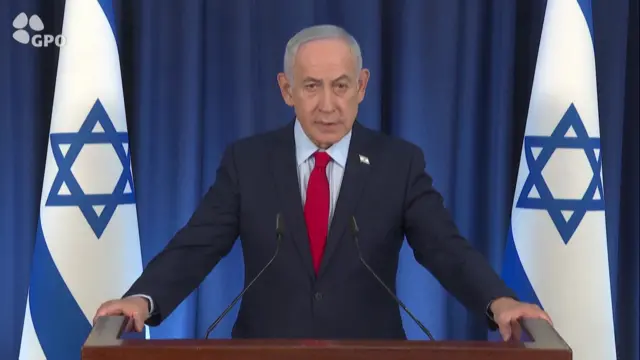
    Bejamin Netanyahu leaning on wooden lectern as he delivers speech. He's standing in-between two Israeli flagsImage source, GPO

    Israeli Prime Minister Benjamin Netanyahu has just started speaking at a news conference.

    He's expected to speak in both English and Hebrew.

    We'll be listening across and will bring you any key developments. You can also watch live at the top of this page.


  2. Iran war could threaten food supplies and push up pricespublished at 18:44 GMT 19 March

    Jonathan Josephs
    BBC business reporter

    Sustained higher energy prices as a result of war in the Middle East could mean global trade grows by just 1.4% this year.

    The World Trade Organization (WTO) says that's instead of the 1.9% that has been expected.

    It was already weaker because of President Trump's tariffs and increasing restrictions on global trade.

    The head of the WTO told the BBC that interruptions to oil and gas markets were also harming fertilizer supplies and that this could reduce food availability and push up prices.

    Dr Ngozi Okonjo-Iweala said Thailand, India and Brazil were particularly vulnerable.

    She added that the global economy was full of uncertainty and that was its biggest challenge.

  3. Iran says it takes responsibility for attacks on ‘all infrastructures belonging’ to the US and Israelpublished at 18:21 GMT 19 March

    Ghoncheh Habibiazad
    Senior reporter, BBC Persian

    Iran’s armed forces will target “all infrastructure belonging” to the US and Israel, and they “officially accept and declare responsibility for it”, says a spokesperson for the Khatam al-Anbiya Central Headquarters.

    Iranian outlets have quoted the spokesperson Ebrahim Zolfaghari as accusing Israel of intending to target energy infrastructure in the region, including Saudi Arabia's Aramco facilities.

    “The regime’s past record of provocations, aimed at blaming Iran and creating discord among regional countries, confirms this malicious intent”, Zolfaghari said.

  4. US intelligence director grilled on whether Iran posed threat to US before war beganpublished at 18:19 GMT 19 March

    Brandon Drenon
    Reporting from Washington

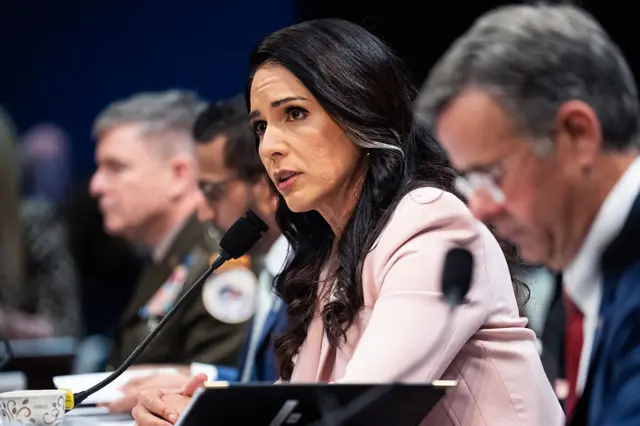
    National Intelligence Director Tulsi Gabbard.Image source, Getty Images

    During a hearing in Congress on Thursday, the US Director of National Intelligence Tulsi Gabbard is asked about Israel's decision to attack Iran's South Pars gas facility.

    Congressman Joaquin Castro pushes Gabbard on why Israel attacked despite President Trump's call to keep those facilities off limits.

    Gabbard replies: "I don't have an answer for that, and I wouldn't speak for Israel."

    In the same hearing, congressman Andre Carson asks Gabbard if there is any evidence that Iran intended to conduct a preemptive attack on the US before the war began.

    Gabbard swerves the question, and says it "needs to be reserved for a closed hearing".

    The national intelligence director also said that Iran's new supreme leader Mojtaba Khamenei was "injured very severely through one of the Israeli strikes". Last week, US Defence Secretary Pete Hegseth said Khamenei was "wounded, and likely disfigured".

  5. B-52 strategic bombers take off from RAF Fairfordpublished at 18:01 GMT 19 March

    Chris Partridge
    BBC News weapons analyst

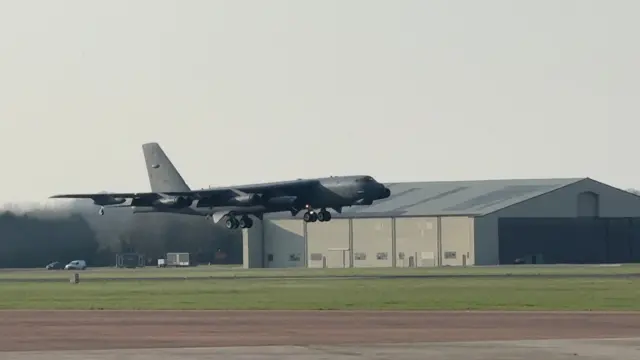
    B-52s departing RAF Fairford on ThursdayImage source, Chris Partridge/BBC

    A short while ago, two USAF B-52 strategic bombers took off from RAF Fairford in Gloucestershire, UK.

    These were armed with AGM-158 JASSM / JASSM-ER cruise missiles, meaning the aircraft were likely on a Deep Strike mission.

    The missiles have a range of appropriately 500 miles and are guided by GPS satellite and INS.

    They deliver a 1,000lb blast fragmentation warhead to target with a stated precision of just a few metres.

    B-52s are tried-and-tested bombers with many taking off here more than 65 years old. Modernised with "glass cockpits" they have been the backbone of the USAF through many conflicts.

    Their newer cousins, the B-1b Lancers, have also been taking off from RAF Fairford these past few weeks - the latest departed at 8am this morning armed likely with GBU-31 JDAM bunker busters.

  6. Iran warns 'zero restraint' as Trump says 'no plans to deploy US troops' - what's the latest?published at 17:41 GMT 19 March

    Charlotte Hadfield
    Live reporter

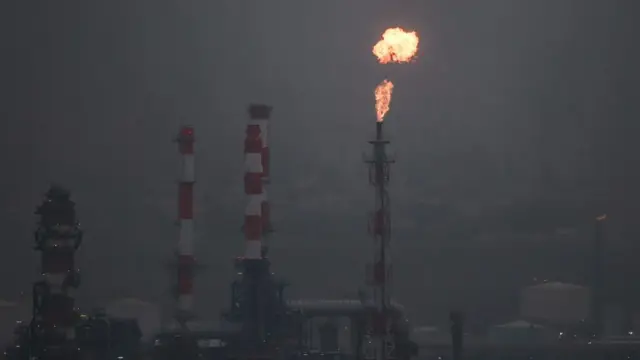
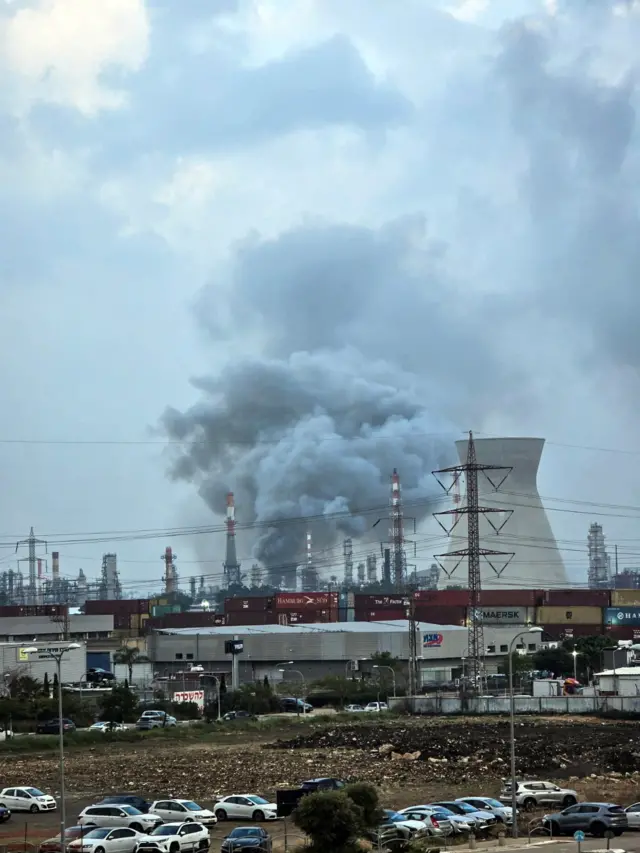
    An oil refinery following an Iranian attack which, according to Israel's Energy Ministry, didn't cause "significant damage.Image source, Reuters
    Image caption,

    A fire at an oil refinery in Haifa, Israel

    Iran's foreign minister has warned that Tehran would act with "zero restraint" if there were further attacks on its infrastructure.

    It comes a day after Israel hit Iran's South Pars, part of the world's largest natural gas field located offshore in the Gulf between Iran and Qatar.

    Last night, Iran attacked Qatar's Ras Laffan energy complex. The strike has been condemned by the Qatari PM as a "very dangerous escalation by the Iranians".

    Earlier today, Israel's Haifa oil refinery was damaged by what Israeli media described as fallen shrapnel following missile barrages from Iran.

    These attacks on the energy sector is "exactly the escalation that Gulf Arab nations feared", says the BBC's security correspondent Frank Gardner.

    The UK, France, Germany and allies have condemned Iran's attacks on civilian infrastructure, and called on Tehran to stop its threats to vessels in the Strait of Hormuz.

    Traffic in the Strait, a vital shipping lane for energy supplies, has come to an effective standstill after Iran threatened to "set fire" to ships.

    Meanwhile, US President Donald Trump has said there are no plans to deploy US ground troops in the Middle East.

    During talks with the Japanese PM in the Oval Office, he also told the media the operation in Iran is "ahead of schedule".

    The impacts of the recent strikes on energy infrastructure is also being felt further afield. The price of gas in Europe is more than double what it was before the war between Iran, and the US and Israel started.

  7. US fighter jet forced to make emergency landing, Centcom tells BBCpublished at 17:25 GMT 19 March

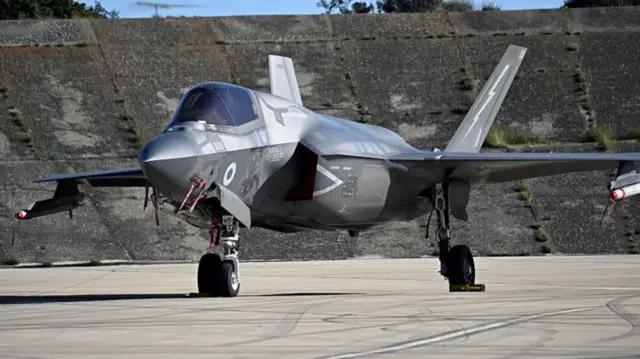
    An F-35 jet, which is grey and has large wings, with wheels on the ground on tarmac.Image source, Getty Images
    Image caption,

    An F-35 jet seen at RAF Akrotiri on 5 March in Akrotiri, Cyprus

    A US F-35 fighter jet was forced to make an emergency landing at a US base in the Middle East after flying a combat mission over Iran, a spokesperson for US Central Command tells the BBC.

    Iran is claiming that it targeted the jet and says it was "seriously damaged", according to state broadcaster IRIB News Agency.

    IRIB says the jet's "fate is unknown and under investigation", adding there was a strong possibility it had been downed.

    The Centcom spokesperson says the jet landed safely and the pilot is in stable condition, adding that the incident is still being investigated.

  8. 'Reckless attacks on critical infrastructure risk pushing region further into crisis' - Starmerpublished at 17:16 GMT 19 March

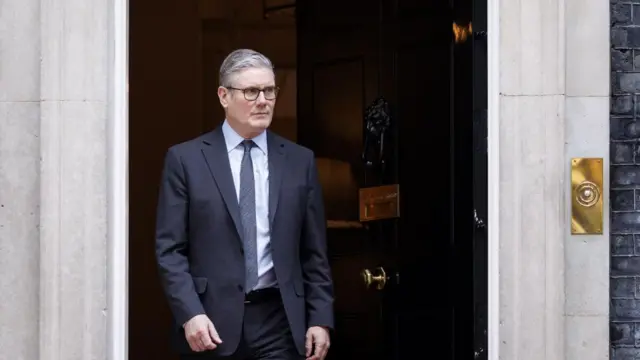
    Prime Minister Keir Starmer in a dark blue suit at No 10 Downing Street.Image source, EPA

    UK Prime Minister Keir Starmer earlier told the Emir of Qatar, Sheikh Tamim bin Hamad bin Khalifa Al-Thani, that he condemns the Iranian strikes on Qatari energy facilities overnight.

    A Downing Street spokesperson says that, in a phone call with Al-Thani, the PM said "such reckless attacks on critical infrastructure risk pushing the region further into crisis and worsening the severe economic impacts being felt globally, including in the UK".

    Starmer reiterated that the UK will continue to support Qatar and other allies in the Gulf, "by providing defensive support to UK partners in the region", according to the spokesperson.

  9. Analysis

    Price tag for US war against Iran coming into viewpublished at 17:00 GMT 19 March

    Anthony Zurcher
    North America correspondent

    With estimates that the US is spending more than $1bn a day on military operations, the Washington Post reports that the Pentagon has asked Congress for $200bn in funds to cover the costs.

    That comes in addition to the Defence Department’s annual budget of $838.7bn, which was approved by Congress in January.

    The request, which has yet to be confirmed by the White House, will set up a bruising legislative fight less than eight months from November’s midterm congressional elections.

    While military funding tends to garner bipartisan support, polls suggest a majority of the US public does not approve the war in Iran – and politicians will be pressed to justify the massive spending increase that is being required.

    Democrats have been quick to attempt to put the size of this military spending package in context.

    The one-year extension of health insurance subsidies they unsuccessfully fought for last year, for instance, was estimated to be $35bn. The administration had previously said that the total savings from last year’s Department of Government Efficiency (Doge) budget cuts – which included massive reductions in US foreign aid – totaled $175bn. Last year, the federal government spent $100bn for food aid for lower-income families.

    In the end, Republicans in Congress should have the votes to push through the extra funding – but it could come at a steep political price if the war, and the economic disruption that has come with it, drag on.

  10. BBC Verify

    Verified footage shows impact of reported strike on Haifa oil refinerypublished at 16:42 GMT 19 March

    Media caption,

    Smoke and flames seen at Haifa oil refinery

    Turning away from the comments from Trump and the Japanese PM, we can bring you the latest from BBC Verify:

    By Shayan Sardarizadeh, Sarah Jalali and Shaina Oppenheimer

    BBC Verify has confirmed two videos that show fire and smoke at an oil refinery in Haifa after a reported Iranian missile attack.

    One clip, which was filmed from a vehicle on a highway north of the refinery, shows a plume of black smoke rising from the complex.

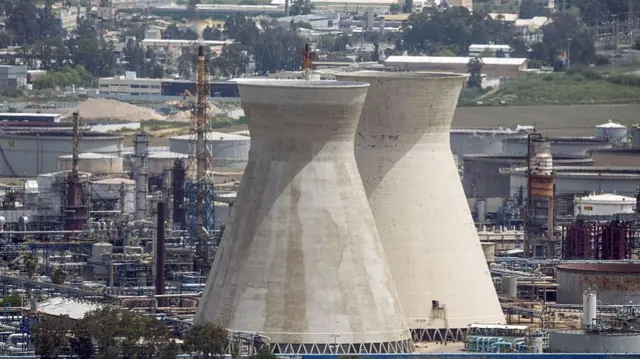
    As the camera zooms in, we can see the smoke is near several fuel storage tanks and at least one cooling tower, although the exact structure that was hit is not clear.

    Another clip, which was filmed from a street immediately west of the refinery, shows fire and a plume of smoke near the eastern edge of the refinery complex.

    Reports by Israeli media have confirmed that the Haifa refinery has been hit by missile fragments. Officials have said that there was no serious damage.

    Iranian media have also posted clips of smoke rising from the oil refinery, describing it as an attack by an "Iranian missile".

  11. 'I expect Japan to step up' - Trumppublished at 16:27 GMT 19 March

    Trump is asked about his thoughts on Japan's reluctance to assist the US in its war with Iran, particularly with the securing of the key shipping route Strait of Hormuz.

    For context: Earlier this week, Trump posted on his Truth Social platform a call for some countries to help secure the vital Strait. Following the hesitant response from some world leaders, Trump said in a later post that the US did "NOT NEED THE HELP OF ANYONE!"

    "I expect Japan to step up, because, you know, we have that kind of relationship," Trump says. "And we step up in Japan. We have 45,000 soldiers in Japan."

    Trump continues, saying "oil is a big reason for them to step up", after mentioning that Japan gets "more than 90% of their oil through the Strait".

  12. Trump says he's 'not putting troops anywhere' and war with Iran is 'ahead of schedule'published at 16:19 GMT 19 March

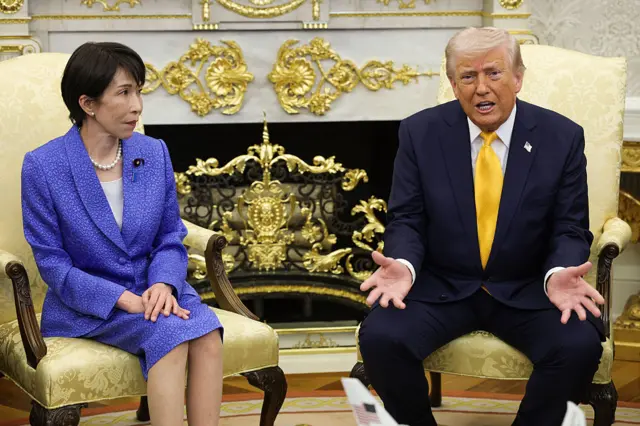
    Trump and Japanese PM Takaichi sat on chairs in the Oval Office, gold chairs and backdrop, Trump has his palms open and facing the camera.Image source, Getty Images

    Trump repeats his frequent talking point on the war in Iran: that the US and Israel have "obliterated" Iran's navy, air force, leadership, and more.

    "We've taken out everything but the pipes," Trump says, adding that the war is "substantially ahead of schedule".

    Trump is also asked if he plans to send more US troops into the region, and he answers that he's not putting troops anywhere. But even if he was planning to, Trump tells the reporter, "I wouldn't tell you".

  13. Japanese PM: 'Only Trump can achieve peace'published at 16:15 GMT 19 March

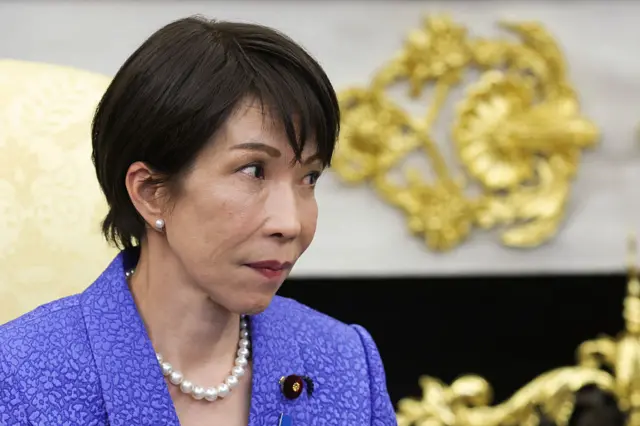
    Japanese Prime Minister Sanae Takaichi wearing a purple blazer and pearl necklace.Image source, Getty Images
    Image caption,

    Japanese Prime Minister Sanae Takaichi in the Oval Office

    We're now turning our attention back to the Oval Office, where Trump and Japan's PM are speaking.

    Japan's PM Takaichi says it is "only" Trump who can achieve peace across the world.

    She adds that Iran's development of nuclear weapons must "never be allowed".

    "And also the global economy is now about to experience huge hits because of this development," she says.

    Takaichi said Japanese officials have made direct appeals to Iran to stop its attacks on energy infrastructure.

  14. Israeli energy minister says 'no significant damage to infrastructure sites'published at 16:08 GMT 19 March

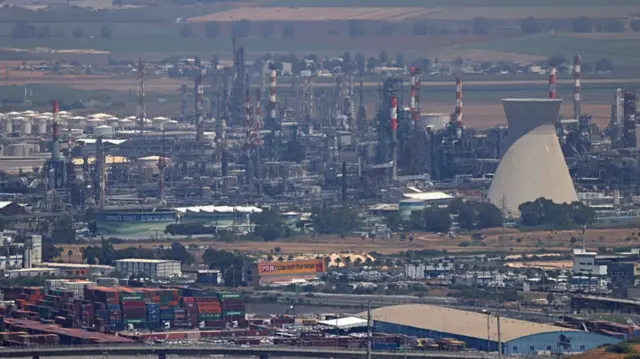
    A wide shot of Haifa from a distanceImage source, Getty Images
    Image caption,

    A file photo of the Haifa refinery, pictured in June 2025

    Israel's energy minister Eli Cohen says damage to the country's electricity grid in the north is "localised and not significant".

    Cohen doesn't confirm that the Haifa refinery was targeted, but his statement comes as verified footage shows smoke rising above Haifa refinery following a reported Iranian attack.

    In our previous post, you can see an image of smoke rising from the oil refinery in Haifa.

    "The teams of the Electric Company are already working on-site and have restored power to most of those disconnected," Cohen says.

    "Additionally, there was no significant damage to infrastructure sites in Israel from the northern barrage.”

  15. Image shows smoke rising from Haifa oil refinerypublished at 16:06 GMT 19 March

    Smoke rising from Haifa oil refinery on 19 March 2026.Image source, Reuters
  16. Haifa oil refinery - what is it?published at 16:00 GMT 19 March

    A general view shows an oil refinery, in Israel's third city of Haifa on April 20, 2015.Image source, Getty Images

    We're still listening across to the meeting between US President Trump and Japan's Takaichi, but we can now bring you some more on the Haifa oil refinery:

    A little earlier, we reported that Israeli media says the country's Haifa oil refinery has been damaged following an Iranian strike.

    This is yet to be confirmed.

    Why is the Haifa oil refinery important?

    The Haifa oil refinery, located in northern Israel's Haifa Bay, is the largest oil processing facility in Israel.

    One of only two refineries in the country, Haifa is a critical facility as it supplies around 60% of Israel's diesel and 50% of its gasoline, according to a report from S&P Global.

    It has the capacity to produce 197,000 barrels of oil per day.

    The plant was also hit during the 12-day war between Israel and Iran in June, temporarily shutting down the plant and forcing Israel to import some of its oil.

  17. Trump meets Japanese PMpublished at 15:54 GMT 19 March

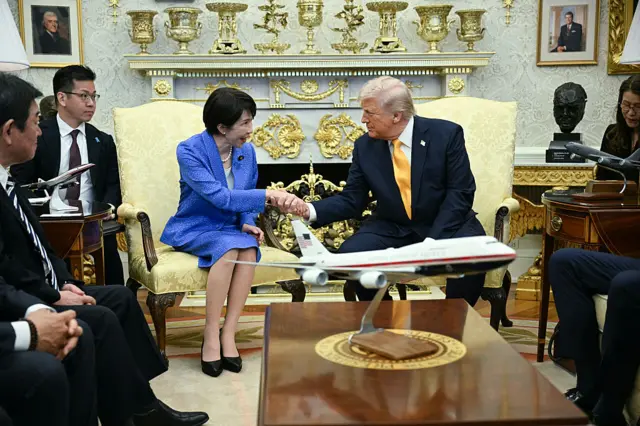
    Donald Trump shakes hands with Japan's Prime Minister Sanae Takaichi .Image source, Getty Images

    US President Donald Trump is now speaking to the Japan's Prime Minister Sanae Takaichi at the White House.

    We're listening across for any significant comments on the conflict in the Middle East.

    Stay with us for the latest developments.

  18. BBC Verify

    Oil spill off Iran after US strike nearing nature reservepublished at 15:50 GMT 19 March

    By Erwan Rivault

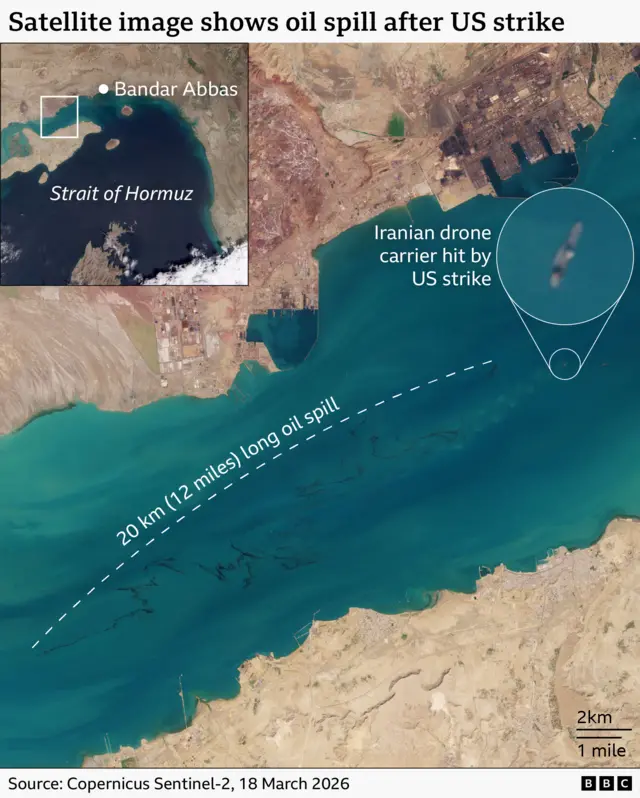
    Satellite imagery analysed by BBC Verify has revealed a 20km (12 mile) long oil spill between the Iranian mainland and the island of Qeshm.

    The spill appears to originate from the Shahid Bagheri, an Iranian drone carrier that was hit by a US strike on 2 March and 6 March.

    Two weeks after the strike, satellite imagery taken on 18 March shows the oil leakage has spread in a south-westward direction with the Gulf’s currents.

    The spill has now spread near the Hara Biosphere Reserve and the Ramsar-protected Khuran Strait Wetlands, posing a threat to coastal and marine environments.

    A satellite image showing the location and length of the oil spill off the coast of Iran
  19. Israel's Haifa oil refinery damaged following Iranian strike - reportspublished at 15:36 GMT 19 March
    Breaking

    Israeli media are reporting Haifa oil refinery in Israel has been damaged following an Iranian missile strike.

    We'll bring you more on this shortly.

  20. BBC Verify

    Fire at Kuwait’s largest oil refinery after reported Iranian strikepublished at 15:27 GMT 19 March

    A screenshot from a video showing a fire and cloud of smoke rising over an oil refineryImage source, X

    By Tom Gould

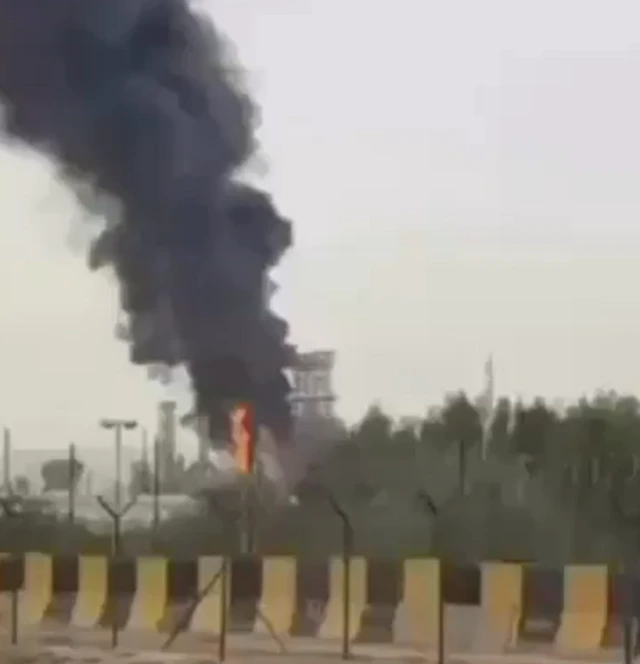
    Footage geolocated by BBC Verify shows a column of black smoke rising from a fire at the Mina Al-Ahmadi oil refinery in Kuwait following a reported Iranian drone strike this morning.

    We confirmed the location by matching the road barriers and refinery facilities with street view and satellite imagery of the area.

    The Kuwait News Agency reported that the refinery was targeted by an Iranian drone. The Kuwait Petroleum Corporation said the “limited fire” was contained and there were no injuries.

    Mina Al-Ahmadi is Kuwait’s largest oil processing facility and one of the most significant in the region, with a capacity to refine around 730,000 barrels per day.