Summary

  1. Downing Street rejects Trump's criticism of US-UK special relationshippublished at 13:58 BST 15 April
    Prime Minister Keir StarmerImage source, House of Commons

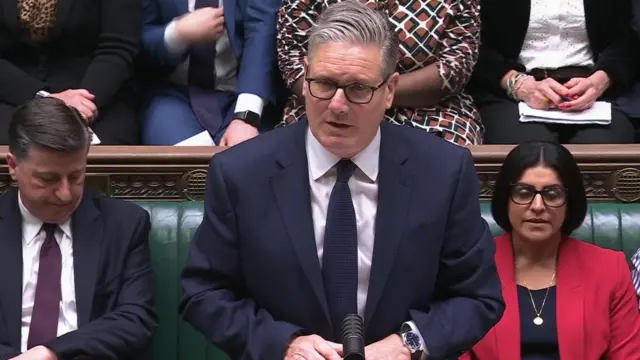
    Downing Street has rejected Donald Trump's suggestion that the special relationship between the US and the UK had "been better".

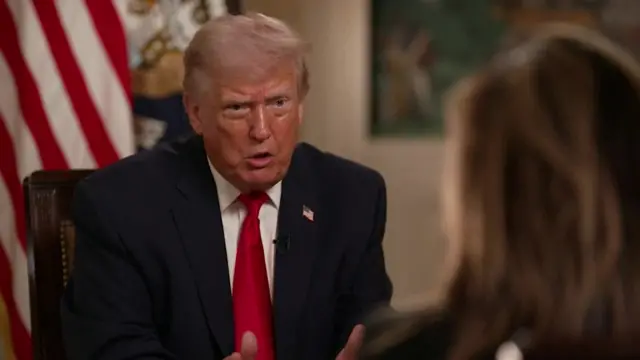
    Trump told Sky News: "It's the relationship where when we asked them for help, they were not there. When we needed them, they were not there."

    In response to Trump's comments, Prime Minister Keir Starmer's official spokesperson says "I certainly wouldn’t characterise it in the way that the president has".

    Downing Street says the "special relationship" exists on "multiple levels", adding that the UK's links with the US span "trade, diplomacy, national security, culture and beyond".

  2. Starmer is 'not going to yield' to pressure to join Iran warpublished at 13:24 BST 15 April

    Prime Minister Keir Starmer says he won't "yield" to pressure for the UK to join the war with Iran.

    His comments came after Donald Trump said in an interview overnight that the US-UK trade deal terms, brokered last year, "can always be changed".

    Speaking in Parliament Starmer told MPs: "It is not our war. A lot of pressure has been applied to me to take a different course, and that pressure included what happened last night."

    “I’m not going to change my mind. I’m not going to yield. It is not in our national interest to join this war, and we will not do so. I know where I stand," he added.

  3. Trump claims China has agreed not to send weapons to Iranpublished at 13:13 BST 15 April
    Breaking

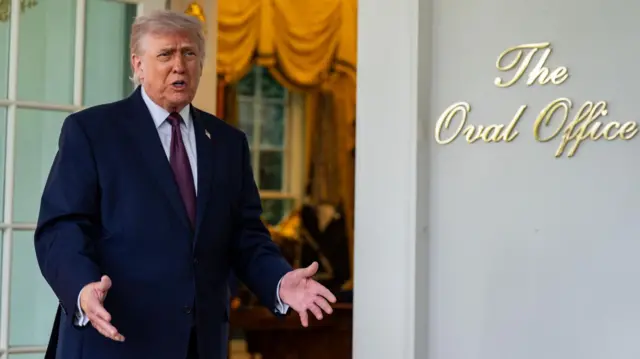
    US President Donald Trump speaks to members of the media outside the Oval Office of the White House in Washington, DC, USA, 13 April 2026Image source, EPA/Shutterstock

    US President Donald Trump says China has agreed "not to send weapons to Iran", after he wrote to President Xi Jinping asking him not to.

    In a post on Truth Social, Trump says: "China is very happy that I am permanently opening the Strait of Hormuz. I am doing it for them, also - And the World."

    "This situation will never happen again. They have agreed not to send weapons to Iran," he writes.

    "We are working together smartly, and very well! Doesn’t that beat fighting??? BUT REMEMBER, we are very good at fighting, if we have to - far better than anyone else!!!"

    On Tuesday, China called the US naval blockage of Iranian ports "irresponsible", and said it could "undermine" the ceasefire. Up until the US blockade, Chinese vessels had been among the very few managing to make their way through the Strait of Hormuz.

    A Chinese foreign ministry spokesperson also told a news conference on Tuesday that reports China was preparing to deliver new air defence systems to Iran were "completely fabricated".

    • For context: The American military said on Tuesday that no ships had passed through the strait in the first 24 hours that the US blockade of Iranian ports came into effect
  4. Iran says it's continuing to exchange messages with US - foreign ministrypublished at 12:54 BST 15 April
    Breaking

    Ghoncheh Habibiazad
    Senior reporter, BBC Persian

    Esmaeil Baghaei, Spokesperson of Foreign Ministry seen during his weekly press conferenceImage source, Getty Images

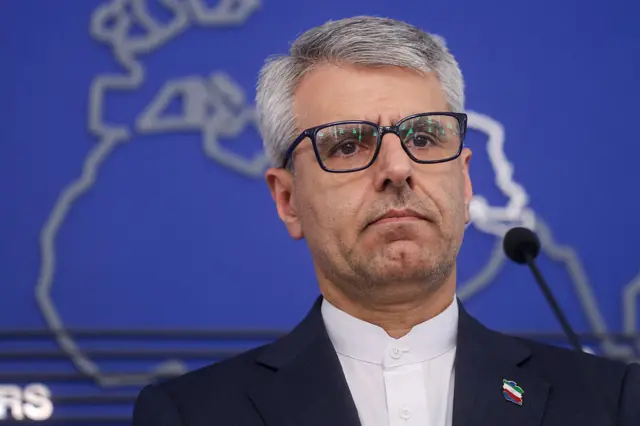
    Iran's Foreign Ministry spokesperson Esmail Baghaei says the exchange of messages between Tehran and Washington is "continuing" with a Pakistani intermediary after talks failed on Sunday.

    Baghaei said Iran’s position had been "clearly set out and repeated in subsequent contacts".

    He added Iran is "most likely" to host a delegation from Pakistan today in a continuation of talks previously held in Islamabad that will include "detailed talks on the positions" of Iran and the US.

    Baghaei rejected American claims about Iran pursuing nuclear weapons and insisted that Iran’s nuclear programme is "peaceful".

    Elsewhere in his remarks, Baghaei said Iran "must be able to continue enrichment [of uranium] based on its needs" but "there is a possibility of dialogue about the type and level of enrichment".

    The third round of nuclear negotiations over Iran’s long-debated nuclear programme happened between Iran and the US on 26 February, two days before the war started.

  5. Trump: Strait of Hormuz is 'opening' and 'the ships are coming back'published at 12:39 BST 15 April

    Donald Trump speaking to Fox NewsImage source, AFP

    As we've just reported, Iran's military has threatened shipping in the Gulf, the Red Sea, and the Gulf of Oman if the US naval blockade of Iranian ports continues.

    The US blockade came into force on Monday, and in an update on Tuesday the US military said no ships had made it through in the first 24 hours.

    In an interview with Fox Business, which was recorded before Iran's latest threats, US President Donald Trump said the Strait of Hormuz "is opening" and "the ships are coming back", without providing further detail.

    In Iran, Trump said "we're not finished", but added that he sees the war as "very close" to being over and the US could have a "great deal" with Iran.

  6. Iran threatens shipping in Gulf, Red Sea, and Gulf of Oman if US naval blockade continuespublished at 11:56 BST 15 April
    Breaking

    Ghoncheh Habibiazad
    Senior reporter, BBC Persian

    Ali Abdollahi - the commander for Iran’s Khatam al-Anbiya Central Headquarters, the country’s highest operational command co-ordinating the armed forces - says that if the US continues its blockade and creates "insecurity for Iran’s commercial vessels and oil tankers", it will "constitute a prelude to a violation of the ceasefire".

    Abdollahi adds that Iran’s armed forces would consequently not allow "any exports or imports to continue in the Persian Gulf, the Sea of Oman, and the Red Sea".

    He did not specify which countries' exports and imports could be affected, although the bodies of water he mentions cover a vast area.

    The US blockade of Iranian ports began on Monday. On Wednesday, the US military said "no ships made it past the blockade" in the first 24 hours, with six merchant vessels forced to turn around in the Gulf of Oman.

    The US-Iran ceasefire, referenced by Abdollahi, was announced on 8 April after nearly six weeks of conflict between Iran and the US and Israel.

    The first round of negotiations between Iran and the US failed - although Donald Trump says US-Iran talks could restart in the next two days. Iran is yet to confirm.

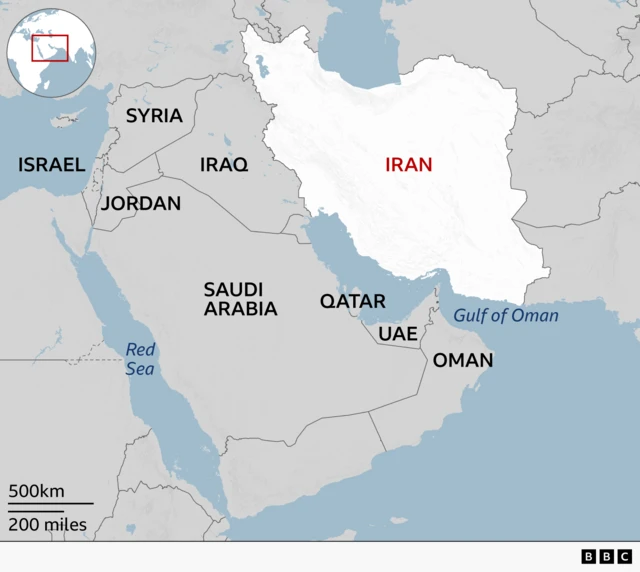
    A regional map highlighting Iran in white with its name in red. Surrounding countries are labeled in grey, neighbouring Iraq to the west and other Middle Eastern countries including Syria, Jordan, Israel, Gaza and Saudi Arabia, Qatar, UAE, and Oman. Bodies of water such as the Red Sea and the Gulf of Oman are marked in blue.
  7. Gas prices will go down 'tremendously' once war is settled, says Trumppublished at 11:33 BST 15 April

    US President Donald Trump speaks to members of the media outside the Oval Office of the White House in Washington, DC, USA, 13 April 2026Image source, EPA/Shutterstock

    We can now bring you some more lines from US President Donald Trump's interview with Maria Bartiromo on Fox Business Network, after a snippet was released earlier.

    In the full interview, Trump says that if you give Iran a nuclear weapon, "the world will be blown up".

    He adds that once the war with Iran has been settled, gas prices will go down "tremendously", adding that electricity prices will decrease too.

    Trump describes the Iran nuclear deal, signed in 2015, as the "worst deal ever made" - and says it gave the country a "short term path" to a nuclear weapon.

    He adds that if the US did not bomb Iran's nuclear facilities last year, the country would have used a nuclear weapon on Israel and its Middle East neighbours, as well as the US.

    Iran has always said that its nuclear programme is entirely peaceful and that it has never sought to develop a nuclear weapon.

    Trump says that after he heard reports that China was giving weapons to Iran, he wrote a letter to President Xi asking him not to.

    Xi wrote Trump a letter back, "essentially" saying China isn't doing that, Trump adds.

  8. Customers will pay for rising air freight costs, trade body sayspublished at 11:01 BST 15 April

    Jemma Crew
    Business reporter

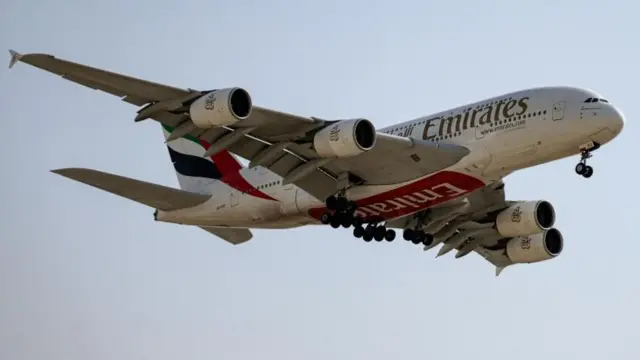
    Emirates planeImage source, EPA

    Brandon Fried, executive director of the Airforwarders Association - the trade body that represents hundreds of US freight forwarding companies – says disruption to cargo is "broad and on a wide scale".

    Middle East carriers such as Emirates, Etihad and Qatar normally carry up to a fifth of the world’s cargo but are operating under capacity, causing congestion and delays, he tells BBC Radio 4’s Today Programme.

    This is "starting to have a worldwide effect", he says, adding the rising cost of jet fuel, rerouting cargo, risk insurance and extra security measures are all significantly adding to the issue.

    He says it varies but some air freight rates have risen by 20-30% in recent weeks.

    "As an industry we can only absorb this for so long, sooner or later the actual customer pays for it."

  9. Tehran's neighbourhoods unrecognisable, charity worker tells BBCpublished at 10:32 BST 15 April

    People view debris from a damaged residential building that, according to Iranian authorities, was hit by a strike onImage source, Getty Images
    Image caption,

    People view the aftermath of a strike on a building that, according to Iranian authorities, was hit on 4 March

    Martje van Raamsdonk has been on the ground in Iran for the Norwegian Refugee Council (NRC) - an international aid agency - since November.

    The NRC is one of very few international humanitarian organisations inside Iran and Martje told the BBC's Newsday programme this morning about the extent of the damage she has witnessed in the country's capital Tehran.

    "They bombed almost daily in densely populated areas so here in Tehran, which is a huge city of over ten million people, many buildings have been destroyed and neighbourhoods are unrecognisable with buildings gone," Martje says.

    "My colleagues also are sharing very horrific stories. They live across Tehran and also in cities like Isfahan they have been very close to attacks, to missiles falling. Hearing those sounds having their roofs and windows shaken and a huge impact with only a few blocks away."

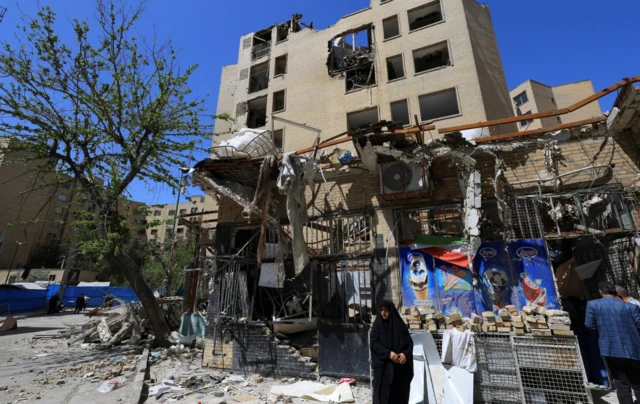
    A woman stands next to debris lying in front of a residential building damaged by a strikeImage source, Reuters
    Image caption,

    A woman stands next to debris in front of a residential building damaged by a strike in Tehran on 4 March, image taken on 14 April

  10. Israeli military says it is operating with 'significant force' in part of southern Lebanonpublished at 10:15 BST 15 April

    Smoke rises behind buildings following an Israeli strike in Lebanon.Image source, Reuters
    Image caption,

    Smoke rises behind buildings following an Israeli strike in Lebanon, near the border with Israel

    The Israel Defense Forces (IDF) have issued a fresh evacuation order for parts of southern Lebanon where it says "air strikes are ongoing".

    The IDF says they are operating with "significant force" in the area south of the Zahrani River, and people should evacuate immediately and head north.

    "Anyone present near Hezbollah elements, their facilities, or their combat vehicles endangers their life," the statement adds.

  11. Any attempts to force Iran to surrender are destined to fail, president sayspublished at 10:00 BST 15 April

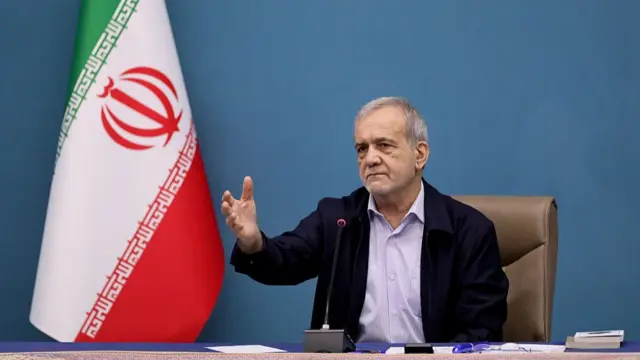
    Iranian President Masoud Pezeshkian delivers remarks during the 'Council for the Development of Quranic Culture' in Tehran, Iran, on February 24, 2026.Image source, Iranian Presidency handout via Getty Images

    Iranian President Masoud Pezeshkian says any attempts by the US or Israel to force Iran to "surrender" are "destined to fail and the Iranian nation will never accept such an approach".

    Speaking at a meeting with Tehran's emergency service officials on Wednesday, Pezeshkian says Tehran is not looking for war or instability.

    Instead, the president says "[Iran] has always stressed the need for constructive talks and interactions with various countries".

    His remarks, reported by Iranian media, come after Trump said US-Iran talks could restart in Pakistan "in the next two days", but Tehran is yet to comment.

  12. What you need to know - in 190 wordspublished at 09:49 BST 15 April

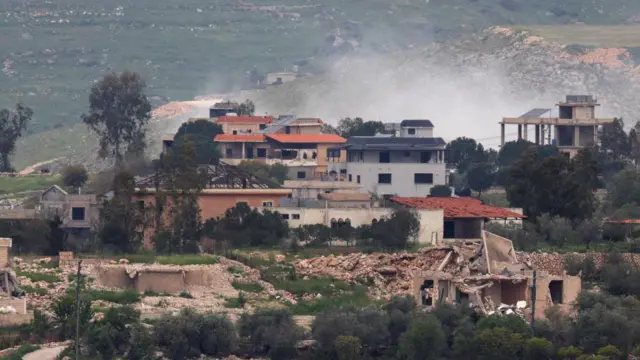
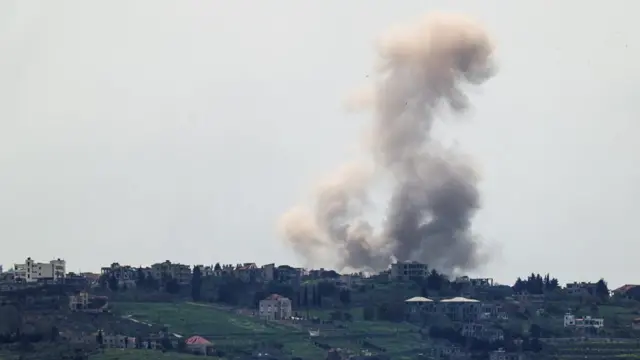
    Smoke rises from several buildings on top of a hill, with green grasses and trees also visible. The sky above the horizon is grey.Image source, Reuters
    Image caption,

    Smoke rises in southern Lebanon following a strike on Tuesday

    Israel and Hezbollah continue to attack each other a day after Israel and Lebanon held their first diplomatic talks in over three decades.

    Israel's military says it will "continue to operate" against Hezbollah, while the Iran-backed group says it will "continue until the Israeli-American aggression ceases".

    In a New York Post interview, Donald Trump says talks between the US and Iran could restart "in the next two days". The president also said the war is "very close to over" in a preview clip of a Fox News interview.

    But, a diplomatic source tells Iran's state news agency there was "no information" about further talks.

    UK Chancellor Rachel Reeves will hold talks with the US Treasury Secretary Scott Bessent in Washington later today. The International Monetary Fund (IMF) has warned the economic fallout from the conflict will hit the UK harder than any other advanced economy.

    The first full day of the US naval blockade saw several ships crossing the Strait of Hormuz, including at least four linked to Iran.

    But Adm Brad Cooper, the commander of US Central Command, has insisted that no ships had made it past its blockade.

    We'll continue to bring you the latest developments on the conflict in the Middle East throughout the day, stay with us.

  13. Hezbollah launches wave of strikes at northern Israelpublished at 09:07 BST 15 April

    Hezbollah targets several areas in northern Israel, launching a barrage of rockets on kibbutzim and towns near the border with Lebanon on Wednesday.

    The town of Kiryat Shmona was targeted twice, first at 08:00 local time (06:00 BST / 05:00 GMT) and then again at 08:55.

    Other areas in northern Israel targeted by the Iran-backed Shia Muslim armed group include Metula, Kfar Giladi, Dovev, Shlomi, Metzuba, Ya'ara, Avdon, Kfar Vradim, Nahariya, and Shavei Zion.

    In an update on Telegram, Hezbollah says attacks on Israel "will continue until the Israeli-American aggression against our country and our people ceases".

    Israel has not yet commented and it is unclear if the strikes have caused any damage.

    • For context: Hezbollah emerged out of Shia militias formed to resist Israel after its invasion of southern Lebanon in 1982, during Lebanon's 1975-1990 civil war. It has strong backing from Iran and opposes Israel's right to exist. It is considered a terrorist organisation by Israel and many other nations, including the UK and US.
  14. Israel and Lebanon report strikes day after talks in Washingtonpublished at 08:47 BST 15 April

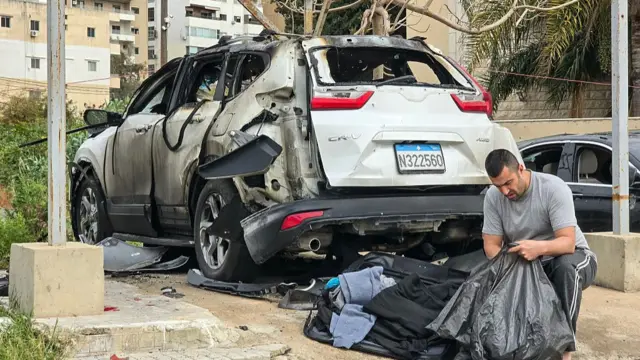
    A man sat next to a car which has been burnt, he is placing items into a bin bag in Tyre, southern Lebanon.Image source, Getty Images
    Image caption,

    In the southern Lebanese coastal city of Tyre, a man inspects the wreckage of a vehicle targeted overnight by an Israeli strike

    An Israeli military spokesperson tells the AFP news agency around 30 rockets were fired by Iran-backed group Hezbollah into northern Israel early on Wednesday.

    It comes as Lebanon's state news agency NNA reports two "dawn raids" in southern Lebanon, which they say killed a family of four in Jbaa and five people in Ansariya.

    NNA also says a car was targeted heading south on the Jiyyeh highway - which connects Beirut to southern cities in Lebanon.

    The Lebanese government yesterday held their first diplomatic talks with Israel in over three decades, aimed at ending fighting between Israel and the Iran-backed Hezbollah group. Hezbollah is not involved in the discussions, and an official told the news agency AP that it would not abide by any settlement agreed there.

    Over 2,000 people have been killed since Israeli military operations in Lebanon began on 2 March, according to Lebanon's health ministry, just days after US and Israeli strikes began in Iran.

    While the two sides were meeting in Washington on Tuesday, Hezbollah claimed at least 24 attacks on Israel and Israeli troops in Lebanon - we've been hearing more from them this morning, and will bring you their latest comments shortly.

  15. Pakistan's PM embarks on trip to Saudi Arabia, Qatar and Turkey after US-Iran talkspublished at 08:21 BST 15 April

    Pakistan's Prime Minister Shehbaz Sharif is set to begin a four-day trip to three countries including Saudi Arabia, Qatar and Turkey, Pakistan's foreign ministry said.

    It comes as Pakistan is gearing itself up for a possible second round of US-Iran talks in Islamabad - following on from the first round of talks over the weekend.

    For context, Trump told a New York Post reporter on Tuesday that "something could be happening" in Islamabad over "the next two days".

    Sharif's trips to Saudi Arabia and Qatar would be conducted "in the bilateral context," the ministry said on Wednesday morning.

    In Turkey, Sharif will take part in the Antalya Diplomacy Forum and will hold bilateral meetings with Turkish President Recep Tayyip Erdogan and other leaders on the sidelines of the forum.

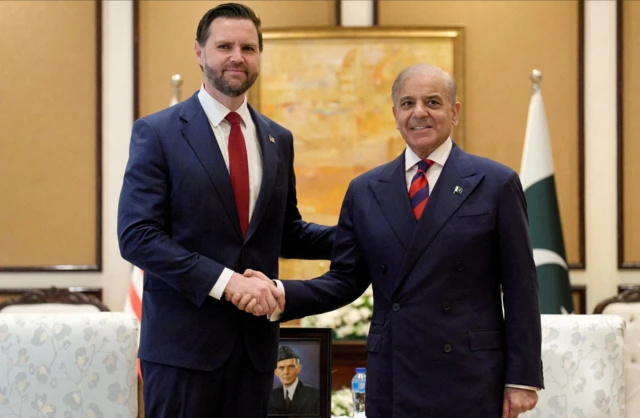
    U.S. Vice President JD Vance and Pakistan's Prime Minister Shehbaz Sharif pose on the day of a meeting for talks about Iran, in IslamabadImage source, Reuter.
    Image caption,

    US Vice-President JD Vance met Shehbaz Sharif for talks in Islamabad on Saturday

  16. Iran said 'no information' on new talks before Trump's latest commentspublished at 08:05 BST 15 April

    As we've reported, President Trump - speaking about the possibility of more US-Iran talks - said "something could be happening" in Islamabad over "the next two days".

    That came hours after a diplomatic source told Iran's state news agency IRNA there was "no information" about further talks.

    IRNA said messages had been exchanged between Tehran and Pakistan - which has been acting as a mediator - but there was nothing confirmed.

    The source said Pakistan "remains committed to its mediation efforts" after previous US-Iran talks in Islamabad ended without agreement.

    Iran has seemingly not commented on Trump's latest comments. The two-week ceasefire was announced on 8 April - meaning it is due to expire next Wednesday on 22 April.

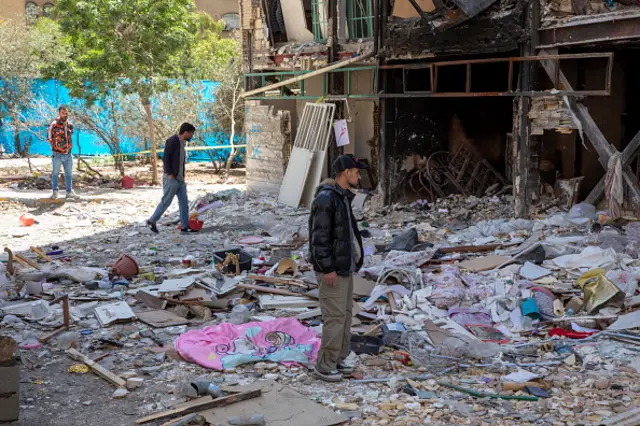
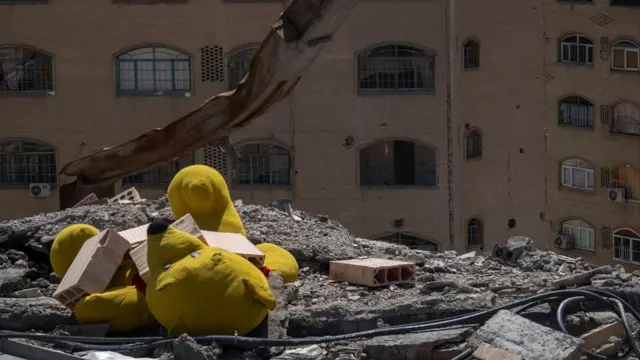
    A teddy bear pictured under the ruins of a building in the Shahid Boroujerdi residential complex in southern Tehran yesterday. The building was destroyed in US-Israel attacks on 4 MarchImage source, Getty Images
    Image caption,

    A teddy bear pictured under the ruins of a building in the Shahid Boroujerdi residential complex in southern Tehran yesterday. The building was destroyed in US-Israel attacks on 4 March

  17. 'Not our war': Minister repeats UK message as Reeves heads to Washingtonpublished at 07:54 BST 15 April

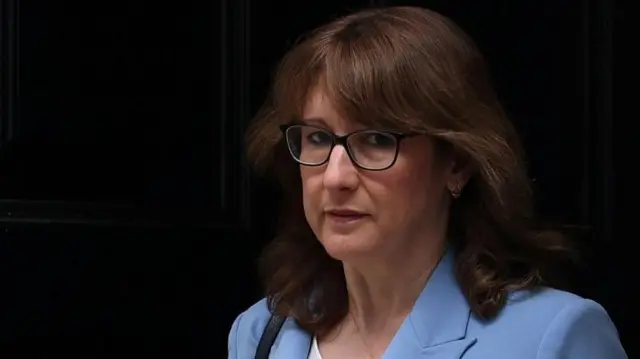
    Rachel Reeves, pictured last monthImage source, Reuters
    Image caption,

    Rachel Reeves, pictured last month

    Later today, UK Chancellor Rachel Reeves will hold talks with the US Treasury Secretary Scott Bessent in Washington.

    As she set off for the US, the chancellor had an interview with the Daily Mirror, external, saying she is "very frustrated and angry" the US went to war with Iran without an exit plan.

    Government minister James Murray was asked on BBC Breakfast about the chancellor's strong words.

    "I think the chancellor is reflecting views that probably quite a lot of people in Britain feel," Murray answers.

    "This is not our war. This is a war we chose not to get involved in and yet it is going to have an impact on our economy."

    The chancellor's comments come after the International Monetary Fund (IMF) warned the economic fallout from the conflict will hit the UK harder than any other advanced economy.

    Meanwhile, Bessent has told the BBC a "small bit of economic pain" is worthwhile for long-term international security.

  18. 'Will someone tell him Iran has killed 42,000 protesters?' Trump renews Pope criticismpublished at 07:34 BST 15 April

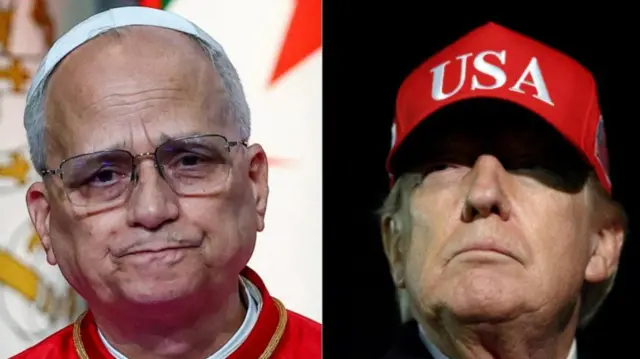
    Pope Leo and Donald Trump in composite imageImage source, Reuters

    President Trump has renewed his criticism of the Pope, writing on social media overnight: "Will someone please tell Pope Leo that Iran has killed at least 42,000 innocent, completely unarmed, protesters in the last two months, and that for Iran to have a Nuclear Bomb is absolutely unacceptable.

    "Thank you for your attention to this matter. AMERICA IS BACK!!!"

    After the Pope commented on the war in Iran, Trump told reporters earlier this month he is "not a big fan" of the American pontiff, accusing him of being "WEAK on crime and terrible for foreign policy".

    Pope Leo has said he has "no fear" of the Trump administration and will continue to speak out.

    Trump has also commented on Nato, writing three hours ago: "NATO wasn’t there for us, and they won’t be there for us in the future!"

  19. Israel continues targeting Hezbollah after talks with Lebanonpublished at 07:15 BST 15 April

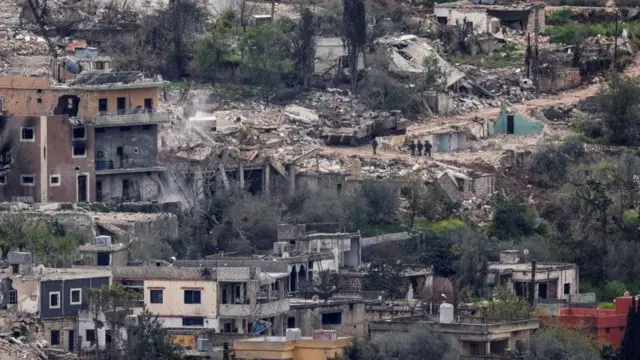
    Destroyed buildings on a hill in southern LebanonImage source, Reuters
    Image caption,

    Destroyed buildings in southern Lebanon, near the border with Israel, on Tuesday

    The Israel Defense Forces (IDF) is continuing attacks in Lebanon, the day after Israel and Lebanon held their first diplomatic talks in over three decades.

    Israel said it wanted to disarm all non-state terror groups - a reference to Hezbollah - who were not involved in the talks.

    The Israel Defense Forces (IDF) says it struck "Hezbollah terrorists and military infrastructure" over the past few days, and "will continue to operate against the Hezbollah terrorist organisation".

    In a statement about the Israel-Lebanon talks in Washington yesterday, the US said it "congratulated the two countries on this historic milestone and expressed its support for further talks, and for the government of Lebanon's plans to restore the monopoly of force and to end Iran's overbearing influence".

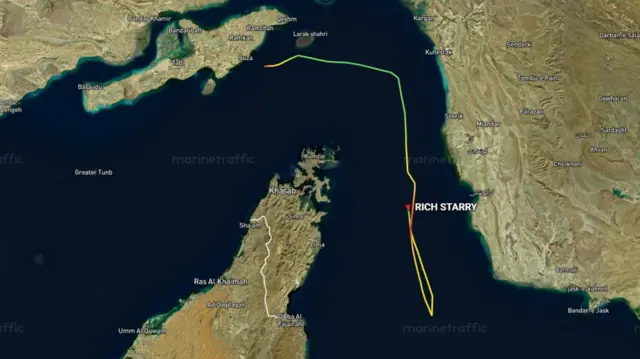
  20. Tracking data appears to show ship turning back under US blockadepublished at 06:47 BST 15 April

    Map showing Rich Starry ship doing a U-turn in the Gulf of OmanImage source, MarineTraffic

    On Sunday, the US military announced a "blockade" of Iranian ports to begin at 14:00 GMT on Monday. It said it would be "enforced impartially against vessels of all nations entering or departing Iranian ports and coastal areas".

    But yesterday, ship tracking data analysed by BBC Verify showed that at least four Iran-linked ships crossed the Strait of Hormuz as the US blockade of Iranian ports began.

    Later, the US Central Command (Centcom) insisted no ships had made it past its blockade - saying six merchant vessels "complied with direction from US forces" to turn around and "re-enter an Iranian port".

    A US official told the BBC's US partner CBS that the US had interdicted two oil tankers on Tuesday, which were part of the six told to turn back by US forces.

    Tracking data shows that one Iran-linked vessel, the Rich Starry, did indeed cross the strait, heading east. But it then seems to turn back upon reaching the Gulf of Oman - possibly under the instruction of US forces.

    BBC Verify reported yesterday that at least one other vessel, the Christianna - which crossed the strait having called at Iran’s Bandar Iman Khomein - also changed direction.