Summary

  1. Pete Hegseth begins press briefing - watch livepublished at 13:05 BST 16 April
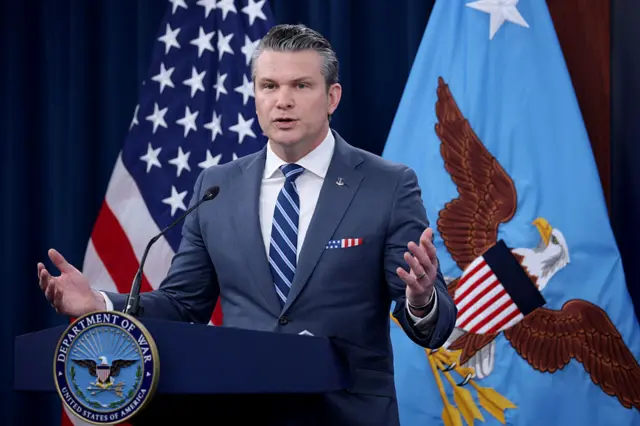
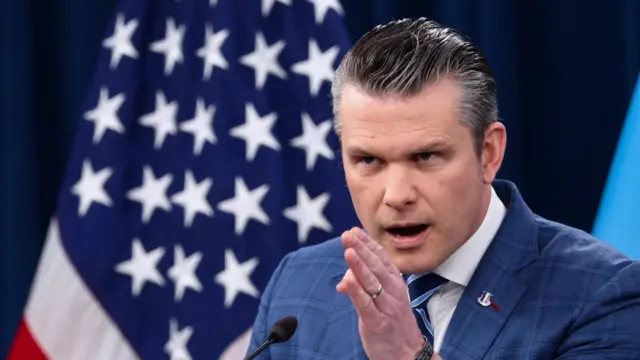
    US defence secretary Pete HegsethImage source, Getty Images

    US Defence Secretary Pete Hegseth has just begun speaking at a briefing at the Pentagon on the US-Israel war with Iran.

    He is joined by General Dan Caine, the chair of the US joint chiefs of staff. It is the first time the two have spoken publicly since the start of the US blockade of Iranian ports.

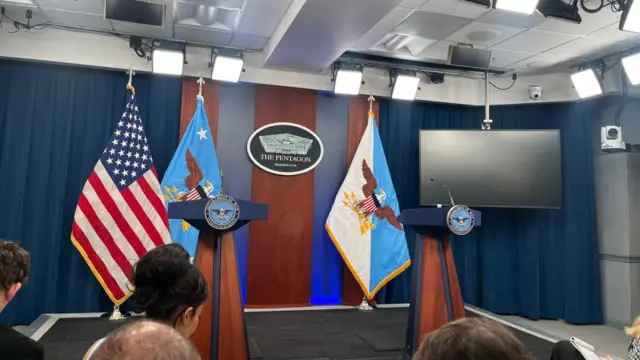
  2. US defence secretary to speak shortlypublished at 12:58 BST 16 April

    Anthony Zurcher
    North America correspondent at the Pentagon

    Two lecterns are seen with a US flag and a TV next to Pentagon branding

    I’m in the Pentagon briefing room for this morning’s news conference with Defence Secretary Pete Hegseth and General Dan Caine, the chair of the US joint chiefs of staff.

    This is their first appearance before the media since last Wednesday – prior to the start of the US naval blockade of Iranian ports, which Donald Trump announced over the weekend.

    You can follow along by tapping watch live at the top of this page - and we'll bring you the key lines.

  3. ‘Ceasefire in Lebanon as important as ceasefire in Iran,' says Iranian parliament speakerpublished at 12:41 BST 16 April

    Ghoncheh Habibiazad
    Senior reporter, BBC Persian

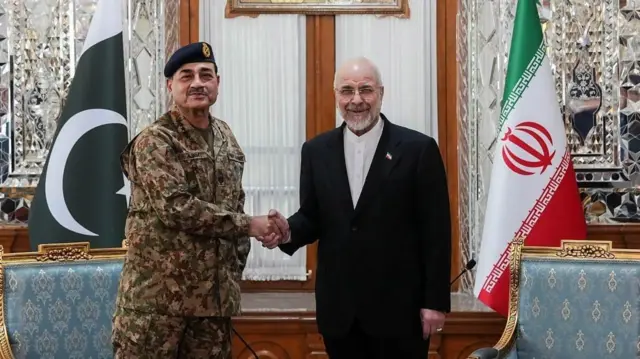
    Iranian Parliament Speaker Mohammad Bagher Ghalibaf (R) meeting with Pakistan army chief Asim Munir in TehranImage source, EPA/Shutterstock
    Image caption,

    Iranian Parliament Speaker Mohammad Bagher Ghalibaf meeting with Pakistan army chief Asim Munir in Tehran

    According to reports by Iranian outlets, Iranian Parliament Speaker Mohammad-Bagher Ghalibaf has held a phone call with his Lebanese counterpart Nabih Berri and said that a “ceasefire in Lebanon is as important” to Tehran as a “ceasefire in Iran”.

    Ghalibaf has said that “during the Islamabad negotiations [with the US] and afterwards," Iran has been “seriously pursuing efforts to compel enemies” for them agree to a “permanent ceasefire”.

    He met today with Pakistan’s Army Chief Field Marshal Asim Munir, according to reports by Iranian outlets.

    The Pakistani delegation has reportedly travelled to Tehran to continue discussions on Iran-US ceasefire talks.

    Ghalibaf has emerged as one of the key figures of the Iranian establishment since the war started, and he was the head of the delegation during the recent talks between US and Iran in Islamabad.

    Iran foreign ministry spokesperson Esmail Baghaei said yesterday that the exchange of messages between Tehran and Washington is “continuing” via Pakistani intermediary after the talks failed on Sunday, but he did not confirm reports of a possible extension to the current ceasefire with the US.

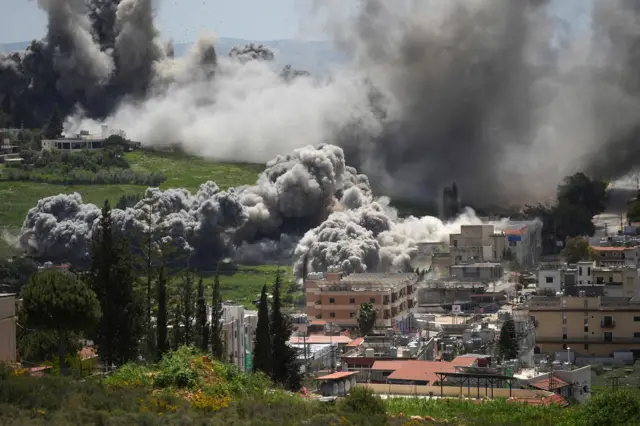
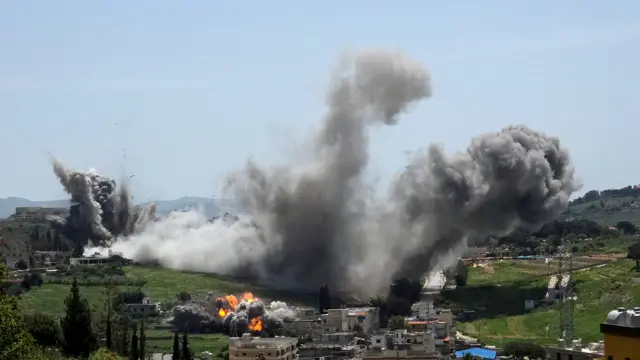
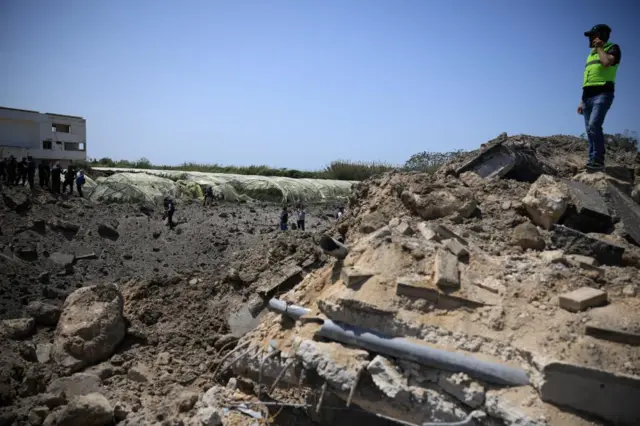
  4. Smoke rises after Israeli strikes in Lebanonpublished at 12:13 BST 16 April

    These are the latest images reaching us of Israeli strikes in Lebanon.

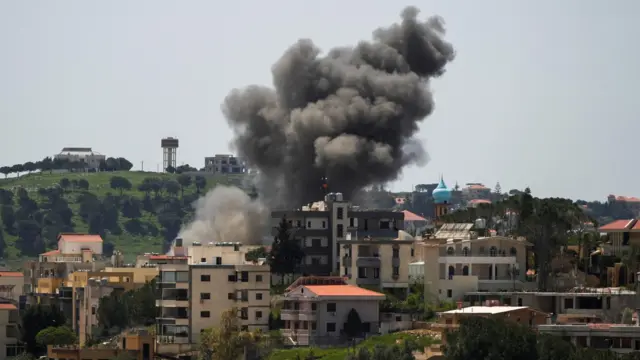
    Smoke was seen rising following a strike in Nabatieh, a city with a population of around 40,000, just north of the Litani River.

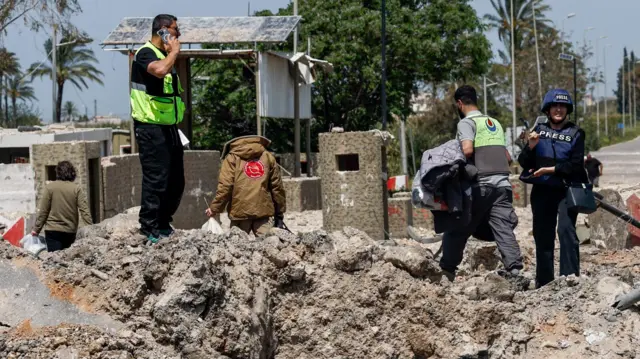
    In Qasmiyeh, near the coast, people inspect the damage following a strike which severed the last remaining bridge linking southern Lebanon to the rest of the country, according to a senior Lebanese security official.

    Smoke clouds rise from a number of different buildings that are nestled in a green valley. Much of the view is obscured by smoke.Image source, Reuters
    Large plumes of smoke rise immediately after strike impact on several buildings in a green valley, with flames visible in the foreground.Image source, Reuters
    A man in a yellow safety vest stands on top of a large pile of rubble. He is speaking on a mobile phone.Image source, Reuters
  5. Israeli strike hits final bridge linking southern Lebanon, says Lebanese officialpublished at 12:02 BST 16 April

    Emergency personnel and a member of the media work at the site after an Israeli strike severed the last remaining bridge linking southern Lebanon to the rest of the country, in Qasmiyeh, LebanonImage source, Reuters

    A senior Lebanese security official tells Reuters news agency that an Israeli strike has severed the last bridge linking south Lebanon with the rest of the country.

    Lebanon's state-run National News Agency reports the Qasmiyeh bridge, connecting the Tyre area with Sidon, was completely destroyed by two successive attacks.

    Israel has previously said its forces target bridges in the country to stop Hezbollah's use of Lebanon's state infrastructure.

  6. Analysis

    There's clearly desire for US-Iran talks, but are they prepared to be flexible?published at 11:53 BST 16 April

    Frank Gardner
    Security correspondent

    Clearly there is a desire on both sides and an interest in having talks.

    Both Iran and the US are looking for off-ramps. They are not going to say publicly that they are desperate for it, but they are both holding out to look as tough as possible.

    Iran is hurting economically. It can take a lot of pain, it has already taken a lot of pain but the US blockade on its ports, choking off its sea trade, is clearly really ratcheting up the pressure on Iran.

    But for Donald Trump too there are pressures.

    There are the threats by Iran yesterday that if the US did not remove the blockade on its ports it could start to target shipping in the Red Sea through its allies the Houthis. Iran does retain missiles and drones and the ability to hurt US military if it gets the chance.

    There is the fact that oil and gas prices are so high and the damage it is doing to the world economy. More and more people are starting to look at the White House and say this is your fault.

    Iran is maybe the one which has the big question mark over it on its nuclear ambitions, but it is the US and Israel which started this war on 28 February.

    We understand they came fairly close to a deal on nuclear enrichment when they met in Islamabad on Saturday. This is an ongoing issue, they probably could get it resolved - the question is how flexible either side is prepared to be.

  7. Israel-Lebanon talks - what's the latest?published at 11:33 BST 16 April

    As we've been reporting, Israel and Lebanon held their first diplomatic talks since 1993 earlier this week in Washington DC, with both sides agreeing to launch "direct" negotiations following the meeting.

    • Donald Trump was the first to put a timeline on the discussions in a post on Truth Social on Wednesday night, in which he said Israeli and Lebanese leaders would be speaking "tomorrow"
    • On Thursday, an official in Lebanon's presidential office told the BBC they were unaware of any upcoming contact with Israel
    • However, Israeli cabinet security member Galia Gamliel then told Israeli Army radio that the country's Prime Minister Benjamin Netanyahu would be speaking to Lebanese President Joseph Aoun today, seemingly echoing the words of Trump
    • If a phone conversation does indeed take place, it will have historic significance, writes our Middle East correspondent in Jerusalem

    Meanwhile, discussions between the US and Iran for a second round of peace talks remain "ongoing" and "productive", according to the White House - after the two countries failed to achieve a deal in Islamabad last weekend.

    In our next post we will bring you some analysis on the likelihood of these talks.

  8. How significant would Israel-Lebanon talks be?published at 10:48 BST 16 April

    Yolande Knell
    Middle East correspondent, in Jerusalem

    Smoke rises following an Israeli strike in Nabatieh, LebanonImage source, Reuters
    Image caption,

    Smoke rises following an Israeli air strike in Nabatieh, Lebanon, as Israel continues to hit southern Lebanon on Thursday

    This Trump Truth Social post came typically late in the night with few details.

    But if a phone conversation does indeed take place between Israel’s Prime Minister Benjamin Netanyahu and Lebanon’s President Joseph Aoun, it will have historic significance.

    Since the state of Israel was created in 1948, it has had no official diplomatic relations with Lebanon.

    They have remained enemies. Before the US hosted the ambassadors of Israel and Lebanon in Washington this week, the two countries last held direct talks in 1993.

    After six weeks of a devastating war, the Lebanese government has been demanding a ceasefire between Israel and the Iran-backed, Lebanese armed group, Hezbollah. It’s unlikely to agree to high level negotiations without that.

    In the longer-term, Israel has said its goal is a peace deal with Lebanon.

    But it’s ruled out a ceasefire without Hezbollah being disarmed. Israeli leaders have insisted that there will be a continuing military occupation of southern Lebanon to create what they call a “buffer zone” to protect Israeli citizens in the north from Hezbollah attacks.

    While Israel separates the Lebanon front from the Iran war, Tehran has been pushing for Lebanon to be included in any wider regional peace deal.

    Reports say that in recent days that has led to Washington putting increased pressure on Israel to end its current intensive fighting with Hezbollah.

  9. BBC Verify

    Satellite images show scale of Israeli demolitions as Lebanese villages destroyedpublished at 10:29 BST 16 April

    Towns and villages in southern Lebanon are being levelled by Israeli demolitions, satellite images and videos obtained by BBC Verify show.

    BBC Verify analysis found more than 1,400 buildings had been destroyed since 2 March based on verified visual evidence.

    This is just a snapshot of the overall damage caused by Israeli air strikes and demolitions, because of limited access on the ground and available satellite imagery. The true scale is likely to be much higher.

    The systematic demolition of these towns and villages may amount to a war crime, international law experts told BBC Verify.

    This Flourish post cannot be displayed in your browser. Please enable Javascript or try a different browser.

  10. Israel says it dismantled 70 Hezbollah sites in southern Lebanonpublished at 10:01 BST 16 April

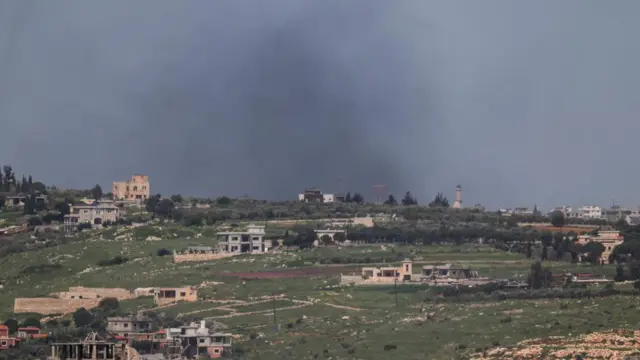
    Smoke rises from a settlement on top of a grassy hill. The sky is grey behind the black smoke rising from the horizon.Image source, Reuters
    Image caption,

    Smoke rises from Lebanon following an explosion

    Israel's military says it dismantled approximately 70 Hezbollah sites across Bint Jbeil, southern Lebanon, yesterday.

    The statement on Telegram comes after the country's prime minister Benjamin Netanyahu said yesterday that Israel was on the verge of eliminating" a "major Hezbollah stronghold" in the area.

    Earlier today, the Israel Defense Forces (IDF) said it intercepted a drone strike launched from Lebanon overnight.

    It added the drone was struck down by the Israeli Navy boat crews, who it said have "taken part in approximately 40 defensive operations to protect the country’s skies" since the start of the conflict.

  11. Disarming Hezbollah would be a great 'turning point' for Israel-Lebanon relations, says former Israeli PMpublished at 09:11 BST 16 April

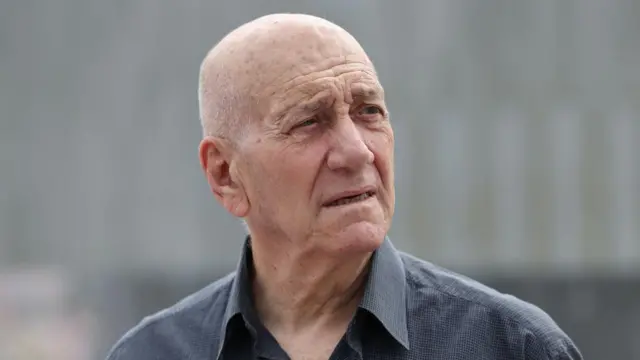
    Ehud Olmert looks to his left. He is wearing a dark grey shirt, with the background behind him blurredImage source, EPA-EFE/REX/Shutterstock

    Lebanon committing to disarming Hezbollah would represent a "turning point of great significance" for the country's relationship with Israel, according to a former Israeli prime minister.

    Ehud Olmert tells the BBC's Newsday programme: "I doubt there would be any Israeli government who would be prepared to end any current military action if there is no disarming of Hezbollah."

    "If Lebanon, alongside Europe, Israel and the US, is serious about disarming Hezbollah - and to cooperate effectively on this, that would be a turning point of great significance. But I think it is still not there," he says.

    Olmert adds that he was not aware of any high level contact between the leaders of Israel and Lebanon following the meeting of the country's ambassadors in Washington on Tuesday.

  12. Israeli cabinet minister says Netanyahu will speak to Lebanese presidentpublished at 08:48 BST 16 April
    Breaking

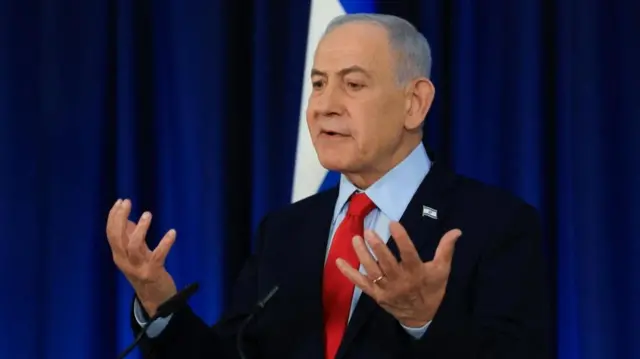
    Benjamin Netanyahu, speaking last monthImage source, Reuters
    Image caption,

    Benjamin Netanyahu, speaking last month

    Israeli Prime Minister Benjamin Netanyahu will speak to the Lebanese President Joseph Aoun today, cabinet security member Galia Gamliel says on Israeli Army radio.

    It comes after President Donald Trump posted on Truth Social - on Wednesday night US time - that Israeli and Lebanese leaders will be speaking "tomorrow".

    On Thursday, an official in Lebanon's presidential office told the BBC they were unaware of upcoming contact with Israel.

    It now seems those talks could be happening - we'll bring you more when we have it.

  13. US says it has turned round 10 ships in naval blockade of Iranpublished at 08:39 BST 16 April

    The US military says no ships have got through the American blockade along the Strait of Hormuz since it came into force on Monday.

    US forces say they will intercept or turn back vessels travelling to or from Iran's coast. Ships coming or going from elsewhere will be allowed to pass through the strait, it says.

    In an update last night, the US Central Command said: "Ten vessels have now been turned around and ZERO ships have broken through since the start of the US blockade on Monday."

    Donald Trump hopes to put pressure on Iran by eliminating the tolls it was demanding ships pay to pass through the Strait of Hormuz, and reducing its oil exports.

    Iran calls the blockade "piracy", and has threatened to retaliate by targeting shipping in the Gulf, the Gulf of Oman, and the Red Sea.

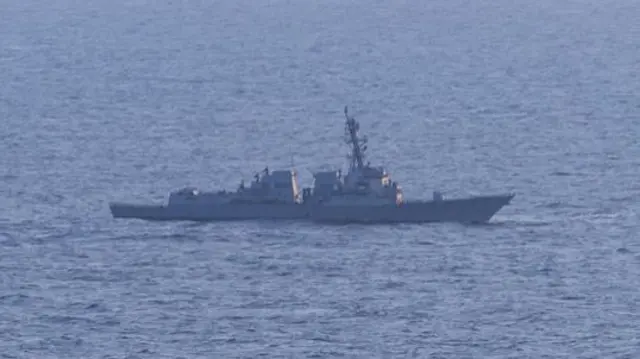
    USS Spruance shipImage source, Centcom
    Image caption,

    The US military said on Wednesday an "Iranian-flagged cargo vessel tried to evade the US blockade after leaving Bandar Abbas [in Iran]... the guided-missile destroyer USS Spruance successfully redirected the vessel"

  14. Who's talking to who?published at 08:07 BST 16 April

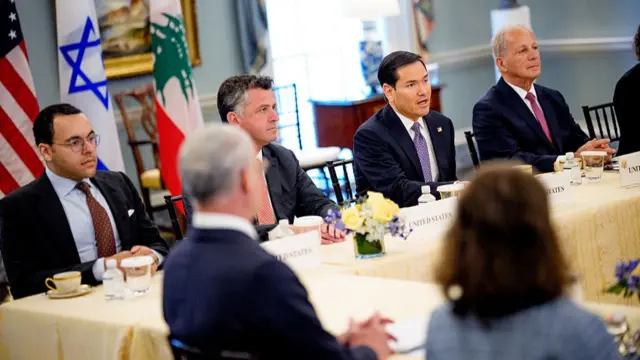
    US Secretary of State Marco Rubio held talks with Lebanese Ambassador to the US Nada Hamadeh Moawad, and Israeli Ambassador to the US Yechiel Leiter, in Washington DC on TuesdayImage source, Getty Images
    Image caption,

    US Secretary of State Marco Rubio held talks with Lebanese Ambassador to the US Nada Hamadeh Moawad, and Israeli Ambassador to the US Yechiel Leiter, in Washington DC on Tuesday

    A two-week conditional ceasefire between Iran and the US remains in place, but strikes continue between Israel and Iran-backed Hezbollah in Lebanon. Here's the latest on the various negotiations:

    Israel-Lebanon talks

    • US President Donald Trump said last night talks between the Israeli and Lebanese leaders are due to take place "tomorrow"
    • But an official in Lebanon's presidential office tells the BBC they are not aware of any upcoming contact with Israel
    • On Tuesday, talks between Israel and Lebanon officials took place in Washington DC - the first direct negotiations since 1993. Lebanon called the talks "productive" and Israel said they were both on the "same side of the equation" - but Israeli attacks against Hezbollah continue

    US-Iran talks

    • Over the weekend, talks in Islamabad between the US, Iran and mediators Pakistan failed to bring about a deal
    • On Wednesday, more details emerged of messages between both sides. Iran's foreign ministry spokesman Esmail Baghaei said Tehran wants a "full end to war, lifting sanctions, and retribution of damages of US-Israeli attacks on Iran"
    • The White House says discussions around a possible second round of peace talks between the US and Iran are "ongoing" and "productive" - but no time or place have been confirmed. The two-week ceasefire is due to end on 22 April
  15. US defence secretary and military chief to hold news conferencepublished at 07:54 BST 16 April

    The US defence secretary and the chairman of the military's joint chiefs of staff will hold a news conference about the US-Israel war with Iran on Thursday morning.

    In a post on X, the US Department of War said Pete Hegseth and Dan Caine will chair the media briefing at 8:00 ET (12:00 GMT/1:00 BST) on Thursday.

    News conferences of this kind have been held regularly since the start of the war on 28 February. You'll be able to watch and follow live on this page.

    The US defence secretary Pete HegsethImage source, Reuters
  16. Hezbollah says it fired rockets at Israelpublished at 07:49 BST 16 April

    Iran-backed group Hezbollah says it has fired a barrage of rockets at Israel this morning.

    In a post on Telegram the group says it targeted Kiryat Shmona, Kfar Giladi, Misgav Am, and Margaliot in northern Israel, near the border with Lebanon, at 08:45 local time (05:45 GMT, 06:45 BST).

    "This response will continue until the Israeli-American aggression against our country and our people ceases," it adds.

    Israel has not commented.

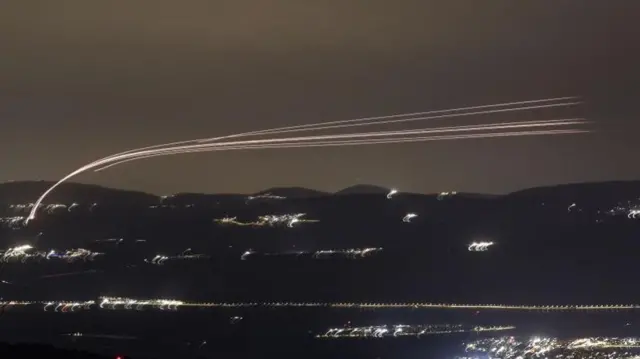
    Israeli defence systems launched above a city, streaks of lights in the dark sky as lights visible below.Image source, EPA
    Image caption,

    Israeli air defense systems intercepting projectiles yesterday

  17. Israel issues warning ahead of strikes on southern Lebanonpublished at 07:29 BST 16 April

    The Arabic-language spokesperson of the Israel Defense Forces, Avichay Adraee, has issued an "urgent warning" to residents living in southern Lebanon as it continues air strikes.

    Adraee says Hezbollah is "forcing" the Israeli military to act in the area and that the IDF "does not intend to harm" civilians.

    "We reiterate and urge you to evacuate your homes immediately and head immediately north of the Zahrani river," he writes this morning.

    "Anyone present near Hezbollah elements, their facilities, or their combat means exposes their life to danger."

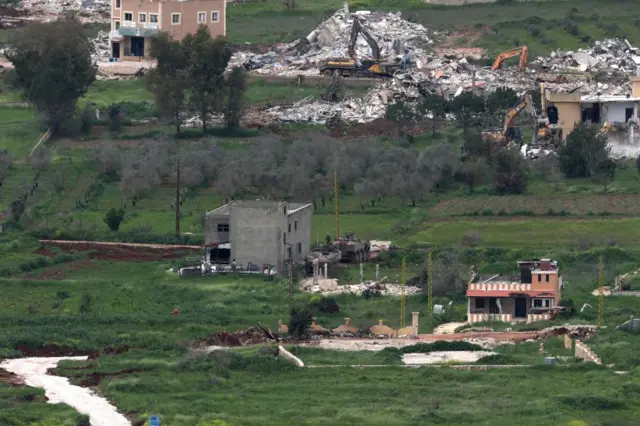
    Israeli armoured personnel carriers guard excavators demolishing buildings in the southern Lebanese village of Mais al-Jabal, as seen from the Israeli side of the border yesterdayImage source, EPA
    Image caption,

    Israeli armoured personnel carriers guard excavators demolishing buildings in the southern Lebanese village of Mais al-Jabal, as seen from the Israeli side of the border yesterday

  18. A damaged bridge and new banners: The BBC reports from inside Iranpublished at 07:21 BST 16 April

    Lyse Doucet
    Chief international correspondent, reporting from Iran

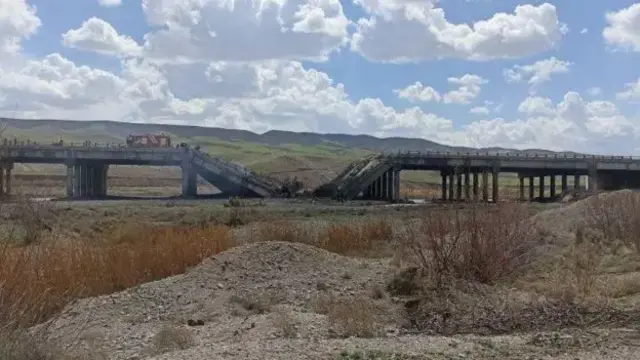
    Iranian media published images of a damaged highway bridge on the Tabriz-Zanjan highway in northern IranImage source, Irna news agency
    Image caption,

    Iranian media published images of a damaged highway bridge on the Tabriz-Zanjan highway in northern Iran

    On our 12-hour journey to Tehran, vehicles are forced to take a detour down winding rural roads because the main bridge linking the northern city of Tabriz with the capital, via Zanjan, collapsed under missile fire last week.

    The targeting of civilian infrastructure has been met by a growing chorus of criticism from legal scholars who warn of violations of international humanitarian law and possible war crimes. The US and Israel insist they're only striking military targets.

    We spot those targets too, including a flattened barracks of the Islamic Revolutionary Guard Corps, the IRGC, on the outskirts of Tabriz.

    A huge flag is draped across the rutted pillars protruding from the ruins like concrete teeth. Other military and police bases, as well as factories, were also hit in this region.

    Trump's apocalyptic threat on 7 April that "a whole civilisation will die tonight" comes to mind when we stop at a roadside restaurant - a hundreds-year-old caravanserai, a travellers' inn of old - with vaulted stone ceilings and stained-glass windows.

    The Iran of today is also visible everywhere we stop, with some women wearing veils and scarves and others, of all ages, bare-headed. It's a legacy of the 2022-2023 Woman Life Freedom protests. Women now refuse to turn the clock back even though strict rules on "modesty" and severe punishments are still the law of this land.

    But there are more pressing priorities for Iran's theocracy in this moment.

    New banners stretch over highways with portraits of the three supreme leaders since the 1979 revolution: Ayatollah Ruhollah Khomeini; Ayatollah Ali Khamenei, who was assassinated in this war's first salvos on 28 February; and his successor, his son Mojtaba Khamenei, reported to have been seriously injured in that attack

    He has not been seen or heard in public since then.

    Media caption,

    BBC's Lyse Doucet reports from outside the Iranian capital

  19. Lebanon casts doubt on Trump's talks claimpublished at 06:59 BST 16 April
    Breaking

    Hugo Bachega
    Middle East correspondent in Beirut

    Lebanon is not aware of any upcoming contact with Israel, an official in Lebanon’s presidential office has told the BBC, after President Trump’s post on social media suggesting a possible conversation between the leaders of both countries.

  20. With one million displaced in Lebanon, UN refugee chief calls for 'urgent' supportpublished at 06:37 BST 16 April

    The head of the UN's refugee agency, Barham Salih, has called on the international community to provide "urgent support and relief" to Lebanon.

    More than one million people - a fifth of the Lebanese population - have been displaced by the conflict, which Salih calls "unprecedented".

    "Lebanon does not deserve to be trapped in a recurring cycle of violence, it deserves support and stability," Salih says after meeting Lebanese Prime Minister Nawaf Salam, the AFP news agency reports.

    More than 2,100 people have been killed by Israeli attacks since 2 March, according to Lebanon's health ministry.

    Israel says its operations in Lebanon are aimed at weakening Iran-backed Hezbollah and protecting its citizens from attacks, including cross-border rocket fire.

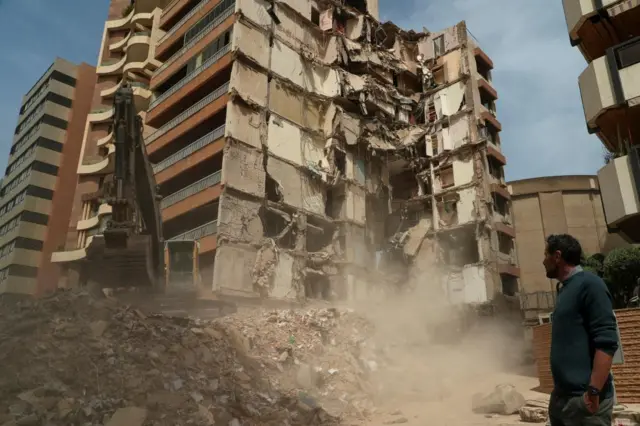
    This picture from the Reuters news agency shows Wael Sabbagh - whose mother Afaf Sidaoui and brother Hassan were killed in an Israeli strike on an apartment building on 8 April - at the site in Beirut yesterdayImage source, Reuters
    Image caption,

    This picture from the Reuters news agency shows Wael Sabbagh - whose mother Afaf Sidaoui and brother Hassan were killed in an Israeli strike on an apartment building on 8 April - at the site in Beirut yesterday