


A chariot burial
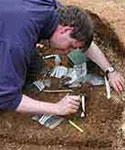
A second bit was also found, together with a series of bronze rein rings or terrets, decorated with coral studs, through which reins would have passed. All this harness re-ignited the hopes that the grave would contain a chariot burial, but the delicacy of the objects prompted the thought that this could be the burial of a woman.
'... there were hints of long-vanished wooden objects, now recognisable only as very slight changes in the soil.'
The position of each bronze object was photographed and recorded, before each was supported by bandages and packing material and finally lifted from the soil. And as well as these solid artefacts, there were hints of long-vanished wooden objects, now recognisable only as very slight changes in the soil.
Under certain conditions, soil will form firmly around a wooden object before it rots away, taking the shape of the object that may then survive as a void or hole. Recognising such voids and distinguishing them from, for example, animal burrows is very important, as a cast can be made from them - after they have been carefully emptied of loose soil - by pouring plaster of Paris in to them. This should then take up the shape of the original wooden object.
Published: 2005-01-25
