|
We used to have little chatters on the quiet but we werent
supposed to (Audrey): Talking and Singing
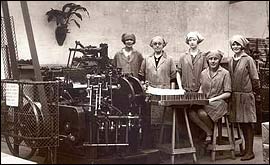
Those working around the conveyors were able to talk and even sing.
During the Second World War, music was played over speakers in the
workrooms to boost morale. Indeed, singing was seen as the sign
of a happy workforce, as well as providing a rhythm by which to
work.
Still, both talking and singing were regulated to some extent if
they were believed to interfere with productivity.
Quaker-influenced rules aimed to enforce decorum at all times:
for instance the directive That packers conduct themselves
in a decorous fashion especially in the matter of loud talking.
However, oral accounts suggest that not everyone conformed. As Audrey
recalled,
Some were a bit rough and they used to swear to each other
you used to hear them shouting across to each other (laughs). You
used to close your ears to a lot of things.
Womens narratives indicate that talking and singing were
not simply ways of relieving the monotony of factory work. For some
women, learning to talk like the old school (those workers
who had been at the factory most of their lives) was an aspect both
of coming to terms with work in the factory and with the development
of increased self-confidence as a woman. Lillian, who had initially
felt lost working with older married women, remembered,
I was getting more broad-minded than what I was before. So,
I thought, I would stand up for myself and be cheeky, talking back
to other people.
The increased confidence gained at work could be carried on into
a womans home life, as she felt more able to talk back to
her family. However, being mouthy still retained the
stigma of being a factory girl, a stereotype most women
rejected. >> More
|