|
Uniform
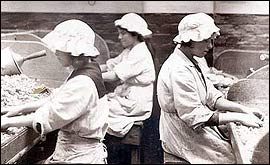
The wearing of uniform could also be a highly gendered, and gendering,
activity. Women on the shop floor had to wear an overall and cap
(known as a turban) to work. A note following the rule on uniform
in the works rule book of 1947 advised them:
A Clean Cap and Overall Properly Worn Make An Attractive
Uniform. A Workmanlike Appearance Is The Best Of Styles For The
Workroom.
There is a definite appeal to a perceived feminine
concern with attractiveness and style rather
than an awareness of the practicalities of working with food, although
the irony of referring to an archetypal male worker
is striking. It was not until 1953 that the same rules were applied
to men.
It is telling that clothing from this point was provided and renewed
by the firm, whereas previously the responsibility and expense of
wearing a uniform rested entirely with the women themselves.
Womens attitudes towards uniform wavered between acceptance
of the rationale behind clothing rules within a food industry and
small subversive acts which reasserted control over their own bodies.
Photographs from the factory magazine in the 1960s are highly suggestive
of how women (particularly young girls) would continue to follow
the fashions of the day, with beehive hairstyles scarcely covered
by the regulation headscarves. >>
More
|