Launching
the report, A New Beginning: Policing in Northern Ireland, Christ Patten
said that it was "the most difficult and gruelling job" he had
ever done and he urged Catholic leaders in the nationalist community to
encourage people to join the new police service.
The
immediate reaction of the Catholic Church was positive. The Bishop of
Down and Connor, Dr Patrick Walsh, said the report was an important step
forward and deserved "honest and serious consideration". The
Church of Ireland Archbishop, Dr Robin Eames, was more cautious. He said
policing had been a political football for far too long and "ways
must be found of removing it from sectional or party political considerations".
He urged "careful and prayerful reading" before individual conclusions
were reached.
The
Presbyterian Church urged people to prayerfully reflect on it rather than
jump to any conclusions. The Methodist Church in Ireland said: "The
recommendations have the potential to take politics out of policing and
may indeed be part of a new beginning for Northern Ireland."
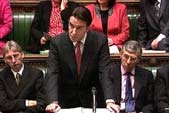
Secretary
of State Peter Mandelson answers questions on the Police (Northern
Ireland) Bill in the House of Commons
Unionist
political reaction, however, was swift and condemnatory. The Ulster Unionist
leader David Trimble described the report as the "most shoddy piece
of work I have seen in my entire life". He regarded the name change
a "gratuitous insult" and warned that the unionist community would
be so outraged by the symbolic changes that they would reject its many worthy
recommendations. The Party's deputy leader John Taylor said the report was
"a total surrender of all our Britishness in Northern Ireland".
The
day after its publication the unionist morning newspaper, the News Letter,
summed up its readers' anger by juxtaposing an emotive photograph of a RUC
man's funeral with one word: Betrayed. The nationalist Irish News carried
the banner headline: A New Beginning and its editorial said the proposals
had "the potential to transform the relationship between the police
force and the wider public in Northern Ireland".
The
Northern Ireland Women's Coalition was supportive of the human rights
recommendations and the SDLP deputy leader Seamus Mallon welcomed the
report but added that they wanted to see its recommendations implemented
swiftly. Both Sinn Féin and the SDLP were concerned that there
would not be an immediate ban on the use of plastic bullets.
The
Northern Ireland Secretary Dr Mo Mowlam set a November deadline for public
consultation on the report before legislation was introduced at Westminster.
The
government published the Police (Northern Ireland) Bill on 16 May 2000.
At the end of May Tom Constantine, former director of the US Drug Enforcement
Agency, was appointed Oversight Commissioner. When the Patten report was
published in September 1999 it recommended that an Oversight Commissioner
be appointed "as soon as possible". An Implementation Plan containing
the Governments response to each of the 175 recommendations was issued
on 6 June.
The
Bill was criticised by the SDLP who raised 44 separate amendments and Sinn
Féin who claimed it made at least 75 changes to the Patten recommendations
on police reform. The Bill was also criticised by the Police Ombudsman,
the Police Authority, the Northern Ireland Human Rights Commission and Amnesty
International.
The
central thrust of the criticism is that the Bill weakens Pattens proposals
on police control and accountability. His report envisaged a strong and
independent police board linked to a system of district policing partnerships.
Unionists are opposed to this and refer to it as "Balkanisation"
of the police. The other key areas where the Bill fails to follow Patten
are:
-
The
proposed Oversight Commissioner
-
The
proposed provision on transparency and accountability in relation
to the powers of the new Policing Board to initiate inquiries
-
The
proposed provisions on human rights and balance in the new police
service
Amendments
were made to the Bill before it received its Royal Assent on 23 November
2000. Although the SDLP and Sinn Féin accepted that some of their
concerns had been dealt with, sufficient changes had not been made to enable
them to support nominations to the new Police Board or recommend that Catholics
join the new Police Service. For the SDLP everything hinged on Secretary
of State Mandelsons implementation plan that set out when and how
various aspects of the policing changes in the Act would come into effect.
On 24 January 2001 Peter Mandelson resigned from the government and was replaced as Secretary of State by the former Scottish Secretary Dr John Reid. On 17 August Reid published a 75-page policing plan outlining in detail changes to be made to the RUC as it was transformed into the Police Service of Northern Ireland. The new plan included substantial changes to the policing board and powers of investigation of police operations.
Sinn Fein rejected the document and highlighted twenty areas of the plan which fell short of nationalist expectations. On 20 August the SDLP announced that they would endorse it and called on Catholics to support the new service. The Irish government and the Catholic Church in Ireland had already indicated they would support the plan.
In a thirty year break with tradition the SDLP agreed to nominate members to the new policing board and some weeks later, on 21 September the UUP and the DUP also agreed to nominate. The new board has ten political members and nine non-political members.
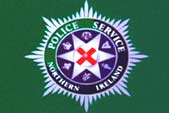
On 4 November 2001 the RUC changed its name to the Police Service of Northern Ireland and on 12 December the Police Board unanimously agreed on a badge for the new service. The emblem features a St Patrick's Cross surrounded by six symbols - a harp, crown, shamrock, laurel leaf, torch and scales of justice. Under the Police Act the title of the new service contains the reference "incorporating the RUC".