Hundreds of 'incredible' blue sea creatures wash up on beach

Hundreds of these strange sea creatures have washed up on beaches in Cumbria
- Published
If we started to talk about Velella velella or by-the-wind-sailors, would you know what we were talking about?
Don't worry if the answer is no, you're probably not alone.
They are blue sea creatures that look a bit like jellyfish, but experts say they are actually "hundreds of tiny, specialised animals working together".
Hundreds of them have washed up on beaches in Cumbria and as incredible as they look, we are being warned not to touch them as they can sting.
So make sure you stay safe and don't get too close if you see one.
More stories like this
Never-before-seen sea creatures discovered in Caribbean
- Published9 March
All the cutest pics from the British Wildlife Photography Awards
- Published9 March
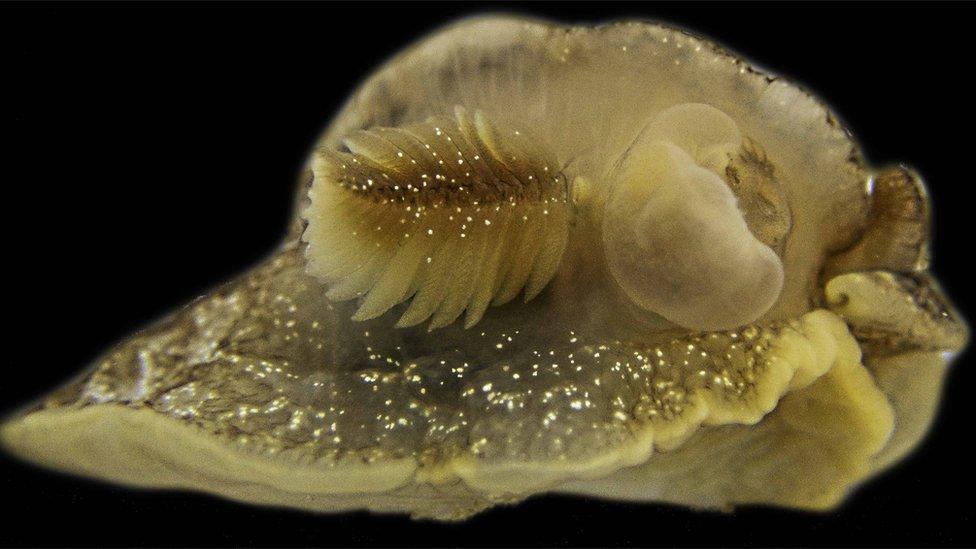
Check out this amazing glowing sea slug
- Published13 November 2024

Velella velella are actually hundreds of tiny animals working together
The creatures are closely related to the Portuguese man of war, that are also groups of tiny animals living together.
They are usually only a few centimetres wide and can look a bit like rock or semi-precious stones.
They get their nickname of 'by-the-wind-sailors' from the little structure on top that acts like a sail, helping them to travel across the surface of the sea.
Usually they live in warmer waters and feed on tiny creatures like plankton.

Although they are not jellyfish the creatures can sting
Georgia de Jong Cleyndert, who is Head of Marine at the Cumbria Wildlife Trust, said each of the creatures is "made up of hundreds of tiny, specialised animals working together as a single floating colony".
She said when the conditions are right and there is long periods of persistent wind "thousands can be washed up along our shores".
Hundreds were spotted on St Bees beach, on the west coast of Cumbria, in recent weeks and they were spotted in Wales earlier this year.
Georgia says that while they are not jellyfish they do still have a very mild sting, so they shouldn't be touched at all.
- Published1 March 2024
- Published5 February
- Published8 August 2025