Summary

  • AstraZeneca says it is "unprecedented" the world has produced multiple vaccines in a year, after the EU approved its jab

  • Prof Andrew Pollard, director of the Oxford vaccine group, adds there is "no reason" to be concerned about using the vaccine on over-65s

  • Some EU states are considering only giving the Oxford-AstraZeneca vaccine to under-65s, citing a lack of data for its use on older age groups

  • Meanwhile, a new coronavirus vaccine developed by Janssen prevents 66% of Covid cases after a single dose, the Belgian company says

  • And another new vaccine, Novavax, is said to be the first to show in trials it is effective against the new virus variant found in the UK

  • Meanwhile, lockdown will continue in Wales for a further three weeks, First Minister Mark Drakeford says

  • The UK's R rate - the average number of people each person with Covid-19 goes on to infect - is now estimated to be between 0.7 and 1.1

  1. Lockdown will continue in Wales for further three weekspublished at 12:27 GMT 29 January 2021
    Breaking

    Drakeford says despite the real progress made in reduction infection levels, it is too early to start lifting lockdown.

    He says although hospital numbers are stabilising, the NHS is still under "significant pressure".

    There are 1,300 people so ill with coronavirus that they need hospital treatment.

    Wales will have to remain at alert level four for a further three weeks, he says.

  2. Vaccinations in Wales 'going from strength to strength', first minister sayspublished at 12:25 GMT 29 January 2021

    Wales' First Minister Mark Drakeford is now holding a press briefing.

    He says the vaccination programme in the country is going from "strength to strength".

    Some 362,000 people in the country have now had their first dose of the vaccine, he says.

    Drakeford says "steady falls" in coronavirus infection rates are being seen across Wales.

  3. EU expected to announce export controls for vaccine producerspublished at 12:12 GMT 29 January 2021

    Gavin Lee
    BBC Europe reporter

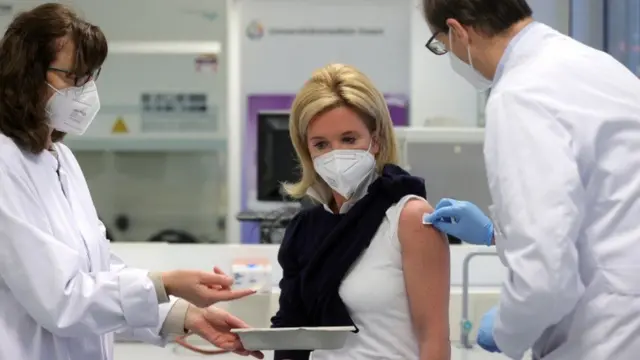
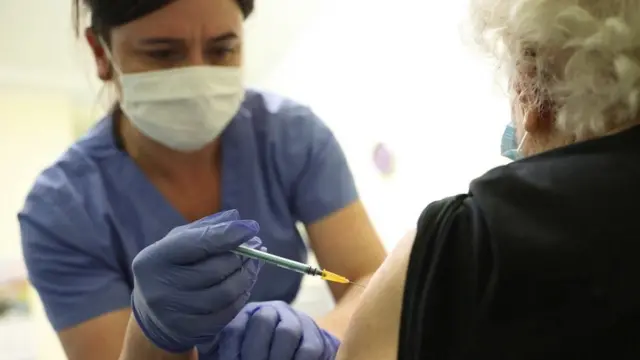
    A woman being vaccinatedImage source, EPA

    The EU is expected to announce later that vaccine producers will need approval to export to countries outside the bloc, including the UK.

    The so-called export transparency mechanism will affect all major drug companies that have signed deals to produce the vaccine for the bloc, and comes in the wake of production problems at two major vaccine suppliers, AstraZeneca and Pfizer.

    It would mean EU member states would have the power to individually authorise or reject a vaccine manufacturer’s application to export elsewhere.

    The decision would be based on whether the company can prove that it has delivered on its vaccine contract with the EU, before the vaccine doses are exported elsewhere.

    An EU official says the new system will mean that "any exporting company would send in to their national authorities what they plan to export, when, to whom and what amount".

    The national authorities would then be allowed to check that and to give an authorisation or a refusal.

    It’s currently envisaged that individual member states would have roughly 24 hours to decide whether to permit the vaccine exportation, upon receiving the request.

    The EU official adds the plan is intended "to protect the doses that are supposed to be for the citizens of our member states via the advanced purchase agreements.

    "If our doses are delivered there will be no further issues about the exports. It’s about ensuring that the doses we paid for are provided for our citizens.”

    The announcement is expected at 14:30 GMT.

    According to officials, the mechanism could be up and running, if member states agree to it, next month.

  4. Ministers took part in Novavax vaccine trialpublished at 12:03 GMT 29 January 2021

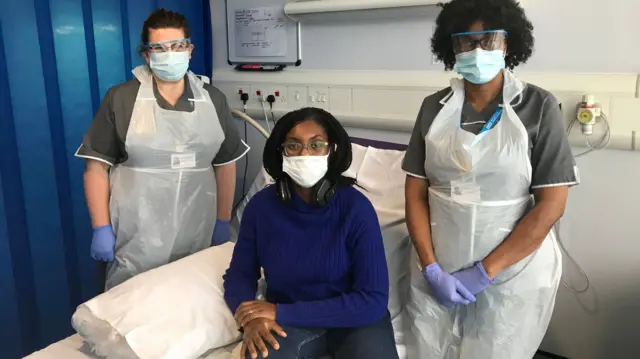
    Treasury Minister Kemi Badenoch in the Novavax trialImage source, PA Media
    Image caption,

    Treasury Minister Kemi Badenoch said all communities needed to be able to trust the vaccines

    Vaccines minister Nadhim Zahawi and Treasury minister Kemi Badenoch - along with Labour MP Naz Shah - are among those who volunteered in the successful UK trial of the Novavax vaccine.

    With the announcement that the trial suggests the vaccine is 89% effective, Zahawi says it is "great to see such encouraging results".

    In October, Badenoch said she was joining the trial to encourage more people from ethnic minorities to take part in the clinical studies and to increase trust in the vaccine for every community.

    "We have to ensure every community trusts a future vaccine to be safe and that it works across the entire population," she said at the time.

    It comes as figures from the Office of National Statistics suggest confidence in the vaccine is lower among black Britons, with 28% saying they would be unlikely to get the vaccine, compared to just 7% of white people.

    About 8% of Asian Britons and 13% of people with mixed heritage also say they would be unlikely to be vaccinated.

    But the ONS cautions that some results for some groups are based on small samples: there were only 150 black respondents compared to 13,240 white people.

    Shah says her participation was "my way of contributing to the good work hospitals and people up and down the country are doing to get the vaccine out".

  5. Japan remains determined to hold Olympics - PMpublished at 11:53 GMT 29 January 2021

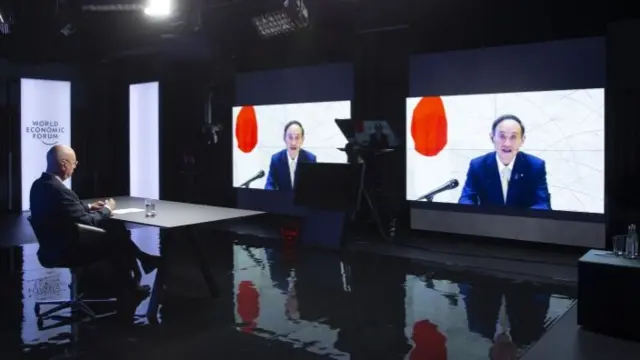
    Klaus Schwab (L), founder and Executive Chairman of the World Economic Forum (WEF), listens to Japanese Prime Minister Yoshihide Suga displayed on screens during a video conference at the Davos Agenda, in Cologny near Geneva, Switzerland, on 29 January 2021Image source, EPA
    Image caption,

    Prime Minister Suga was speaking at the virtual World Economic Forum

    Japan's Prime Minister Yoshihide Suga has reiterated he is determined to hold the Olympic Games in Tokyo this summer, as a symbol of "hope and courage" during the pandemic.

    "Japan will hold the Tokyo Olympics and Paralympics this summer," he tells a virtual meeting of the World Economic Forum, which is being held online this year because of the pandemic.

    "I'm determined to realise the games that will bring hope and courage to the world, as proof of mankind's victory over the virus and as a symbol of global unity."

    On Wednesday, the International Olympic Committee said it was still committed to the "successful and safe delivery" of the games, despite the pandemic.

    While much of Japan is under a state of emergency because of a third wave of Covid, the Olympics are due to begin on 23 July.

  6. EU publishes redacted contract with AztraZenecapublished at 11:42 GMT 29 January 2021

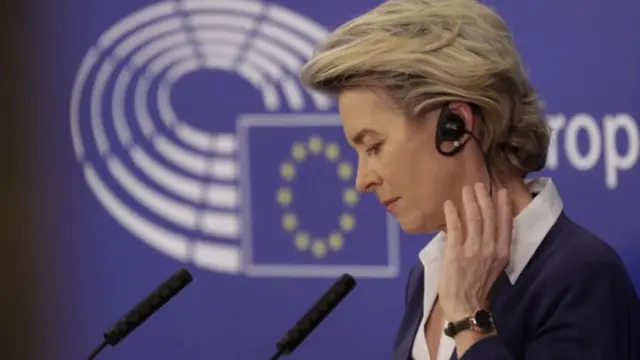
    Ursula von der LeyenImage source, EPA

    The European Commission has published a redacted version of its contract, external with drug-maker AstraZeneca for the Covid vaccine amid a row over supplies.

    The move comes hours after Commission chief Ursula von der Leyen increased pressure on the company over its decision to reduce supplies to the EU.

    The contract signed in August contained "binding orders", she tells German radio, and calls for an explanation.

    The vaccine is expected to be approved by the EU medicines regulator later.

    UK-Swedish AstraZeneca is blaming production delays at two plants.

    You can read the full story here.

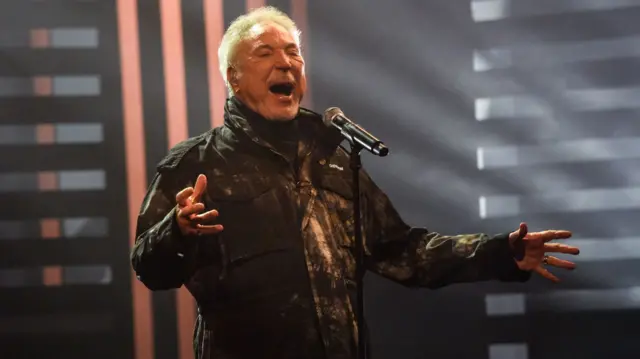
  7. Sir Tom Jones jokes he's 'bulletproof' after second jabpublished at 11:32 GMT 29 January 2021

    Tom JonesImage source, PA Media
    Image caption,

    Sir Tom Jones said he is waiting for more people to be vaccinated so live performances can resume

    Singer Sir Tom Jones has said he feels "bulletproof" after receiving his second dose of the Covid vaccine.

    He previously said that priority vaccination was "one good thing" about being 80, but he told the BBC's Graham Norton Show that he would only reap the real benefits when the population at large had been immunised and he could perform live again.

    “I’ve had the two and I’m now bulletproof! It’s a great feeling," he said.

    “I thought, ‘I’ll be able to go out and do some live shows now’. But then I thought, ‘you’ve got to have an audience for that!’ If they haven’t had the jab, what’s the point?”

  8. 'Deep concern' in South Africa about low vaccine response to local variantpublished at 11:21 GMT 29 January 2021

    Novavax vaccineImage source, Reuters

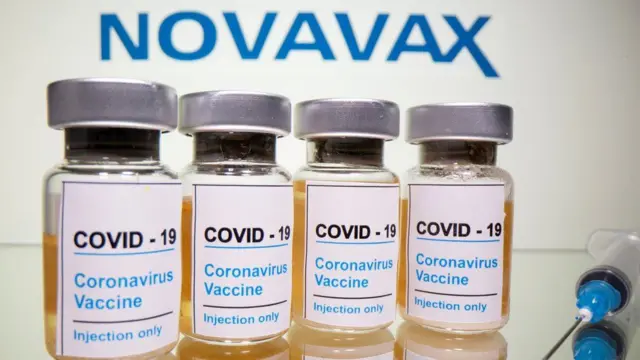
    We've been reporting on the Novavax vaccine this morning. It has been shown to be effective in large-scale UK trials, and is the first to show in trials that it is effective against the new virus variant found in the UK.

    But the head of the South African government’s Covid-19 advisory panel has expressed concern at the vaccine's reduced efficacy against the new South African strain.

    "It is deeply concerning that a vaccine’s efficacy can drop from 89.3% against viruses in the UK to 49.4% against viruses in South Africa," he tells the BBC's Andrew Harding.

    "This risks the creation of 'two worlds', where some countries or regions will be able to achieve viral control through herd immunity, while others with variants like 501Y.V2 [the South African variant] may not be able to reach herd immunity levels through vaccine protection.

    "It points to the next big scientific challenge - developing new generation vaccines with greater neutralisation breadth to get ahead of the inevitability of yet more future immune-escape coronavirus variants across the world."

    In the South African part of the Novavax trial, where most of the cases were the South African variant of the virus, the vaccine was 60% effective among those without HIV. This offers a level of protection similar to that given by flu shots against influenza.

  9. How the UK discovered its first case - a year ago todaypublished at 11:11 GMT 29 January 2021

    Staycity aparthotel in YorkImage source, Getty Images
    Image caption,

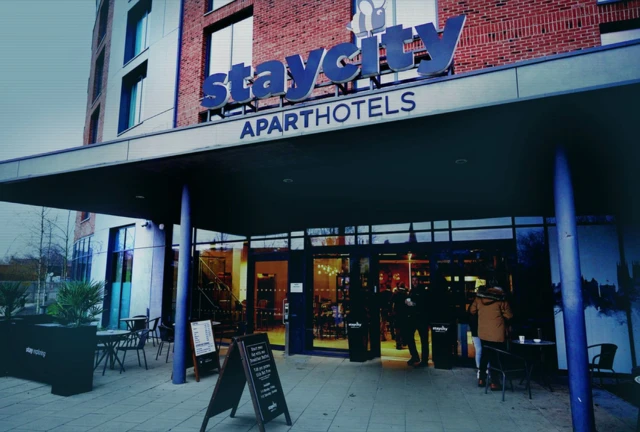
    A Chinese student called 111 from this hotel with fever, a dry cough and muscle pain

    A year ago today, two parademics arrived at the York Staycity apartment-hotel in white hazmat suits and headed to a first-floor room. This was the moment it was confirmed that the novel coronavirus had come to the UK.

    "You were hoping, in the back of your head, that it's another false alarm," says Keith Freeman, Staycity's chief operating officer. "You're also thinking 'what are the chances?'"

    The family - one of whom had returned from Wuhan a week earlier, the day the city went into lockdown - were taken by paramedics discreetly out of a fire exit to the waiting ambulance and to the regional infectious diseases unit at Castle Hill Hospital, near Hull.

    Dr Anda Samson, an infectious disease specialist, had been about to go to sleep when she received the news the mother and son had tested positive - the first people in the UK to do so.

    She remembers thinking how well they looked, with only "a bit of a fever and some flu-like symptoms". The main task was to ensure they did not contaminate anyone else.

    "We knew this was something big and it was bigger than just us, but we never really expected that it would take over the world in the way that it did," she said.

    Read more about how the UK dealt with its first case.

  10. Highest weekly death toll recorded in Northern Irelandpublished at 11:01 GMT 29 January 2021

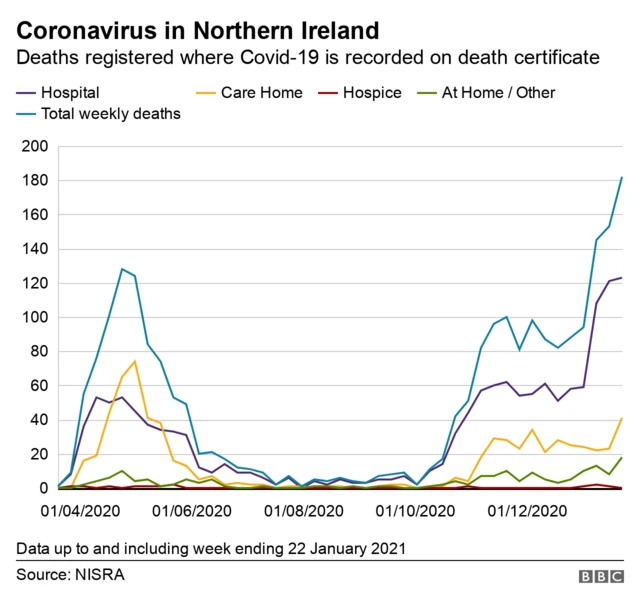
    Northern Ireland had recorded its highest weekly death toll of the pandemic, according to the NI statistics agency.

    The 182 lives lost in the week up to 22 January bring the total number of people for whom Covid-19 was mentioned on their death certificate to 2,311.

    Daily figures reported by the NI Department of Health, which are based on a different measure of people who died within 28 days of a positive test, are at 1,716.

    Graph showing NI coronavirus deaths by setting
  11. Studies about to start on giving vaccines to childrenpublished at 10:52 GMT 29 January 2021

    Prof Adam Finn
    Image caption,

    Immunising children will help to reduce spread in the community and keep schools open, said Prof Adam Finn

    At the moment, under-18s are not included in the vaccine roll-out because the jabs have not been tested on younger people.

    But that will change later, says Prof Adam Finn. The member of the UK's Joint Committee on Vaccination and Immunisation tells BBC Breakfast they are just beginning studies for teenagers aged 12 and over.

    Studies focusing on younger children will follow, he says.

    "We’re equipping ourselves with the information we need to make sure these vaccines are safe and effective, and that we’re giving the right dose to children," he says.

    He says normally most vaccines are given to children because they experience more infections early in life.

    “The reason children are really at the back of the queue at the moment is because of this focus on hospitalisations and deaths prevention, and actually, happily, children are really relatively unlikely to get seriously ill with this infection," he says.

    Prof Finn says later the focus on vaccination will shift to reducing the circulation of the virus in the community and ensuring places such as schools stay open, making it more important that children can be vaccinated.

  12. WHO investigation team to begin field tripspublished at 10:44 GMT 29 January 2021

    Stephen McDonell
    BBC News, China correspondent, Wuhan

    Marion Koopmans, a member of the World Health Organisation (WHO) team tasked with investigating the origins of the coronavirus disease, leaves Hubei Provincial Hospital of Integrated Chinese and Western Medicine in Wuhan, Hubei province, on 29 January 2021Image source, Reuters
    Image caption,

    Finding the origins of the virus may take years, says the WHO team

    The World Health Organization (WHO) says its team of scientists investigating the origins of the coronavirus will start doing field trips from today.

    After completing two weeks' quarantine, the WHO investigation scientists have already had face-to-face meetings with their Chinese counterparts.

    According to the WHO, the next step is to commence field trips on Friday, which, over the coming weeks, will include a visit to the livestock market from where the first cases were reported.

    They also plan to go to the Wuhan Institute of Virology; however, team members have downplayed the possibility that the coronavirus can be traced back to a lab leak.

    The main work carried out by the WHO group will be to review research already carried out by Chinese scientists. They said the process to find the origins of the debilitating virus is highly complicated and may take years to complete.

    Searching for answers in WuhanChina's painful year of fighting the virusWuhan marks its anniversary with triumph and denial

  13. Whitty thanks Novavax trial volunteerspublished at 10:37 GMT 29 January 2021

    Following the news the Novavax vaccine has been shown to be 89.3% effective in large-scale UK trials, England's chief medical officer offers his thanks to "all trial volunteers and those who conducted the research".

    Prof Chris Whitty says that, if approved by the regulator, the new jab will increase the UK's "future resilience".

    This X post cannot be displayed in your browser. Please enable Javascript or try a different browser.View original content on X
    The BBC is not responsible for the content of external sites.
    Skip X post

    Allow X content?

    This article contains content provided by X. We ask for your permission before anything is loaded, as they may be using cookies and other technologies. You may want to read X’s cookie policy, external and privacy policy, external before accepting. To view this content choose ‘accept and continue’.

    The BBC is not responsible for the content of external sites.
    End of X post
  14. Why is EU’s vaccine rollout so slow?published at 10:30 GMT 29 January 2021

    Katya Adler
    Europe Editor

    Poland's elderly are being vaccinated against Covid-19Image source, EPA
    Image caption,

    Poland's elderly are being vaccinated against Covid-19

    Has the European Commission failed EU voters in its all-for-one and one-for-all approach to procuring coronavirus vaccines? Are member countries now regretting they didn't go it alone?

    As things stand, according to EU sources, the bloc looks sets to receive only a quarter of the 100 million doses it had been expecting from pharma company AstraZeneca by the end of March - putting millions of lives at risk.

    Vaccine deliveries from another pharma giant, Pfizer, have also slowed down temporarily, while the firm says it's adjusting production methods.

    Dwindling supplies of coronavirus vaccines have seen Madrid cancelling first dose injections for two weeks, while regional hospitals in Paris say they're in a similar position.

    Read more here.

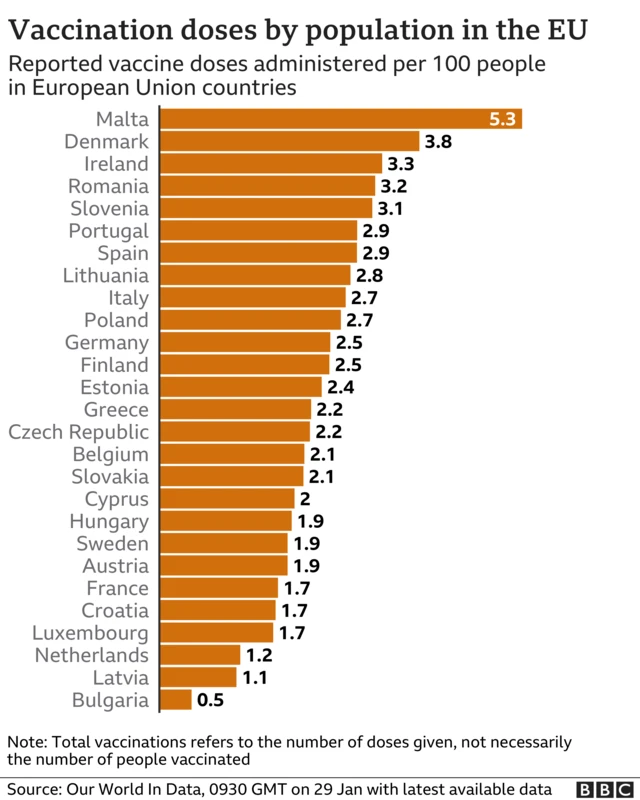
    Chart showing vaccine doses given per 100 people  in each EU country
  15. UK will help neighbours with vaccine supply 'where we can'published at 10:23 GMT 29 January 2021

    Today Programme
    BBC Radio 4

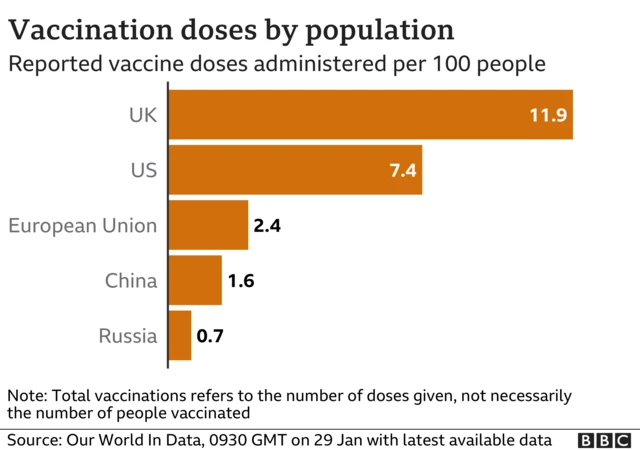
    The UK will help neighbouring countries with vaccine supply issues "where we can", a junior government minister tells the BBC.

    However, Lucy Frazer also adds the government's priority remains vaccinating its own citizens.

    It comes amid the ongoing row over vaccine supply between producer AstraZeneca and the EU.

    Speaking to BBC Radio 4's Today programme, Ms Frazer says: "We have done a great deal of work in the UK to help support the supply chain and the manufacturing base to ensure that we have sufficient supplies within this country.

    "But, as I said, our priority is to ensure we vaccinate people in the UK, but of course, where we can help our friends and neighbours, we would do that."

    Chart showing vaccine doses given per 100 people in the UK, US, EU, China and Russia
  16. Watch: Kate on lockdown haircuts and 'exhausting' parentingpublished at 10:14 GMT 29 January 2021

    Media caption,

    Duchess of Cambridge: "I've become a hairdresser this lockdown, much to my children's horror"

    The Duchess of Cambridge has said the challenges of parenting and home schooling during lockdown have left her "exhausted".

    During a video call with a group of parents, Catherine also joked about her three children recoiling in "horror" when she had to cut their hair.

    Asked to rate her maths ability, the duchess scored herself "minus five".

    She urged people "to reach out to loved ones and friends" if they were struggling or feeling isolated.

    Read more here.

  17. UK ‘really confident’ Oxford-AstraZeneca vaccine works for over-65spublished at 10:07 GMT 29 January 2021

    Pharmacist with Oxford vaccineImage source, PA Media
    Image caption,

    A leading UK expert says he has no doubts the vaccine works on older people

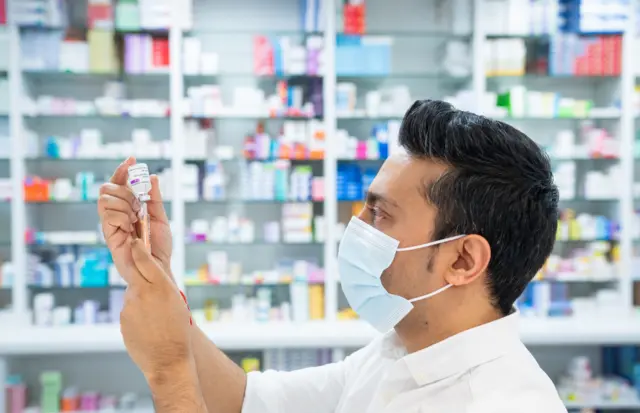
    With Germany having declined to approve the Oxford-AstraZeneca vaccine for over-65s, saying there is not enough data on its effectiveness for that age group, the UK is insisting there is "really good evidence" for giving it to older people.

    Prof Anthony Harnden, deputy chairman of the UK’s Joint Committee on Vaccination and Immunisation, says: “We’re really confident about this.”

    He tells BBC Radio 4's Today programme it creates a strong immune response, including producing antibodies, which is very similar in older people and younger people.

    Prof Harnden, who is also a GP, says he has worked with some of his older patients for 30 years and “I have absolutely no intention of giving them anything I have any doubts about effectiveness”.

    He says the debate is not about the Oxford vaccine’s effectiveness but about “the precision of the size of the effect”.

    The AZ vaccine trial enrolled older people at a later stage in order to try it on younger people first, but that means a smaller sample of older patients and less precision in the estimate of its effectiveness, he says.

    Germany has fewer doses of the Oxford-AstraZeneca vaccine at the moment and many more from Pfizer-BioNTech, the professor adds.

    “They said that, given the limited precision of estimate for the Oxford data, that they would prefer to use the majority of their Pfizer vaccine in the older people,” he says.

  18. Australian Open players begin to exit quarantinepublished at 09:56 GMT 29 January 2021

    (L-R) Serena Williams, Jannik Sinner, Novak Djokovic, Rafael Nadal and Naomi Osaka at an outdoors press conference in Adelaide following their release from quarantineImage source, EPA
    Image caption,

    (L-R) Serena Williams, Jannik Sinner, Novak Djokovic, Rafael Nadal and Naomi Osaka left quarantine on Friday

    Australian Open tennis players have begun to leave hotel quarantine after completing their 14-day isolation, about a week before the event starts.

    By Sunday, about 500 players will have been released from hotels in Melbourne and Adelaide, organisers say.

    High-profile stars Novak Djokovic, Rafael Nadal and Serena Williams have been among those allowed out on Friday.

    Players have quarantined because of the Australian government's Covid-19 rules for anyone entering the country.

    In early January, more than 1,700 players, staff and others tied to the Grand Slam were flown into Australia on chartered flights. The tournament begins on 8 February.

    Read more here.

  19. Fewer infections means Welsh schools may reopen earlierpublished at 09:48 GMT 29 January 2021

    Mark Drakeford
    Image caption,

    Children have had a "torrid time" during the lockdowns over 12 months, First Minister Mark Drakeford said

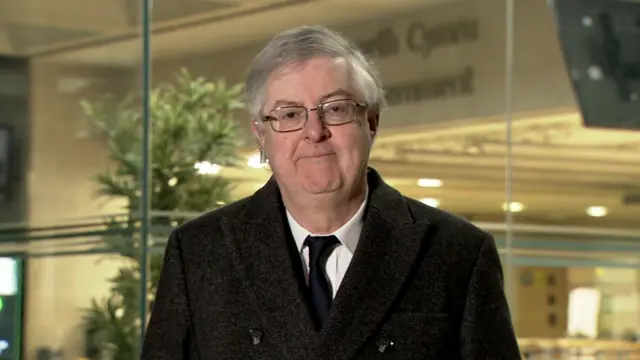
    Lower rates of coronavirus in Wales mean schools could return sooner than in England and Northern Ireland, First Minister Mark Drakeford says.

    He tells BBC Breakfast the youngest pupils could start returning to classes after the February half-term if infection rates continue to fall. England and Northern Ireland have said face-to-face teaching will not resume for children who are learning at home until 8 March.

    "The context is very different," he says, with 175 infections per 100,000 people in Wales compared with about 350 per 100,000 in England.

    "We want to take advantage of that. Our children and young people have had a torrid time over the last 12 months, they are missing out on education every week.”

    Drakeford says the return will begin as soon as it is safe, which he believes will be from 22 February, after half-term.

    As well as infection rates and test positivity rates, the Welsh government will look at the number of people admitted to hospital and critical care before making a decison, he says.

  20. Moroccan king kicks off virus vaccine campaignpublished at 09:40 GMT 29 January 2021

    Morocco's King Mohammed VI has launched the country's nationwide coronavirus vaccine campaign, getting his injection at the royal palace in the city of Fez.

    The palace released pictures showing the monarch, wearing a face mask, being jabbed in the arm on Thursday.

    This X post cannot be displayed in your browser. Please enable Javascript or try a different browser.View original content on X
    The BBC is not responsible for the content of external sites.
    Skip X post

    Allow X content?

    This article contains content provided by X. We ask for your permission before anything is loaded, as they may be using cookies and other technologies. You may want to read X’s cookie policy, external and privacy policy, external before accepting. To view this content choose ‘accept and continue’.

    The BBC is not responsible for the content of external sites.
    End of X post

    Vaccines will be free for all Moroccan citizens and foreigners living in the north African kingdom, according to a government statement.

    The campaign will take place gradually and target people aged between 17 and 75 years.

    "This will make it possible to achieve the expected levels of collective immunisation and protect the population against this pandemic," the statement said.

    Morocco has one of the highest coronavirus infection rates in African and has confirmed 469,139 cases with 8,224 deaths since the pandemic began.