Summary

  1. Trump touts successes in Iran and urges allies to help in Strait of Hormuzpublished at 16:24 GMT 16 March

    Bernd Debusmann Jr
    Reporting from the White House

    Trump has made brief remarks concerning the war in Iran at the top of his event, saying - as he often does - that Iran's military capacity has been "obliterated" and touting US and Israeli success in the campaign.

    The US president has also pointed to what he said were significant reductions in the number of Iranian drones being launched at its neighbours, as well as ongoing targeting of manufacturing sites and naval targets.

    Additionally, he has again called on other countries to "come and help us" with the Strait of Hormuz - an issue with enormous global economic impact as well as important domestic political considerations for the administration.

    The US, Trump seems to be suggesting, will remember which countries came to the aid of the US in this conflict.

    There has so far been very little new information in his remarks - he covered much of this with reporters travelling back with him from Florida last night.
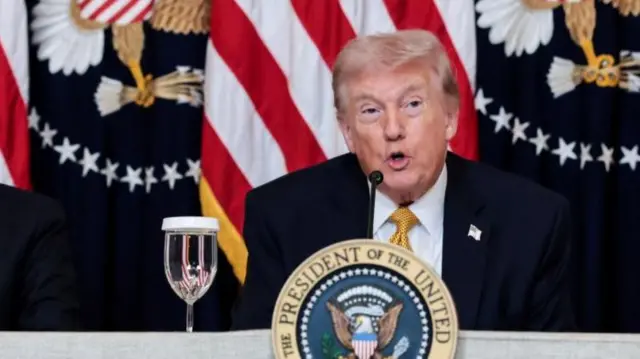

  2. US President Donald Trump speaking at White Housepublished at 16:18 GMT 16 March

    TrumpImage source, Reuters

    Donald Trump has just started speaking in Washington.

    We're expecting to hear some comments on the conflict with Iran - we'll bring you key lines right here, or you can watch live above.

  3. Analysis

    Why some Nato allies have had a blunt response to the warpublished at 16:05 GMT 16 March

    Paul Adams
    Diplomatic correspondent

    Throughout his two terms in office, Donald Trump hasn't been shy to criticise – even to attack – Washington's Nato allies.

    But his latest suggestion – that failing to secure the Strait of Hormuz would be "very bad for the future of Nato" – implies an understanding of the alliance's purpose that has already raised eyebrows.

    "Nato was created as a …defensive alliance," Gen Nick Carter, former chief of the defence staff, told the BBC on Monday.

    "It was not an alliance that was designed for one of the allies to go on a war of choice and then oblige everybody else to follow," he said.

    Coming from a president who only two months ago was making strident claims to Greenland, the sovereign territory of a fellow Nato member, there's more than a little irony in his latest remarks.

    This perhaps helps to explain why some responses have been fairly blunt.

    In Germany, a government spokesman said the war with Iran "has nothing to do with Nato", while the country's Defence Minister Boris Pistorius seemed to pour scorn on the idea that Europe's modest navies could make a difference.

    "This is not our war. We have not started it."

    But none of this should hide the fact that there's now an urgent, and growing, need for a solution to the crisis in the Gulf. Iran's effective blocking of the Strait of Hormuz – except for a handful of vessels carrying its own oil to allies like India and China – has left western governments scrambling to find a solution.

    It may be a crisis triggered by Donald Trump's decision to go to war, but it's one that needs to be fixed quickly, before the impacts on the global economy get any worse.

  4. Debris, shrapnel from Iranian missiles land in Jerusalem's Old Citypublished at 15:53 GMT 16 March

    Jon Donnison
    Reporting from Jerusalem

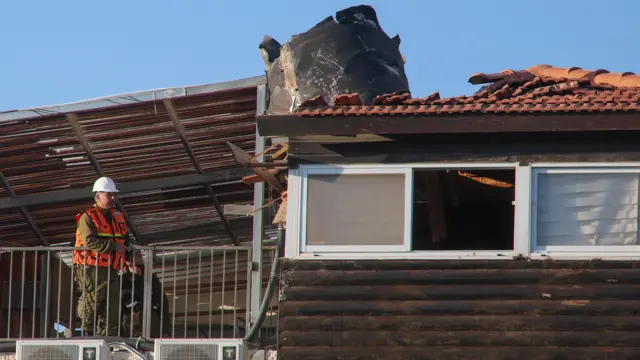
    A piece of shrapnel sticks out of a rood as a worker looks onImage source, Reuters
    Image caption,

    Large pieces of shrapnel have fallen in East Jerusalem

    Debris and shrapnel from Iranian missiles and Israeli interceptors has landed in Jerusalem’s Old City.

    One piece was maybe half a metre across and it fell close to the Church of the Holy Sepulchre, one of the world’s holiest sites for Christians.

    It is only a short walk away from the Al Aqsa Mosque, one of Islam’s holiest sites. Large pieces of shrapnel also fell in East Jerusalem, including close to the British Consulate.

    On one of the main shopping streets near our hotel, smouldering metal could be seen in the road.

    The residents in Israeli-occupied East Jerusalem are primarily Palestinian, the vast majority of whom do not support Israel’s war against Iran.

    Unlike most Israelis, few Palestinians have bomb shelters in their homes.

    Shrapnel also fell close to Israel’s parliament, the Knesset. There are no reports of any serious injuries.

    The local municipality says three people were lightly injured.

  5. Attacks reported across the Gulf - what to knowpublished at 15:40 GMT 16 March

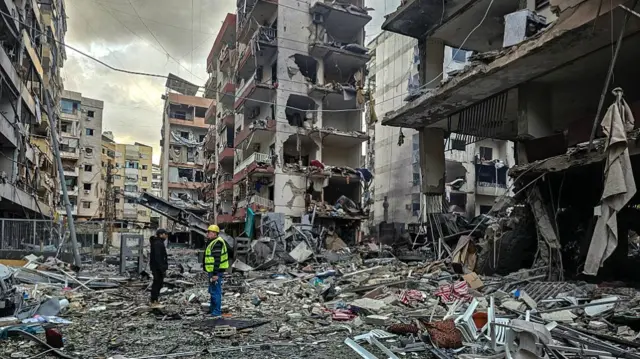
    Men standing around in piles of rubble amid destroyed and damaged buildingsImage source, AFP via Getty Images
    Image caption,

    Men inspect a site of overnight Israeli airstrikes in the southern suburbs of Beirut

    Israel has launched a fresh wave of strikes on multiple Iranian cities, including the capital, Tehran. In the Gulf, nations including the United Arab Emirates and Qatar have reported intercepting Iranian missiles.

    Here's what to know about the strikes around the region today:

    • The IDF says it began a "wide-scale wave of strikes" targeting the Iranian regime's infrastructure in Tehran, Shiraz, and Tabriz - Israel says it struck a space-related compound in the capital
    • The Israeli military also says it carried out "limited and targeted" operations against Hezbollah in southern Lebanon
    • In Israel, sirens sounded around the country because of incoming Hezbollah missiles in the north and Iranian missiles in the south
    • Qatar says it has intercepted a second wave of missiles from Iran following an attack earlier in the day - the BBC's Maryam Moshiri in Doha says she heard four explosions
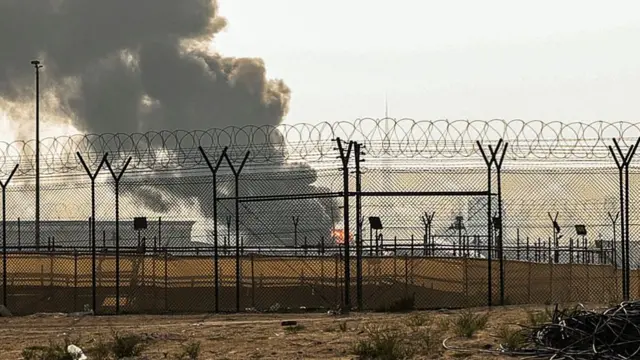
    • In the UAE, drone attacks caused fires at a large oil industrial area in Fujairah, and at a building in Umm al-Quwain, and a Palestinian civilian was killed in Abu Dhabi after a missile fell in a civilian area, authorities say
    • Saudi Arabia says it downed dozens of drones overnight and Iraq and Kuwait have reported new attacks, the BBC's Middle East correspondent reports from Jerusalem

  6. Debris from intercepted Iranian missiles hits home in East Jerusalempublished at 15:31 GMT 16 March

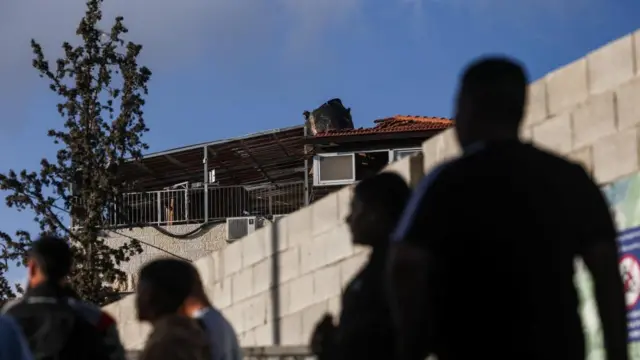
    Four people in front of a white wall. On the other side of the wall, part of a missile is visible slightly poking out of the roof of a hImage source, Reuters
    Image caption,

    An intercepted missile landed on a house in East Jerusalem

    Fragments of Iranian missiles intercepted by Israel have fallen in several areas of Jerusalem.

    Israel's Fire and Rescue service says a large chunk of an intercepted missile hit a home in occupied East Jerusalem, according to the Times of Israel.

    The outlet also reports that fragments of missile also landed near the Knesset - Israel's parliament - and in Jerusalem's Old City, at the Church of the Holy Sepulchre.

  7. BBC Verify

    How could the Royal Navy help secure the Strait of Hormuz?published at 15:17 GMT 16 March

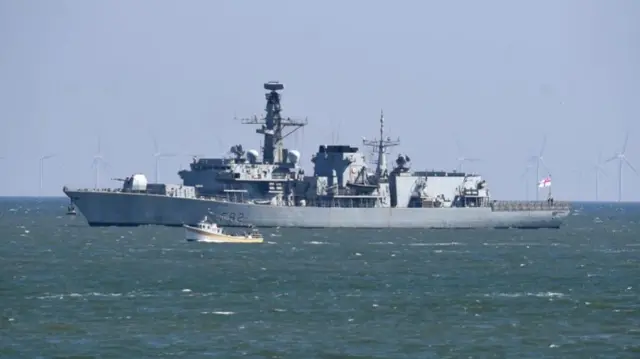
    A Royal Navy Type-23 frigate at sea - it is a grey warship with multiple antenna and communications equipment with a prominent forward gunImage source, Getty Images

    By Thomas Spencer

    The UK’s Royal Navy has a number of vessels it could deploy to counter the threat of Iranian sea mines, missiles and drones following US President Donald Trump’s call for countries to help reopen the Strait of Hormuz.

    It's been effectively closed by Iran which has led to a major reduction in the supply of oil and gas from the Middle East.

    According to figures published by the International Institute of Strategic Studies, the Royal Navy has up to eight vessels able to sweep for mines in addition to other equipment that include autonomous drones.

    The Royal Navy also has Type-45 destroyers and Type-23 frigates - like the one pictured above - that can shoot down missiles and drones as well as hit targets at sea and on shore.

    Military analyst and former British army officer Justin Crump told BBC Verify some of these destroyers are not likely to be ready to deploy or are already committed to other tasks.

  8. Strait of Hormuz remains closed 'to our enemies' - Araghchipublished at 15:08 GMT 16 March

    Iran's Foreign Minister Abbas Araghchi says Tehran has not asked for ceasefire or exchanged messages with the US, and says the Strait of Hormuz will remain closed "to our enemies".

    Araghchi says: "They (Americans) are asking other countries to come and help them so that the Strait of Hormuz remains open ... from our perspective it is open.

    "It is only closed to our enemies, to those who carried out unjust aggression against our country and to their allies."

    He adds that the war "must come to an end in a way that it will not be repeated again".

  9. IEA says it is prepared to release more oil reservespublished at 15:01 GMT 16 March

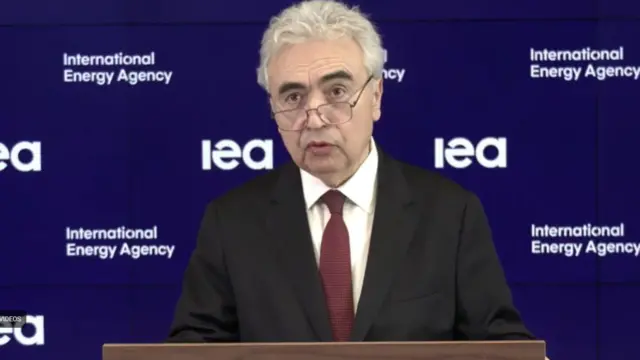
    IEA Executive Director Fatih BirolImage source, IEA

    The International Energy Agency (IEA) says it is prepared to release more oil reserves "if needed" amid what it says is the "largest supply disruption in the history of the global oil market".

    The IEA's executive director, Fatih Birol, says the volume of oil supply offline is already higher than during any previous disruption, including the oil crisis of 1973.

    The organisation announced last week that it would release 400 million barrels of oil to tack the crisis.

    "Oil prices today are significantly lower than they were one week ago," he says, but adds that the reserves are "not a lasting solution" while passage through the strait remains uncertain.

    The IEA still has more than 1.4 billion barrels of oil remaining, "which means we can do more later, as and if needed," Birol says.

  10. Analysis

    'De-escalation': The buzz word in an escalating conflictpublished at 14:52 GMT 16 March

    Lyse Doucet
    Chief international correspondent

    "De-escalate" is the new buzz word in a war which still seems to be escalating.

    Western leaders being ordered by US President Donald Trump to bring military support to America’s war against Iran are emphasising the need to find another way out.

    UK Prime Minister Keir Starmer called de-escalation the most "simple and effective" way to combat the cost of living in the UK.

    France’s President Emmanuel Macron said much the same when the US commander-in-chief asked for assistance to escort tankers through the Strait of Hormuz.

    India has managed to get two gas tankers through this crucial waterway through their own diplomacy with Tehran and is calling on others to follow suit.

    But, for now, there mainly seems to be talks about talks.

    In his latest remarks, Trump said "we're talking to them," without giving any details. He added "I don't think they're ready. But they are getting pretty close."

    Iran’s Foreign Minister Abbas Araghchi has repeatedly denied any talks are taking place and, even more, insists they’re not asking for them.

    But he did tell the Al-Araby Al-Jadeed news outlet that countries in the region were putting forward ideas and Iran was prepared "to study any proposals."

    The foreign minister of Oman, Badr Al-Busaidi, the traditional mediator, has again called for restoring “the political and diplomatic track” in a post on X.

    For now Trump, Araghchi, and others on their teams keep talking at each other through their social media platforms.

  11. What to know about the Strait of Hormuzpublished at 14:39 GMT 16 March

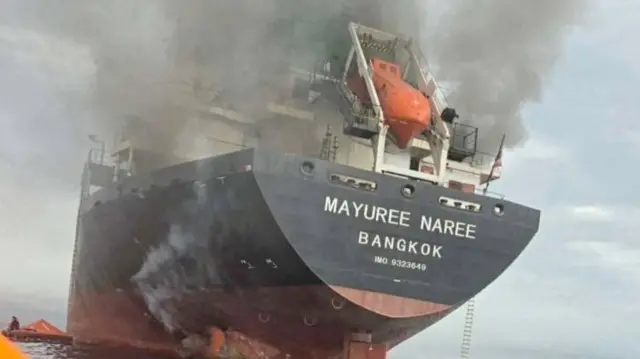
    The Thailand-flagged cargo ship Mayuree Naree engulfed in black smoke in the Strait of Hormuz, March 11, 2026Image source, Reuters
    Image caption,

    The Thailand-flagged cargo ship Mayuree Naree was evacuated after a fire broke out following an Iranian attack last week in the Strait of Hormuz

    The Strait of Hormuz is the world's busiest oil shipping channel and about 20% of the world's oil passes through it.

    This equates to about 3,000 ships sailing through the strait every month. In 2025, an average of about 20 million barrels of oil passed through it every single day.

    This means that Iran's effective closure of the strait has had a catastrophic impact on global supply chains and energy prices.

    The conflict has led to volatility in global oil prices and led the International Energy Agency authorising its "largest ever" release of 400 million barrels of oil reserves to offset to loss from the strait's closure.

    On Saturday, US President Trump urged the UK, along with China, France, Japan and South Korea, to send warships to the region to secure the shipping route from Iranian attacks.

    Earlier today, UK PM Keir Starmer said he has had discussions with Trump about a plan to move oil through the area, but added it is "not a simple task".

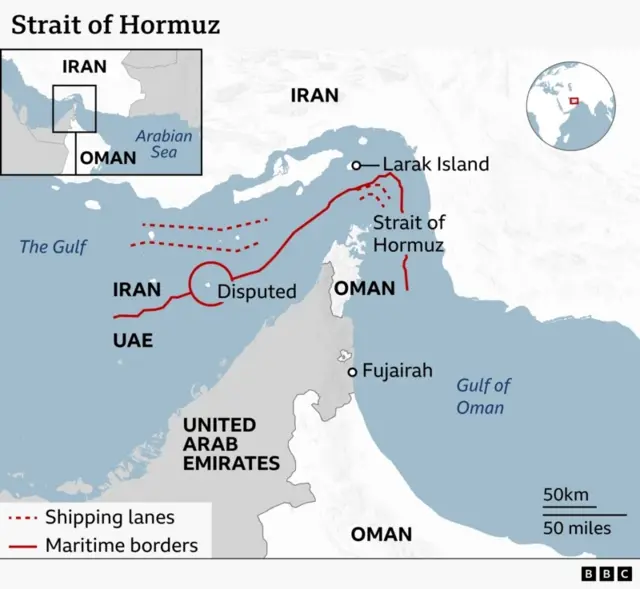
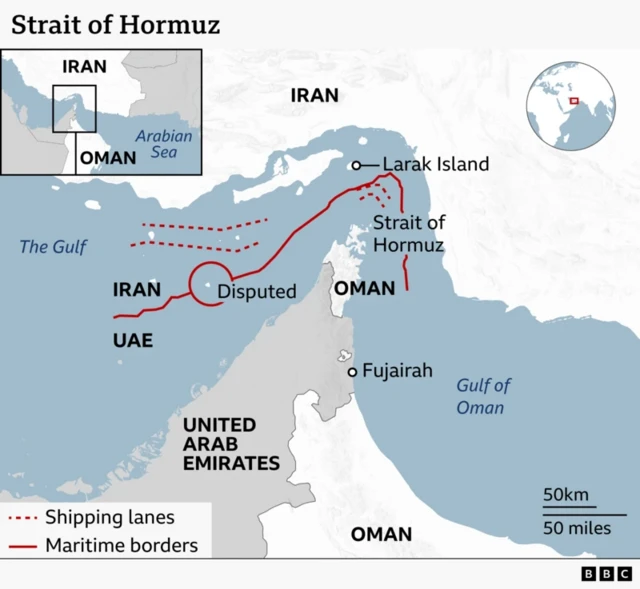
    Map showing the Strait of Hormuz with an overlay of the maritime border and shipping routes
  12. Photos show scene in Iran as Israeli-US strikes continuepublished at 14:31 GMT 16 March

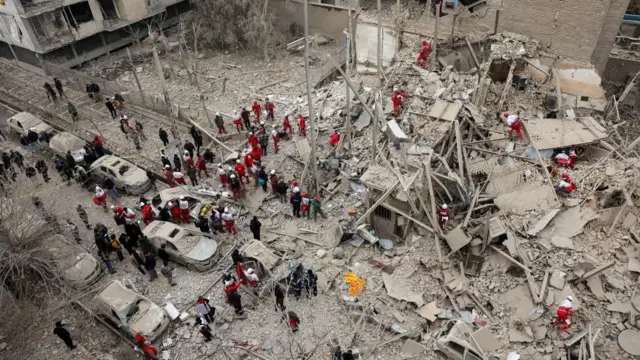
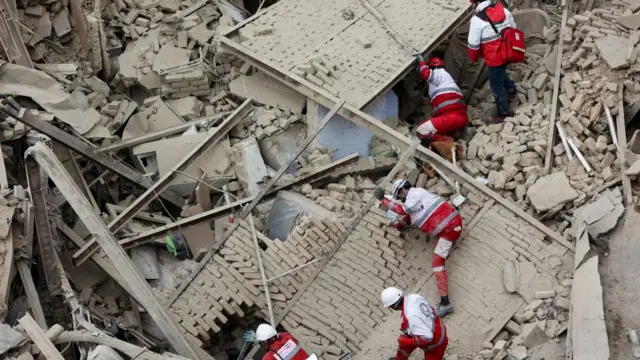
    Strikes have continued on Iran today as the Israel Defence Forces (IDF) announced it was launching a "wide-scale" wave of strikes earlier this morning in Tehran, Shiraz and Tabriz.

    Photos show smoke and emergency workers looking through the rubble.

    Emergency personnel work at the site of a strike on a residential building. The photo is taken from above and lots of people in black and red and white uniforms are standing next to shattered cars covered in dust and a gutted buildingImage source, Reuters
    Image caption,

    Emergency services work at the site of an earlier strike on a residential building Tehran

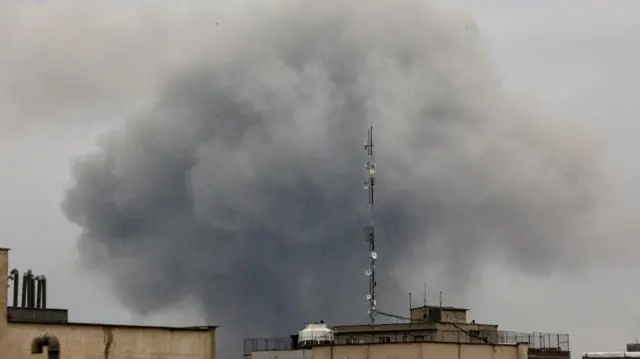
    Smoke rises in the shape of a dark grey mushroom cloud following from behind a buildingImage source, Reuters
    Image caption,

    Explosions and large plumes of smoke were reported in Tehran last night and into today

    Five emergency workers in red and white uniforms climb through a huge pile of rubble from a building that has been destroyed in TehranImage source, Reuters
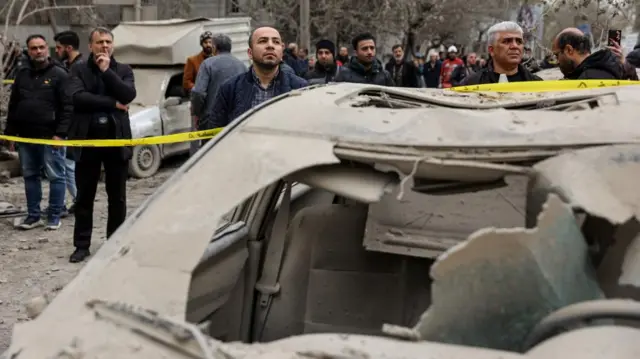
    People look at the damage at the site of a strike on a residential buildingImage source, Reuters
    Image caption,

    People surround the site of a strike where a vehicle has been hit

  13. Qatar reports second wave of missile attacks from Iranpublished at 14:20 GMT 16 March
    Breaking

    Qatar says it has intercepted a second wave of missiles from Iran following an attack earlier this afternoon.

    The BBC's chief presenter, Maryam Moshiri, earlier reported hearing four explosions following the launch of Qatari air defences following this first attack.

    Qatar's Ministry of Defence says the second wave has been intercepted "successfully".

  14. BBC Verify

    New videos showing aftermath of strikes in Tehran emerge onlinepublished at 14:06 GMT 16 March

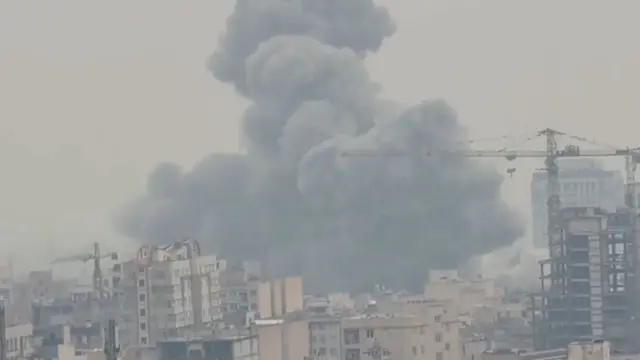
    A screengrab from one of the videos showing a massive cloud of black/grey smoke emanating from northern Tehran. Various buildings can be seen in the shot as well as construction cranes and partially completed tower blocksImage source, X

    By Emma Pengelly and Kumar Malhotra

    Despite the tightened restrictions on internet use in Iran that we reported on earlier, BBC Verify has seen footage and photos from Tehran that have been newly shared on social media today.

    One video shows a large smoke plume rising above an area of northern Tehran while another shows people looking on as smoke issues from a building which appears to have been completely destroyed in the same part of the city. We haven’t been able to confirm if they’re the same incident.

    A third photo shows a police building that was heavily damaged in north-east Tehran which is still smouldering from a reported strike.

    Earlier this morning the Israel Defense Forces said, external it had begun “a wide-scale wave of strikes” in the cities of Tehran, Shiraz and Tabriz.

  15. Trump thinks UK should've 'stepped up sooner', says press secretarypublished at 13:51 GMT 16 March

    Bernd Debusmann Jr
    Reporting from the White House

    It's a relatively slow morning at the White House, with many staff members and journalists opting to stay home ahead of an expected storm later today.

    Among those who are in their offices today is Press Secretary Karoline Leavitt, who spoke to reporters for a few minutes outside the West Wing earlier this morning.

    In her remarks, Leavitt again called on US allies to do more to ensure the safety of shipping through the straight of Hormuz.

    "These other countries are benefiting greatly from the United States military taking out the threat of Iran," she said. "The president is absolutely right to call on these countries to do more."

    Additionally, Leavitt was also asked about relations with the UK, responding that Trump believes the UK should have "stepped up sooner".

    "He continues to speak with our allies in Europe and is calling on them to do more, just as he did when he called on them to step up with regards to their defence spending in Nato," she added.

    We're likely to hear from President Trump directly more than once today. He has teased a press conference at 11:45 local time (15:45 GMT) ahead of an event at the Trump-Kennedy Center, and is expected to appear at a signing ceremony alongside JD Vance in the mid-afternoon.

  16. How some nations are responding to Trump's call to protect ships in the Strait of Hormuzpublished at 13:43 GMT 16 March

    US President Donald Trump has called for nations to send ships to the Strait of Hormuz to protect commercial ships and unblock global oil supplies - but he's been met with a fairly tepid response.

    The US president posted on Truth Social on Saturday and called on the UK, China, France, Japan, South Korea and other nations to send ships to the Strait. He later upped the rhetoric in an interview with the Financial Times, external late on Sunday, and said failure to secure shipping would "be very bad for the future of Nato."

    Here's how nations are responding:

    • UK: During a briefing from Downing Street on Monday morning, Keir Starmer said the UK is working with allies on a viable plan to reopen the Strait - but insisted it would not be a Nato mission
    • Germany: Defence Minister Boris Pistorius rejected the president's demands. "This is not our war, we have not started it," he said
    • South Korea: On Sunday South Korea's presidential office said the country would "communicate closely with the US regarding this matter and make a decision after careful review"
    • Japan: Defence Minister Shinjiro Koizumi went further on Monday when he told Parliament: "In the current Iran situation, we are not at the moment considering issuing a maritime security operation"
    • Australia: Cabinet member Catherine King also ruled out sending naval ships to the Strait when she was interviewed by state broadcaster ABC on Monday
    • China: A spokesperson for the Chinese Embassy in Washington did not say whether Beijing would accept Trump's request, but said all parties have a responsibility to ensure a stable and unimpeded energy supply
    A graphic shows the strait of hormuz as it passes beside the UAE, Oman and Iran. Red lines on the map denote the usual maritime borders through the middle of the strait, and dottted lines show the routes ships normally take around it. The map shows that ships typically pass near the Iranian coast and the country's Larak Island.
  17. Building struck by drone catches fire in UAEpublished at 13:37 GMT 16 March

    A drone attack has caused a fire at a building in the United Arab Emirate's Umm al-Quwain region, on the west coast of the Gulf nation.

    It is the least-populated city in the UAE.

    In a statement, the regional government says no injuries have been reported.

  18. BBC Verify

    Two Indian ships passed Strait of Hormuz without broadcasting positionspublished at 13:28 GMT 16 March

    By Shruti Menon and Barbara Metzler

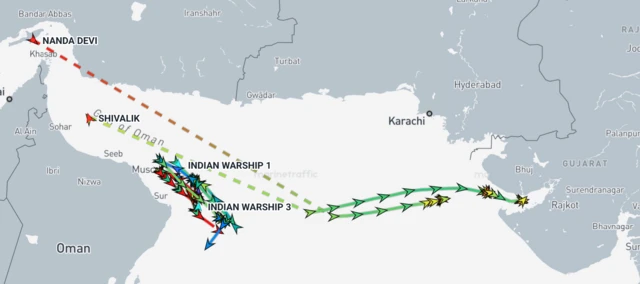
    Two Indian-registered liquefied petroleum gas carriers - Nanda Devi and Shivalik - crossed the Strait of Hormuz on Saturday and are approaching port in India’s Gujarat state, according to vessel-tracking website MarineTraffic.

    Tracking data shows both Nanda Devi and Shivalik were loaded at the Ras Laffan port in Qatar and crossed the strait with their AIS signals switched off (indicated by the dotted line estimating their path). AIS is what ships broadcast to show their position and can be tracked online.

    We've also seen that two Indian warships were in the area on 14 March when the tankers had their AIS off.

    A MarineTraffic graphic showing the approximate track of the two ships through the Strait of Hormuz to Indian - dotted lines represent the approximate track at the time they had their AIS signals offImage source, MarineTraffic

    Nanda Devi was anchored in Iranian waters off Qeshm island for several days and is set to arrive at the Indian port of Kandla tomorrow. Shivalik arrived at the port of Mundra earlier today.

    India's foreign minister told the Financial Times there is no “blanket arrangement” to let all Indian vessels pass through the strait but the government is in talks with its Iranian counterparts.

  19. 'There is no fear,' Iranians tell BBC at Turkey border crossingpublished at 13:19 GMT 16 March

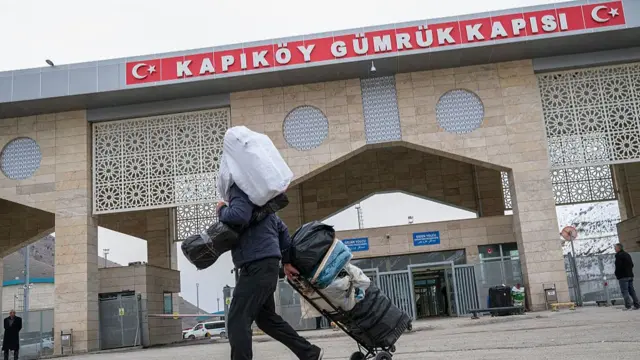
    A man, carrying a sack on his back, leaves Iran with his suitcases at the TurkeyIran border in Van, Turkey, on March 14, 2026,Image source, Getty Images
    Image caption,

    Iranians have been speaking to BBC Persian on the Turkish side of the Kapikoy-Razi border crossing

    “There is no fear. Iran is our country, and we are returning there,” an Iranian man tells BBC Persian at the Turkey-Iran border.

    He is returning to his hometown in the north-west of Iran: “All of our loved ones are there. There is nothing to be afraid of.”

    He says his family and friends back home have told him the situation was “calm” following “one or two nights” of intense bombing.

    “God willing, whatever happens will be for the best. I don’t really know what else to say.”

    Another man, who had travelled to the border from Hamadan in western Iran, tells us that “life is continuing as normal”.

    “Yes, there were some damaged areas along the way… [but] most of the places that were targeted were military centres,” he says.

    He says he lived through the Iran-Iraq war, and so conflict has become “somewhat familiar”, adding that this “doesn’t mean we welcome it, but we are not overwhelmed with fear of war”.

    A woman, travelling from Urmia - near the border with Turkey - to Istanbul, says “everyone is continuing their lives normally and we are not afraid of anyone”.

    She says many lived through the Iran-Iraq war and so “we have experienced everything, so people are not really afraid”.

  20. UAE says 7 killed, 145 injured in country since war beganpublished at 13:10 GMT 16 March

    Smoke seen through perimeter fence at Dubai airportImage source, Getty Images
    Image caption,

    A plume of smoke could be seen rising above Dubai airport after a drone-related incident

    The United Arab Emirates' ministry of defence has just published an update which lists the nationalities of those injured and killed following strikes by Iran.

    It says a total of seven people have been killed. This includes two members of the UAE armed forces, as well as five civilians - they are foreign nationals from Pakistan, Nepal, Bangladesh and one Palestinian.

    A further 145 people have been injured, ranging from moderately to severely. The ministry of defence says the list of those hurt includes citizens of Sweden, Turkey, Nigeria, India and Ghana, among others.

    Since the onset of the war in Iran, the UAE says its air defences have so far engaged 304 ballistic missiles, 15 cruise missiles and 1,627 UAVs.