Summary

  1. BBC Verify

    Iran appears to further tighten internet restrictionspublished at 10:24 GMT 16 March

    By Shayan Sardarizadeh and Rob Corp

    BBC Verify has seen a notable drop in the number of videos being shared from inside Iran suggesting the authorities have further tightened restrictions on internet use.

    One woman from Tehran told the BBC that some people who’ve been using Elon Musk’s Starlink satellite-based internet service to get around the restrictions have been arrested. An Iranian man who’s contacted the BBC said Starlink terminals were being disconnected.

    Monitoring group Netblocks says it has tracked “a collapse in connectivity” on a key telecoms network which had remained partly online.

    We know Iran has maintained a “whitelist” giving some officials, state-affiliated groups and journalists internet access - but this development suggests even some of those connections have been curtailed.

    Iranian authorities moved to restrict internet connections on 28 February after the US and Israel launched their first air attacks.

    International journalists’ access to Iran is heavily restricted so getting footage and messages is a key way of reporting the war from inside the country. Restricting the internet will have an impact on how and when we get new information out of Iran.

    Additional reporting by BBC Persian’s Ghoncheh Habibiazad
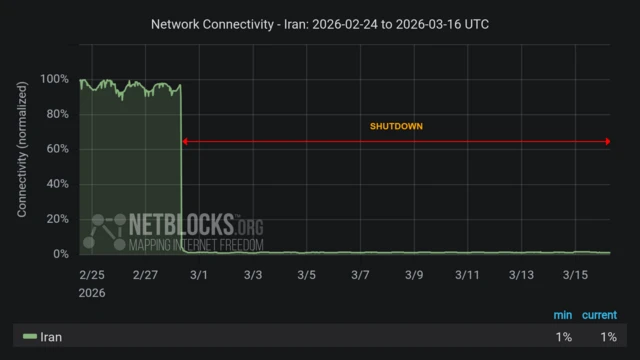
    A Netblocks graphic showing internet connectivity dropping from almost 100% on 28 February to 0% todayImage source, Netblocks
  2. IDF begins 'wide-scale wave' of strikes in Iranpublished at 10:22 GMT 16 March

    The Israel Defense Forces (IDF) has begun a "wide-scale" wave of strikes in parts of Iran.

    In a post on the messaging app Telegram, the IDF says: "The IDF has just begun a wide-scale wave of strikes targeting infrastructure of the Iranian terror regime in Tehran, Shiraz, and Tabriz."

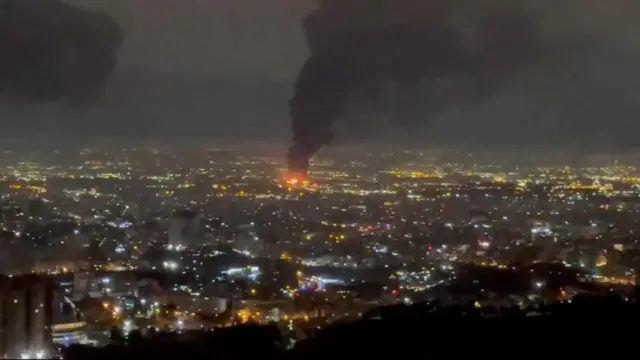
    The US and Israel have been continuing strikes on Iran and there have been reports of heavy bombing in Tehran overnight.

    Gulf countries have also been reporting more Iranian attacks overnight

  3. UK prime minister to give update on Iran shortlypublished at 10:14 GMT 16 March

    We're expecting to hear from UK Prime Minister Keir Starmer shortly, who's due to give an update on the situation in Iran at about 10:30 GMT.

    You can watch live at the top of this page and we'll be bringing you the key lines right here.

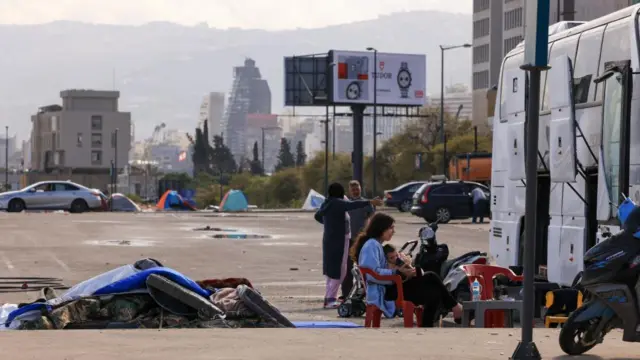
  4. Displaced civilians on streets of Lebanese capital Beirutpublished at 10:13 GMT 16 March

    Tents in a car park can be seen with the backdrop of Beirut behind it. A woman sits in a chair on the side of the road with a baby in her lapImage source, Reuters
    Image caption,

    A displaced woman sits with a child next to belongings in Beirut

    The Israel Defense Forces announced earlier this morning that it has begun "limited and targeted ground operations against key Hezbollah strongholds" in southern Lebanon.

    It is the latest escalation in Israel's action against Iran-backed Hezbollah, which has displaced more than 800,000 people in Lebanon since the US and Israel launched their war against Iran, according to the UN International Organization for Migration.

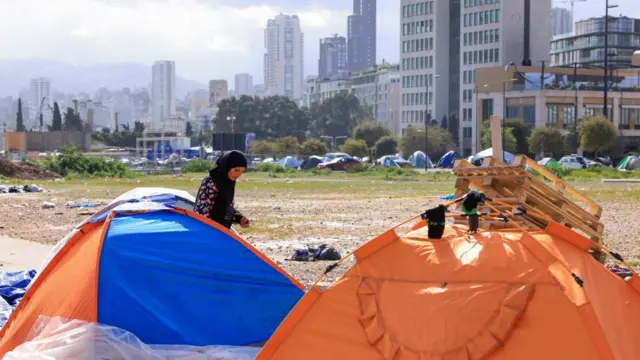
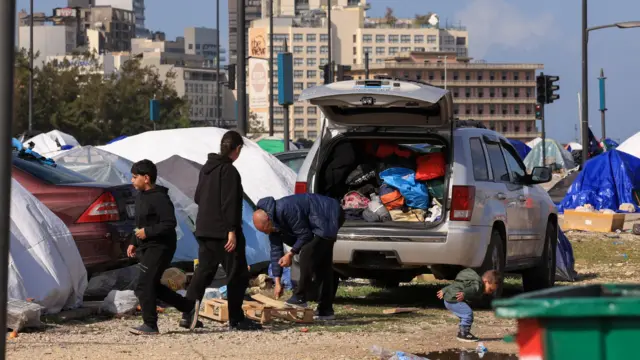
    Here are some of the latest photos we've seen from Beirut, showing displaced people in Lebanon's capital.

    Two tents can be seen in front of a view of the city Beirut with high rise buildings. A woman walks behind one of themImage source, Reuters
    Image caption,

    Tents have been set up in parts of the Lebanese capital

    Displaced people outside a car with belongings next to tents, following an escalation between Hezbollah and Israel, amid the U.S.-Israeli conflict with Iran, in Beirut, Lebanon, March 16, 2026.Image source, Reuters
    Image caption,

    A car filled with belongings next to tents in Beirut

  5. Israel says it has destroyed plane used by Iran's late leader in Tehranpublished at 09:45 GMT 16 March

    Yolande Knell
    Middle East correspondent, in Jerusalem

    The Israeli military says it has destroyed a plane used by Iran’s late Supreme Leader Ali Khamenei at Tehran’s Mehrabad airport overnight.

    It says the aircraft had been used by other top Iranian officials and military personnel to advance weapons purchases and co-ordinate with allied countries.

    Otherwise, one of the main targets for the Israeli military remains missile launchers in Iran.

    One Israeli report says that 70% of these have now been destroyed or put out of use.

  6. US-Israeli attack on Iran is not a Nato war - UK minister Pat McFadden sayspublished at 09:08 GMT 16 March

    British Secretary of State for Work and Pensions Pat McFadden smiling in a close-up at the camera with a blurry Downing Street behind himImage source, EPA

    More now from BBC Radio 4's Today programme, where Work and Pensions Minister Pat McFadden was speaking a short while ago.

    He says the Nato defence alliance was not conceived with the "kind of situation that we're seeing in the Middle East" in mind.

    Nato was founded by 12 countries, including the US and UK, in 1949 and one of its core principles is Article 5, which states that an attack against one country is an attack against all.

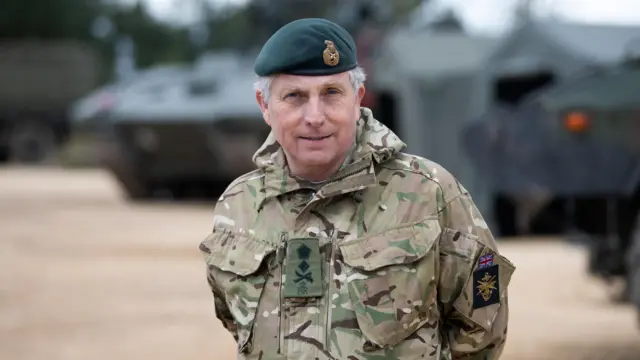
    As we mentioned in our last post, former Chief of Defence Staff - Gen Sir Nick Carter - has also been on the programme this morning and he says Nato "is not an alliance that was designed for one of the allies to go on a war of choice and then oblige everyone else to follow".

    Asked whether he agrees, McFadden says Gen Carter is "right" and describes the current conflict as "not a Nato war" but "US-Israeli action".

    McFadden adds "we're deeply committed to Nato".

  7. Starmer should consider sending warships to Middle East, former UK chief of defence staff sayspublished at 08:50 GMT 16 March

    Chief of the Defence Staff, General Sir Nick Carter after a live exercise demonstration at Bovington Camp in Dorset.Image source, PA Media
    Image caption,

    Former Chief of the Defence Staff, Gen Nick Carter, pictured at a military exercise in Dorset, in 2021

    The UK prime minister should be open to sending warships, as well as drones, to the Middle East to support the US in its war with Iran, says the UK's former Chief of the Defence Staff.

    Gen Sir Nick Carter tells BBC Radio 4's Today programme that it is in Britain's "national interest" to keep the Strait of Hormuz open, and also important for the global economy.

    When asked about Iran's capabilities, he says Iran's navy may be weaker than it was but the navy of the Iranian Revolutionary Guard Corps (IRGC) is "still very much alive and well".

    Gen Carter adds that the IRGC's weaponry includes shore-based missiles, drones, armed speedboats, unmanned surface vessels and mines. "They have become experts at controlling that particular strait," he says.

    "I think what we would want to see is a really well co-ordinated operation, led by the Americans with many nations involved in it," Gen Carter also says.

    He continues by saying "you can't do this on your own; its going to require everyone's capabilities to come together to make this happen and its going to be a really difficult, deliberate operation".

    We're expecting Prime Minister Starmer to speak about the UK's approach to the conflict in the Middle East during a news conference at about 10:30 GMT.

  8. Analysis

    UAE continues to feel the impact of warpublished at 08:37 GMT 16 March

    Azadeh Moshiri
    Reporting from Dubai

    In this third week of war, the impact shows no let-up for the United Arab Emirates.

    Just a day after Iran's foreign minister denied Iran was targeting civilian or residential infrastructure, the UAE has had to respond to a drone-related incident in the vicinity of Dubai's airport, a missile falling on top of a car and killing a civilian in Abu Dhabi, and now another fire at its major oil terminal in Fujairah.

    Authorities say the fires have been contained and no injuries have been reported so far.

    While the defence ministry says most attacks in this war have been intercepted, these are further blows to the UAE's image of safety and stability in a volatile region and will infuriate leaders here who feel they've been unjustly pulled into this war.

  9. Fire at oil terminal on UAE's east coast after drone attack, officials saypublished at 08:36 GMT 16 March

    A drone attack on a large oil industrial area has sparked a fire in Fujairah, on the eastern coast of the United Arab Emirates, local officials have said.

    Fujairah is on the Gulf of Oman, near the Strait of Hormuz - which is usually an important exit point for the UAE's oil.

    Fujairah authorities says there have been no injuries reported.

  10. China calls for immediate cease to military operations, after Trump's commentspublished at 08:27 GMT 16 March

    China has responded after President Trump earlier, in an interview with UK newspaper the Financial Times, threatened to delay a summit with Chinese leader Xi Jinping if Beijing doesn't send help to secure the Strait of Hormuz.

    When asked about the US president's comments, a spokesperson for China's foreign ministry says "head-of-state diplomacy plays an irreplaceable strategic guiding role in China-US relations", before adding "the two sides have maintained communication regarding President Trump's visit”.

    In response to a question about Trump calling for warships to be sent to the Strait, Lin Jian says that recent tensions have disrupted trade routes and undermined regional and global peace.

    "China reiterates its call for all parties to immediately cease military operations," the spokesperson says and adds "we are committed to promoting de-escalation".

  11. EU to discuss what Europe can do to keep Strait of Hormuz openpublished at 08:12 GMT 16 March

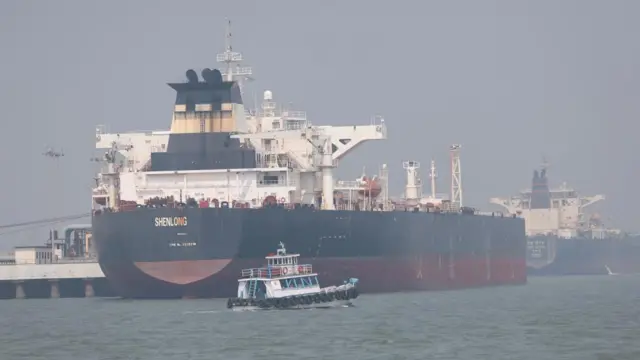
    Oil tanker docked in port. A smaller boat sails in front of it.Image source, EPA

    European Union member states will talk about what can be done from the European side to keep the Strait of Hormuz open, the bloc's foreign policy chief says.

    "It is in our interest to keep the Strait of Hormuz open," Kaja Kallas has said ahead of an EU foreign affairs meeting in Brussels, according to Reuters news agency.

    A number of ships have reportedly been attacked since the conflict began as they attempted to navigate the narrow strait, through which about 20% of the world's oil usually passes.

    As we reported a short while ago, US President Donald Trump says it "would be very bad for the future of Nato" if US allies don't help secure it.

    On Sunday, Downing Street said Trump spoke with UK Prime Minister Keir Starmer about the importance of reopening the Strait of Hormuz "to end the disruption to global shipping".

  12. Trump says he's in talks with 'around seven countries' on securing Strait of Hormuzpublished at 07:54 GMT 16 March

    Smoke rises over cityImage source, Reuters
    Image caption,

    Iran’s semi-official Mehr News Agency reported that explosions were heard in Tehran early Monday morning

    The Iran war is now in its third week, and US President Donald Trump says he is in talks with around seven countries about helping to secure the Strait of Hormuz - through which about 20% of the world's oil usually passes.

    In an interview with the Financial Times in the UK, Trump said Nato faced "a very bad future" if members of the alliance didn't help the US.

    Elsewhere:

    • There are reports of heavy bombing in Iran's capital Tehran, while Saudi Arabia says it intercepted more than 60 drones overnight as Gulf countries continue to be targeted
    • The Abu Dhabi Media Office says that a Palestinian civilian has been killed there after a missile fell in a civilian area
    • Meanwhile, flights are partially resuming at Dubai International Airport after they were suspended following an Iranian missile strike nearby
    • And the Israel Defense Forces (IDF) says it has started "limited and targeted" ground operations in south Lebanon against "key Hezbollah strongholds"

  13. Palestinian killed after missile falls in civilian area in Abu Dhabipublished at 07:35 GMT 16 March

    A Palestinian civilian has been killed in the United Arab Emirates (UAE) capital Abu Dhabi after an incident involving a missile which fell in a civilian area, authorities say.

    Local media are reporting that a missile hit a car.

    Abu Dhabi Media Office said in a post on X: "The public is advised to obtain information only from official sources and to avoid spreading rumours or unverified information."

  14. 'A new norm': Doha market starting to fill up again two weeks into Iran warpublished at 07:09 GMT 16 March

    Qatar's neighbouring countries have felt the impact of Tehran's retaliatory strikes, with at least 18 people killed across the Gulf states so far.

    Most of the strikes aimed at Qatar – some targeting US military bases – have been intercepted by air defences, with little damage done on the ground and no deaths reported in the country.

    As the conflict in the Middle East enters its third week, Doha's best-known market is starting to look busy again. Barbara Plett Usher visited to ask people there how they are feeling.

  15. Dubai International Airport resumes some flightspublished at 06:49 GMT 16 March

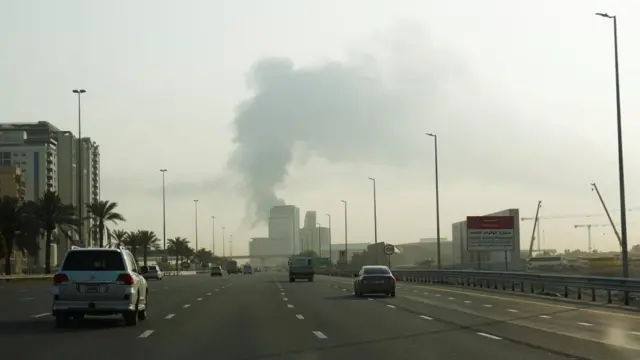
    Image is of a multi-lane carriageway in Dubai with some vehicles driving and with smoke rising from behind a multi-storey building on the horizonImage source, Reuters

    Some flights will resume to and from Dubai International Airport after they were temporarily suspended due to a "drone-related incident" overnight, says Dubai Media Office.

    Authorities announced the temporary suspension following a fire that affected a fuel tank. No injuries were reported.

    In a post on X, Dubai Media Office said Dubai Civil Aviation Authority "announces the gradual resumption of some flights to and from Dubai International Airport to selected destinations", following the temporary suspension "implemented as a precautionary measure".

    It advises passengers to check with their airlines for updates regarding their flights.

  16. Israel says it has begun 'limited and targeted' ground operations in south Lebanonpublished at 06:27 GMT 16 March
    Breaking

    The Israel Defense Forces (IDF) says it has begun a "limited and targeted ground operations against key Hezbollah strongholds", in a statement shared to Telegram.

    The IDF said strikes were conducted "against numerous terrorist targets" in the area prior to troops' entry to southern Lebanon, and the operation was aimed at "enhancing the forward defense area" and the "dismantling of terrorist infrastructure" in the region.

    The IDF said it would continue to "operate with determination" against Hezbollah.

  17. Why hasn't the release of oil reserves lowered prices?published at 06:21 GMT 16 March

    Osmond Chia
    Business reporter

    The release of a record volume of oil reserves has done little to bring down oil prices, which are edging upwards as trade in Asia enters the afternoon.

    US-traded crude is trading at $98.97 (£74.62) a barrel while Brent is priced at $104.33. Both are up by around 1%.

    Prices also climbed last Thursday after the International Energy Agency (IEA) member states agreed to the plan to release a record volume of reserves.

    The measure is only a "temporary" solution and but the impact on markets is going to be "limited" if tensions go on, said Martin Ma from the Singapore Institute of Technology.

    The markets have accounted for the risk that the war could be a prolonged conflict that could disrupt production and shipping from the Middle East, he said.

    Strikes across the region have continued, while US Energy Secretary Chris Wright has indicated that the war will last for several weeks more.

    Shipments from the Gulf remain at a standstill after Iran maintained its threats against vessels that try to pass through the critical Strait of Hormuz.

  18. UAE responding to incoming missile and drone threats from Iran, MoD confirmspublished at 06:04 GMT 16 March

    Azadeh Moshiri
    South Asia Correspondent

    At about 09:00 local time here in the United Arab Emirates (05:00 GMT), the Ministry of Defence said its air defences were "currently responding to incoming missile and drone threats from Iran". There has been no further update about the threats since.

    They’ve said sounds heard in the UAE are the result of those air defence systems intercepting these threats.

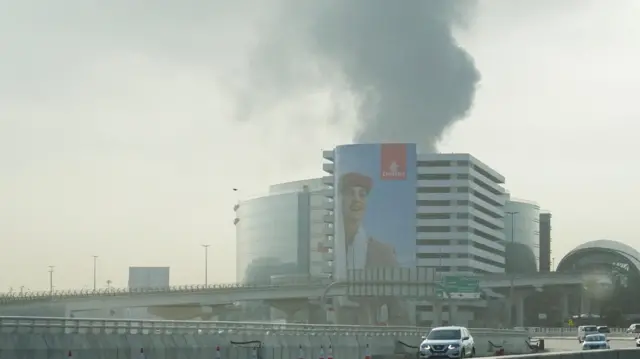
    This comes after a fire broke out "in the vicinity" of the Dubai International Airport, after "a drone-related incident" affected a fuel tank, forcing airlines to suspend flights, according to authorities.

    Dubai's national carrier, Emirates, has announced it would resume limited services from the airport after 10:00 local time (06:00 GMT) and advised that some flights had been cancelled.

    We just spoke to one passenger who was on a connecting flight here in Dubai. He says he and others are still stranded at the airport, and that he was unaware of the fire until we spoke to him. "I've still got no idea what it was about," he told us.

    He said pilot had announced a "security incident" and that "the airspace had been closed", after about 40 minutes of waiting on the plane. He agreed with the decision to keep passengers in the dark about the details.

    "It would have caused panic throughout the airport," he told us.

    Dubai International Airport is a major transport hub and the world’s busiest for international passengers.

    Last year, it handled nearly 90 million travellers.

    Smoke rising from near the Dubai International Airport is seen through the windshield of a vehicle.Image source, Reuters
  19. Iranians tell BBC about fear of security checkpoint searchespublished at 05:50 GMT 16 March

    Ghoncheh Habibiazad
    Senior reporter, BBC Persian

    Iranians in Tehran have been telling the BBC about the security checkpoints around the city, where many people are being stopped and searched.

    A man in his twenties, who has been providing internet access amid the blackout in the country, tells the BBC of his fear while passing through one in a taxi.

    "What I do as a job is considered a crime in Islamic Republic," he explains. "I was really worried, because I had my laptop and phone with me."

    "They had stopped cars. But luckily, they didn't search the car that I was in," he says.

    Another man, also in his twenties, lays out his strategy for getting through a checkpoint: "I started saying things like 'thanks for your hard work' and that sort of thing... as if they were genuinely putting in a lot of effort and I appreciated it."

    The authorities let him go afterwards.

    "I always wear colourful clothes. But now I don’t," says a woman, also in her twenties. "I’m afraid of their patrols, worried that if I wear something too bright it might annoy them."

  20. Gulf countries report more Iranian attacks overnightpublished at 05:39 GMT 16 March

    Yolande Knell
    Middle East correspondent, in Jerusalem

    Authorities say they’ve now brought a fire at Dubai International Airport under control and that no injuries were reported after a drone hit a fuel tank.

    Iran has fired close to 2,000 missiles and drones at the United Arab Emirates during the war – with most intercepted by air defences.

    Saudi Arabia says it downed dozens of drones overnight and Iraq and Kuwait reported new attacks.

    As the US and Israel keep up their strikes on Iran, there are reports of heavy bombing in Tehran. There was a large explosion in Lebanon's capital, Beirut, where Israel’s military says it targeted Hezbollah infrastructure.

    In Israel, sirens sounded due to incoming Hezbollah missiles in the north and Iranian missiles in the south.