Summary

  1. White House's Stephen Miller: The US is in chargepublished at 23:12 GMT 5 January
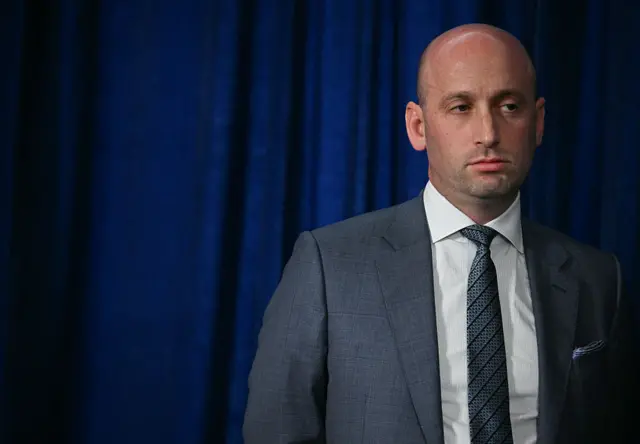
    Stephen Miller stands in a suit during a press conference with a blue backdrop behind himImage source, Getty Images

    Stephen Miller, the White House deputy chief of staff, insists that the US is running Venezuela despite the swearing in of Vice-President Delcy Rodriguez after the capture of Nicolas Maduro.

    Appearing on CNN on Monday, Miller says the US wants an interim government "that will respect the interests of the people of Venezuela" and a government that wants "a good, peaceful, secure future for Venezuela".

    He adds that "the best decision they can make is to cooperate fully and completely with the United States".

    Miller, who is also the White House's homeland security adviser, reiterates Trump's remarks over the weekend that the US will "run" the country.

    He says the "US is in charge" and also will "set the terms and conditions" there, including a "complete embargo on all of their oil and their ability to do commerce."

    "The United States is using its military to secure our interest unapologetically in our hemisphere. We're a superpower, and under President Trump, we are going to conduct ourselves as a superpower," Miller says.

    "It is absurd that we would allow a nation in our own backyard to become the supplier of resources to our adversaries, but not to us," he also says.

    During the interview, he turns from Venezuela and says his country "should have Greenland as part of the United States".
  2. 'We would love to have elections that are legal, secure and transparent,' Venezuelan sayspublished at 23:01 GMT 5 January

    Alice Cuddy
    Reporting from Cúcuta on the Colombia-Venezuela border

    I’ve been hearing more reactions from Venezuelans inside the country and here at the border with Colombia.

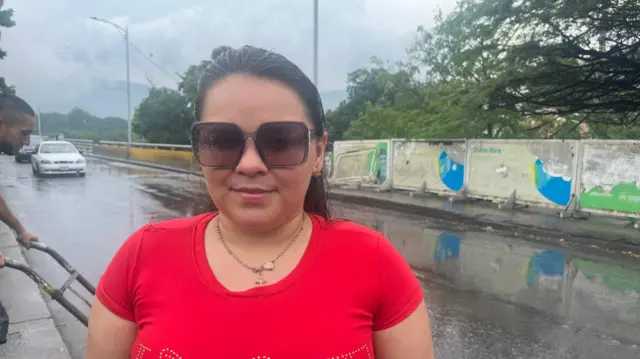
    Angela, 31, says it’s too soon to know how to feel about the US operation on Saturday.

    "We need to wait to see what happens," she says.

    At a different crossing, Pedro Morales, who helps people transport baggage across the border, says he’s against the seizure of Maduro and his wife.

    "I’m not OK with the invasion. I think it’s going to bring more problems. But it is what it is - it’s happened and we can’t change it now," he says.

    Speaking over message from the border city of Ureña, a 50 year-old cleaner who asks not to be named says things in her community feel "calm" as people wait to see what happens next.

    "We would love to have elections - ones that are legal, secure and transparent. But we have no idea who the candidates will be and know it’s going to take a very long time."

  3. Trump administration officials arrive on Capitol Hill for classified briefingpublished at 22:52 GMT 5 January

    Defence Secretary Pete Hegseth and Chairman of the Joint Chiefs of Staff Dan Caine have arrived on Capitol Hill for a closed-door briefing with top US lawmakers, as has Secretary of State Marco Rubio.

    John Ratcliffe, CIA director, is also attending the meeting.

    They are due to brief congressional leaders from both parties on the US operation in Venezuela that led to the seizure of Maduro.

  4. House Speaker Johnson says Trump didn't need congressional consent for Venezuela operationpublished at 22:46 GMT 5 January

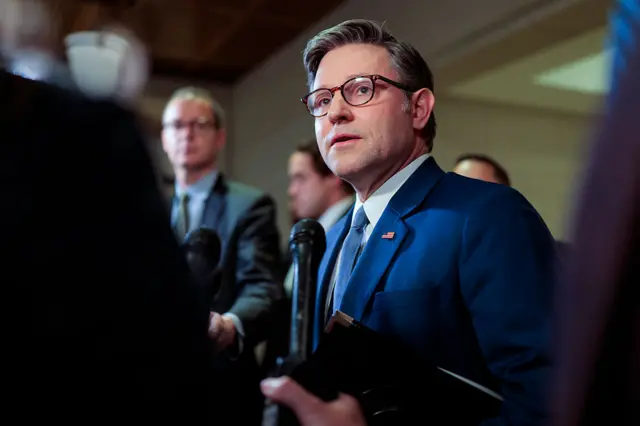
    US Speaker of the House of Representatives Mike Johnson speaks to a gaggle of reporters on 5 January 2026Image source, Getty Images

    In his most detailed remarks since the US seized Venezuelan President Nicolas Maduro, House Speaker Mike Johnson says President Donald Trump did not need prior consent or authorisation from Congress for the military operation.

    Speaking to CNN on Monday before entering a closed-door briefing about the strike, the Republican lawmaker said the operation only required "notification of Congress" and that it was "well within Article II" of the US Constitution, which limits the president's powers to unilaterally wage war.

    Trump and cabinet members spoke with Johnson within hours of the operation, he said, and did "everything they were supposed to do".

    "This was an appropriate action and we’ll get a lot more details inside,” he said, adding that a full briefing for all members of Congress is expected by mid-week.

    For background: Article II lays out the roles and responsibilities for the executive branch, including making the president the Commander in Chief of the armed forces and granting the power to respond to attacks. Article I is on the organisation and authorities of Congress and gives it the sole power to declare war.

  5. Bettor made $400,000 on Maduro's exitpublished at 22:35 GMT 5 January

    Natalie Sherman
    New York business reporter

    Trump’s announcement of Maduro’s seizure caught many off guard.

    But not everyone.

    Bets on Polymarket, a crypto-powered betting site, that Maduro would be out of power by the end of January ramped up in the hours before Trump revealed the move on social media in the early morning of 3 January.

    Polymarket data shows traders put the odds of Maduro’s exit at just 6.5% as of 18:00EST (23:00GMT) the night before.

    But that jumped to 11% shortly before midnight and surged to more than 56% by 02:30, indicating a sudden change in positions.

    One mystery account, which joined the platform last month and took four positions – all related to Venezuela – made more than $400,000 (£295,400) from the wager, making its final bets in the late hours of Friday.

    The activity has sparked speculation, external that someone with knowledge of the operation might have taken the opportunity to profit.

    The BBC has approached Polymarket for comment.

    Thumb on top of a phone with a blue screen, the name Polymarket, and the company's logo - a trapezoid with a "v" in the middle on its sideImage source, Getty Images
  6. Further US military action in Venezuela 'a non-starter', top Democrat sayspublished at 22:24 GMT 5 January

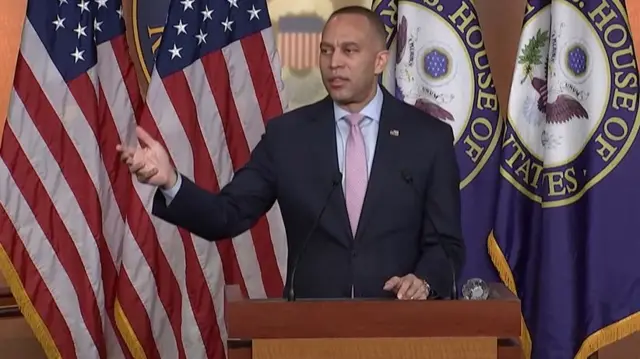
    Hakeem Jeffries, Minority Leader of the US House of Representatives, speaks in Congress. He is wearing a suit and standing in front of two US flags and two emblems of the US HouseImage source, Reuters

    US House Minority Leader Hakeem Jeffries has criticised the Trump administration's decision to launch strikes in Venezuela and seize its president, Nicolás Maduro.

    Jeffries, speaking at a news conference on Capitol Hill, says the US actions lacked congressional approval.

    He adds that he and other congressional leaders are due to hold a classified briefing about the operation with officials including defence secretary Pete Hegseth in the coming hour.

    "We're going to confront the administration as it relates to actions that they took, connected to Venezuela, and the possibility that they're going to send additional troops into Venezuela, which is a nonstarter," he says.

  7. Protests and celebrations erupt worldwide after Maduro was seizedpublished at 21:59 GMT 5 January

    thousands of protesters standing in a city streetImage source, Reuters
    Image caption,

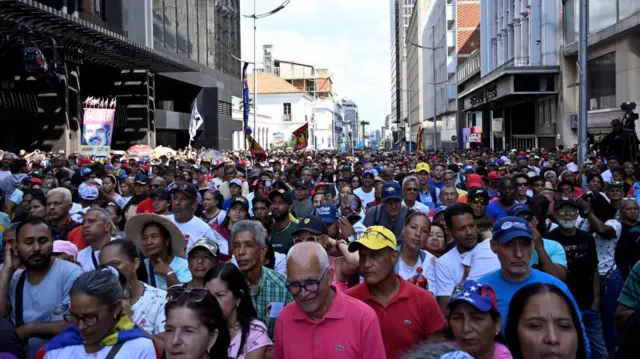
    Pro-Maduro protesters march in Caracas, Venezuela to demand their leader's return

    In Caracas on Monday, thousands of Maduro supporters are marching in the streets to demand the release of their captured leader, AFP news agency reports.

    The protesters are gathered outside Venezuela's National Assembly, where Maduro's ally and vice president Delcy Rodríguez is being sworn in as interim president.

    The BBC previously spoke with several Venezuelan residents who are, however, are happy to see Maduro gone. It's not clear if there are any celebrations of Maduro's seizure happening within Venezuela, where public dissent may still be dangerous under the regime of Maduro's allies.

    In Chile, Mexico, the US, Spain, and Colombia, large crowds of Maduro opponents - including many who fled Venezuela during his presidency - gathered over the weekend to celebrate US forces capturing the leader.

  8. Cooper discussed 'importance of international law' in Rubio callpublished at 21:46 GMT 5 January

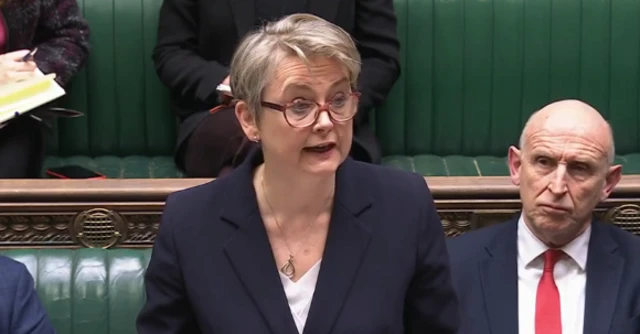
    Yvette CooperImage source, UK Parliament

    UK Foreign Secretary Yvette Cooper says she's spoken to her counterpart Marco Rubio about the situation in Venezuela.

    Cooper repeats that the UK was not involved when the US seized Maduro, and says her teams are working to support around 500 British citizens based in Venezuela.

    In talks with Rubio, Cooper says she "raised the importance of complying with international law", but adds "it is for the US to set out the legal basis of their actions".

    As for what comes next, the foreign secretary says the US and UK must have a collective focus on avoiding further deterioration in Venezuela, but says: "We can shed no tears for the end of Maduro’s rule."

    Opposition leader Kemi Badenoch says she's disappointed not to hear from Prime Minister Keir Starmer directly. She also says the UK should work with the US - "not snipe from the sidelines".

    But Badenoch also expresses concerns about the international precedent set by the US's actions.

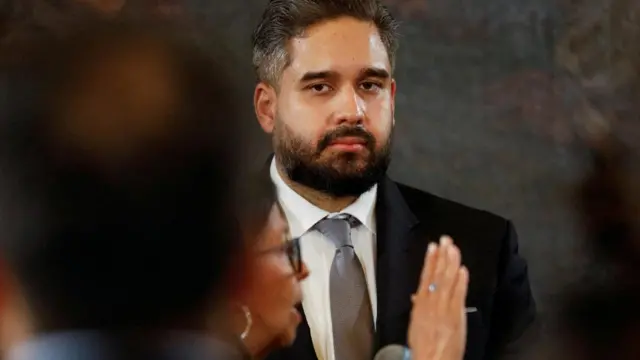
  9. Maduro's son demands release of his parentspublished at 21:30 GMT 5 January

    Vice President Delcy Rodriguez is sworn in as Venezuela’s interim president while Nicolas Maduro Guerra, son of ousted president Nicolas Maduro looks on, at the National AssemblyImage source, Reuters

    Maduro's son, Venezuelan congressman Nicolás Maduro Guerra, has criticised the US operation to capture his parents in his first speech since they were taken into custody.

    "If we normalise the kidnapping of a head of state, no country is safe," Maduro Guerra says. "Today it's Venezuela. Tomorrow, it could be any nation that refuses to submit. This is not a regional problem. It is a direct threat to global political stability."

    Maduro Guerra is also demanding the US release his parents, and condemns the US for including his own name in the indictment.

  10. Nearly 200 US personnel went to Caracas on 3 January - Hegsethpublished at 21:15 GMT 5 January

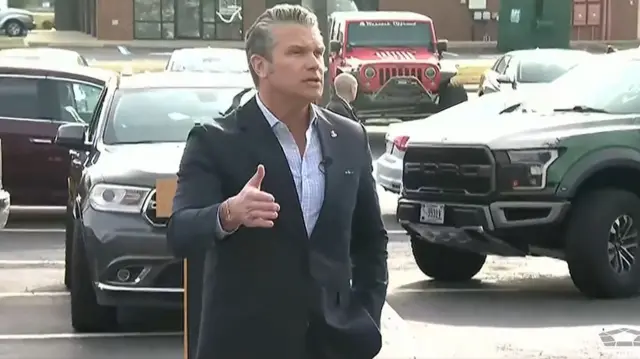
    Hegseth speaking to new recruits in the parking lot of a enlistment ceremony in VirginiaImage source, US government

    US Defence Secretary Pete Hegseth says that "nearly 200 of our greatest Americans went downtown in Caracas" on Saturday, when US forces went to strike the capital and seize Nicolás Maduro.

    Speaking at an event in Virginia, Hegseth adds that the forces completed the "capture" of a wanted individual "without a single American killed".

    "Extending the long arm of American power and justice in way only the United States of America can do," he says. "President Trump is re-establishing dominance and deterrence in our own hemisphere."

  11. US planning to intercept another Venezuelan oil tanker - CBSpublished at 21:01 GMT 5 January

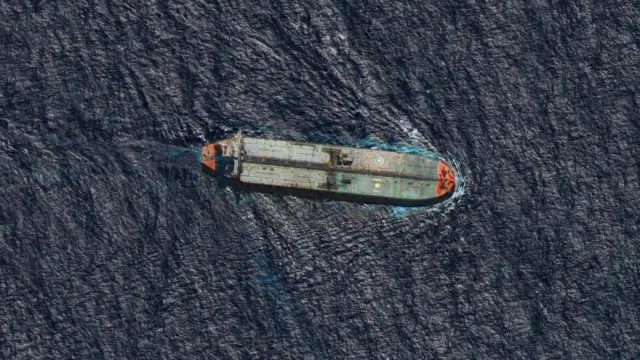
    Last month, US forces seized two oil tankers off the coast of Venezuela. Attorney General Pam Bondi said one of them, the Skipper, was used to transport sanctioned oil from Venezuela and Iran. Caracas denounced the action, calling it an act of "international piracy".

    US media partner CBS News reports today, citing two US officials, that the US is planning to intercept another tanker - the Marinera, formerly known as Bella 1.

    When the US Treasury Department added Bella 1 to its sanctions list, it accused the registered owner of having links to Iran and supporting Iran's Islamic Revolutionary Guard Corps.

    CBS says these discussions took place before the seizure of Maduro and his wife, and follows President Trump saying about two weeks ago that the US Coast Guard was "pursuing" the vessel.

    Citing the two officials, CBS reports that the mission "could come as early as this week" but notes the operation could be shelved.

    Reuters, citing documents and industry sources, reported earlier that around a dozen oil tankers have left Venezuelan waters since the start of the year - despite the US president ordering "a total and complete" blockade of all sanctioned oil tankers entering and leaving Venezuela.

    A handout photo made available by Vantor shows a satellite image of 12 December 2025 of the recently seized Venezuelan crude oil tanker known as The SkipperImage source, EPA
    Image caption,

    Attorney General Pam Bondi accused the Skipper of transporting sanctioned oil from Venezuela and Iran

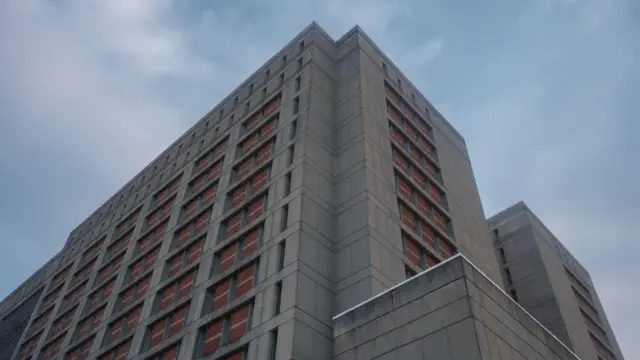
  12. Where are Maduro and his wife being held?published at 20:46 GMT 5 January

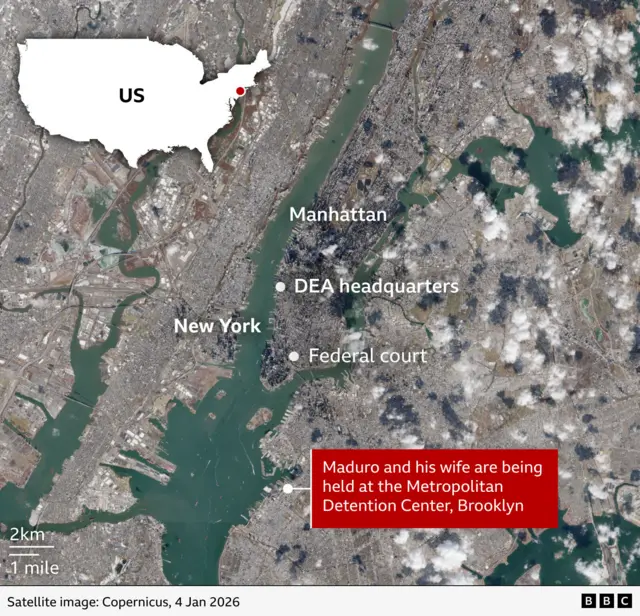
    A map of New York showing the location of the DEA headquarters, federal court, and the Metropolitan Detention Center, Brooklyn, where Maduro and his wife are being held. Satellite image is from 4 Jan 2026

    The Venezuelan former president Nicolás Maduro and his wife, Cilia Flores, are currently being held in the Metropolitan Detention Center (MDC) in Brooklyn, New York.

    US lawyers have described the prison as "hell on earth" - with overcrowding and understaffing leading to frequent acts of violence.

    Then-New York Attorney General Letitia James said conditions were "unacceptable and inhumane", external in 2019. One judge said "chaos reigns, along with uncontrolled violence" in the facility, citing several cases where jurists had hesitated to send defendants and convicts to the jail due to the conditions there.

    Despite this, as the only federal jail in New York City, the MDC is often chosen by US authorities to house prominent prisoners. This has included former Honduran President Juan Orlando Hernández, who faced drug trafficking charges and was pardoned by Donald Trump last year.

    Other famous inmates include Jeffrey Epstein associate Ghislaine Maxwell and rapper Sean "Diddy" Combs.

    The Metropolitan Detention Center, a large, concrete building towering above.Image source, EPA/Shutterstock
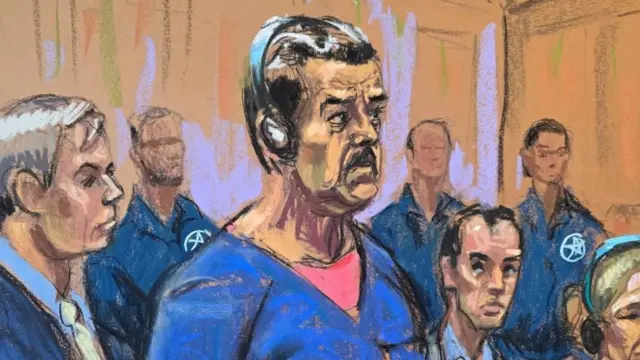
  13. Maduro in court, new Venezuelan leader sworn in - what's happened todaypublished at 20:31 GMT 5 January

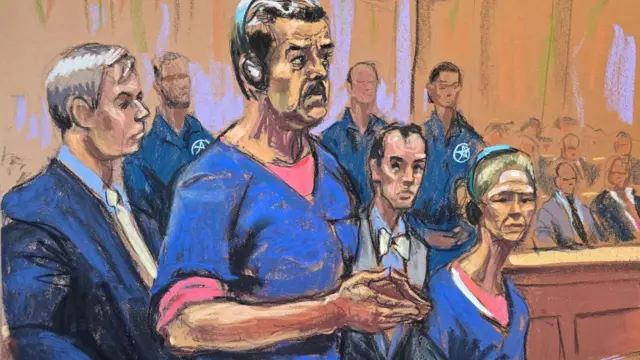
    Court sketch of Nicolas Maduro in court in New York, he is drawn as wearing a blue outfit and is wearing headphonesImage source, Reuters

    Maduro appears in US court

    • Maduro and his wife Cilia Flores both plead not guilty at a court in New York
    • According to CBS News, Maduro also said he was still the leader of Venezuela, saying via an interpreter: "I'm innocent. I'm not guilty. I'm a decent man, the president of my country"
    • Flores appeared to have bruises on her face which a lawyer alleged she sustained when they were seized

    Rodríguez sworn in as interim president of Venezuela

    • The former vice president was sworn in as interim president by her brother, who is president of the country's National Assembly
    • She called Maduro and his wife "two heroes", and said she took the oath with pain because of the suffering caused by "illegitimate military aggression"

    International reaction

    • In a statement, UN Secretary General António Guterres said he is "deeply concerned that rules of international law have not been respected" when it comes to the US's actions in Venezuela
    • The White House shared a message from the US State Department which said "THIS IS OUR HEMISPHERE"
    • Iran and China both called for Maduro's immediate release - China's foreign ministry accused the US of "a clear violation of international law"

    Media caption,

    Nicolás Maduro and wife en route to New York court

  14. 'Rodríguez is the ideal person to take over but new leader needed long-term'published at 20:18 GMT 5 January

    Alice Cuddy
    Reporting from the Venezuela-Colombia border

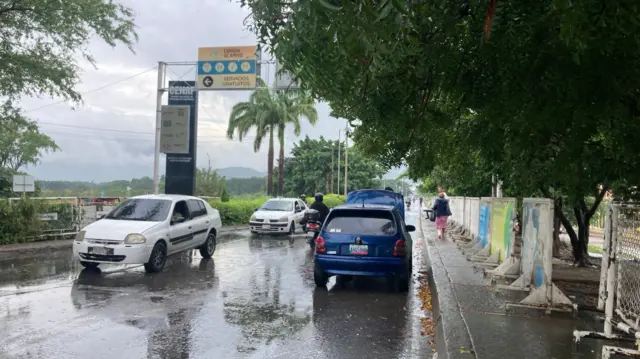
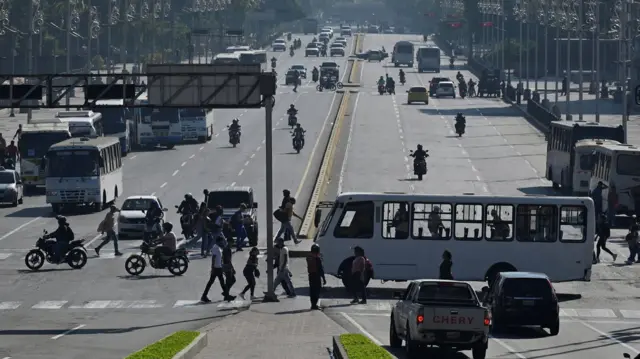
    A landscape image of a road with cars travelling towards the cameraImage source, Alice Cuddy/BBC
    Image caption,

    Photo taken near the Venezuela-Colombia border

    Darwin Villa from the Venezuelan city of La Guaira tells me he is happy about the US action but thinks it is going to take a long time to see what it really means.

    He says he has been checking in regularly on his family members in Caracas, who remain anxious but have returned to work today.

    The 56-year-old says he accepts Delcy Rodríguez as a temporary leader but hopes that there will soon be elections and a new government.

    “She knows everything about the government so she’s an ideal person to take over temporarily, but a new leader is needed [long-term],” he says.

  15. 'Maduro's government should pay for what they've done'published at 20:10 GMT 5 January

    Alice Cuddy
    Reporting from Venezuelan-Colombia border

    Headshot of Glendys QuirozImage source, Alice Cuddy/BBC
    Image caption,

    Glendys Quiroz

    At the rainy border between Colombia and Venezuela, I’ve been speaking to more Venezuelans about their feelings about what’s happening.

    Glendys Quiroz, 28, tells me she crosses the border regularly to pick up groceries, noting that it feels quieter than usual today.

    “We know Maduro has been captured but we don’t know what’s going on or what’s going to happen,” she says.

    She says she supports the US action and wants Maduro and his government to “pay for [what] they’ve done”, adding that there is a “long list of people” who should also face action.

    She adds that she wants opposition leader María Corina Machado to run the country.

  16. Sketch shows Maduro and wife Cilia Flores in courtpublished at 20:07 GMT 5 January

    Court sketch of Nicolás Maduro and his wife Cilia Flores, wearing prison uniforms, standing in court alongside lawyers and officersImage source, Jane Rosenberg / Reuters
    Image caption,

    Venezuela's seized President Nicolás Maduro and his wife Cilia Flores attend their arraignment with defense lawyers Barry Pollack and Mark Donnelly

    With no cameras allowed inside the New York courthouse, we rely on artists to give us a glimpse inside.

    Jane Rosenberg's drawing shows Nicolás Maduro standing, while his wife Cilia Flores sits nearby.

    They both wear headphones to listen to a translation of proceedings, and both wear the same blue prison outfits.

  17. Preparations under way to possibly reopen US embassy in Caracaspublished at 20:01 GMT 5 January

    Tom Bateman
    US State Department correspondent

    US officials say they're making preparations to reopen the US embassy in the Venezuelan capital, if Trump permits.

    A senior State Department official says: “As President Trump said, we are making preparations to allow for a reopening should the president make that decision."

  18. 'They gave the people scraps while keeping the feast for themselves'published at 19:55 GMT 5 January

    Alice Cuddy
    Reporting from Cúcuta on the Colombia-Venezuela border

    We’ve been hearing from people in the Venezuelan capital Caracas about what life is like there since the US action and what they want for the country.

    A 33-year-old masseuse who asks not to be named says she is still waiting at home today to see how things develop. “There’s so much fear in the streets and in our homes,” she says.

    She does not support Venezuela’s new leader Delcy Rodríguez, but says “if this is the price we have to pay for a government transition then I accept it”.

    “If it wasn’t this way then we could have a rebellion, and we can’t forget the armed groups,” she adds.

    She says she hopes there will be lasting change for Venezuela. "They gave the people the scraps while keeping the feast for themselves,” she says of Maduro’s regime.

  19. Caracas resident describes 'pseudo normalcy'published at 19:49 GMT 5 January

    Kristina Volk
    BBC World Service

    A view of downtown Caracas in the wake of the U.S. capture of Venezuelan President Nicolas MaduroImage source, Reuters

    It is "eerily quiet and tense" a man in Caracas tell us - he does not want us to use his name, saying he is afraid he would be in danger if the government found out he was speaking to us.

    He says he went back to work this morning and describes it as living a "pseudo normalcy".

    Over the course of today, he says he and others in the country are getting in touch with their friends and reading and hearing about the latest developments.

    Reacting to the events of today he says "at this point we the people have not much voice or leverage in the political destiny of our nation".

  20. Venezuelans thank Trump, says opposition leader María Corina Machadopublished at 19:43 GMT 5 January

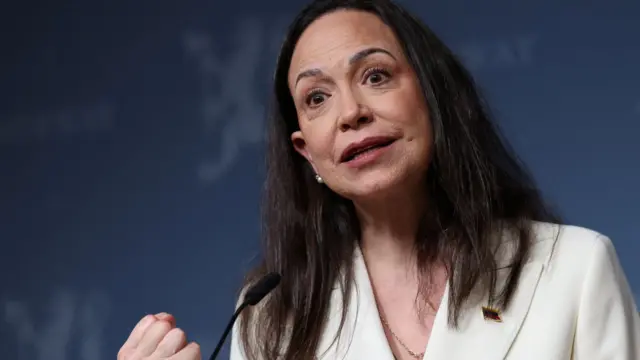
    Nobel Peace Prize laureate and Venezuelan opposition leader Maria Corina Machado speaks during a press conference in Oslo, Norway December 11Image source, Reuters

    Earlier, Venezuelan opposition leader María Corina Machado thanked the US president and his administration for their "firmness and determination in upholding the law".

    Machado, who accepted the Nobel Peace Prize in Norway last month, writes on X that Venezuela will "be the main ally" of the US on matters of "security, energy, democracy, and human rights".

    "The freedom of Venezuela is near, and soon we will celebrate on our land. We will shout, pray, and embrace as a family, because our children will return home," she adds.

    It comes after she celebrated the initial news of US intervention on 3 January, stating then that the "hour of freedom had arrived".

    Trump previously appeared dismissive of the idea that Machado could lead Venezuela, saying: "I think it'd be very tough for her to be the leader, she doesn't have the support... she doesn't have the respect."