Summary

  1. With two killed in Abu Dhabi, the UAE's safe and stable image is under threatpublished at 07:39 GMT 26 March

    Azadeh Moshiri
    South Asia correspondent, reporting from Dubai

    We’ve just heard that debris from an intercepted missile in Abu Dhabi has killed two people and injured three.

    A number of cars were also damaged, according to Abu Dhabi's authorities.

    The UAE has borne the brunt of attacks on the Gulf, with more than 2,100 missiles and drones launched by Iran.

    While the Ministry of Defence says most attacks have been intercepted, the government is keeping a tight grip on information.

    So far, there have been more than 100 people arrested after taking pictures and recording videos of damage from attacks and interceptions, which is illegal in the UAE. The government has said this is for security reasons.

    The UK Foreign Office has warned UK citizens that it is also illegal to post material that is critical of the government here.

    These attacks are chipping away at the UAE's image of safety and stability. Officials have said should any negotiations with Iran take place, they want long-term curbs and controls on its bank of missiles and drones, and that the attacks have only pushed the UAE to grow its security ties with Washington.

  2. 'They're afraid they'll be killed by their own people': Trump on Iran's leaderspublished at 07:34 GMT 26 March

    Media caption,

    Trump insists Iran are negotiating, but they're 'afraid to say it'

    Despite various denials from Tehran this week, US President Donald Trump insists that Iran is negotiating with the US.

    Speaking during the National Republican Congressional Committee (NRCC) annual fundraising dinner in Washington DC last night, Trump covered a wide range of topics - from midterm elections, to immigration and Venezuela. On Iran:

    • Trump told Republicans Iran "want to make a deal so badly". But he claimed Iran are "afraid to say it because they figure they'll be killed by their own people". He added: "They're also afraid they'll be killed by us"
    • He said the war in the Middle East was a "military operation". "They don't like the word war because you're supposed to get approval [from the US Congress]. So I'll use the word military operation, which is really what it is"
    • He said the US are "decimating" Iran and "there are great military triumphs against Iran [which] can't be displayed on television because they're displaying [immigration officials at] airports"
    • Trump insisted Iran would have used a nuclear weapon against the US "without hesitation". He said if it was not for the US "the entire world would be under mortal threat and the prospects for peace in the Middle East would be absolutely shattered forever"
    • He added that the changes to oil prices are short term, insisting the US had to "cut out the cancer". "The cancer was Iran with a nuclear weapon. We've cut it out now. We're going to finish it"
  3. Two killed in Abu Dhabi by falling debris after missile interceptedpublished at 07:25 GMT 26 March
    Breaking

    Two people have died in Abu Dhabi after debris fell from a ballistic missile which was intercepted by air defence systems, according to the Abu Dhabi Media Office.

    Three people were also injured in the incident which caused damage to a number of cars.

  4. Oil edges higher as traders weigh US-Iran peace prospectspublished at 07:16 GMT 26 March

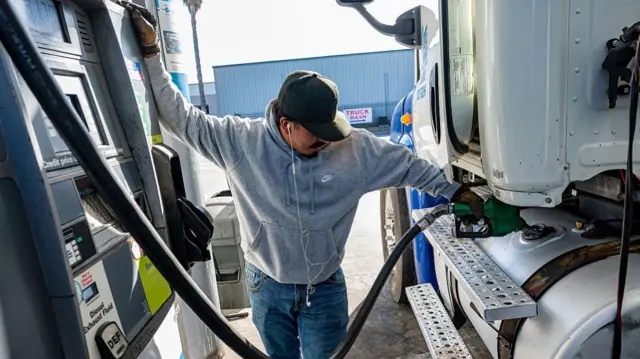
    A driver refuels a lorry.Image source, Bloomberg via Getty Images

    Oil prices are edging higher in afternoon trade in Asia as investors reassess the potential for a ceasefire between the US and Iran.

    Brent crude rose by 2.2% to $104.43 (£78.14), while West Texas Intermediate was 2.1% higher at $92.24.

  5. If you don't serve in the military, they come after you, young Iranian tells BBCpublished at 07:14 GMT 26 March

    Fergal Keane
    BBC News

    There has been a near-total internet blackout in Iran since the US-Israeli attacks began, but BBC sources have been able to speak to some Iranians about the war.

    Ali*, in his early 20s, is due to undertake military service. He recently lost a close friend in an air strike on an army base.

    "I heard that they had bombed that place. After that, I found out that my friend had been killed. I could not believe it myself. I called the other friends, and they told me: 'Yes that friend of ours has been killed.'"

    Every male over the age of 18 is required to serve.

    "You must go... They come after you. They take you from your house. If they see you outside the house, they take you with them," Ali says.

    But Ali says he will not serve. He is not an ideological young man. He simply doesn't want to be killed.

    "I definitely won't go because my life would be in danger. Whatever I can do, I will do so that I don't go into military service."

    *Not his real name. Read more here.

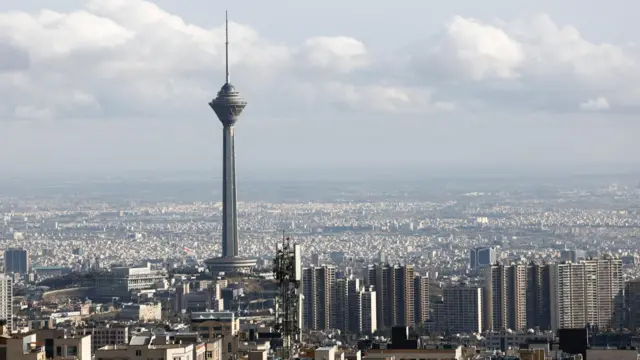
    People stand at a park in view of Milad Tower, Tehran, on WednesdayImage source, West Asia News Agency via REUTERS
    Image caption,

    People stand at a park in view of Milad Tower, Tehran, on Wednesday

  6. UAE intercepting fresh drone and missile attacks from Iranpublished at 06:34 GMT 26 March

    Just a few moments ago the United Arab Emirates said it was intercepting Iranian missile and drone attacks over its territory.

    It says air defence systems are being deployed to intercept ballistic missiles while fighter jets are in the sky to take down incoming drones.

    It is the third such warning the defence ministry has issued since Wednesday night.

  7. Six injured in central Israel following missile attackpublished at 06:32 GMT 26 March

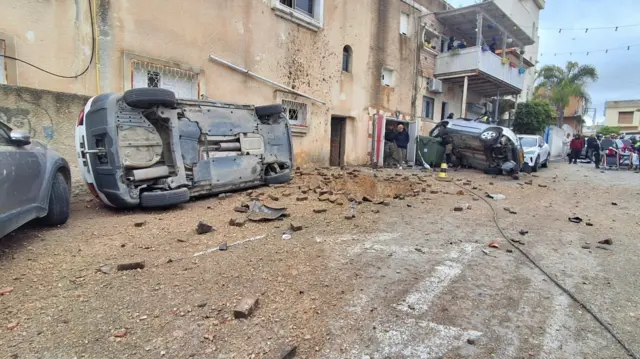
    Magen David Adom (MDA), Israel's emergency service, says six people are being transferred to hospital for injuries after an earlier missile attack on central Israel.

    There was also damage to several houses in the city of Kafr Qasim. The military said the missiles were launched from Iran.

    Video from the fire service showed damage in Kafr Qasim this morningImage source, Israeli emergency services
    Image caption,

    Video from the fire service showed damage in Kafr Qasim this morning

  8. What has the White House said about a potential deal with Iran?published at 06:04 GMT 26 March

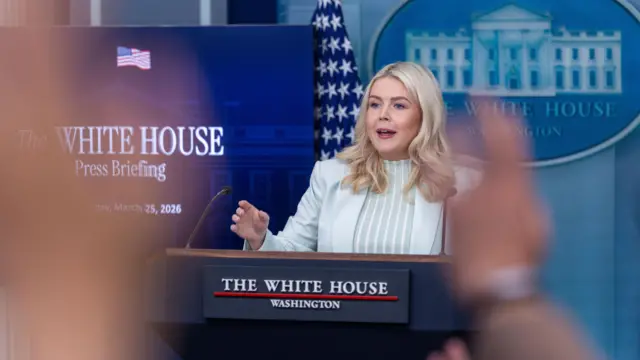
    White House Press Secretary Karoline Leavitt responds to a question from the news media during the daily briefing at the White House.Image source, EPA

    In a press briefing on Wednesday evening, White House Press Secretary Karoline Leavitt spoke extensively about Iran, saying that President Trump was still engaged in "productive conversations" with Iran - while warning President Trump was still prepared to "unleash hell".

    • Leavitt also said that the 15-point plan circulating on social media is "speculative" but had "elements of truth to it", refusing to go further into the "nitty gritty" details of how the talks are unfolding
    • The press secretary also doubled down on Trump's declaration that a regime change in Iran has already been achieved, telling reporters that Iranian leaders have all been killed and "nobody has really seen or legitimately heard" from Mojtaba Khamenei
    • Leavitt refused to answer questions about the potential for US "boots on the ground" in Iran - but she did say formal authorisation from Congress to do so would not be necessary
    • When asked whether the end of war was in sight, Leavitt said that the US is "very close" to meeting its core objectives, but did not give any updated timelines
    • She said President Trump's preference was "always peace" - but he was "prepared to unleash hell"
  9. What is Iran demanding in order to end the war?published at 05:51 GMT 26 March

    A cityscape of TehranImage source, Reuters

    Iran’s state broadcaster Press TV has quoted a “senior political-security official” as saying that Iran has rejected a US proposal aimed at ending the current war.

    "Iran will end the war when it decides to do so and when its own conditions are met," the official reportedly told the broadcaster.

    They outlined five conditions to Press TV that would need to be met in order to end the war:

    • A complete halt to "aggression and assassinations" by the enemy
    • The establishment of concrete mechanisms to ensure that the war is not reimposed on the Islamic Republic
    • Guaranteed and clearly defined payment of war damages and reparations
    • The conclusion of the war across all fronts and for all resistance groups involved throughout the region
    • International recognition and guarantees regarding Iran's sovereign right to exercise authority over the Strait of Hormuz

    Iranian officials have repeatedly said they want a complete end to the war, and not just a ceasefire.

  10. IDF reports more missiles launched from Iranpublished at 05:44 GMT 26 March

    The Israel Defense Forces (IDF) says that it has identified two rounds of missiles launched from Iran toward Israel in the past hour.

    It warned the public to shelter in a safe place.

    Magen David Adom, Israel's emergency service, said it was providing medical treatment to two people in central Israel.

  11. Oil moves higher after Iran rejects direct US talkspublished at 04:43 GMT 26 March

    A driver refuels a tractor trailer with diesel.Image source, Bloomberg via Getty Images

    Global oil prices are trading higher on Thursday in Asia after Iran's foreign minister said the country has "no intention of negotiating for now" with the US.

    On Wednesday, Abbas Araghchi told state media that exchanges between Tehran and Washington had been “conveyed via friendly countries” and do not mean negotiations are being held.

    In response US President Donald Trump said Iran's leaders are "afraid" to admit that they are in talks.

    Brent crude rose by 1.6% to $103.85 (£77.71), while West Texas Intermediate was 1.4% higher at $91.61.

  12. Fuel crisis could bring Manila and Beijing closerpublished at 04:21 GMT 26 March

    Suranjana Tewari
    Asia Business Correspondent

    The war in Iran is reshaping politics within Asia. Even with its long-running dispute with China over the South China Sea, Manila is hinting it might be ready to get closer to Beijing.

    Asia - and the Philippines in particular - is highly exposed to any disruption in global oil supplies, especially through the Strait of Hormuz, because the country depends so much on imported fuel.

    President Ferdinand Marcos Jr. has said he’s open to restarting talks with China on joint oil and gas exploration in contested waters, calling the current crisis a possible “impetus” for cooperation.

    For China, it’s a chance to show it can be a reliable energy partner in Southeast Asia. Both sides have clear reasons to engage: the Philippines needs more energy sources, and China wants to strengthen its influence in the region.

  13. How the prolonged Middle East conflict could reshape how we flypublished at 04:02 GMT 26 March

    Dubai has become one of the key pillars of the aviation industry. Its airport - Dubai International Airport (DBX) - is the busiest in the world for international travellers, far outstripping London Heathrow. In 2024, more than 92 million passengers made their way through its gleaming, marble-floored halls.

    Under normal circumstances, the three Gulf airports - including Abu Dhabi and Qatari capital, Doha – together handle more than 3,000 flights every day, with the majority of them operated by local carriers, Emirates, Etihad and Qatar Airways.

    But since the conflict in the Middle East, aircraft at these major hub airports have been grounded in some instances, leaving hundreds of thousands of passengers stranded.

    As the bombardments continue, air traffic in the region remains heavily disputed. But there is also the issue of fuel. Since Iran effectively blocked the Strait of Hormuz, supplies from oil refineries in the Gulf have been choked off.

    The region normally accounts for about half of Europe's jet fuel imports, and fears of scarcity have caused prices to double since the start of the conflict. Some carriers have already begun cutting flights in response. According to analysts at Cirium, more than 30,000 services to the Middle East have been cancelled since the start of the conflict.

    What this means in the long-term for the hugely successful "Gulf model" of aviation - widely credited with transforming long-distance travel and making it cheaper - could be really damaging, experts say. If the conflict drags on, more passengers will find alternative routes to fly, which will inevitably drive prices up, experts say.

    Read more here in our InDepth piece by BBC transport correspondent Theo Leggett.

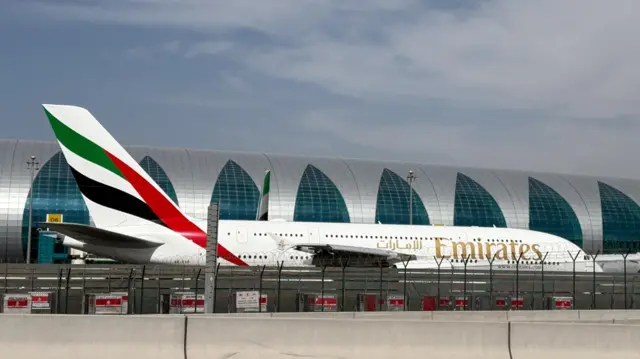
    An Emirates airplane sits at the Dubai International Airport with a curved building in the background.Image source, Reuters
    Image caption,

    At Gulf hubs like Dubai International Airport, schedules remain limited

  14. 'This regime has inflicted so much pain on us'published at 02:45 GMT 26 March

    Fergal Keane
    BBC News

    The BBC has spoken to Iranians across Tehran, but has had to change their names to protect them from official retaliation.

    One of those people is Zahra, a grandmother who has struggled to maintain contact with her family due to internet blackouts imposed by Iran’s government.

    "My children are restless. Not being able to hear their voices is driving me insane. This is truly the height of cruelty and oppression for a mother," she told the BBC.

    Outside her home, the residue of "black rain" left after US and Israeli strikes on oil depots covers the ground.

    When asked if she wants a ceasefire, Zahra is scornful.

    "This regime has inflicted so much pain on us over the past 47 years leaving countless mothers without their children, more than even the war itself did. So, I prefer that there be no ceasefire until this entire regime is gone."

    You can read more from Zahra here.

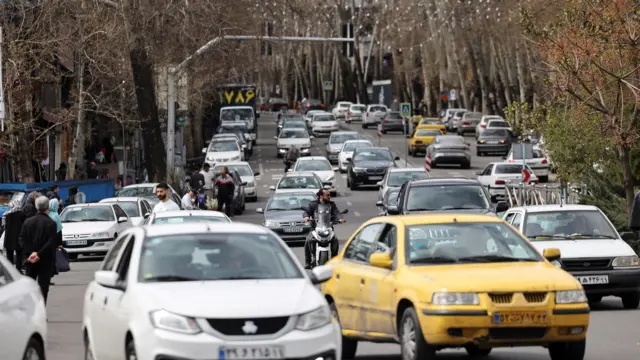
    Motorists on a street, amid the U.S.-Israeli conflict with Iran, in Tehran, Iran, March 24, 2026.Image source, Reuters
  15. Watch: 'No intention of negotiating' with US, says Iran's foreign ministerpublished at 02:13 GMT 26 March

    Footage has come through now on the remarks from Iranian Foreign Minister Abba Araghchi, which are in stark contrast to Donald Trump's latest address.

  16. Is Trump any closer to an Iran exit strategy?published at 01:42 GMT 26 March

    Daniel Bush
    Washington correspondent

    Trump appears increasingly interested in finding an off-ramp with Iran, or what he calls "winding down" the war.

    But his exit strategy is unclear - and the US president's mixed messaging suggests he's still undecided about what would work best: ramping up the conflict to try to end it as quickly as possible, or pushing for a negotiated settlement with Tehran.

    On Tuesday, Trump signalled the US may pursue both strategies at once. In a matter of hours, the Pentagon ordered ground troops to Iran, and US negotiators sent the Iranian regime a new 15-point peace plan.

    By Wednesday, the White House was urging Iran to accept the deal while threatening to hit the country harder than ever if it didn't, stoking further confusion about Trump's intentions.

    "President Trump does not bluff, and he is prepared to unleash hell," Karoline Leavitt, the White House press secretary, told reporters. "Iran should not miscalculate again."

    Read Daniel Bush's analysis on Trump's mixed messaging.

  17. Iran's rejection of US talks reflects deep mistrustpublished at 01:18 GMT 26 March

    Amir Azimi
    Editor, BBC Persian

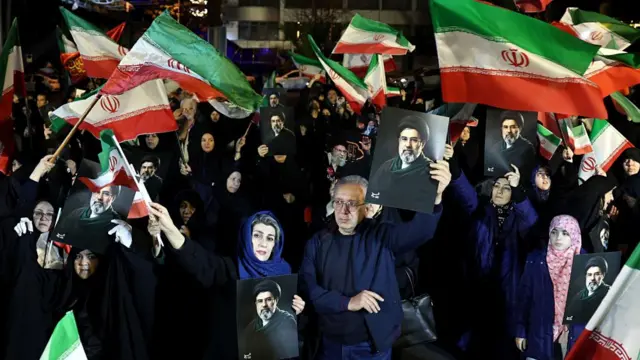
    Iranian people chant, wave flags and hold posters of the new Iranian supreme leader Mojtaba Khamenei during a rally in support for the military, in TehranImage source, Reuters

    While Washington talks about progress with Tehran, Iran rejects it outright.

    That disagreement reflects a deep mistrust that stems from previous talks between the two sides.

    They have twice raised hopes of easing tensions.

    Both times, they were followed by Israeli and US military strikes on Iran.

    From Iran's point of view, talks have not reduced the possibility of war; they have come just before it. That is why Trump's claims are being treated with suspicion.

    But Iran's denial does not necessarily mean it is against talks. There is more going on.

    Even officials who support diplomacy are under pressure. Trying negotiations again would be risky. There is no clear sign that this time would be different, which helps explain the tough tone from Foreign Minister Abbas Araghchi and other officials.

    More: Iran's rejection of US talks reflects deep mistrust

  18. Iran's foreign minister dismisses reports of talkspublished at 01:17 GMT 26 March

    Ghoncheh Habibiazad
    Senior reporter, BBC Persian

    As we reported earlier, Iranian Foreign Minister Abbas Araghchi has said in a televised interview on Iran’s state TV news channel that for “several days” the US has "begun sending various messages through different intermediaries”.

    But he says that the fact these messages were “conveyed via friendly countries”, and that Iran was responding by stating their “positions and issuing warnings”, is “neither dialogue nor negotiation, nor anything of the sort”.

    Araghchi also says that Iran’s policy for now is to continue “defending”, and they have “no intention of negotiating for now”.

    He adds that, “This is Israel’s war and people of the region and people of the US are paying the price for it”.

  19. What are the latest developments on talks between the US and Iran?published at 01:16 GMT 26 March

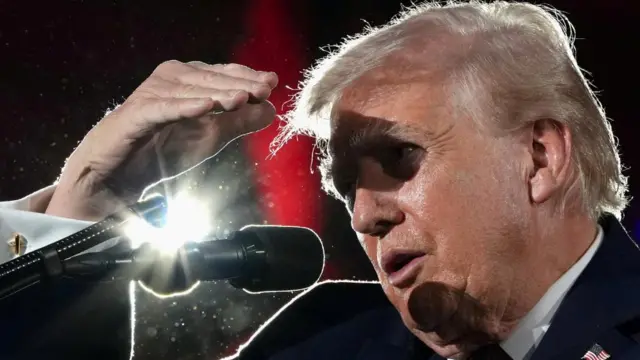
    Trump shields his eyes with his hand as he speaksImage source, Reuters

    Our live coverage of the Iran war continues amid conflicting reports about negotiations between Washington and Tehran. Here are the latest developments:

    • Speaking on Wednesday, White House Press Secretary Karoline Leavitt said President Trump has been engaged over the last three days in "productive conversations" with Iran
    • She also said the operation was "ahead of schedule" and the Iranian regime was looking for an "exit ramp"
    • That message is in stark contrast to the tone of Iranian Foreign Minister Abbas Araghchi, who said later that Iran has “no intention of negotiating for now
    • He said messages had been “conveyed via friendly countries”, but these exchanges is “neither dialogue nor negotiation, nor anything of the sort”
    • Undeterred, Trump insists that Iran "are negotiating", saying "they're afraid to say it because they figure they'll be killed by their own people". He added: "They're also afraid they'll be killed by us"
    • There has also been conflicting reports about proposals to end the war. On Wednesday, there were reports that Iran had received a 15-point plan from the US for reaching a ceasefire
    • For its part, an Iranian “senior political-security official” was quoted by state broadcaster Press TV as saying they had five conditions to end the war, including payment of "war damages and reparations" and the end of the war across all fronts
    • Meanwhile, the fighting continues - footage shows a plume of smoke from the vicinity of an Israeli power station after a reported Iranian missile attack, while Iranian air defence systems have been heard in Tehran

    Stay with us for the latest updates and analysis.