Summary

  1. Thursday sees heavy explosions in Tehranpublished at 23:46 GMT 26 March

    Ghoncheh Habibiazad
    Senior reporter, BBC Persian
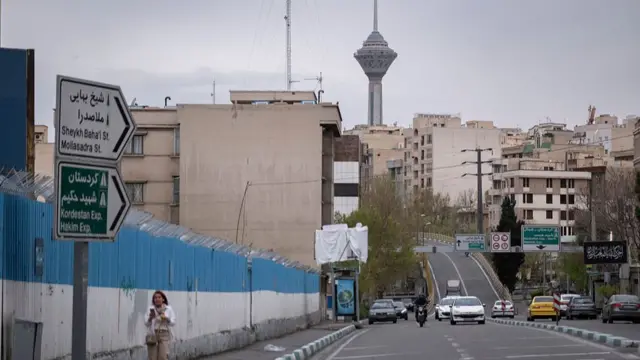
    A view of Tehran is seen on 26 March 2026Image source, Getty Images
    Image caption,

    A view of Tehran on 26 March

    I've been hearing from some inside Iran that residents from western to eastern Tehran heard very loud explosions this evening in the capital.

    A woman in her 20s in western Tehran tells me that she started "sobbing" today because of how close the explosion felt to her.

    "I heard such a loud explosion that I had never heard before in my life. It was as if it had gone off right next to my ear. I started sobbing and my hands were shaking when I tried to type a text to tell a friend that I’m okay," she says.

    A man in his 30s in the capital tells me that he is a "bit scared, but not as much as before".

    "It feels as though our minds are getting used to the explosions, just as we've grown used to internet outages. We are learning a different kind of living... life with sanctions, inflation, security and social pressure, war, and internet blackouts," he says.

    Iran is currently under a near-total internet blackout, but some people still manage to connect.

  2. Iran will be welcome and safe at World Cup, White House sayspublished at 23:36 GMT 26 March

    Anthony Zurcher
    North America correspondent

    Andrew GiulianiImage source, BBC / Anthony Zurcher

    The Iranian national football team is welcome – and would be safe – if they come to the US for this summer’s World Cup competition, according to Andrew Giuliani, head of the White House’s World Cup task force. He spoke to the BBC in Texas while attending the annual Conservative Political Action Conference (CPAC).

    "Right now, we're expecting the Iranian team to come," Giuliani says. "I think it's a great opportunity for the Iranian diaspora here in the United States of America to be able to celebrate their country."

    Iran has group stage matches scheduled in Los Angeles and Seattle.

    As we reported earlier, Iran's sports ministry has banned its national teams and athletes from participating in events in "hostile countries".

    Two weeks ago, Donald Trump caused an uproar when he posted on Truth Social that he didn't think it was appropriate for the Iranian team to travel to the US out of concerns for their "life and safety".

    The following week, Iranian officials said they requested their matches be moved to Mexico – a request that Fifa, football's governing body, denied.

    Giuliani says that the president continues to welcome the Iran team, and his original post was written as members of the Iranian women's national football team were considering seeking asylum in Australia, amidst allegations that their families in Iran were being threatened by the regime.

    He warns, however, that the ongoing US Department of Homeland Security shutdown risks disrupting planning for the global event, which is set to start in 77 days.

    "We're doing everything we can to make sure it's safe and secure, but we need to open up the Department of Homeland Security to maximise our chances that this is not just a safe and secure World Cup, but truly an incredible success," he tells me.

  3. Israeli opposition leader warns IDF is 'stretched to the limit'published at 23:21 GMT 26 March

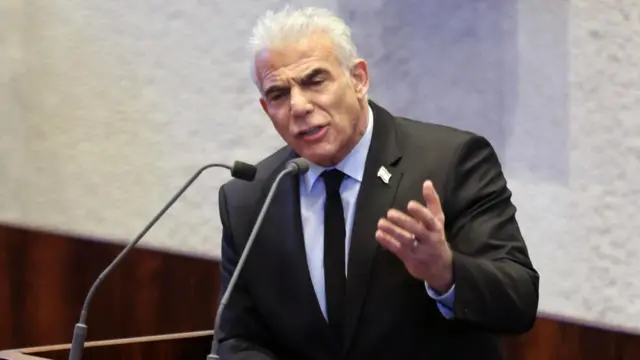
    Israeli opposition leader Yair Lapid speaking into two microphones at a podium and raising his left handImage source, EPA

    Israel's opposition leader, Yair Lapid, has accused the government of sending the army into a war without a strategy and with too few soldiers.

    In a video statement delivered in Hebrew, Lapid says: "The IDF is stretched to the limit and beyond. The government is leaving the army wounded out on the battlefield."

    Lapid says the government is sending the army into a "multi-theat war without a strategy, without the necessary means, and with far too few soldiers". He adds that reservists are "worn out and exhausted and can no longer meet our security challenges".

    He calls on the government to draft men from the ultra-Orthodox Haredi community - those who devote themselves full-time to the study of sacred Jewish texts and who since the creation of Israel in 1948 are often exempt from mandatory military service in Israel.

    His statement follows military chief Lieutenant General Eyal Zamir warning the security cabinet yesterday that "the IDF is on the verge of collapse", according to Israeli media reports.

  4. Iran bans athletes from 'hostile' countriespublished at 22:50 GMT 26 March

    Iranian National Football Team players attend a training session on the field of the hotelImage source, Anadolu via Getty Images
    Image caption,

    Iranian national football team players are currently at a training session in Turkey

    Iran's sports ministry has banned its national teams and athletes from participating in events in "hostile countries", according to Iranian state media.

    The ministry says "the presence of national and club teams in countries that are considered hostile and are unable to ensure the security of Iranian athletes and team members is prohibited until further notice."

    The ban could affect the Fifa World Cup scheduled to take place this summer in Mexico, Canada, and the United States. Iran's group stage matches are scheduled to take place in Los Angeles and Seattle.

    Already, Iran has formally asked for its matches in the US to be moved to Mexico, a request Mexican President Claudia Sheinbaum says she is open to accommodating.

    Earlier this month, President Trump said Iran was welcome to participate but added: "I really don’t believe it is appropriate that they be there, for their own life and safety."

  5. Missile and drone attacks around the Middle Eastpublished at 22:25 GMT 26 March

    Saudi Arabia intercepted and destroyed a total of four additional drones in its eastern region, the ministry of defence has posted on X over the last two hours, and on the heels of multiple other interceptions announced by defence officials over the past 24 hours.

    Kuwait is also confronting missile and drone attacks, the army has posted on X. It warned residents they might hear explosions from the interception, and to follow safety guidelines issued by the government.

  6. Trump says Iran asked him for seven-day energy strike pause - he agreed to 10 dayspublished at 21:59 GMT 26 March

    Donald Trump says Iran asked him for a pause of seven days on striking energy plants, but that he gave them ten, and Tehran was "very thankful".

    Earlier, Trump announced on Truth Social that he would extend a pause on striking Iranian energy plants from five days to two weeks. The pause was set to expire tomorrow, but this new extension means the pause will be in effect until April 6.

    Speaking on the phone to Fox News just now, Trump says the US is in conversations with Iran which are going "fairly well".

    "They said to me, very nicely, through my people: 'Could we have more time?'," the US president tells the hosts of Fox's The Five.

    "They asked for seven [days]. And I said, 'I'm going to give you ten', because they gave me ships. You know, we talked about the eight ships. You know, the 'present' that I talked about the other day."

    At a White House cabinet meeting earlier today, Trump said Iran let oil tankers pass through the Strait of Hormuz as a "present" to him during talks.

    Iran has denied that talks to end the war are taking place.

  7. Israeli strikes continue on Lebanon and Iran - the latest updatespublished at 21:31 GMT 26 March

    Israeli strikes continue on Lebanon and Iran as US President Donald Trump claims Iran is begging to make a deal. Here's what you need to know:

    Iran: Israel says its air force completed approximately 20 strikes on "launch sites" in western Iran so far today. It comes after Israel announced early this morning that it launched a "wide-scale" wave of strikes against the city of Isfahan and several other areas.

    Lebanon: The state-run National News Agency reports that the death toll since the conflict began, when the US and Israel attacked Iran, has risen to over 1,100 as the IDF continues to attack southern Lebanon, with both strikes and military forces on the ground.

    Israel: The IDF has also announced it detected missiles coming from Iran. One person was killed after a missile attack in northern Israel, according to emergency service Magen David Adom.

    Energy prices: Globally, countries are announcing measures to deal with surging energy prices. Poland is planning to reduce VAT on fuel, German lawmakers approved measures to limit price rises at petrol stations and South Korea announced it will eases limits on coal-fired energy production and boost nuclear power plant utilisation.

    Trump's first cabinet meeting since the start of the war: Earlier, Trump said Iran was begging to make a deal and warned Tehran to follow through with a peace plan. Iran has repeatedly denied the talks to end the war are taking place.

    Trump claimed that he had been sent a "present" by the Iranians of 10 oil tankers being allowed to sail through the Strait of Hormuz.

  8. Oil prices, which had climbed on Thursday, drop after Trump's latest commentspublished at 21:03 GMT 26 March

    Natalie Sherman
    New York business reporter

    Stocks in the US slid again on Thursday, as a sell-off of key tech companies added to investor worries about the war.

    The Nasdaq index, where many tech firms are listed, dropped nearly 2.4%, weighed down in part by a sharp slide in sales of Meta shares, after back-to-back juries found against the company in closely watched court cases in the US.

    The drop pushed the index down 11% from its most recent high in October, putting it formally in so-called correction territory.

    The S&P 500 slid 1.7%, while the Dow fell 1%.

    Shortly after markets closed in the US, Trump said he would hold off on strikes against Iran energy sites until 6 April. Oil prices, which had climbed on Thursday, reflecting concerns about a prolonged supply crunch due to the war, dropped back after the social media post.

    Brent crude futures had settled at roughly $108 a barrel but were trading about a dollar lower roughly an hour after Trump's announcement.

  9. Initial pause on striking energy sites was announced on Mondaypublished at 20:54 GMT 26 March

    We've just heard that Donald Trump's extending a pause on striking Iranian energy plants - a five-day period has now been extended to two weeks.

    Trump first announced that he would be pausing military strikes on Iranian energy infrastructure on Monday, claiming there had been talks between Washington and Tehran.

    In a Truth Social post at the start of the week, Trump said the two countries had been having "very good and productive conversations" aimed at a "complete and total resolution" of hostilities, while announcing a five-day pause on any planned strikes against Iranian energy infrastructure

    This was set to expire at the end of this week but the extension, as Trump says in the post, means the pause will be in effect until 6 April.

    We're yet to hear a response from Iran, but in the post Trump says the announcement comes after a request from the Iranian government.

  10. Trump extends pause on striking Iranian energy plants by 10 dayspublished at 20:33 GMT 26 March
    Breaking

    President Trump has posted on Truth Social, extending a pause on striking Iranian energy plants, which he announced on Monday.

    He also says talks between the US and Iran are "ongoing".

    The post says:

    "As per Iranian Government request, please let this statement serve to represent that I am pausing the period of Energy Plant destruction by 10 Days to Monday, April 6, 2026, at 8 P.M., Eastern Time. Talks are ongoing and, despite erroneous statements to the contrary by the Fake News Media, and others, they are going very well. Thank you for your attention to this matter! President DONALD J. TRUMP"

  11. Trump says Iran let oil tankers pass through Strait of Hormuz as 'present' during talkspublished at 20:22 GMT 26 March

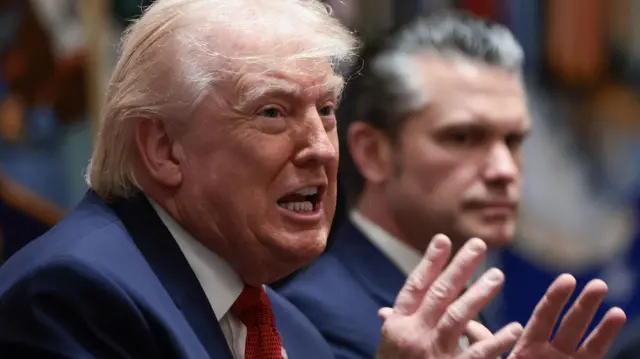
    Donald Trump speaking at a press conference and gesticulates with his hands while Defense Secretary Pete Hegseth is blurred in the background next to himImage source, Reuters

    Earlier, during a cabinet meeting at the White House, Donald Trump said he had been sent a "present" by the Iranians: 10 oil tankers being allowed to sail through the Strait of Hormuz.

    At the meeting, Trump was asked by reporters how the negotiations were going, to which he said Iran had wanted to show the US they were "real and solid".

    He then recalled how he had watched a Fox News anchor report on eight boats going "right up the middle of the Hormuz Strait".

    "They then apologised for something they said, and they said 'We're going to send two more boats. And [it] ended up being 10 boats," Trump said.

    • For context: The Strait of Hormuz - one of the world's busiest oil shipping channels - has effectively been blocked by Iran since the war began. About 20% of the world's oil usually passes through there, and as a result energy prices have risen.
  12. Almost a month into war, images show devastation and destruction in Iran, Israel and Lebanonpublished at 20:02 GMT 26 March

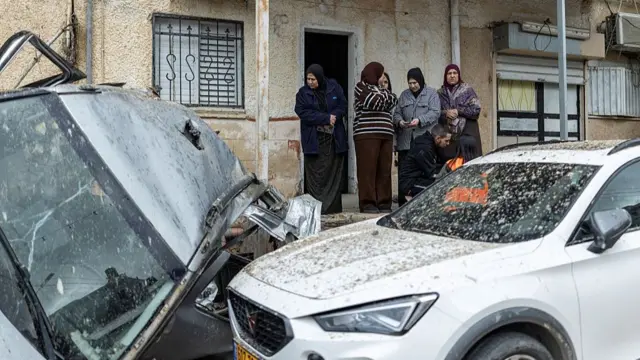
    A group of people stand on the porch of a house and look over two severely damaged carsImage source, Getty Images
    Image caption,

    Residents of Kafr Qasim survey damage on the streets after a reported Iranian strike

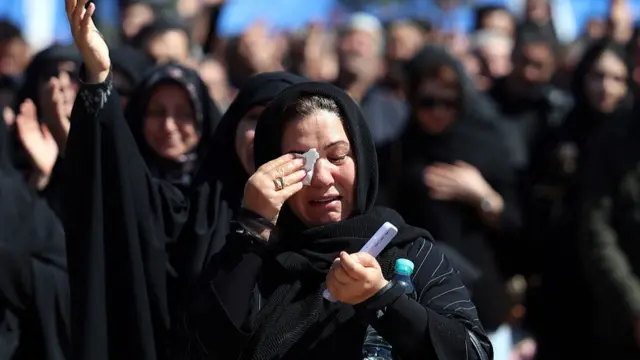
    An Iranian women wipes away tearsImage source, AFP via Getty Images
    Image caption,

    A woman in southern Tehran cries while attending a funeral of someone killed during the war

    A man walks down the street past a completely leveled buildingImage source, Getty Images
    Image caption,

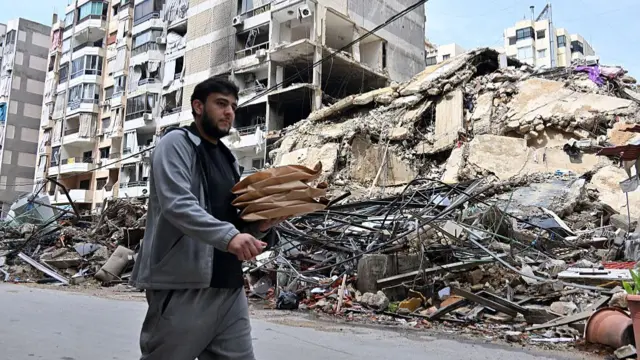
    A man walks through an area of Lebanon's capital, Beirut, with buildings seen flattened by the side of the road

  13. Iran’s Starlink crackdown continues, with some paying a hefty price to connectpublished at 19:29 GMT 26 March

    Ghoncheh Habibiazad
    Senior reporter, BBC Persian

    Iran is still under a near-total internet shut down, but some people have managed to connect using satellite internet Starlink and other methods, although they’re paying a hefty price for it.

    In Iran, using or possessing a Starlink device can lead to up to two years in prison, and authorities have been trying to crack down on it.

    In their latest attempt, the police commander of the central Yazd province has said today that they have discovered six of the devices and frozen 61 bank accounts belonging to the “suspects”.

    Iran’s Ministry of Intelligence had said on 17 March that they had confiscated “hundreds” of Starlink devices.

    Internet access via Starlink is being sold on the Telegram messaging app for around $6 (£4.50) for 1 GB of data - a high price in a country where the average monthly salary is estimated to be between $200 and $300 (£149 - £223).

  14. Over 1,100 killed in Lebanon since start of conflict, state media reportspublished at 19:10 GMT 26 March

    The death toll in Lebanon has risen to 1,116 since the start of the conflict, according to the country’s state media.

    The National News Agency quotes the Disaster Risk Management Department - the group coordinating the government-led emergency response in Lebanon - as saying 136,262 people are currently displaced in shelters and 3,229 are wounded.

  15. Israeli Air Force conducts 20 strikes on Iran in the last day - IDFpublished at 18:49 GMT 26 March

    The IDF says the Israeli Air force has completed approximately 20 strikes on "launch sites" in western Iran over the past day.

    The post on X says the air force dropped around “70 munitions” on sites used for "storing and launching ballistic missiles and air defence systems."

    It adds that soldiers who operated at these sites were "eliminated", saying it “continues to operate without pause to strike the (Iranian) regime's ballistic missile array.”

  16. In Bandar Abbas, Iran, an apartment building is destroyed by strikepublished at 18:28 GMT 26 March

    Paria Manzarzadeh
    BBC Persian

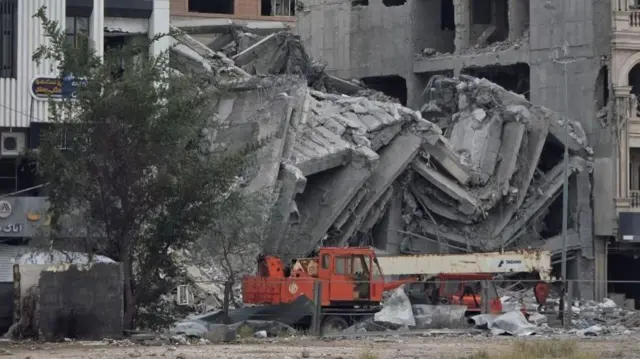
    A grab from the footage shows the eight-storey apartment block is now a pile of rubbleImage source, X

    A multi‑storey residential building in the southern Iranian port city of Bandar Abbas has been reduced to rubble following a reported air strike, verified footage shows.

    The video has been geolocated to Daneshgah Street, a residential area in the east of the city. It shows all that remains of the apartment block is a pile of debris.

    Two other blocks either side of the building appear to have been damaged but remain largely intact.

    Local authorities say the building was struck by a fighter jet, with one regional official adding the attack had killed three people.

  17. Here's how countries are dealing with surging energy pricespublished at 18:06 GMT 26 March

    Poland earlier announced that it would reduce the VAT on fuel from 23% to 8% to combat soaring energy prices, adding itself to the list of countries attempting to shield consumers from the volatility caused by the war in the Middle East.

    Elshwere, German lawmakers have approved initial measures that limit price rises at petrol stations to once a day, at noon.

    The Italian government announced last week that it had set aside €417m (£361m) to cut excise duties on fuels until 7 April, Reuters news agency reports.

    Meanwhile, South Korea's ruling party has announced it plans to ease limits on coal-fired energy production while also boosting the utilisation of nuclear power plants.

    And in the UK, following pressure to outline plans to protect consumers from the surge in prices, Chancellor Rachel Reeves announced government plans to help "those who need it most".

  18. What is the Strait of Hormuz, and why's it so important?published at 17:47 GMT 26 March

    Iran has effectively blocked the Strait of Hormuz, one of the world's busiest oil shipping channels, where about 20% of the world's oil usually passes through.

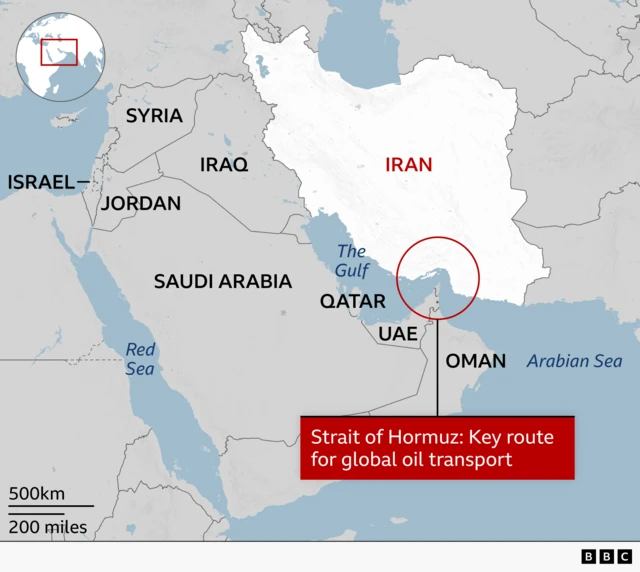
    Bounded to the north by Iran and to the south by Oman and the United Arab Emirates (UAE), the oil shipping channel - only about 50km (31 miles) wide at its entrance and exit, and about 33km wide at its narrowest point - connects the Gulf with the Arabian Sea.

    In 2025, about 20 million barrels of oil and oil products passed through the Strait of Hormuz per day, according to estimates from the US Energy Information Administration (EIA). That is nearly $600bn (£447bn) worth of energy trade per year.

    About 3,000 ships usually sail through the strait each month but this has dramatically decreased recently, with Iran threatening to attack tankers and other ships.

    As a result, energy prices are volatile and remain well above levels before the conflict. Brent crude rose to $108 a barrel on Thursday, as we reported earlier, and was hovering just under this level at 15.30 GMT.

    Gulf countries, including Iran, rely heavily on energy exports for their income. A blockade of the strait has also hit Asia hard, with China alone estimated to buy around 90% of the oil that Iran exports to the global market.

    Map showing where the Strait of Hormuz is in the Gulf of Oman, a key route for global oil transport. The strait lies between Iran and the peninsula of the United Arab Emirates and Oman. The map also shows countries in the wider Middle East region including Saudi Arabia, Iraq, Jordan and Israel
  19. BBC Verify

    Six vessels spotted passing Strait of Hormuz, so far, on Thursdaypublished at 17:30 GMT 26 March

    By Shruti Menon

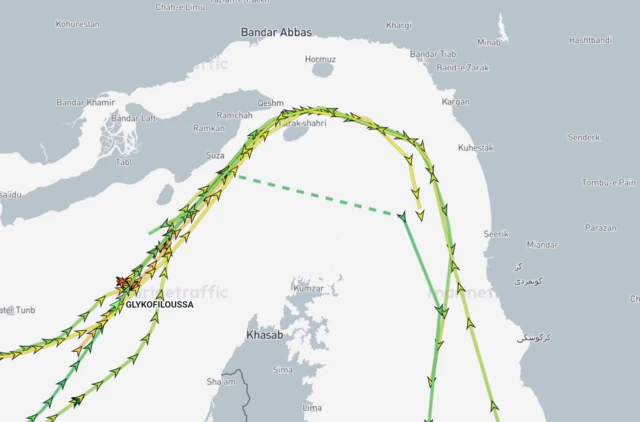
    BBC Verify is tracking ship movements along the Strait of Hormuz and we’ve spotted six vessels pass the narrow waterway so far on Thursday, according to ship-tracking site MarineTraffic.

    They include two liquefied petroleum gas tankers, Niba and Salute, and four bulk carriers - Zea, NJ Jupiter, Glykofiloussa and Neraki.

    Five of these crossed the strait while continuing to broadcast their positions. LPG tanker Niba switched off its location transmitter as it approached Iran’s Qeshm Island and then reappeared on the eastern side.

    While Iran has previously listed friendly countries as being China, Russia, India, Iraq and Pakistan - whose ships have been allowed safe passage in recent days - none of the vessels seen to have made the transit today appear to be from those states.

    All the vessels followed a longer route through the strait, sailing close to Iran’s Qeshm Island.

    Ship-tracking data showing the six vessels that have passed through the Strait of Hormuz so far todayImage source, MarineTraffic
  20. France continues negotiations with partners to 'restore freedom of navigation in the Strait of Hormuz'published at 17:29 GMT 26 March

    Marianne Baisnée
    Reporting from Paris

    In France, the ministry of armed forces says it's continuing consultations with partners "with a view to launching an initiative aimed at helping restore freedom of navigation in the Strait of Hormuz, once the intensity of hostilities has sufficiently decreased".

    A video conference was held earlier by French military officials, with representatives from 35 countries in attendance.

    Organised by the French chief of the defence staff, the ministry says the video conference provided "an opportunity to gather the positions of countries wishing to participate in a co-ordinated approach aimed at contributing to the security of maritime navigation in this strategic area".

    "This initiative, independent of ongoing military operations in the region, is strictly defensive in nature. Its objective is to organise the resumption of navigation in the Strait of Hormuz after the cessation of hostilities."