Summary

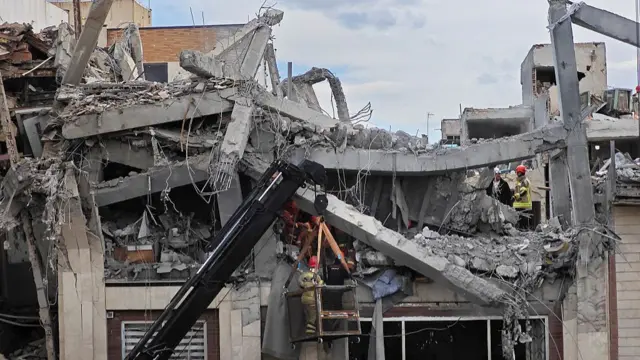
  1. Building reduced to rubble in Tehranpublished at 13:45 GMT 27 March
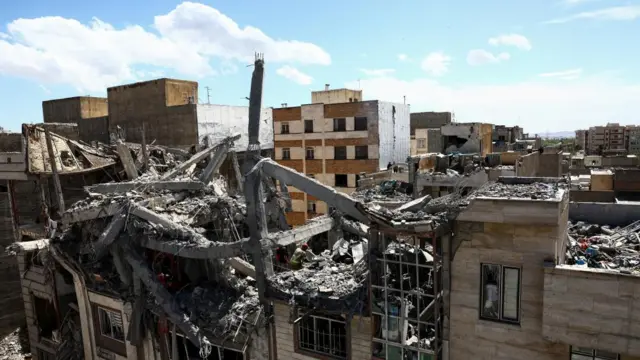
    A view of a residential building damaged by a strike, amid the U.S.-Israeli conflict with Iran, in Tehran, IranImage source, Reuters
    Image caption,

    A residential building damaged by a strike in Tehran, Iran

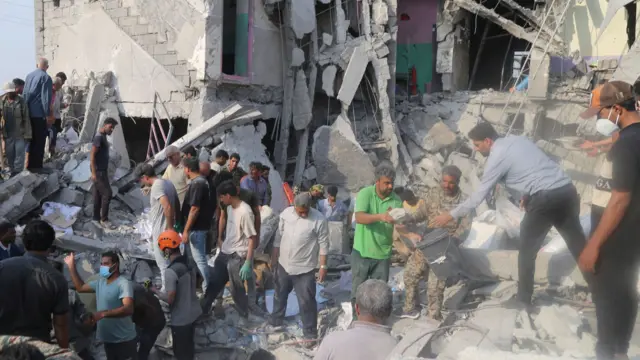
    Throughout today, images have emerged from Tehran, the Iranian capital, following a strike on a residential building.

    Emergency services have been in attendance today, as people gather among the rubble.

    Due to the ongoing internet shutdown in the country, it is often difficult to obtain images from inside Iran.

    International news organisations are often refused visas to Iran, which severely limits their ability to gather information there.
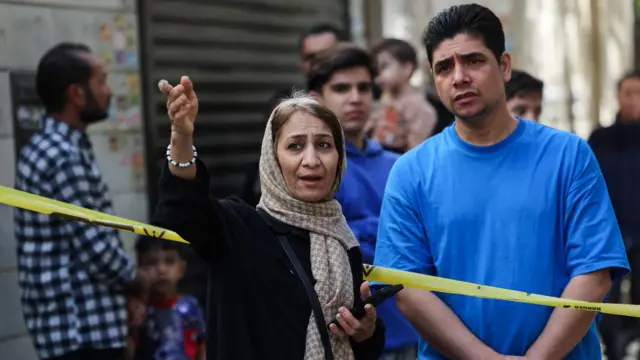
    People gather by a cordon tape at the site of a  building damaged by the strike in TehranImage source, Reuters
    Image caption,

    People gather beside a cordon near to the site of the strike
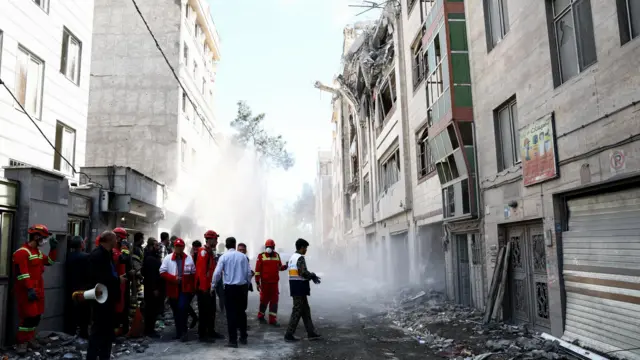
    Emergency responders inspect the site of a residential building damaged by a strike, amid the U.S.-Israeli conflict with Iran, in TehranImage source, Reuters
    Image caption,

    Emergency services inspect the damage to the site
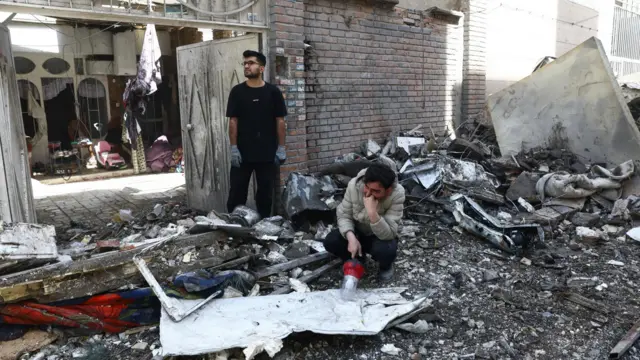
    People react at the site of a residential building damaged by a strike in Tehran, IranImage source, Reuters
    Image caption,

    People are left sifting through the rubble where the building once stood

  2. Analysis

    Iran's survival rests not with any individual, but with the institutionpublished at 13:22 GMT 27 March

    Jeremy Bowen
    International Editor

    Despite the US and Israel killing Iran's supreme leader and other top officials, Iran's regime is surviving in this war.

    The important thing to know about the structure of the Iranian regime is it's not really about names, it's about an institution.

    The reason the regime has proved to be so resilient is, unlike Libya under Gaddafi, it has these institutions. It's not based on individuals.

    If a system is institutionally based, it means if individuals go the institution ploughs on.

    After the Libyan leader Gaddafi was killed in 2011, the institution had been totally hollowed out by the regime and the whole thing collapsed. Iran is a very different proposition.

    As well as those institutions, an iron-clad religious ideology exists, in combination with nationalism and an ethos of martyrdom, resistance and survival.

  3. Rubio's task at G7 talks is to sell the US strategy of warpublished at 13:15 GMT 27 March

    Nomia Iqbal
    News correspondent, in Paris

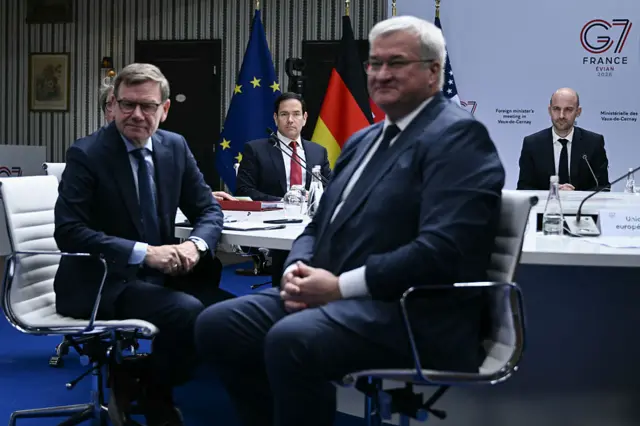
    Ukraine's Foreign Affairs Minister Andrii Sybiha (R), Germany's Foreign Minister Johann Wadephul, Britain's Foreign Secretary Yvette Cooper, US Secretary of State Marco Rubio and France's Foreign Affairs Minister Jean-Noel Barrot attend talks on Russia's war in Ukraine during a G7 Foreign Ministers' meeting with Partner Countries at the Vaux-de-Cernay Abbey in Cernay-la-Ville outside Paris.Image source, Getty Images
    Image caption,

    Marco Rubio (back), with his Ukrainian, German, French and British counterparts at a G7 Foreign Ministers' meeting in France

    US Secretary of State Marco Rubio is currently meeting with his counterparts at crucial G7 talks in France.

    This is Marco Rubio’s first foreign trip abroad since the war started. He has the inevitable task of essentially selling the US strategy of the war to other G7 members.

    France, Italy, Germany, Japan, Canada and the UK released a statement several days after the war began condemning Iran’s retaliatory strikes but notably didn’t comment on US and Israel who started the war.

    Broadly speaking, the other G7 members don’t want to be sucked into this war but economic pressure may force them to take some sort of position that draws them closer. Re-opening the Strait of Hormuz is one of the key issues they’ll be discussing.

    As far as Rubio is concerned, Europe owes the US.

    He said before boarding the plane, Ukraine wasn’t America’s war yet they’re helping as a way of justifying why Europe should help the US.

    It’s not really a clear equivalence, but it’s effective political rhetoric which puts European leaders into a further bind.

  4. Trump's strike delay fails to calm oil tradepublished at 12:38 GMT 27 March

    Lucy Hooker
    Business reporter

    Brent crude rose above $110 a barrel again on Friday.

    That’s despite Trump’s statement on Thursday that talks with Tehran were going "very well" and that he was holding off on military strikes on Iran’s energy infrastructure until at least 6 April.

    In the past, such pronouncements have helped calm the markets.

    But traders' scepticism seems to be growing with, as AJ Bell investment director Russ Mould says, the "parallel worlds" comments from Washington and Tehran are seemingly coming from.

  5. 'I didn't know if it was the thunderstorm or explosions': Iranians describe worst night so farpublished at 12:20 GMT 27 March

    Ghoncheh Habibiazad
    Senior reporter, BBC Persian

    Rescue workers search for bodies in the rubble of a residential building following a hit in an airstrike in the early hours of March 27, 2026 in Tehran, Iran.Image source, Getty Images
    Image caption,

    This residential building in Tehran was reduced to rubble in overnight strikes, rescue workers are searching among the debris

    Heavy strikes amid thunderstorms last night in Tehran and the nearby city of Karaj made it very difficult to distinguish between the two.

    "I couldn’t sleep at all. It was so scary. I think it’s been the worst night of the war so far. The sound of missiles was mixed with the thunderstorm," said a woman in her 20s in Tehran.

    She added that she is so "sick of everything" that she wants the war to end "now".

    "They hit somewhere near my house so hard that the whole room and its windows were shaking… twice in a row. I could hear the rain throughout the night. I slept and woke up several times and I didn’t know whether it was the thunderstorm or the explosions," said a woman in her 40s in Tehran.

    I asked her today what she thinks about the war ending: "I don’t want it to end until the clerics are all gone. I don’t have any other choice but to tolerate this."

    Several people in the nearby city of Karaj, west of Tehran, also said that it was pouring with rain there. "There was a huge explosion during the rain last night," one man in his 20s said.

  6. Eighteen dead in strike on Qom, Iranian media reportspublished at 11:56 GMT 27 March

    Eighteen people have been killed in an overnight attack on the Iranian city of Qom, local media has reported.

    IRGC-backed Fars news agency and Tasnim report the attack hit the Pardisan area of the city early this morning, with an initial death toll of six being later updated.

    According to reports, 10 people were also injured.

    The Iranian Red Crescent Society said rescue workers attended the scene, which it described as a residential area.

  7. BBC Verify

    Has a 'present' of '10 boats of oil' passed through Hormuz as Trump says?published at 11:39 GMT 27 March

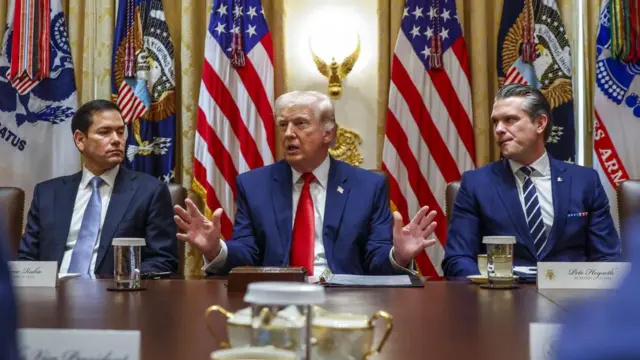
    President Trump (c) speaking at a cabinet meeting in the White House on 26 March - he is flanked by Secretary of State Marco Rubio (l) and Defence Secretary Pete Hegseth (r)Image source, EPA

    By Shruti Menon

    US President Donald Trump has claimed that Iran allowed "10 boats of oil" - which he described as a "present" - to pass through the Strait of Hormuz earlier this week.

    "They said, to show you the fact that we're real and solid and we're there, we're going to let you have eight boats of oil, eight boats, eight big boats of oil. This was two days ago… and they’ll sail up tomorrow so it’s three days ago.

    "I guess they were right, and they were real, and I think they were Pakistani-flagged... it ended up being 10 boats," Trump said during a cabinet meeting at the White House yesterday.

    BBC Verify has checked through publicly available ship-tracking data to see which vessels crossed the Strait with their location transmitters on between 23 and 25 March - the period Trump mentioned.

    Over that period we have identified five vessels carrying oil through the Strait, none of which were Pakistan-flagged. Five other ships made the journey, but none of these were listed as carrying oil.

    Ship-tracking would not pick up any vessels that passed through the Strait without publicly broadcasting their locations.

    Earlier Iran’s Islamic Revolutionary Guard Corps said it had turned back three ships trying to transit the Strait which it said was closed to vessels travelling to and from ports "belonging to allies and supporters” of the US and Israel.

  8. Recap: UN says school strike sparked 'visceral horror'published at 11:06 GMT 27 March

    The UN Human Rights Council has been holding an emergency debate on the strike on a primary school in Minab, southern Iran, at the start of the war. Iranian authorities say 168 people were killed, mostly children.

    Here's a round-up of what we've heard today at the UN:

    • UN human rights chief Volker Türk called for an investigation into the school strike to be concluded "as soon as possible", adding that it sparked "visceral horror"
    • Separately, he also said US-Israeli strikes have increasingly "destroyed civilian infrastructure" as the war has progressed, and called the targeting of nuclear facilities "reckless beyond comprehension" Earlier, the UN's nuclear watchdog urged "maximum restraint" to avoid a nuclear incident in Iran, after a reported strike near Iran's Bushehr Nuclear Power Plant on Tuesday
    • Appearing at the UN via video link, Iran's Foreign Minister Abbas Araghchi called the conflict an "illegal war imposed by two bullying nuclear armed regimes". He called the strike on the school a "calculated, phased assault" and a "war crime"
    • The mother of two children killed in the strike told the UN her home is now silent, "much more silent than any home should ever be" - see our post below
    • We didn't hear from the US in the debate. It has not accepted responsibility for the strike and has said it does not target civilians - it has previously said it is investigating the incident. US media has reported that US military investigators believe American forces were likely responsible for hitting the school unintentionally - but that they have not reached a final conclusion
  9. 'Truth must be brought to light,' says mother of children killed in school bombingpublished at 10:55 GMT 27 March

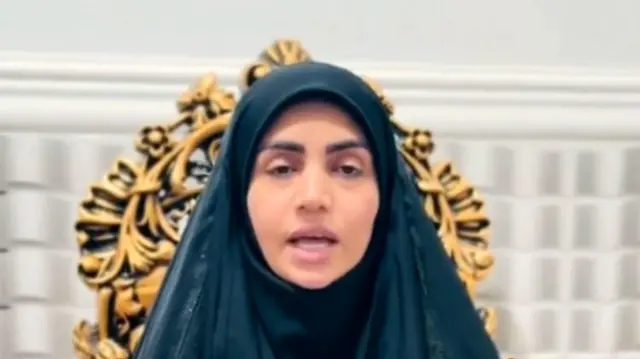
    A woman in an Islamic religious head covering speaks on a gold-and-black backed chair.Image source, United Nations Human Rights Council
    Image caption,

    The woman, speaking via video link, urged the UN "not to let this tragedy be forgotten"

    The mother of two children killed in a strike on a girls' school in Iran at the outset of the conflict says the "truth must be brought to light".

    Mohaddeseh Fallahat, speaking during a UN Human Rights Council debate on the Minab bombing, blamed the US and Israel as "the cause of this suffering" and said both nations must be held accountable.

    Israel's military has previously said it was "not aware" of any operations in the area, and while the US has not accepted responsibility, it has said it is investigating. US media has reported that US military investigators believe American forces were likely responsible for hitting the school unintentionally - but that they have not reached a final conclusion.

    "I call upon the Human Rights Council, its members, upon the responsible institutions, and upon all those who have a duty and ability to defend the lives of children, not to let this tragedy be forgotten," Fallahat said via a remote feed in a message translated by the UN.

    She described the last moments of seeing her children alive, adding "no mother is prepared to hear the words 'your child isn't coming back'".

    Iranian officials have said the school strike killed 168 people, including around 110 children.

  10. Iran says it turned back three vessels attempting to pass through Strait of Hormuzpublished at 10:36 GMT 27 March

    Ghoncheh Habibiazad
    Senior reporter, BBC Persian

    Iran's Islamic Revolutionary Guard Corps (IRGC) has claimed they have turned back three vessels this morning that were trying to pass through the Strait of Hormuz.

    "Three container ships of different nationalities attempted to proceed towards the designated corridor for authorised vessels. They were turned back after a warning from the IRGC Navy," the statement by the public relations of the IRGC says.

    The statement also says that "the Strait of Hormuz is closed and that any transit through it will be met with a firm response".

    "The passage of any vessel to and from ports belonging to allies and supporters of the US and Israel, to any destination and via any corridor, is prohibited," it says.

    Iranian Foreign Minister Abbas Araghchi said two days ago on state TV that Iran has so far has accepted requests for vessels to pass from countries such as "China, Russia, Pakistan, Iraq, and India". He said the strait, from Iran’s perspective, "is not completely closed but closed to enemies".

    This Flourish post cannot be displayed in your browser. Please enable Javascript or try a different browser.

  11. Analysis

    The threat of sea mines is playing a significant role in this conflictpublished at 10:24 GMT 27 March

    Chris Partridge
    Weapons analyst

    The Israeli military earlier said it had struck Iran's "primary facility for the production of missiles and sea mines".

    The Strait of Hormuz is the narrow shipping channel through which, in normal times, about 20% of the world’s oil and liquefied natural gas supplies pass though.

    Iran’s effective closure of the strait has become a major bargaining position in a war that has seen the country’s air force and navy largely destroyed.

    While Iran continues to hit back with cruise and ballistic missiles, and drones - securing control of the strait has focused attention on mines.

    These weapons, beneath the surface of the sea, greatly threaten shipping and the fear of their use - along with missile strikes - has brought the passage of ships to a virtual standstill.

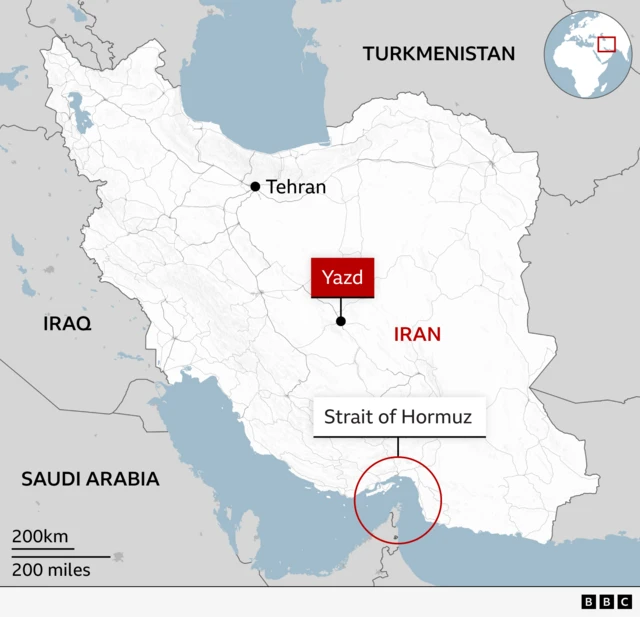
    We don’t precisely know whether the strait is mined or not, but Israel’s attack on what it described as the primary facility of missile and mines production in Yazd is clearly intended to address that risk.

    Other ways to mitigate this threat to the strait have been underway for some time now.

    US Air Force A-10 air-to-ground attack aircraft - with their feared 30mm Gatling gun - have been targeting Iranian fast-attack boats. AH-64 Apache helicopters armed with cannon and hellfire missiles are involved too.

    Map of Iran and surrounding countries labelling the capital Tehran is the central north of the country, Yazd in the centre and the Strait of Hormuz to the south of Iran. Turkmenistan is labelled to Iran's north east, Iraq to its west and Saudi Arabia to its south west.
  12. Iran warns people in the region near US forces to evacuatepublished at 10:00 GMT 27 March

    Ghoncheh Habibiazad
    Senior reporter, BBC Persian

    Iran's Islamic Revolutionary Guard Corps (IRGC) has warned people in the region to leave the area where the US forces are stationed.

    In a statement published by IRGC-affiliated Fars News Agency, the IRGC has accused the US and Israel of using "civilian locations and innocent people as human shields". The statement has also accused the US of killing civilians and Iranian officials.

    The IRGC has issued several warnings since the war started, such as on 14 March when the IRGC warned residents living near US industrial sites in the Middle East to leave. However, in this latest warning, it has not specified any locations and appears to have issued a broader warning.

    The IRGC has lost several of its high-ranking commanders in the current war.

    While Iran has not announced its official death toll in the recent days, US-based human rights activists news agency (Hrana) has said that 1,492 Iranian civilians, including 221 children, have so far been killed in the US-Israeli war against Iran, and 1,167 Iranian military personnel have so far been killed.

  13. Iran's foreign minister calls school strike a 'war crime'published at 09:58 GMT 27 March

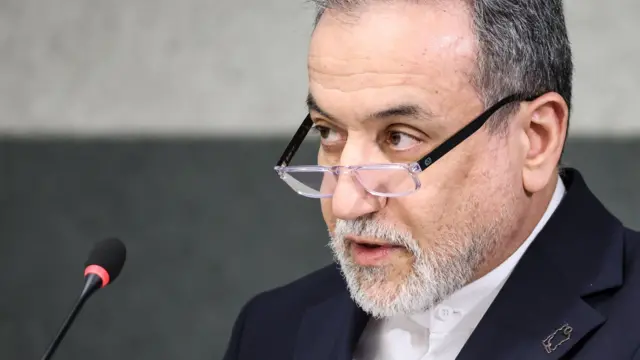
    Iran's Foreign Minister Abbas Araghchi pictured earlier this yearImage source, Reuters
    Image caption,

    Iran's Foreign Minister Abbas Araghchi pictured earlier this year

    More now from the UN meeting we referenced in our last post, where Iran's Foreign Minister Abbas Araghchi - speaking via video link - calls the US-Israeli conflict with Iran an "illegal war imposed by two bullying nuclear armed regimes".

    He accuses the US of having "betrayed diplomacy for the second time in the course of nine months" by striking Iran at the end of February, while negotiations were ongoing.

    A strike on a girls' school in Minab on the first day of the conflict was one of the "most harrowing manifestations of this aggression", he says, calling it a "war crime and a crime against humanity".

    Araghchi calls the strike a "calculated, phased assault", saying the US possesses precise military technology. "No-one can believe the attack on this school was anything other than deliberate and intentional," he says.

    He calls for "unequivocal condemnation by all" and "unambiguous accountability for the culprits".

    The US has not accepted responsibility, but has previously said it is investigating.

    US media has reported that US military investigators believe American forces were likely responsible for hitting the school unintentionally at the start of the joint US-Israeli operation - but that they have not reached a final conclusion.

  14. Deadly Iran school bombing must be investigated transparently - UN rights chiefpublished at 09:42 GMT 27 March

    PeopleImage source, Mehr News/WANA/Reuters
    Image caption,

    Rescuers at the scene in the aftermath of the strike on 28 February

    The UN human rights commissioner Volker Türk calls for an investigation to be concluded "as soon as possible" into the bombing of a girls' school in Minab in south Iran, which officials say killed 168 people, mostly children.

    US media have said US military investigators believe American forces were likely responsible for hitting the school unintentionally - but that they have not reached a final conclusion.

    In a debate about protecting children in conflict at the UN Human Rights Council, Türk says the onus is on "those who carried out the attack to investigate promptly, impartially, transparently and thoroughly to determine the facts and lay the basis for accountability".

    He calls for the investigation to be concluded "as soon as possible", with the findings made public, adding the attack sparked “visceral horror".

    "Senior US officials have said the strike is under investigation," he says. Whatever differences countries have, "we can all agree they will not be solved by killing school children", he says.

    Both the UN and the US have separately said they are investigating the incident, in which 110 children were killed, according to local authorities.

    • We’re bringing you moments from the debate in the stream at the top of the page. Press watch live to follow along
  15. European markets flat after US suffered biggest one-day fall yesterday since war beganpublished at 09:32 GMT 27 March

    Mitchell Labiak
    Business reporter

    Cargo ships in the Gulf, near the Strait of Hormuz, as seen from northern Ras al-Khaimah, near the border with Oman’s Musandam governance, amid the U.S.-Israeli conflict with Iran, in United Arab Emirates, March 11, 2026Image source, Reuters
    Image caption,

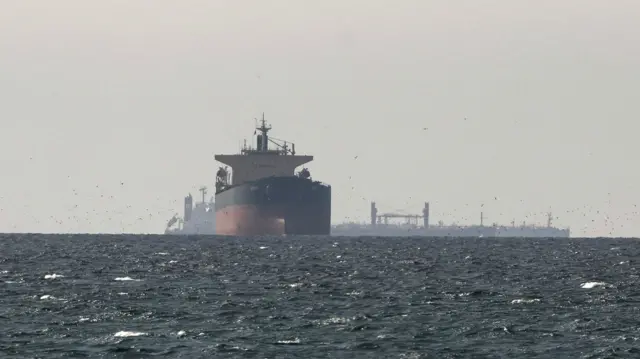
    Iran's effective closure of the Strait of Hormuz is causing economic volatility

    European markets opened flat this morning, after Asian markets closed following similarly subdued trading.

    It marks a stark contrast to the US markets, which on Wednesday suffered their biggest one-day fall since the start of the US-Israel war with Iran. Meanwhile, the global benchmark oil price has crept up over $110 - it was around $73 before the conflict began.

    As a reminder, the war has effectively blocked the Strait of Hormuz, a key waterway south of Iran through which one fifth of the world’s oil and gas usually flows. And while US President Donald Trump said again on Thursday that his peace talks with Iran are going well, Iran continues to deny they are happening.

    The longer the war drags on, the more concerns about the global economy grow.

    The FTSE 100 index of the largest firms listed in London, Germany's Dax 40, and France's Cac 40 all moved only a fraction from where they were the day before in early trading. The Japanese Nikkei 225 and the South Korean Kospi ended the day down 0.43% and 0.4% respectively, while Hong Kong’s Hang Seng closed 0.38% higher.

    The S&P 500 closed down 1.74% while the tech-heavy Nasdaq closed down 2.8%. That follows the landmark US court ruling that found Meta and Google liable for a user’s social media addiction. In addition to wider economic concerns about the war, the court’s decision could have a big impact on US tech giants.

  16. Ballistic missiles intercepted heading towards Riyadh region, Saudi defence ministry sayspublished at 09:25 GMT 27 March

    Six ballistic missiles were launched towards the area of Riyadh, where the Saudi capital is located, the country's defence ministry says.

    Two ballistic missiles have been intercepted, and four others fell in the Gulf and uninhabited areas, it says.

    Kuwait has also reported attacks this morning, as strikes continue across the Middle East.

  17. Have questions about the war? Get in touchpublished at 09:09 GMT 27 March

    After four weeks of war, the impact of the conflict in the Middle East continues to be felt around the world - what questions do you have about it? We want to hear from you:

    Please read ourterms & conditionsandprivacy policy. In some cases a selection of your comments and questions will be published, displaying your name and location as you provide it unless you state otherwise. Your contact details will never be published.

    A red banner with the words ‘Your Voice’ written in white with a lighter red graphic paintbrush effect behind it
  18. Kuwait says second port attacked by missiles and dronespublished at 09:06 GMT 27 March

    Kuwait has reported further strikes on its ports, hours after it said its main commercial port was attacked by drones.

    Mubarak Al-Kabeer port was hit by a "double attack" from "hostile drones and cruise missiles", Kuwait's Ministry of Public Works says in a statement.

    "Material damage" has been sustained, it says, but there has been no casualties.

    Earlier, Kuwait said its main commercial port in Shuwaikh had been attacked.

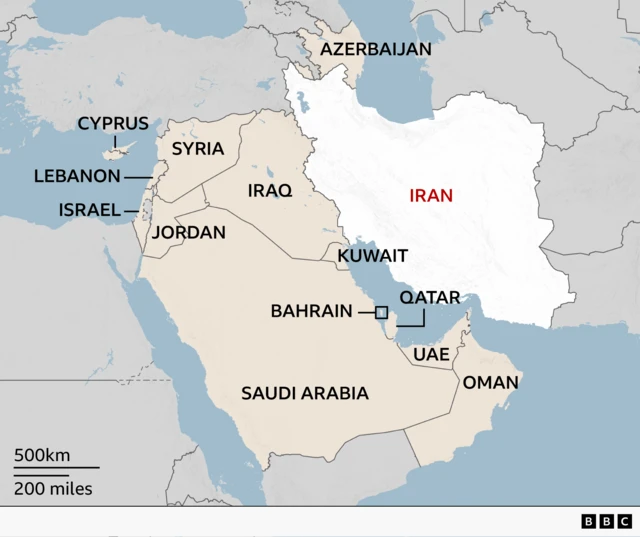
    A regional map highlighting Iran in white with its name in black. Countries that have come under fire from Iran and its allies are labelled - Israel, Cyprus, Lebanon, Iraq, Kuwait, Jordan, Bahrain, Qatar, UAE, Oman, Saudi Arabia, Azerbaijan, Syria. Surrounding countries are grey.
  19. Trump extends pause on striking Iranian energy sites - how we got herepublished at 08:57 GMT 27 March

    US President Donald TrumpImage source, EPA/Shutterstock

    Trump said on Thursday that he would hold off on striking Iranian energy plants for another 10 days, saying talks with Tehran are "ongoing".

    He first issued the threat on 21 March, saying if Iran didn't "fully open, without threat" the Strait of Hormuz within 48 hours, the US would "obliterate their various power plants, starting with the biggest one first".

    Trump extended the deadline on Monday, 23 March, for "a five day period", saying he had told the US Department of Defense "to postpone any and all military strikes against Iranian power plants and energy infrastructure" during that time.

    He said this followed "very good and productive conversations" regarding a "complete and total resolution" of hostilities.

    Iranian officials have denied any talks have taken place - Foreign Minister Abbas Araghchi said earlier this week messages had been "conveyed via friendly countries", but said these exchanges are "neither dialogue nor negotiation, nor anything of the sort".

    Yesterday, Trump said he was extending the pause again, this time for a further 10 days, saying talks are still "ongoing", and "going very well" despite "erroneous statements to the contrary by the Fake News Media, and others".

    Iran has yet to respond to Trump's latest remarks.

  20. Analysis

    What's going on with US-Iran talks, and how realistic is a deal?published at 08:43 GMT 27 March

    Jeremy Bowen
    International editor

    Clearly something is going on.

    With conflicting accounts from the US and Iran, there may be a semantic debate about whether it's negotiations or contacts. But certainly something is happening.

    The Iranians are interested in a deal - but it has to be a deal that they like.

    What we've heard so far about Trump's 15-point plan - certainly the version that was leaked I think from Israeli sources - is it actually read more like a surrender document.

    It had everything in it that Israel and America have always asked of Iran.

    And Iran has countered publicly by coming up with a list of its own demands which the other side couldn't accept.

    On that basis, the two countries are a long way apart.