Summary

  • Our coverage on this page has ended. For the latest developments, head to our new live page here.

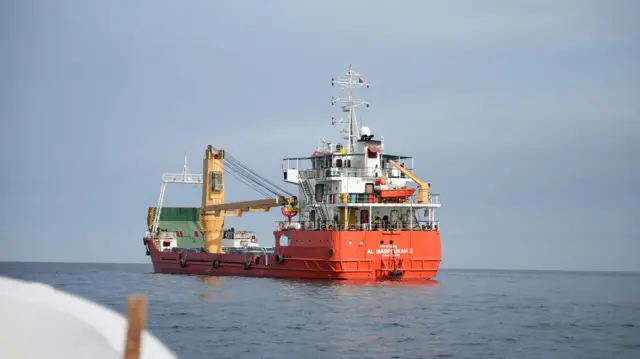
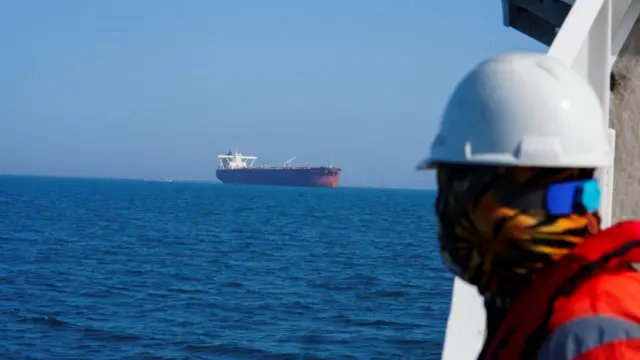
  • Iran's Islamic Revolutionary Guard Corps Navy says the Strait of Hormuz will remain closed from this evening until the US blockade on Iranian ports is lifted

  • It says the continuing US blockade is a "breach of the ceasefire" and warns that ships approaching the vital shipping channel "will be targeted"

  • On Friday, Iran opened the Strait of Hormuz, but Donald Trump said the US naval blockade "will remain in full force until our transaction with Iran is 100% complete" - here's how the situation has evolved

  • Earlier today, Trump told reporters in the Oval Office that Iran's leaders want to close the strait, but the US won't let them "blackmail us"

  • Three ships have reported attacks in the region, the UK Maritime Trade Operations says

  • It's hard to keep up with what's really happening in the Strait of Hormuz, writes our correspondent, and this casts doubt on Trump's claim of an imminent deal

  1. Iran partially reopens airspace - state mediapublished at 09:12 BST 18 April

    Iran's airspace has partially reopened to international flights, according to the state news agency IRNA.

    The country's civil aviation authority has issued a notice that the country's airspace and a number of airports have been reopened as of 07:00 local time (04:30 BST) and flights will gradually resume from today, IRNA reports.

    Air routes above the eastern part of the country are open for international flights, the broadcaster adds.

    The airspace over Iran has been closed since US-Israeli attacks began on 28 February.

  2. Analysis

    A swirl of contradictory statements from the US and Iranpublished at 08:54 BST 18 April

    Lyse Doucet
    Chief international correspondent, in Iran

    If you're a bit confused about all of the contradictory statements coming out of Washington and Tehran, the reality is that the situation is confused.

    President Trump gave a swirl of statements yesterday to journalists and upbeat assessments about how the talks are going, saying that Iran had agreed not to enrich uranium, and Iran has agreed to give up its stockpile of highly enriched uranium.

    All of his claims were then refuted by Iran's parliamentary speaker, who said Trump had made "seven claims in one hour, all seven of which were false".

    But Iran's statements also have not been so clear.

    That first announcement by the foreign minister that the Strait of Hormuz was completely open was then clarified, with Tehran saying that the tankers and the vessels would have to take routes designated and controlled by Iran.

  3. Freedom of navigation needed through Strait of Hormuz, says former Qatari intelligence officerpublished at 08:39 BST 18 April

    Nawaf Al-Thani, a former director of Qatar's defence intelligence operations, says the possible reopening of the Strait of Hormuz "feels like a moment of something" but is unsure whether he would "call it progress".

    He tells the BBC's Today programme that countries in the Gulf have been very clear there should be freedom of navigation in the Strait. Al-Thani says there needs to be a return to the status quo from before the war began.

    Al-Thani explains that many in the Gulf will welcome the ceasefire, but adds the Gulf nations so far have not been included in negotiations between the US and Iran.

  4. Shipping data shows vessels crossing Strait of Hormuzpublished at 07:39 BST 18 April
    Breaking

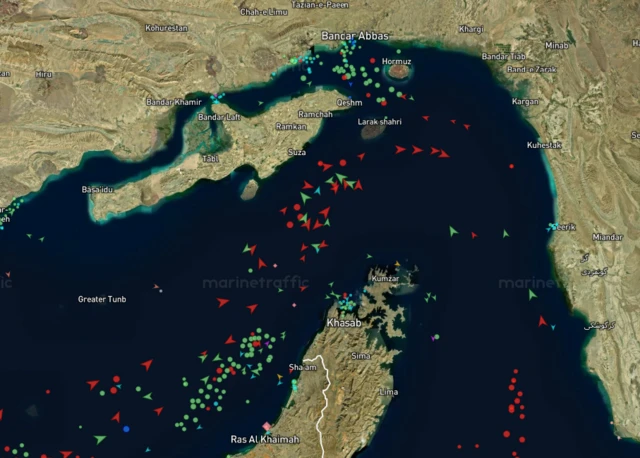
    red and green arrows denoting vessels can be seen on a map of the strait.Image source, MarineTraffic
    Image caption,

    Ships appear to be transiting through the Strait of Hormuz

    Ships appear to be moving through the Strait of Hormuz, data from tracking site MarineTraffic shows.

    Several vessels, which according to the site includes ships designed for carrying oil, liquefied petroleum gas and chemicals, can be seen transiting the key marine corridor.

    We'll bring you more information throughout the day about the situation in the strait.

    This Flourish post cannot be displayed in your browser. Please enable Javascript or try a different browser.

  5. What's the latest on the Strait of Hormuz?published at 07:10 BST 18 April

    A vessel at the Strait of Hormuz, off the coast of Oman’s Musandam provincImage source, Reuters
    Image caption,

    A vessel pictures off the coast of Oman on 12 April

    If you're just joining us, or are in need of a quick recap, here are the latest comments from leaders about the Strait of Hormuz.

    Trump - The US president says it "seems to be going pretty well" in the Middle East with Iran, saying negotiations will be taking place over the weekend and he has "some good news" that he cannot share yet.

    Yesterday, Trump said in a post on his Truth Social platform that the US naval blockade of Iran's ports will remain in place until the "transaction with Iran is 100% complete".

    Iran's parliament speaker - Meanwhile, Mohammad Bagher Ghalibaf says recent comments by Donald Trump about the US winning its war with Iran are "false". He adds that if the US continues its blockade, the Strait of Hormuz "will not remain open".

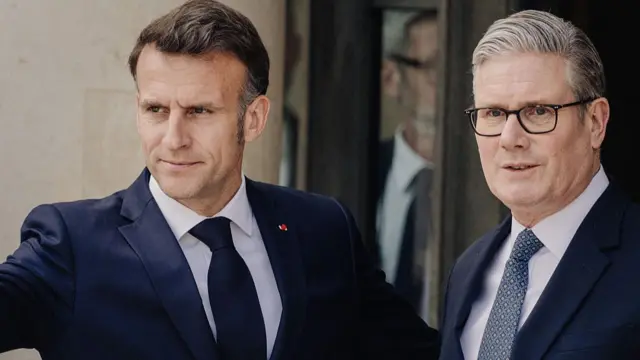
    European leaders - French President Macron and UK Prime Minister Starmer chaired a virtual meeting of about 40 countries yesterday from Paris focused on a global response to keeping the Strait open.

    Starmer says the UK and France will lead an international mission to protect freedom of navigation in the waterway "as soon as conditions allow, strictly peaceful and defensive".

    China's president - According to Trump, the Chinese President Xi Jinping is "very happy that the Strait of Hormuz is open and/or rapidly opening".

    The US president also says his meeting with Xi Jinping in China, due to be held on 14-15 May, "will be a special one and, potentially, historic".

  6. Trump: 'A great and brilliant day for the world'published at 06:23 BST 18 April

    Peter Bowes
    North America correspondent

    US President Donald Trump said it was a "great and brilliant day for the world" now that Iran had declared the Strait of Hormuz open.

    But he added that the US blockade of Iranian ports would remain "in full force" until the "transaction" to end of the war was "100% complete".

    He has also suggested he may end the ceasefire with Iran unless a long-term deal to end the war is agreed by Wednesday.

    Posting on X, Iran's Parliamentary Speaker, Mohammad Bagher Ghalibaf, who was part of last weekend's face to face negotiations, said: "With the continuation of the blockade, the Strait of Hormuz will not remain open."

    Tehran has also denied Trump's claim that it would work with the US to recover its stockpile of enriched uranium and send it to America.

    Iran's foreign ministry said the matter had "never been raised in negotiations".

  7. US naval blockade has turned back 21 ships since Mondaypublished at 05:55 BST 18 April

    As we reported earlier, Donald Trump has said that the US naval blockade of Iranian ports will remain in place until a full US-Iran deal has been done.

    US Central Command says the blockade, which began on 13 April, has forced 21 ships to turn around and return to Iran so far.

  8. IDF says it has launched almost 11,000 strikes on Iranpublished at 05:35 BST 18 April

    The Israel Defense Forces (IDF) has released new figures on its bombardment of Iran, saying it conducted approximately 10,800 strikes on the nation.

    The US-based Human Rights Activists News Agency (Hrana) has reported a death toll of 1,701 Iraninan civilians as of 7 April, the day that US President Donald Trump announced a conditional two-week ceasefire with Iran.

    The IDF also says it is responsible for over 14,900 artillery strikes and 2,500 air strikes in Lebanon, and says it hit approximately 165 multi-storey building.

    Lebanese health authorities say that 2,100 people have been killed over the six weeks of conflict in Lebanon, and over a million, or roughly one in five of the population, have been displaced.

  9. Trump says Xi 'very happy' about Hormuzpublished at 05:16 BST 18 April

    Donald Trump says Chinese President Xi Jinping is "very happy that the Strait of Hormuz is open and/or rapidly opening", in a post on Truth Social.

    Trump goes on to say their meeting in China, due to be held on 14-15 May, "will be a special one and, potentially, Historic".

    "Much will be accomplished!"

    China, the biggest buyer of Iranian oil, gets about 38 per cent of its oil via the Strait of Hormuz.

    It has been crucial in urging Iran to negotiate with the US and says it supports the ceasefire and resumption of peace talks.

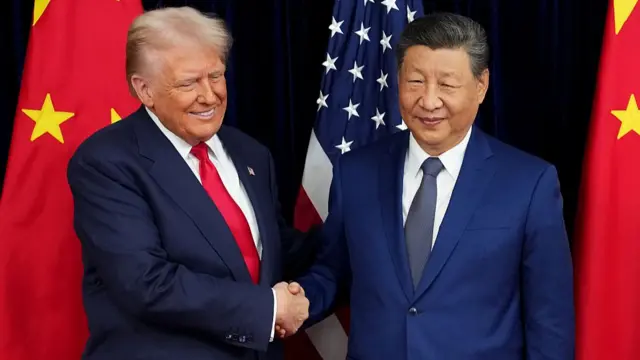
    US President Donald Trump and Chinese President Xi Jinping shake hands as they stand in front of US and Chinese flags at Gimhae Air Base on October 30, 2025 in Busan, South Korea.Image source, Getty Images
    Image caption,

    Trump and Xi met for talks in South Korea in October

  10. Iranian parliament speaker labels Trump’s claims as 'false'published at 04:48 BST 18 April

    Ghoncheh Habibiazad
    Senior reporter, BBC Persian

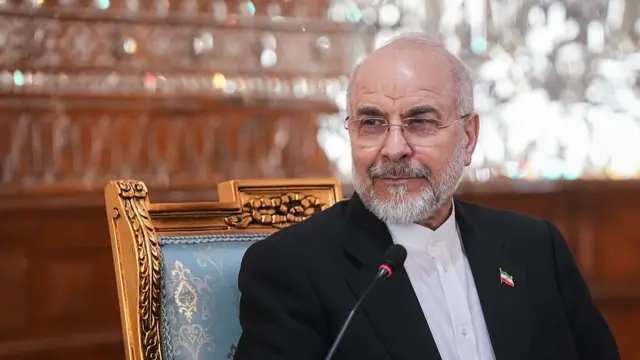
    Mohammad Bagher Ghalibaf, meets the head of Pakistan's Army Field Marshal Syed Asim Munir (not pictured) on April 16, 2026 in Tehran, Iran.Image source, Getty Images
    Image caption,

    Iran's parliament speaker Mohammad Bagher Ghalibaf

    Iranian Parliament Speaker Mohammad Bagher Ghalibaf, who headed Iran’s delegation in the recent talks with the US in Islamabad, said on X that Donald Trump "made seven claims in one hour, all seven of which were false".

    "They did not win the war, and they will certainly not get anywhere in negotiations either with these lies," Ghalibaf added.

    On the Strait of Hormuz, he said that, with the "continuation of the [US] blockade", the strait "will not remain open".

    He reiterated remarks made earlier by Iranian Foreign Ministry spokesman Esmail Baghaei, who had said that "whether the strait is open or closed and the regulations governing it will be determined on the ground, not on social media".

    Both remarks by Ghalibaf and Baghaei came after a post on X by Iranian Foreign Minister Abbas Araghchi, who said in English that the "passage for all commercial vessels" through the Strait of Hormuz was "completely open for the remaining period of the ceasefire".

    Araghchi's comments drew criticism from some Iranian outlets and hardliners, who called on him to "clarify" his remarks.

    "Media warfare and the shaping of public opinion are an important part of war, and the Iranian nation is not influenced by these tactics," Ghalibaf said on X.

  11. US extends Russian oil sanction waiver after saying it would notpublished at 04:46 BST 18 April

    We are resuming our live coverage of the conflict in the Middle East.

    Late on Friday, the US said it would extend a waiver on the purchase of sanctioned Russian oil.

    It comes days after Treasury Secretary Scott Bessent said sanction waivers would not be extended.

    The new general licence, announced by the Treasury Department, permits the delivery and sale of Russian crude oil and petroleum products loaded on vessels as of April 17. The sanction reprieve runs until May 16, the department said.

    The waiver does not cover transactions involving Iran, Cuba and North Korea.

    In March, Donald Trump removed restrictions on exports of Russian oil as global prices soared due to the war in Iran, especially instability in the Strait of Hormuz.

  12. Iran and Trump say Strait of Hormuz is openpublished at 23:39 BST 17 April

    Nathan Williams
    Live reporter

    The Malta-flagged tanker Agios Fanourios I, an oil tanker that sailed through the Strait of Hormuz, arrives in Iraq’s territorial waters off Basra,IraqImage source, Reuters

    At around 13:00 GMT (14:00 BST) Iran's foreign minister declared that the Strait of Hormuz was "open" to vessels while the Lebanon ceasefire was in place.

    Donald Trump hailed the move in a serious of posts on his Truth Social platform, while also insisting that America's blockade of Iranian ports would stay until a full US-Iran deal was done.

    The news has led to a drop in the price of oil. But the head of the International Maritime Organisation told the BBC the shipping industry should remain "cautious". There is also a major backlog of vessels trapped in the Persian Gulf.

    While the US president has suggested the vital waterway is fully open, Iranian officials have since suggested there may be limitations, external on shipping going through the Strait.

    Our security correspondent Frank Gardner points out that Iran is insisting that all vessels follow a "designated route". Maritime tracking services showed very few vessels actually transited through the strait on Friday.

    Trump has also been sending very upbeat signals about the current state of US-Iran negotiations, telling BBC US partner CBS that Iran has "agreed to everything", including the removal of enriched uranium from the country. A senior Iranian official has said this is not the case.

    We are now pausing our live coverage, but you can continue to read more in our main story from today: Iran says Strait of Hormuz is 'open' but tracking shows few ships moving.

    We have further articles on the Iran war, including one from diplomatic correspondent Paul Adams on how two ceasefires in the Middle East could boost US-Iran talks.

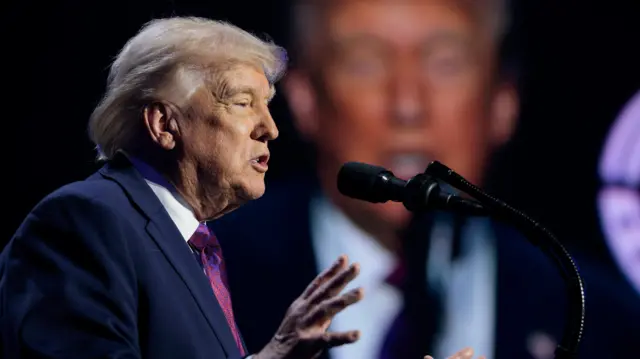
  13. Trump addresses Middle East conflict at conservative advocacy eventpublished at 23:33 BST 17 April

    President Donald Trump speaks during a Turning Point USA event at Dream City Church in Phoenix, Arizona.Image source, Reuters

    Speaking at the Turning Point Action event in Arizona, US President Donald Trump is reiterating many of his key talking points from throughout the day on the subject of the conflict in the Middle East.

    • He says Iran has announced the Strait of Hormuz is "fully open and ready for business", but the US naval blockade will remain "in full force" until the "transaction" is 100% complete
    • Trump also repeated his claim that the US and Iran will jointly excavate enriched uranium, or "nuclear dust", and remove it from Iran - earlier today, a spokesperson for Iran's foreign ministry has said the enriched uranium is going nowhere
    • He has spoken about Nato, leading to a wave of boos from the audience of young conservatives, for what the president says is the alliance's lack of support to open the Strait of Hormuz - the president says help was offered far too late, claiming that the US spends close to $1tn helping Nato
    • The president heralded the "unprecedented" ceasefire between Lebanon and Israel, and says it is the first time it has happened in 78 years
    • Trump has also thanked Pakistan and its prime minister, Shehbaz Sharif, for the "tremendous help" in working towards a deal with Iran
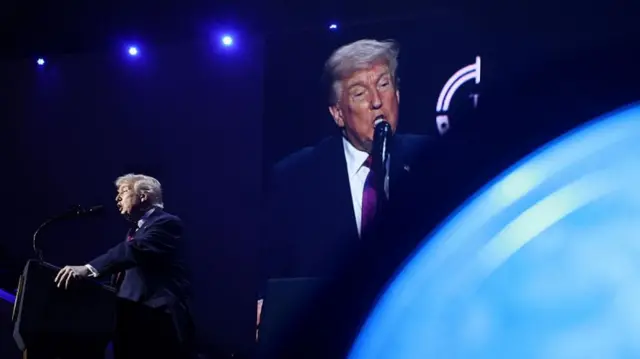
  14. Trump speaking at Turning Point Action eventpublished at 23:17 BST 17 April

    US President Donald Trump is speaking at a Turning Point Action event in Phoenix, Arizona.

    He was introduced by Erika Kirk, the widow of the late Charlie Kirk, the conservative advocacy group's founder.

    Trump spoke briefly about the conflict in the Middle East. We'll bring you the key points he makes relating to Iran.

    Donald Trump speaking into a microphone and projected on to a screenImage source, Getty Images
  15. Trump projects diplomatic victory but clear differences remainpublished at 22:52 BST 17 April

    Simi Jolaoso
    Washington DC correspondent

    We’ve heard a lot from President Trump today.

    He has struck an upbeat tone on talks with Iran, claiming Tehran has agreed to hand over what he called its “nuclear dust” - meaning their enriched uranium.

    Various media outlets have reported he told them the US would collect and transport the material to America, and insisted he has not agreed to release any of Iran’s frozen funds in return.

    Those would mark major concessions from Iran, as they were all issues that proved sticking points in the first round of negotiations

    Donald Trump’s optimism may be premature though. Iran’s foreign minister has rejected the idea that the country's enriched uranium would be transferred abroad.

    So even though President Trump is projecting a diplomatic victory, there are still clear differences between the two sides.

    The coming days will be critical in determining whether diplomacy can hold, or whether the conflict risks sliding back towards escalation.

    President Trump has already warned that if no deal is reached, fighting could resume.

  16. Talks will continue over the weekend, Trump sayspublished at 22:46 BST 17 April

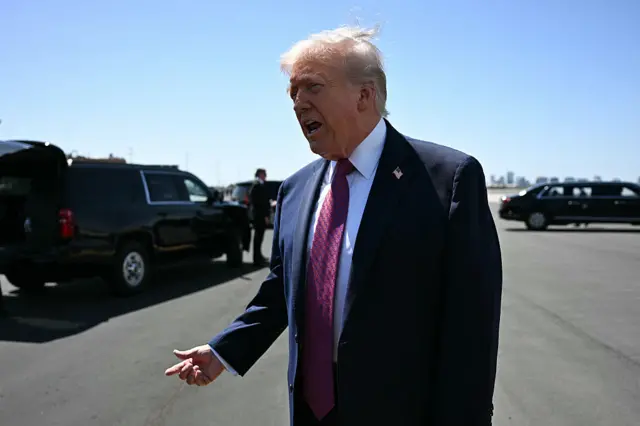
    Donald Trump talks to the press on the tarmac of an airport with large black SUVs in the backgroundImage source, Getty Images

    Moments ago, President Trump spoke to reporters as he made his way to an event in Phoenix, Arizona.

    "Talks are going on, [they will] go on over the weekend," he says. "A lot of good things are happening and that includes Lebanon too."

    He downplayed comments from an Iranian official that significant differences remain between Washington and Tehran.

    "If there are, we'll have to straighten it out but I don't think there's too many significant differences," he says.

  17. Why Iran’s enriched uranium has been a point of debate for yearspublished at 22:30 BST 17 April

    Ghoncheh Habibiazad
    Senior reporter, BBC Persian

    Today is not the first day that the topic of Iran’s enriched uranium has come up in remarks by Iranian and American officials.

    Iran’s nuclear programme has been a point of debate for years. Iran has always insisted that its nuclear programme is peaceful, a claim rejected by both the US and Israel.

    According to the International Atomic Energy Agency (IAEA), as of mid-2025 Iran possessed more than 400 kg of uranium enriched to 60% purity, a short technical step from weapons-grade (90%).

    Handing over Iran’s stockpile of highly enriched uranium has been a key US demand in current and past negotiations over Tehran’s nuclear programme.

    The recent war started on 28 February, two days after a round of talks between the US and Iran. The 12-day war between Iran and Israel back in the summer of 2025 also happened while the US and Iran were engaged in talks. The US also got involved that time and hit three key Iranian nuclear sites.

    Iran and the US were back at the negotiating table recently, but it's not clear yet if a deal will happen.

    For Washington, the priority right now remains limiting Iran's nuclear programme to prevent the development of a weapon.

    For Tehran, a deal could offer economic relief and security guarantees.

    When it comes to rhetoric, Iran seems to be rejecting that they want to give up their enriched uranium.

    But it is yet to be seen if Iran is actually willing to give up what it has spent years and resources on for a deal or not.

  18. Cruise ship makes it through the Strait of Hormuzpublished at 22:28 BST 17 April

    A cruise ship successfully transited the Strait of Hormuz today - the first passenger vessel to make it through since the war began - ship tracking service MarineTraffic says.

    The Malta-flagged vessel, the Celestyal Discovery, had been stuck in Dubai for 47 days, after arriving there in early March, according to the maritime tracking service.

    Sailing without any passengers on board, it is now heading toward Muscat, Oman with an estimated arrival of Saturday, MarineTraffic says.

  19. US placing new sanctions on seven ‘Iran-backed Iraqi militia commanders’published at 22:11 BST 17 April

    The US Department of Treasury will place further sanctions on Iraqi militia commanders as part of "Operation Economic Fury".

    “We will not allow Iraq’s terrorist militias, backed by Iran, to threaten American lives or interests,” says Secretary of the Treasury Scott Bessent.

    The US Department of the Treasury’s Office of Foreign Assets Control (OFAC) says it has designated seven Iraqi militia commanders responsible for “planning, directing, and executing attacks against US personnel, facilities, and interests in Iraq".

    The militia organisations include Kata’ib Hizballah, Kata’ib Sayyid Al-Shuhada, Harakat Al-Nujaba, and Asa’ib Ahl Al-Haqq.

  20. UK and France further outline their joint mission in the straitpublished at 21:52 BST 17 April

    Emmanuel Macron standing beside Keir Starmer, both wearing suitsImage source, AFP via Getty Images

    Earlier today, UK Prime Minister Keir Starmer and French President Emmanuel Macron announced that their countries will be leading a mission to protect freedom of navigation in the Strait of Hormuz.

    They've just issued a statement confirming their mission and outlining its three main points.

    1. "First, we called for the unconditional, unrestricted, and immediate re-opening of the Strait of Hormuz. The right of transit passage without restrictions or tolls is the bedrock of international trade."
    2. "Second, we confirmed our support for the vital work of the International Maritime Organisation to ensure the safety of seafarers and vessels. We will continue to work with the shipping industry to ensure that they can resume operations as soon as conditions permit, including through engagement with shipping operators, insurers, and industry bodies."
    3. "Third, France and the United Kingdom confirmed that they are establishing an independent and strictly defensive multinational mission to protect merchant vessels, reassure commercial shipping operators, and conduct mine clearance operations as soon as conditions permit following a sustainable ceasefire agreement."