Summary

  • US President Donald Trump has urged Iranian anti-government protesters to "keep protesting", saying "help is on its way"

  • We don't know what "help" he is leaning towards, and when that might come, writes our reporter from the White House

  • Trump has recently floated the possibility of intervention in the country - his national security team is expected to meet today to discuss the options

  • Thousands of people are feared dead after a crackdown on weeks of anti-government protests in Iran. Iranians describe terrible levels of death and destruction in their first calls to family abroad in days

  • An Iranian security official tells news agency Reuters that the death toll could be around 2,000 people, including security personnel

  • One protester, Erfan Soltani, will reportedly be "executed tomorrow", with a human rights group saying they "have never witnessed a case move so quickly"

  • While some people in Iran are now able to call people outside the country, an ongoing internet blackout is making it difficult to verify information from inside

Media caption,
Mortuary videos shows violent government crackdown in Iran
  1. How are fragments of information being shared?published at 15:39 GMT 12 January

    The first question goes to BBC Persian journalist Siavash Ardalan. He is asked to explain how fragments of information are coming in.

    Ardalan says the main piece of information that has come through so far is a "heart wrenching" video of bodies piled outside a mortuary in Tehran, as people searched for their loved ones.

    This video showed the scale of the killings, he explains. As more information comes through, in fragments mainly through Starlink, the situation is one "that could be associated with serious civil war".

    He says everyone has known somebody who has been killed.

    Red rectangle graphic with the words Your Voice written on it in white
  2. BBC correspondents to answer your questionspublished at 15:24 GMT 12 January

    Our correspondents will shortly be answering your questions on the situation in Iran.

    We'll be hearing from diplomatic correspondents Caroline Hawley and Paul Adams as well as BBC Persian journalist Siavash Ardalan.

    You can follow along by clicking watch live at the top of this page from 15:30 GMT.

    A red graphic that's a rectangle with the writing Your Voice across the middle of it in white thick lettering
  3. Videos from mortuary show how deadly protests have becomepublished at 15:17 GMT 12 January

    Benedict Garman, Richard Irvine-Brown and Shayan Sardarizadeh
    BBC Verify

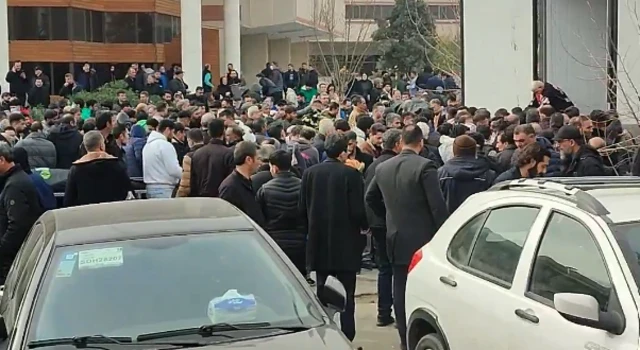
    Hundreds of people waiting around in what seems like a car park outside a building. There are two cars parked in the foreground.Image source, X/@Vahid
    Image caption,

    Videos from outside the building show hundreds of people waiting and searching body bags

    Several distressing videos have emerged over the weekend showing how deadly the protests in Iran have become.

    One set of videos were filmed at a mortuary near the town of Kahrizak, the Forensic Diagnostic and Laboratory Center of Tehran Province, which is around 14 miles from Tehran.

    We matched the layout of the exterior of the building and the dimensions and structure of a warehouse and another building nearby to satellite images to verify the location.

    Shots from outside these buildings show many body bags on trolleys, with hundreds of people gathered around them.

    One video shows the warehouse appearing full of both bags and people looking over them. We have assessed at least 50 body bags were seen in the clip.

    One video from Sunday was published by the state broadcaster. It shows a reporter arriving at the site and inspecting body bags inside a windowless room inside the same warehouse while talking to grieving people.

    Two of the videos BBC Verify found did not appear online before 10 January, although they could be filmed earlier.

  4. Iran summons Western ambassadors to view 'violent' protest footagepublished at 14:53 GMT 12 January

    Sarah Namjoo
    BBC Persian

    The British, German, Italian and French ambassadors were today summoned to Iran’s Ministry of Foreign Affairs to view footage of what Iranian authorities described as “violence by rioters.”

    The countries involved are among those that have publicly expressed support for the demonstrations in Iran.

    According to Iran’s state television, the foreign ministry presented images from street protests and argued that the unrest had gone beyond peaceful demonstration.

    Iranian officials also accused the US and Israel of inciting instability in the country and referred to the protesters as “vandals.”

    State media reports say the foreign ministry told the ambassadors that any political or media support for the protests was unacceptable and amounted to interference in Iran’s internal affairs.

    Iran had previously summoned Britain’s ambassador over what it described as “interventionist comments” by the UK foreign secretary, as well as an incident in which a protester removed the Iranian flag from the embassy building in London and replaced it with a pre-1979 flag used before the Islamic Revolution.

  5. Analysis

    Iran: The military optionspublished at 14:32 GMT 12 January

    Frank Gardner
    Security correspondent

    President Donald Trump has been presented with a range of military options for US intervention in Iran. The Islamic Republic has vowed to retaliate if attacked.

    Like the protests themselves, there is a recent historical precedent here. In June last year Israel and Iran fought a brief but intense 12-day war, with the US Air Force joining in at the end to destroy much of Iran’s nuclear programme at three sites.

    This time, any US military strikes - if authorised by President Trump - would most likely be aimed at the heart of Iran’s security apparatus, targeting Iran's Islamic Revolutionary Guard Corps (IRGC), the Basij and possibly the Supreme Leader himself, Ayatollah Ali Khamenei.

    There is a risk it could backfire.

    The Islamic Republic has already painted the protesters as "terrorists...trying to please Donald Trump". A US bombing raid that caused civilian casualties could conceivably work to the advantage of the regime.

    When it comes to retaliation, Iran is not completely toothless.

    It still has an arsenal of ballistic missiles, it has its allies the Houthis in Yemen and it could try to mine the strategic Strait of Hormuz.

    But to borrow the words of a US President, Iran "doesn’t have all the cards".

    It is in a far weaker position today than 18 months ago, having lost its principal ally in Syria and watched Israel slice through its air defences and strike wherever it pleases in the Middle East.

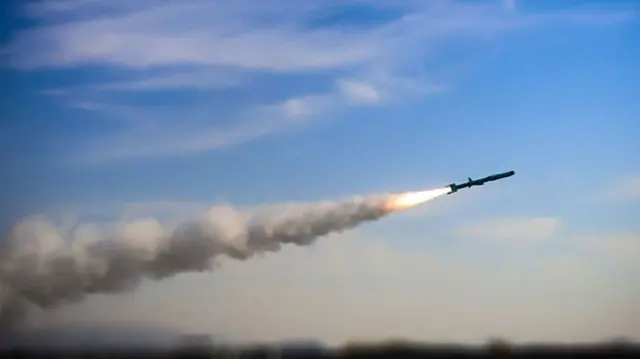
    A missile being fired through the air with cloud behind it.Image source, IRGC/EPA
    Image caption,

    A handout photo from the Islamic Revolutionary Guard Corps shows a missile being launched during a military drill in the waters off southern Iran

  6. Fireworks, barricades, lasers: BBC Verify examines footage of clashes in Iranpublished at 14:06 GMT 12 January

    Richard Irvine-Brown
    BBC Verify journalist

    We’re looking into footage from Iran showing clashes during anti-government protests in Iran.

    One video which emerged over the weekend shows protesters who have set up barricades and lit fires on Vakil Abad Highway, in the north-eastern city Mashhad.

    The demonstrators are wearing masks and appear to be using fireworks and pointing green lasers at a group of security forces in the distance.

    The footage is a series of clips edited together, with gunfire and other explosions audible in many of them, while one clip shows what appears to be the muzzle flash of a gun being fired from a bridge over the road.

    Media caption,

    Watch: Protesters and security forces clash in Iran protests

  7. 'Come and see how all your assets in the region will be destroyed', Iran speaker warns USpublished at 13:39 GMT 12 January

    Soroush Negahdari
    BBC Monitoring

    The speaker of Iran's parliament has issued a stark warning that US military bases, ships and personnel in the Middle East could be targeted in the event of any military intervention by Washington.

    Addressing the US president directly at a state-organised pro-government rally in Tehran, Mohammad Baqer Qalibaf warns: “Come and see how all your assets in the region will be destroyed… what will befall American bases, American ships and American forces.”

    He stresses that the consequences of any US intervention would be severe and that the region would be “set ablaze”, describing Trump as “delusional” - urging the US president not to believe what the speaker calls misleading intelligence.

  8. Do you have a question about Iran? Ask our correspondentspublished at 13:14 GMT 12 January

    A red graphic that's a rectangle with the writing Your Voice across the middle of it in white thick lettering

    Do you have questions about the situation in Iran?

    We have a team of correspondents on hand to answer them from 15:30 GMT on the BBC News channel.

    We'll be hearing from diplomatic correspondents Caroline Hawley and Paul Adams as well as BBC Persian journalist Siavash Ardalan - and you'll be able to watch live later at the top of the page.

    Want to submit a question? You can get in touch in the following ways:  

    Please read our terms & conditions and privacy policy  

     In some cases a selection of your comments and questions will be published, displaying your name and location as you provide it unless you state otherwise. Your contact details will never be published.  

  9. Analysis

    What would it take to topple the Iranian regime?published at 13:01 GMT 12 January

    Frank Gardner
    Security correspondent

    Iran has been down this road several times before in the past 17 years.

    Each time the same questions re-emerge: What will it take to overthrow the regime? How will we know if a crucial tipping point has been reached?

    For the regime to be genuinely in severe danger of collapse it would take large and significant numbers of the security forces to change sides and join the protesters. That hasn’t happened yet.

    The Islamic Republic has one of the deepest, most pervasive and most effective security apparati in the world. It has informers, eavesdroppers, online content monitors and a whole army of Basij enforcers whose job it is to safeguard the regime and its repressive values.

    It has succeeded in crushing every protest movement so far - by killing and arresting large numbers of people, in many cases torturing them in jail and then releasing them, battered and traumatised, so they can warn others of what happens if you are caught.

    It is a policy of deterrence through fear.

  10. Referee and student among hundreds killed in Iran protestspublished at 12:58 GMT 12 January

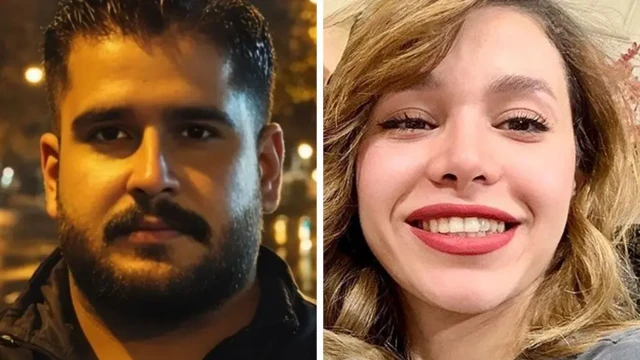
    Amir Mohammad Koohkan and Rubina Aminian are among hundreds of protesters reportedly killed during two weeks of protests in IranImage source, Instagram/Iran Human Rights

    A football referee and a student are among hundreds of people reportedly killed during the massive anti-government protests in Iran.

    Coach Amir Mohammad Koohkan, 26, was hit by live ammunition on 3 January during protests in the town of Neyriz, his friend told BBC Persian.

    "Everyone knew him for his kindness", they said, adding his family is grieving and "angry because he was killed by the regime".

    Koohkan was killed in Neyriz in south-west Fars Province, his friend told BBC Persian. The friend did not witness the incident firsthand, but heard from eyewitnesses at the scene.

    "It was far too soon for him," the friend said, adding that Koohkan was "someone who didn't like to see people in this state... in this misery".

    Five days later, student Rubina Aminian, 23, was shot from behind during a protest in Tehran, according to human rights groups. "She fought for things she knew were right", her uncle told CNN.

    Aminian was shot from behind while taking part in a protest on Thursday, according to three rights groups.

    Two groups - Norway-based Iran Human Rights (IHRNGO) and Kurdish organisation Hengaw - said she was shot in the head, while the Kurdistan Human Rights Network said she was shot in the back. Both Kurdish groups said she was shot by government forces.

    The BBC has been unable to independently verify the circumstances of her death.

    The 23-year-old, whose first name has also been spelled Robina or Roubina, was studying textile and fashion at Shariati Technical and Vocational College in Tehran, IHRNGO said.

    She was "thirsty for freedom, thirsty for women's rights," her uncle said.

  11. BBC Verify

    'Death to Khamenei' chanted at Tehran funeralpublished at 12:42 GMT 12 January

    By Ghoncheh Habibiazad, BBC Persian, and Richard Irvine-Brown

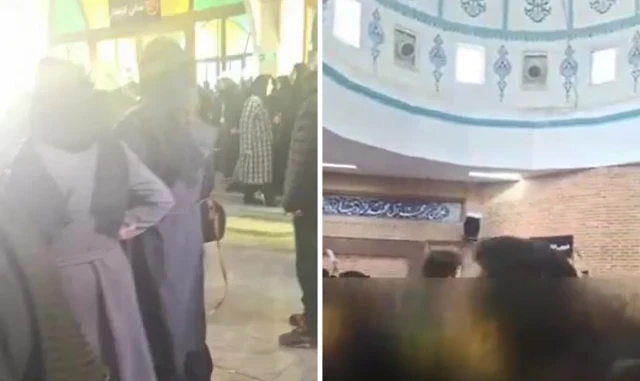
    Among the many hundreds of videos of protests BBC Verify and BBC Persian have reviewed, one piece of footage shows a protest happening at a funeral in a Tehran mortuary.

    This video, which first was first posted on Telegram at 00:45 local time (20:45 GMT) on Sunday, shows mourners at the Behesht-Zahra Mortuary, 20km (12 miles) south of the centre of Tehran, crying for “bravery” while they carry a casket.

    Mourners at a funeral at the Behesht-Zahra Mortuary in TehranImage source, Telegram

    Much of the video was blurred to anonymise people at the funeral, but we have been able to verify the mortuary where the ceremony took place by matching images of it - in particular its atrium - to those on Google Photos.

    By reverse searching frames from the video we found no earlier copies cached online before Sunday.

    Usually this ceremony would include calls of “There is no God but Allah”, but in this video we can hear chants of “death to Khamenei” - the Supreme Leader of Iran.

  12. Analysis

    Why are the protests erupting now?published at 12:24 GMT 12 January

    Ghoncheh Habibiazad
    Senior reporter, BBC Persian

    These protests began just over two weeks ago with shopkeepers - often called the backbone of support for the Islamic Republic - in Tehran angry about the collapsing currency.

    The demonstrations then spread to students and street protests in several cities across the country.

    Based on videos, these are the biggest protests seen since 2022, and the anger isn’t just about economic issues. Protesters have been chanting slogans against the entire clerical leadership and the supreme leader.

    Iran has faced a mix of recent problems - economic crisis, political repression, social unrest, and international tension over its nuclear and ballistic missile programme.

    The leadership has been cracking down on protests for years. Security forces are often ready to act, and authorities can quickly close banks, schools and public institutions, while tightly controlling the state media narrative.

    Officials increasingly blame those considered foreign enemies - especially the US and Israel - as they try to contain the unrest.

    With the internet outage, most information coming out of Iran right now is from state media and officials.

  13. 'Swift and harsh' punishment for protesters, Iran's judiciary chief vowspublished at 12:00 GMT 12 January

    Soroush Negahdari
    BBC Monitoring

    Iran’s judiciary chief has doubled down on threats of “swift and harsh” punishment for those involved in the protests, warning courts to show no leniency towards what he calls “rioters”.

    Speaking at a meeting with senior judicial officials this morning, Gholamhossein Mohseni-Ejei urges prosecutors to work closely with intelligence agencies so cases are handled “as swiftly as possible”.

    The judiciary chief again accuses protesters of being backed by the US and Israel, which he describes as “the main perpetrators of these violent and terroristic acts”.

    • As a reminder, last week he told police commanders that "rioters" would face "rapid" prosecution and punishment in order to serve as a deterrent

    The remarks come amid escalating warnings from Iran’s security establishment since 9 January, including an unprecedented warning by Iran's General Prosecutor Mohammad Kazem Movahedi-Azad.

    He said on 10 January that “all rioters” could face the the charge of moharebeh - waging war against God - an offence punishable by death, and one used in previous rounds of protests to issue death penalties for some alleged armed protesters.

  14. 'This grief shouldn't stay hidden', says Iranian using Starlink internetpublished at 11:32 GMT 12 January

    Ghoncheh Habibiazad
    Senior reporter, BBC Persian

    There has been an internet blackout in Iran since Thursday. But some people are able to get online via the Starlink satellite service - although as we reported earlier, there are fears users could be traced by the government.

    I have been chatting with someone within Iran who is connected via Starlink.

    They tell me it seems like the authorities are trying to clamp down on those who are using the service, by disrupting the connection.

    "What will the authorities do if they find out you’re connected right now?" I ask.

    They reply: "I don’t even want to think about it. The thought scares me. I could be accused of espionage."

    That's an accusation that could potentially carry the death sentence.

    "Why are you doing this then?" I ask.

    "This grief and fury shouldn’t stay hidden," they reply. "The world should know what’s happening to us inside."

  15. US considering 'very strong options' in Iran amid deadly protest crackdown - a recappublished at 11:23 GMT 12 January

    As Iran enters its third week of unrest, let's bring you up to date with some of the key developments this morning:

    • US President Donald Trump says the US is considering "very strong options" to intervene in Iran amid a deadly crackdown on anti-government protests
    • Iranian Foreign Minister Abbas Araghchi says Tehran does not plan pre-emptive military action, but is fully prepared for war if attacked
    • Meanwhile an internet blackout across Iran continues, making it difficult to get an accurate picture of what is happening inside the country right now
    • State TV and other Iranian outlets are trying to project that the situation is "calm" since last night in the capital, our colleagues at BBC Persian report
    • On the ground in Iran hundreds of people are feared dead and thousands more have been detained, according to some human rights organisations
    • The BBC has been able to count at least 180 white shrouds at an open-air morgue outside Tehran, our chief international correspondent Lyse Doucet writes
  16. Son of Iran’s exiled late monarch urges supporters to replace embassy flagspublished at 11:17 GMT 12 January

    Amir Nategh
    BBC Persian

    This morning a group of protesters entered the grounds of the Iranian embassy in Canberra, Australia, and removed the official flag of the Islamic Republic.

    Demonstrators - reported to be supporters of the exiled crown prince Reza Pahlavi - replaced it with the Lion and Sun flag, a symbol associated with Iran before the 1979 revolution.

    The incident follows a fresh call to action from Pahlavi late last night, in which he again urged Iranian security forces to defect and appealed to Iranians living in Western countries to reclaim embassies for the people.

    He said Iran’s diplomatic missions should display the national flag rather than what he described as the “disgraceful banner of the Islamic Republic”.

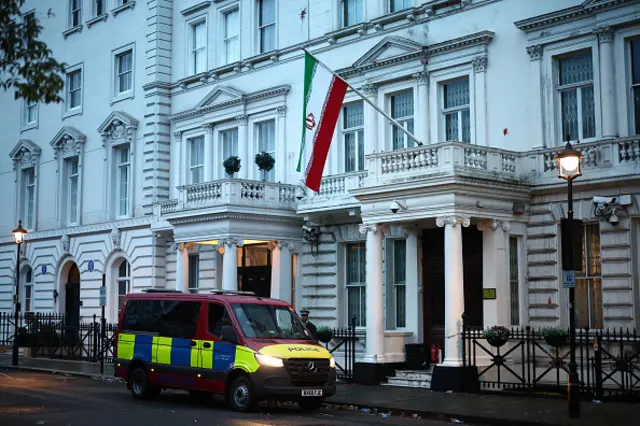
    It comes after a protester climbed onto the balcony of the Iranian embassy in west London on Saturday and pulled down the official flag and briefly replaced it with the Lion and Sun emblem.

    Iran reacted with its foreign ministry summoning the British ambassador in Tehran, state TV reports.

    Foreign ministry spokesperson Esmaeil Baghaei has accused Western governments of failing to meet their obligations to protect diplomatic premises.

    He said they had neglected their duty to ensure the security of Iranian missions, describing the protest at the London embassy as “absolutely unacceptable”.

    A metropolitan police van waits outside the Iranian Embassy, flying flag of the Islamic Republic of Iran in central London early in the morningImage source, Getty Images
    Image caption,

    A Metropolitan Police van outside the Iranian Embassy in central London early on Monday morning

  17. UK ambassador has held talks with Tehran officials, BBC understandspublished at 10:48 GMT 12 January

    Henry Zeffman
    Chief political correspondent

    The UK's ambassador to Iran, Hugo Shorter, is in Tehran and held talks at the country's foreign ministry yesterday, the BBC understands.

    Press TV, the Iranian state-owned media organisation, has claimed that Shorter was summoned in response to a protester climbing onto the balcony of Iran's embassy in London - and tearing down its flag.

    Shorter has been the ambassador to Iran since October 2024. The British embassy was previously closed between 2011 and 2015, after it was stormed by Iranian protesters.

  18. 'I have a grandma in Iran who was sick, and I don't know how she is now'published at 10:38 GMT 12 January

    Rebekah Wilson
    BBC News NI

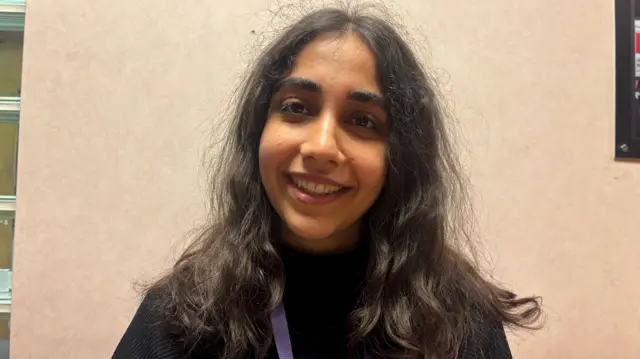
    Fatemeh Sadat Mosavi has a black jumper and is smiling at the camera.

    Iranians living in Northern Ireland tell the BBC they haven’t had contact with their families for days.

    Fatemeh Sadat Mosavi says "I think it was four days ago before they cut the internet, and I have a grandma in Iran who was sick and I don't know how she is now”.

    She says what is happening in her home country is "a very, very, very hard situation”, with economic issues meaning many are suffering.

    "If you do not have any money to buy something to eat, how can you be alive?" she says.

    Meanwhile, Hamirez Bahmani says he cannot get news from his parents, brother and sisters in Iran, but calls what is happening there “a revolution”.

    "Today the people just want a change, they really want a change because people are only in the streets for basic rights - the freedom, the life, the normal life that many people in the world have."

  19. Iran open to negotiations with US, foreign ministry spokesperson sayspublished at 10:26 GMT 12 January

    A spokesperson for Iran's Ministry of Foreign Affairs says diplomatic channels remain open with the US.

    In comments reported by the state broadcaster and the Iranian Students' News Agency, Esmail Baqaei says communication between Foreign Minister Abbas Araghchi and US officials is possible "whenever necessary".

    The spokesperson says Iran is adhering to diplomacy, and has never left the negotiating table - but it will not engage in negotiations that aren't bilateral.

  20. From rising inflation to calls for regime change - Iran's protests in 227 wordspublished at 10:06 GMT 12 January

    Thomas Mackintosh
    Live reporter

    Media caption,

    Watch: Protesters and security forces clash over the weekend

    The wave of unrest was sparked by Iran's continuing economic crisis - with rising inflation and currency devaluation.

    Protests began on 28 December after shopkeepers in Tehran's Grand Bazaar staged a strike when the Iranian rial hit a record low against the US dollar on the open market.

    Since then protests and demonstrations have escalated and spread to more than 100 cities and towns across all of Iran's 31 provinces, according to human rights groups.

    Economic protests quickly became political too, with many demonstrators calling for a regime change after nearly 50 years of clerical rule.

    For weeks violent clashes between anti-government protesters and security forces have been reported in several locations.

    The US-based Human Rights Activist News Agency says it has verified the deaths of 495 protesters and 48 security personnel nationwide. Another 10,600 people have been detained over the weeks of unrest, the agency says.

    On Friday - as a monitoring group reported a total internet blackout in Iran - Supreme Leader Ayatollah Ali Khamenei called anti-government protesters "troublemakers" who are trying "to please the president of the US".

    The Trump administration has been keeping a watchful eye on developments. The US has threatened to intervene, and on Sunday President Donald Trump said Iran's leaders had called him to "negotiate".

    However, Trump warned overnight that the US "may have to act before a meeting".