Summary

  1. 'I will always do what is necessary to protect our national security' - Starmerpublished at 21:21 BST 11 June
    Chris Mason
    Political editor

    The prime minister said: “My first duty is to keep the British people safe, and I will always do what is necessary to protect our national security.

    “I am pleased to appoint Dan Jarvis as Defence Secretary as we strengthen our armed forces and meet the growing threats facing our country.

    “This Labour Government is delivering the largest sustained increase in defence spending since the Cold War.

    “In a dangerous and volatile world, we will give our armed forces the capabilities they need to defend Britain and keep our nation secure.”

  2. Who is new Defence Secretary Dan Jarvis?published at 21:20 BST 11 June

    Joshua Nevett
    Political reporter

    Jarvis is a former Army officer who has served as security minister since 2024, and a Cabinet Office minister since last year.

    Having been elected as an MP in 2011, he spent years on the backbenches, before becoming the mayor of South Yorkshire from 2018 to 2022.

    In 2023, he was appointed shadow security minister in Keir Starmer's shadow cabinet, and took up a role in government after Labour won the 2024 general election.

    His Army background and experience made him a likely candidate to replace Healey.

  3. Dan Jarvis appointed defence secretarypublished at 21:07 BST 11 June
    Breaking

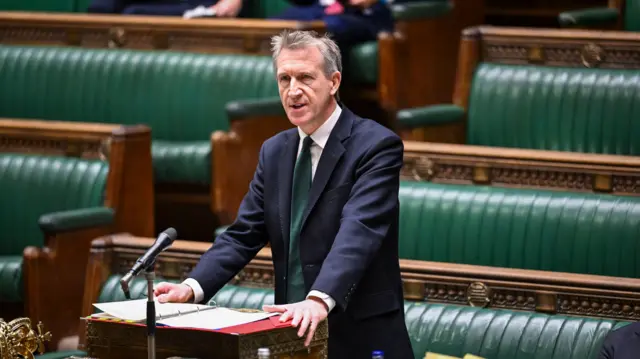
    Dan Jarvis speaking in House of CommonsImage source, House of Commons/PA Wire

    Security Minister Dan Jarvis has been appointed as John Healey's replacement as defence secretary, No 10 says.

  4. Carns criticised defence funding plan in interviewspublished at 21:03 BST 11 June

    Joshua Nevett
    Political reporter

    As Chris said, Carns’ resignation came shortly after he criticised the government’s defence investment plan in strikingly candid interviews with Sky News and the BBC.

    Here’s a bit more of what he said:

    Carns suggested "we should look at every model possible to find the money for defence and national security to make sure we're safe and secure here in the United Kingdom".

    He added that the government needed to get the "right financial settlement for defence" and that the "defence investment plan is as transformative as it can be".

    He gave no indication he was going to resign within the hour of giving that interview.

    He did, however, tell Sky News in an earlier interview that he would “consider my position” once he’d seen the final defence investment plan.

    "I’m getting on with my job," he said.

    It seems something changed between the Sky News interview and his decision to resign.

  5. Pamela Nash quits government rolepublished at 20:50 BST 11 June

    Joshua Nevett
    Political reporter

    This isn’t the only resignation this evening.

    Earlier this evening, before Carns resigned, Pamela Nash quit as parliamentary private secretary in the Ministry of Defence.

    In her letter to the prime minister, the Labour MP says stepping down from the role is not “an action I take lightly”.

    “The defence of our nation is the most important responsibility for any government,” she writes.

    “The delays and difficulties with securing the necessary funding to progress the defence investment plan has been the latest issue that is damaging to the trust of the public in us.”

    Nash says the government’s “successes are consistently drowned out by mistakes and the failure to be bold when it matters most,” adding “we must do better”.

    Parliamentary private secretaries are unpaid assistants to government ministers.

  6. Extraordinarypublished at 20:47 BST 11 June

    Chris Mason
    Political editor

    What a bizarre evening.

    At half seven I interviewed Al Carns, as a serving defence minister.

    No sooner had we fed our video into our systems here, and he’d packed it in and left the government.

    Media caption,

    Al Carns speaks to the BBC ahead of resignation

  7. Who is Al Carns?published at 20:43 BST 11 June

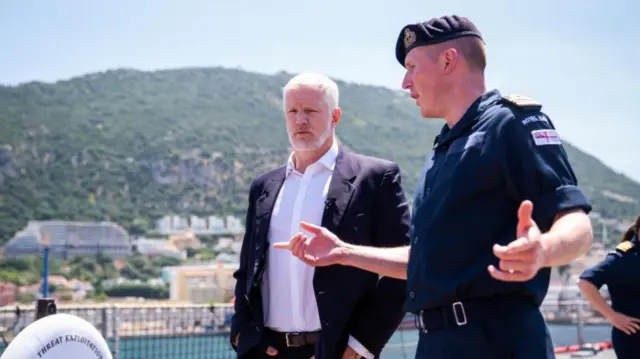
    Armed forces minister Al Carns (left) is shown mine detecting equipment during a visit to RFA Lyme Bay in GibraltarImage source, PA Media
    Image caption,

    Armed forces minister Al Carns (left) is shown mine military equipment during a visit to Gibraltar

    Former armed forces minister Al Carns has resigned just hours after former Defence Secretary John Healey.

    Who is he?

    Since joining the military at 19, Carns served during four tours in Afghanistan, and was awarded the Military Cross in 2011 in recognition of his service - the citation for his actions remains classified.

    He had a 24-year military career, including serving as a Royal Marine Commando, though much of it is shrouded in secrecy.

    From 2017, he served as adviser to three UK defence secretaries, before being elected Labour MP for Birmingham Selly Oak during the 2024 General Election.

    Carns was swiftly promoted to the position of veterans minister, and became minister for the armed forces in last September's reshuffle.

  8. Al Carns is seventh minister to resign in less than a monthpublished at 20:42 BST 11 June

    Al Carns is the seventh minister to step down in the past month, and the second today, following John Healey.

    Health Secretary Wes Streeting left his post on 14 May.

    Two days before, Jess Phillips resigned from her position as safeguarding minister.

    On the same day, junior ministers Miatta Fahnbulleh, Alex Davies-Jones and Zubir Ahmed also resigned from the government.

  9. Carns says UK cannot keep up with changing 'character of conflict'published at 20:35 BST 11 June

    In his resignation letter, Carns says "the character of conflict is changing faster than our procurement can keep up with".

    He says the defence investment plan "is not built for the threat we face" and "is neither transformative enough nor sufficiently funded.

    "We are asking our Armed Forces to operate in a more dangerous world on a budget written for a calmer one," the letter adds.

    "A strong country is not simply one with capable armed forces. It is one where working people feel economically secure, public services function, energy is resilient, communities are stable, and young people can see a future worth working towards."

    Carns finishes the letter by saying he will "keep fighting for the people I served with" and hopes the government will do the same.

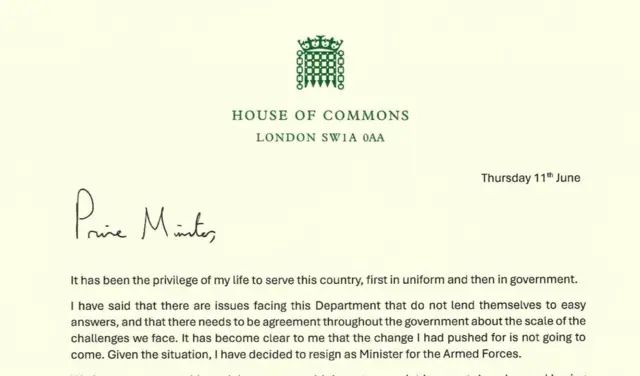
    Screenshot of the top of a letter sent by Al Carns to the prime ministerImage source, Al Carns
  10. Armed Forces Minister Al Carns resignspublished at 20:25 BST 11 June
    Breaking

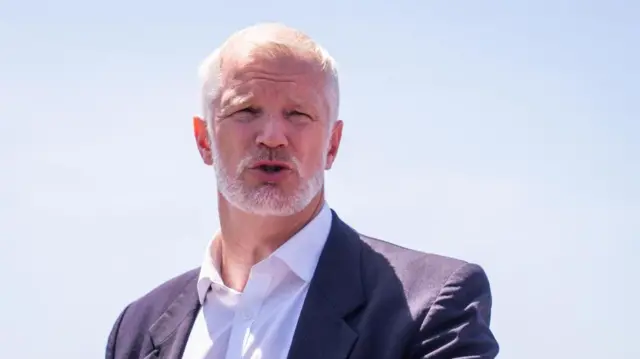
    Al CarnsImage source, PA Media

    Armed Forces Minister Al Carns resigns from government hours after Defence Secretary John Healey stepped down.

    In a letter to the Prime Minister Keir Starmer, he says: "It has been the privilege of my life to serve this country, first in uniform and then in government.

    "I have said that there are issues facing this Department that do not lend themselves to easy answers, and that there needs to be agreement throughout the government about the scale of the challenges we face.

    "It has become clear to me that the change I had pushed for is not going to come. Given the situation, I have decided to resign as Minister for the Armed Forces."

  11. Healey quits as defence secretary amid military spending rowpublished at 19:41 BST 11 June

    Freya Scott-Turner
    Live reporter

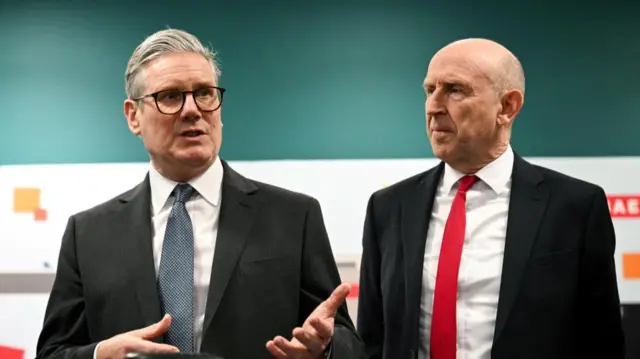
    Keir Starmer and John Healey stand side by side wearing black suitsImage source, Reuters

    Defence Secretary John Healey has become the sixth minister to tender his resignation from Keir Starmer's government in the past month.

    In his resignation letter - which caught most Westminster-watchers off guard - Healey made clear his resignation was over defence funding.

    Pressure has been mounting on the government to publish its defence investment plan.

    Healey wrote that he viewed the plans in full for the first time on Monday, and said the money offered to his department falls "well short of what is required for defence and the country at this dangerous time".

    He accused Starmer of being "unable" and the Treasury "unwilling" to "commit the resources that the nation needs".

    In response a short while ago, Starmer insisted his funding plan would "provide the resources our military needs to keep us safe”.

    Healey's successor is yet to be announced.

    We're pausing our live coverage here, but you can keep up-to-date with the latest in our news story, or in this analysis piece from our political editor Chris Mason.

  12. 'Important that we remain apolitical', military chief tells staffpublished at 19:09 BST 11 June

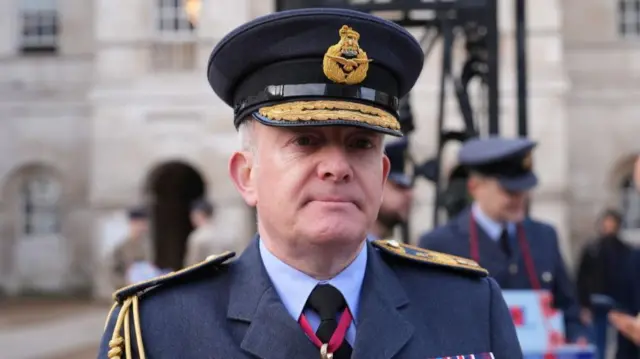
    Chief of the Defence Staff Sir Rich Knighton wearing military regaliaImage source, PA Media

    In a message to staff at the Ministry of Defence, Chief of the Defence Staff Sir Richard Knighton says: "There will be much written and said about the armed forces over the next few days.

    "It is important that we remain apolitical and are not drawn into speculation about decisions that are for ministers to make.

    "In uncertain times, it is more important than ever that we stay focused on our duty to defend the UK and its interests across the world without fear or favour."

    "The work our armed forces do matters, and it matters more than it has done for many years."

    At the bottom of the message, Knighton adds that he is looking forward to welcoming the new defence secretary.

    "For now, thank you for everything that you do for the nation. You should be rightly proud of the role you play in keeping us safe."

  13. Former Army head predicts 'continuing decline' if spending not increasedpublished at 19:02 BST 11 June

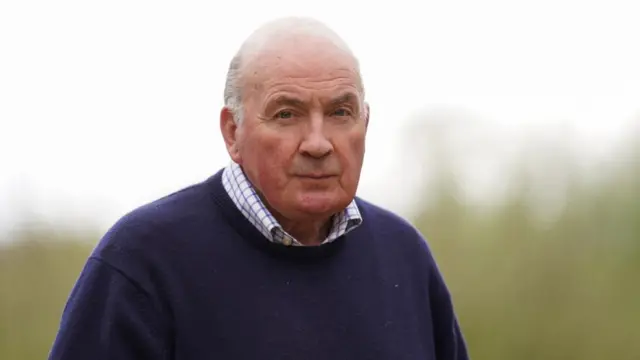
    General Lord Dannatt headshotImage source, PA Media

    The former head of the British Army says he was "shocked" about the timing of John Healey's resignation but "not surprised as to the substance".

    General Lord Richard Dannatt tells BBC News that if the chancellor does not have a "change of heart" and allocate more funding to defence spending, we will see a "continuing decline" in the UK's armed forces and and military capability.

    He says that would lead to a "withering" of the deterrent effect, which he says the UK needs "to hold back someone like [Russian President] Vladimir Putin's otherwise otherwise aggressive and expansionist intentions".

    Dannatt adds: "We've got to show that we take seriously the defence of this country... we've got to put serious amounts of money extra into this budget."

    He says not allocating more funding "absolutely increases the risk" to army personnel deployed, echoing Healey's assertion in his resignation letter that without an investment plan that "meets the moment", he would be forced to make decisions that "increase the risk to personnel on operations".

  14. Starmer says he is 'determined to rebuild our country'published at 18:43 BST 11 June

    More now from the prime minister's letter to Healey.

    Starmer says the world today "requires a serious response to build our economic resilience and our national defences".

    The prime minister says the pair "have achieved a great deal working together" and he is "proud of our record on funding".

    The defence investment plan "will allow our armed forces to transform and modernise and back them with the tools they need to change the way we fight — and to deter our enemies," the letter adds.

    Starmer says the increases in spending outlined in the defence investment plan, which is yet to be released, "will be sustainable and fair" and "will mean significant reallocations of funding from across government departments".

    He finishes the letter by saying: "Taking these decisions is never easy. I am determined to rebuild our country after years of being buffeted by crises."

  15. 'Sorry that you will not be part of work going forward' - Starmer to Healeypublished at 18:32 BST 11 June

    Jack Fenwick
    Political correspondent

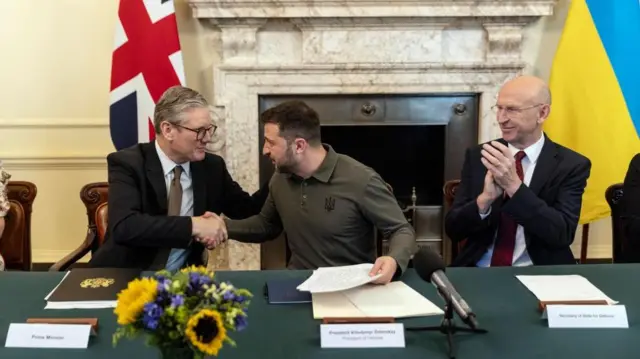
    Keir Starmer and John Healey sit in front of a fireplace with Ukrainian President Volodymyr ZelenskyImage source, The Times/PA Wire
    Image caption,

    Keir Starmer and John Healey host Ukrainian President Volodymyr Zelensky at Downing Street in July 2024

    As we've just been reporting, Keir Starmer has insisted the government’s defence investment plan “will provide the resources our military needs to keep us safe”.

    In a letter to John Healey, the prime minister said he was increasing defence spending “in a sustainable way” and said “irresponsible borrowing” would put the country’s finances “at risk”.

    The prime minister thanked Healey for his work and said he was “sorry that you will not be part of that work going forward”.

    In a direct response to Healey’s accusation that the money in the defence investment plan would not be sufficient to defend the UK against threats, Starmer said: “I will always do what is needed to keep our country safe.”

    He said Healey was “right that we have to go further” on defence spending but said the defence investment plan “does just that delivering an unprecedented increase in defence spending in a sustainable way”.

    He added: “Strong public finances are part of what keeps us safe - irresponsible borrowing only puts that at risk.”

  16. Starmer defends funding plan in response to Healey resignationpublished at 18:26 BST 11 June
    Breaking

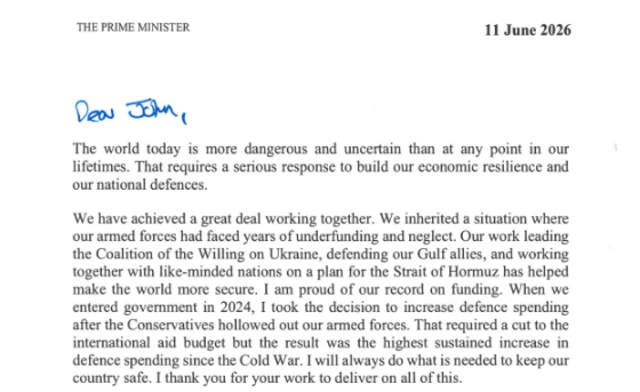
    A part of the letter sent from Starmer to John Healey, with handwritten words "Dear John" at the top in blue ink.Image source, UK Government

    Prime Minister Keir Starmer insists a key defence funding plan “will provide the resources our military needs to keep us safe”, in a letter to Healey responding to his resignation.

    In the letter, the prime minister says he is sorry to see him resign as defence secretary.

    We'll bring you more on this shortly.

  17. PM 'has my full support' after Healey resignation, says NI secretarypublished at 18:22 BST 11 June

    Jayne McCormack
    BBC News NI political correspondent

    Hilary Benn in a black suit and red tie with round glassesImage source, PA Media

    Northern Ireland Secretary Hilary Benn has defended the government's defence spending plans after John Healey's resignation.

    Speaking in Belfast, Benn says the defence investment plan "involves difficult decisions", but adds that he "would draw attention to the fact we have seen the biggest increase already in defence spending as a result of the decisions the PM has taken since the Cold War".

    "We are living in dangerous and difficult times... the PM has my full support. We need stability and he's going to carry on doing his job in the way that he has," he says.

    Benn says he has known Healey a "very long time" and wants to thank him for the role he played during his time in office, and wishes him all the very best.

  18. Fully-funded defence spending plan could boost growth, says industry bodypublished at 18:18 BST 11 June

    Jemma Crew
    Business reporter

    A fully-funded defence investment plan must be published urgently, according to the Confederation of British Industry (CBI).

    Chief executive Rain Newton-Smith, who co-chaired the government’s defence and growth taskforce last year, says this would lead to investment and jobs.

    Newton-Smith says it has the potential to be a "catalyst for growth... strengthening both our security and the long-term productivity of the UK economy".

    “We live in a precarious world where our peace and security is being tested.

    "Enhancing our national security is vital, and a government commitment to higher defence spending is a key part of this.

    "Delay carries a cost – not only to our security, but also to investor confidence."

  19. BBC Verify

    Government defence advisers warned ‘it may be necessary to go faster’published at 18:03 BST 11 June

    By Ben Chu

    The government’s strategic defence review in June 2025 set out a blueprint for a transformation of the UK armed forces over the next decade, including more investment in drones, creating a “more lethal” army and investing in the “next generation” of aircraft.

    The authors of the report specified they had made their recommendations within a framework of the government’s existing commitments for the defence budget to rise to 2.5% of GDP by 2027 and 3% in the 2030s.

    The report said: “We are confident that the transformation we propose for the harder world we now live in is affordable over 10 years, given these promised new resources.”

    However, the authors - former Defence Secretary Lord Robertson, retired general Sir Richard Barrons and ex-US national security adviser Fiona Hill - added that “as we live in such turbulent times it may be necessary to go faster”.

    Since the review was published Prime Minister Keir Starmer has said the Royal Navy will lead a multinational mission to protect commercial shipping routes in the Strait of Hormuz.

    And Robertson said in April that the government was “not willing to make the necessary investment” in defence.

  20. Analysis

    Beneath resignation lies what some see as a broader failurepublished at 17:41 BST 11 June

    James Landale
    Diplomatic correspondent

    Forget, for a moment, the here and now about John Healey’s resignation. There is a bigger picture.

    Successive governments have struggled to get a grip on defence spending. They spent less after the Cold War ended and failed to spend more as the world became more dangerous.

    To its many critics, the Ministry of Defence (MoD) failed to spend well what money it got, botching procurement after procurement, delivering late and over budget.

    Whitehall failed to resolve its internal tensions, both Number 10 and the Cabinet Office unable - or too weak - to manage repeated rows between the Treasury and MoD.

    All the while, many analysts believe politicians failed to be honest with voters about the increasing threats the UK faced, and the brutally hard trade-offs needed to address them.

    Labour MPs will admit in private more money for defence would mean less for other priorities such as net zero and transport - even health and education.

    John Healey’s resignation may reflect a current row but beneath it lies what some see as a broader failure of government and politics to address a genuine national interest.