Summary

  1. Delays and underfunding putting jobs in sector at risk, says union bosspublished at 16:05 BST
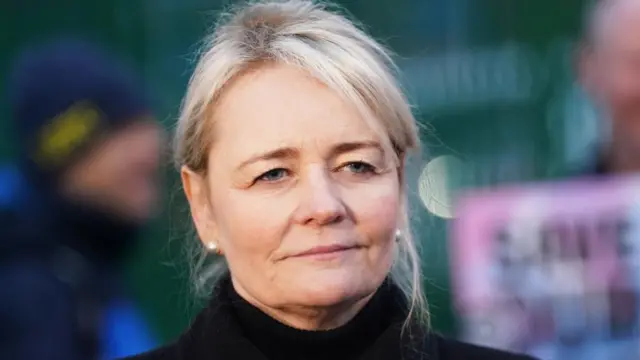
    Unite general secretary Sharon Graham pictured previously wearing black coatImage source, PA Media

    Unite general secretary Sharon Graham says John Healey's resignation letter is "devastating" and lays bare "the chaos at the heart of government".

    Delays and underfunding are "risking defence workers' jobs", she says, adding that failing to protect jobs in the sector would be a "national betrayal".

    "The government scrabbling around robbing Peter to pay Paul on such a critical plan is embarrassing and a sign of weakness," she adds.

    Graham says the government should instead rework its fiscal rules "to allow proper investment in the nation’s defence infrastructure".

  2. Healey resigns over defence spending - a recappublished at 15:51 BST

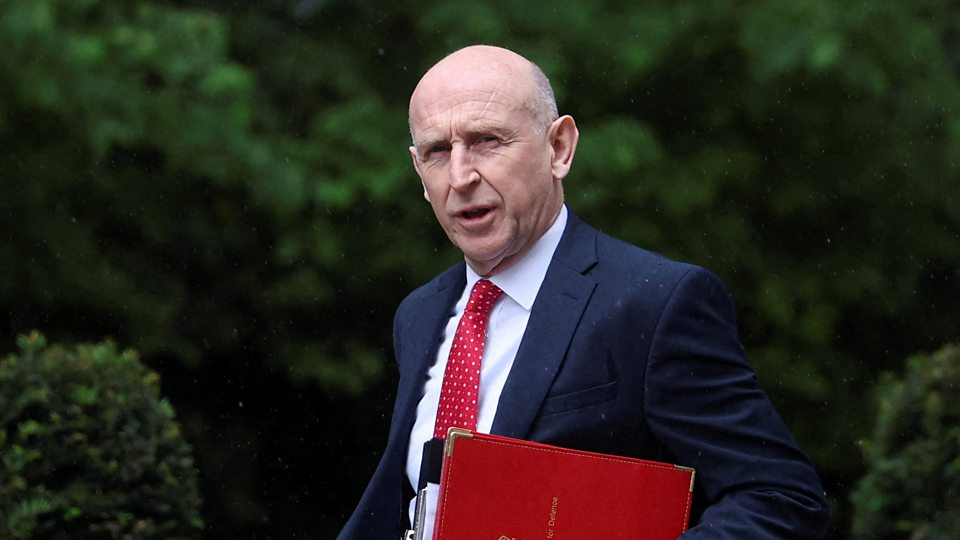
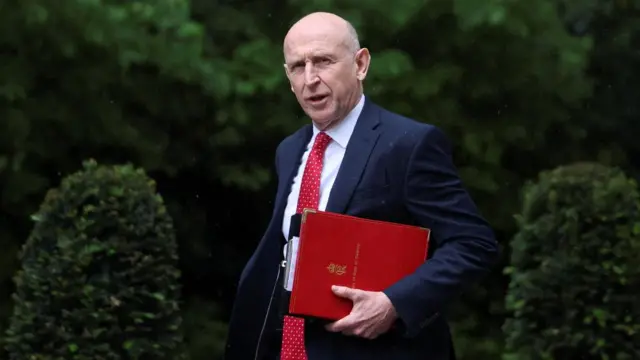
    John Healey in a navy suit carrying a small red binder.Image source, Reuters

    John Healey has quit as defence secretary, becoming the sixth minister to resign from Keir Starmer's government in the past month.

    In his resignation letter, Healey accused the prime minister of being unable "to commit the resources that the nation needs to defend the country at this time of rising threats".

    He specifically mentions the defence investment plan, which has not yet been released and is due to lay out the government's defence spending plans.

    This, he says, "falls well short of what is required for... this dangerous time".

    Henry Zeffman writes that the main emotion among Labour ministers, MPs and advisers right now is shock, with one Labour figure describing Healey as "the loyalist’s loyalist".

    While the prime minister has not yet commented, a government source says "the country is safer because of the decisions Keir Starmer has made".

    Tory leader Kemi Badenoch describes Healey's decision as "honourable", while Reform UK's Robert Jenrick says: "Good on Healey. Shame on them [the government]". The Greens and Liberal Democrats have similarly criticised the government.

  3. What are the government's defence spending commitments?published at 15:30 BST

    Katie Williams
    Live reporter

    In his resignation letter, Healey accused the prime minister of failing to commit the resources the military needs.

    Let's take a closer look at the government's defence spending commitments, and what Healey has said today:

    The government's commitments

    In February 2025, the government committed to increase defence spending to 2.5% of GDP by 2027. It also announced a change in the definition of defence spending to put that figure at 2.6%.

    As part of that commitment, the government outlined an ambition to reach 3% in the next parliament.

    Separately, the UK has committed to a Nato target to spend 5% of GDP on "national security" by 2035.

    The government says this would be made up of 3.5% of GDP on "core defence" and another 1.5% of GDP going on things like protecting critical infrastructure and ensuring civil preparedness.

    What Healey said today

    Healey said today that there are "credible ways of meeting the mid-term funding challenges", but that the financial settlement for the defence investment plan "falls well short of what is required".

    He says the extra support in the plan is "backloaded" when he believes the pressure to speed up readiness "is in the first two years".

    Healey adds that defence spending "rises to just 2.68% of GDP in 2030". As BBC Verify reports, that implies an 0.08% increase on the existing 2027 commitment.

  4. Some praise Healey's resignation, others say he ignored budget warningspublished at 15:11 BST

    Jonathan Beale
    Defence correspondent

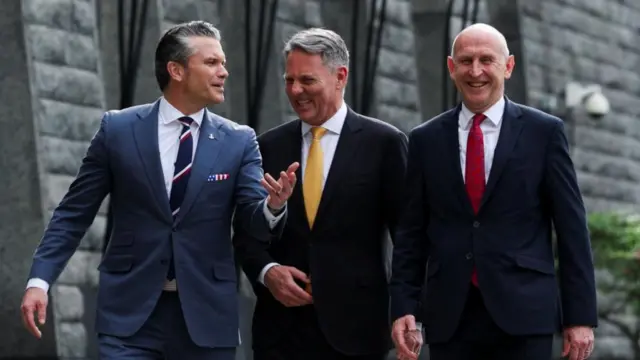
    John Healey walks alongside Pete Hegseth and Richard Marles, the three laugh togetherImage source, Reuters
    Image caption,

    John Healey alongside his US counterpart Pete Hegseth and Australian Deputy Prime Minister Richard Marles, on a visit to Singapore in May

    While there’s been praise for John Healey’s decision to resign as defence secretary, there’s been criticism too.

    Some who worked with him in the Ministry Of Defence (MoD) say he had long been warned the MoD's budget was already overcommitted - under the last government.

    When he commissioned Labour’s strategic defence review, it increased those unfunded ambitions “substantially”.

    The “hard part”, a defence source says, was always going to be getting agreement on the defence investment plan - the extra money.

    A source says Healey still believed he could somehow balance the books, that big adjustments could be made. One called that assumption “inept”.

  5. Healey resignation 'sent us reeling' - head of defence trade bodypublished at 15:01 BST

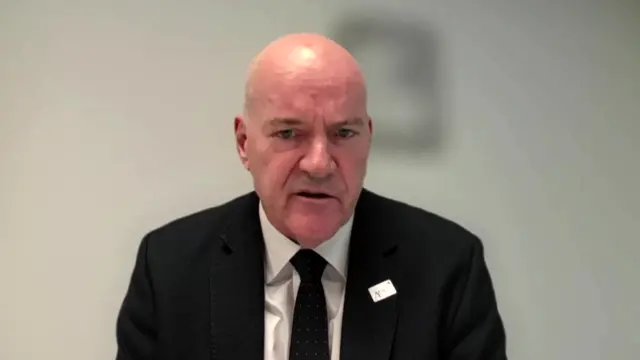
    Kevin Craven sits in front of a white wall wearing a black suit

    Kevin Craven, chief executive of the ADS Group, the UK’s trade body for the aerospace, defence, security and space sectors, says Healey's resignation has "sent us reeling".

    In a statement, he says the now former defence secretary "has consistently shown himself to be an intelligent, supportive and highly principled man, who has the best interests of UK defence as top of mind in everything that he does".

    Craven adds: "His resignation today is something to lament, and is truly a damning reflection on the current state of affairs."

    He warns that the consequences of getting the defence investment plan wrong "are of a magnitude far beyond our worst fears", adding that it's "imperative that an adequately funded Defence Investment Plan is published as soon as possible".

    "It should not take the resignation of an honourable man for that realisation to sink in."

  6. BBC Verify

    The number of soldiers, ships, and fighter jets has fallenpublished at 14:52 BST

    By Adam Durbin and Thomas Spencer

    Since the end of the Cold War in 1990, the British Army has gone from having 153,000 regular soldiers to 73,790 today - only just above the 73,000 minimum recommended in last year’s strategic defence review.

    As well as the regular Army there have been reductions across the military over the same period:

    • Army reservists have gone from 76,000 to 25,770
    • The Royal Navy has fallen from 48 major combat ships (13 destroyers, 35 frigates), to 13 (seven frigates and six destroyers)
    • The Royal Air Force has dropped from more than 300 combat jets to 144

    It is important to note, however, that these newer fighter jets - 107 Eurofighter Typhoons and at least 37 F-35 Lightning IIs - are technologically superior to those in use 36 years ago.

    And uncrewed aircraft systems, also known as drones, now form an element of the UK's military air capabilities. These did not exist in 1990.

    Experts say the UK needs to invest considerably more in this military technology. Read more of BBC Verify’s analysis of the state of the UK military here.

  7. Healey has had bruising negotiations with the chancellorpublished at 14:46 BST

    Faisal Islam
    Economics editor

    John Healey’s resignation reflects some bruising internal negotiations with the chancellor over finding the money to fund the defence investment plan. The now former defence secretary confirmed that the level of spending would reach 2.68% of GDP by 2030.

    His letter also acknowledged that other departments would face some cuts against their plans. It is thought that this is a reference to the capital budgets for transport and energy, among other things. Defence spending, on heavy equipment and technology, is very capital intensive.

    A Treasury source told the BBC that Chancellor Rachel Reeves will "always do what is right and needed to keep this country safe".

    The source pointed to a "record uplift in defence spending at the spending review”, and said Reeves would be "working alongside the PM deliver billions more to fund the defence investment plan in full".

    As leadership speculation looms over the government, it is worth noting that Greater Manchester Mayor Andy Burnham previously suggested that some defence spending could be exempted from fiscal rules, as has occurred in Germany.

    His advisers have suggested this may occur over a longer time period, only after the UK balances its budget.

    The Spanish PM Pedro Sanchez, who publicly refused to meet the 3.5% Nato target, is now publicly citing this move as one of the reasons behind Spain’s strong economy.

  8. 'A government with no leadership, under a caretaker PM' - Polanskipublished at 14:42 BST

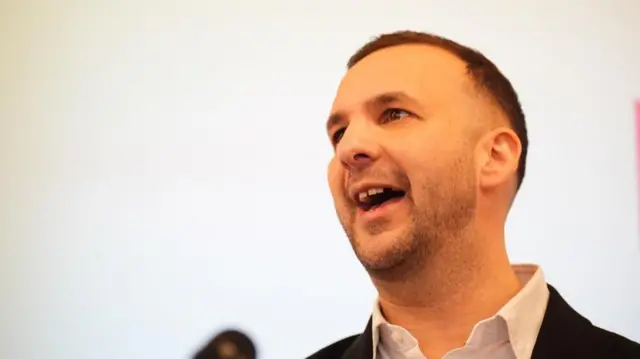
    Zack Polanski speaks into a microphone wearing a white shirt and black jacketImage source, PA Media

    "Labour has no serious plan to address threats we face," says leader of the Green Party Zack Polanski.

    He calls it "a government with no leadership, under a caretaker PM expected to be replaced imminently - it's chaos".

    Polanski adds: "We need to make sure that we're looking at defence to also include cyber security, threats to nature and the climate crisis and our resilience towards both pandemics and terrorist attacks.

    "Most of all we need a clear and consistent plan."

  9. Analysis

    Shock within Labour at resignation of 'loyalist's loyalist'published at 14:26 BST

    Henry Zeffman
    Chief political correspondent

    The main emotion I am getting from Labour ministers, MPs and advisers right now is shock. This isn’t very John Healey.

    He has been a Labour MP since 1997, serving either as a minister or a shadow minister under every Labour leader in that time - and there have been several, of quite a few different political hues.

    More specifically, he’s overseen the defence brief for Keir Starmer for the entirety of Starmer’s six years as Labour leader - a period in which the world has become more war-torn and more dangerous.

    In public but also in private, he plays a straight bat.

    "He was the loyalist’s loyalist," one Labour figure who worked with Healey closely in this job said to me.

    Yes, there were signs that he was frustrated. Signs that, as with any defence secretary but especially at a time like this, he wanted the government to spend more on defence.

    But few seem to have had any sense at all that he had frustrations on this level.

  10. Former chancellor says Healey 'brave and principled'published at 14:25 BST

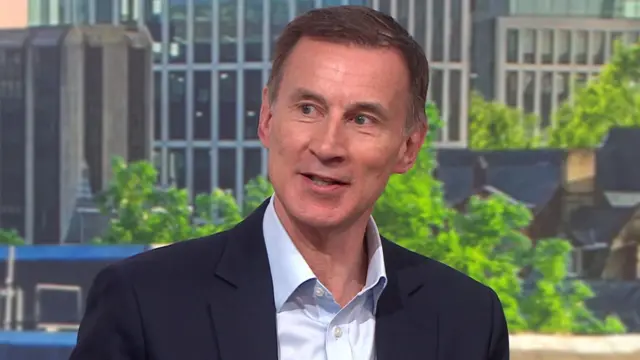
    Former Chancellor Jeremy Hunt speaks to BBC Politics Live

    Speaking to Vicki Young on Politics Live, the former Chancellor Jeremy Hunt says that John Healey has been "very brave and principled" in resigning.

    Hunt says it was clear Healey had lost the Whitehall battle to increase defence spending by £28bn. If the government is to keep the country safe, he says, "the prime minister now needs to find that money".

    He adds: "There’s only one game in town - if you need to find the money quickly, it is to bite the bullet on welfare reform."

  11. Streeting says Healey's 'warning needs to be heeded'published at 14:24 BST

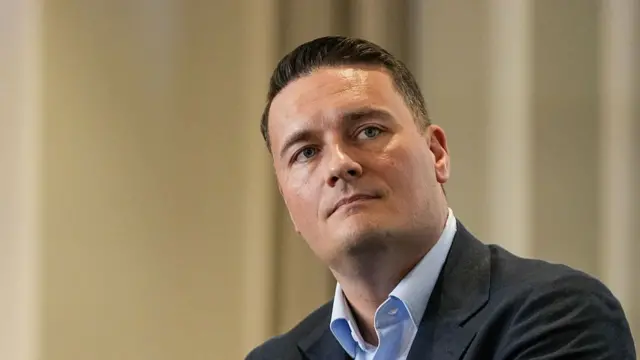
    Headshot of Streeting looking up to the side in front of a blurry beige backgroundImage source, Getty Images

    Wes Streeting, who quit as health secretary last month citing a lack of confidence in Keir Starmer's leadership, has shared a short statement on X.

    "John was an excellent Defence Secretary. Every word of warning here needs to be heeded."

  12. Country is safer because of Keir Starmer's decisions, government source sayspublished at 14:09 BST

    Henry Zeffman
    Chief political correspondent

    Nearly two hours after John Healey’s resignation, the government has issued its first response, via a source.

    The source said: "This country is safer because of the decisions Keir Starmer has made and we will continue to act in our national interest.

    "It is this Labour government and this Labour prime minister that is delivering the largest sustained boost to defence spending since the Cold War.

    "We cut the international aid budget to make record investment in our armed forces, and now the PM is imposing cuts on other government departments to fund billions more.

    "The defence investment plan will deliver the capability our armed forces need. ⁠We will always do what is right, and needed, to keep the country safe."

  13. These are the dying days of Starmer's government, claims Plaid Cymrupublished at 14:07 BST

    We continue to see political reaction pour in following John Healey's resignation.

    Dave Doogan, the SNP's representative in Westminster, says that "once again, the Labour Party is engulfed in chaos".

    He adds that it is "yet another sign of a government losing control".

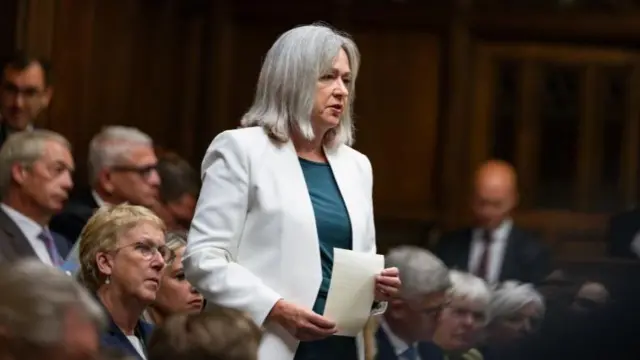
    Plaid Cymru's Westminster Leader, Liz Saville Roberts, says the resignation "is another blow to the prime minister’s credibility and authority. These really are the dying days of Starmer’s government."

    Liz Saville Roberts speaking during Prime Minister's Questions last weekImage source, House of Commons
    Image caption,

    Liz Saville Roberts speaking during Prime Minister's Questions last week

  14. Analysis

    This raises stark questions about Starmer's authoritypublished at 14:01 BST

    Henry Zeffman
    Chief political correspondent

    This is devastating for Keir Starmer.

    It would be devastating for any prime minister at any time, whatever their general political condition, to have the defence secretary resign and denounce how seriously they take defence of the realm.

    But clearly at a time of global conflict and at a time of internal Labour Party conflict, with Starmer’s position more vulnerable than it has ever been, it is an especially devastating decision for Healey to have made.

    Starmer had planned to fill the gap between now and next Thursday’s Makerfield by-election, which may well return Andy Burnham to Westminster, with policy: with signs that he is getting on with the job as prime minister and still has the authority to do things.

    The defence investment plan was meant to be at the heart of that plan.

    It is very hard to see how it can now be published in its current form, even with a new defence secretary.

    That inevitably raises stark questions for Starmer about his authority to go on leading this government.

  15. Our department has issues, says minister in Healey's teampublished at 13:59 BST

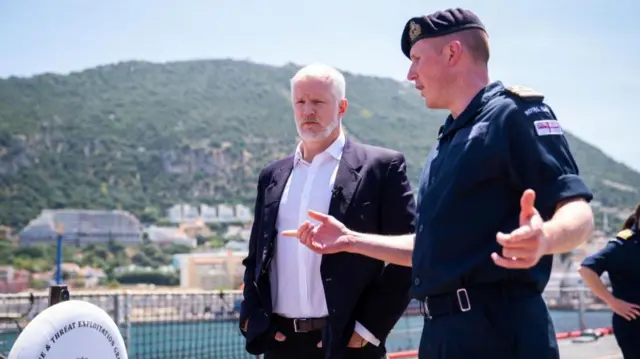
    Armed forces minister Al Carns (left) during a visit to RFA Lyme Bay in GibraltarImage source, PA Media
    Image caption,

    Armed forces minister Al Carns (left) during a visit to RFA Lyme Bay in Gibraltar

    Al Carns, the armed forces minister, says John Healey took on the defence ministry "at a moment when the world was getting more dangerous, not less, and he carried that weight with the discipline and decency that the job demands".

    In a statement online, he says he worked with Healey closely, observing the "hours, the care and the seriousness" he brought to the role.

    The Labour MP says there are "issues" facing the defence department, "that do not lend themselves to easy answers".

    "Our armed forces remain on operations around the world, standing with our allies, protecting our interests, and keeping the British people safe. They deserve a Ministry of Defence that matches their seriousness with our own. That is the job. It continues today."

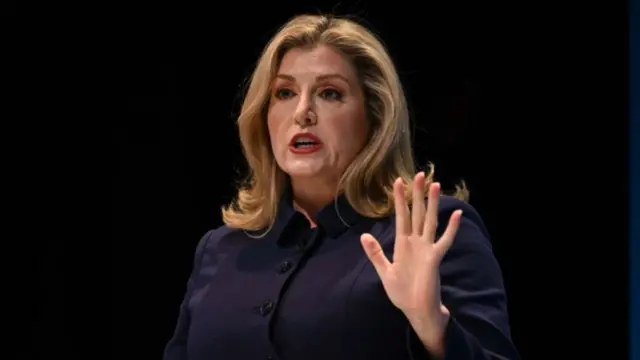
  16. 'Thank you John. Country before party' - ex-Defence Secretary Mordauntpublished at 13:55 BST

    Mourdant speaking in front of a black background with her hand up and palm openImage source, Getty Images

    Former Defence Secretary Penny Mordaunt says in a post on X that John Healey recognises "this moment for what it is.

    "Pivotal for our national resilience and defence with devastating consequences if we fail to modernise and rearm. Thank you John. Country before party."

  17. Analysis

    This row between No 10, the Treasury, and the military has been going on for monthspublished at 13:48 BST

    Jack Fenwick
    Political correspondent

    This is the latest and most dramatic twist in a saga about defence spending that has been going on for months.

    Last June the government published its strategic defence review – a document which set out how to ensure the UK was ready for war.

    Another document – the defence investment plan – was supposed to follow last autumn. It would lay out how the government would buy the necessary equipment to make its defence ambitions a reality – and crucially how much money would be involved.

    But that document has never seen the light of day – largely because of a huge row involving the Ministry of Defence, the Treasury and Number 10 over how much extra cash the country could afford.

    The prime minister told MPs in March that the investment plan was on his desk – a clear insinuation that its publication was imminent.

    But since then, there’ve been further delays, as the government has attempted to figure out where it could cut money in other areas to fund defence.

    And the nature of the arguments with the Ministry of Defence have become increasingly bitter.

    The arguments spilled out into the public realm for the first time in April, when Lord Robertson – a Labour peer, former Nato boss and author of the government’s defence review – launched a scathing attack on ministers and called for a cut to welfare to fund the increase.

    Number 10 hoped that it had reached something of a compromise when it presented John Healey with a plan on Monday – but Healey decided the money involved wasn’t an offer he could accept.

  18. Starmer more interested in appeasing backbenchers on welfare, says Badenochpublished at 13:41 BST

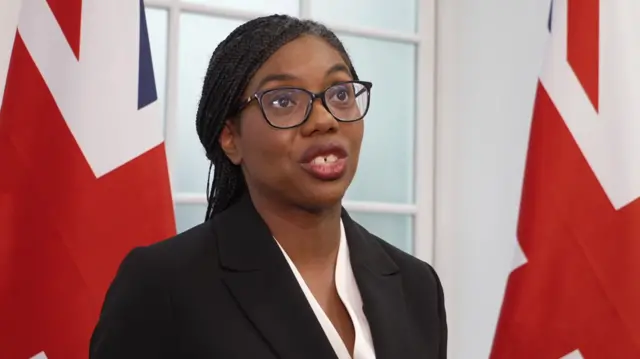
    Leader of opposition Kemi BadenochImage source, Pool

    Leader of the opposition Kemi Badenoch says she is "not surprised" John Healey has resigned, calling his decision "the honourable thing".

    She says she asked the PM about defence spending at PMQs yesterday, and Starmer - according to Badenoch - exposed that he was "not going to put money into defence to the amount that was required".

    "I am glad that he [Healey] agrees with me," she says, but calls his letter "shocking" in suggesting current spending plans could leave troops at risk.

    Badenoch says Starmer is "putting in less than half of the minimum required", with last year's strategic defence review suggesting about £28bn was required.

    She says he is "more interested in saving his job" by appeasing backbenchers with welfare spending than "putting the national interest first".

    Badenoch says the country needs to spend 3% of GDP on defence by the end of this parliament - claiming her party would fund this by reinstating the two-child benefit cap and implementing a sovereign defence fund.

  19. Other defence ministers told to stay in position by Healeypublished at 13:34 BST

    Jack Fenwick
    Political correspondent

    BBC News understands that John Healey has asked the government's other defence ministers to stay in post to minimise disruption.

  20. Healey told Starmer that a 0.08% increase was not enoughpublished at 13:28 BST

    Jonathan Beale
    Defence correspondent

    The BBC understands that John Healey had been pressing the prime minister for a larger increase in defence spending than he was offered.

    The deal the prime minister offered on Monday did not include a timetable to reach 3% of GDP.

    Having promised to reverse what he called the "hollowing out" of the armed forces, the settlement John Healey was offered on Monday was not enough.

    In other words, it would have meant further cuts.

    Healey was being offered an extra £13.5bn over the next four years - which defence sources said would really mean a £10bn increase alongside some "treasury trickery".

    The offer was well short of what Healey had been asking for - and well below the estimated £28bn needed to avoid large cuts.

    It’s understood that Healey told the prime minister that what amounted to a 0.08% increase would not be enough to keep the country safe.