Summary

  1. PM to lead another Cobra meeting on Middle East impactpublished at 05:25 GMT 23 March

    Joe Pike
    Politics reporter

    Prime Minister Sir Keir Starmer will lead a meeting this afternoon of the government's emergency committee, Cobra, to discuss the economic consequences of the conflict in the Middle East.

    Chancellor Rachel Reeves, Foreign Secretary Yvette Cooper and the governor of the Bank of England Andrew Bailey will join the meeting, which is expected to focus on energy security and the resilience of supply chains.

    Downing Street is facing pressure to set out how it'll support households and businesses as conflict continues.

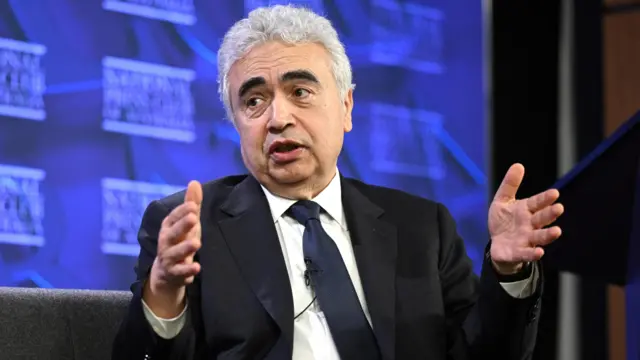
    Earlier today, we heard the head of the International Energy Agency compare the current energy crisis to those of the 1970s and the impact of Russia's 2022 invasion of Ukraine.
  2. Air strikes continue as Israel warns of 'several more weeks' of fightingpublished at 04:18 GMT 23 March

    If you are just joining us, here's what's been unfolding over the last few hours:

    We'll bring you the latest developments as we get them.

  3. Explosions rock Tehran after IDF launches attackpublished at 03:13 GMT 23 March

    Israel's military has launched an early morning "wide scale" airstrike on sites across Iran's capital Tehran.

    Blasts were reported across the city by Iranian state media, including IRGC-aligned Fars news agency.

    "Terrible sounds of explosions have been reported," Fars wrote.

    The Israel Defense Forces (IDF) says it is targeting "terrorist infrastructure" in Tehran.

  4. No country 'immune' from potential worst energy crisis in decadespublished at 02:37 GMT 23 March

    The Middle East war could spark an energy crisis worse than the combined shocks of the 1970s and comparable to the initial impacts of Russia's invasion of Ukraine in 2022.

    That was the warning of Fatih Birol, Executive Director of the International Energy Agency, in comments made to Australian media at a press event in Canberra.

    "Many of us remember the two consecutive oil crises in the 1970s... at that time, in each of the crises, the world has lost about five million barrels per day, both of them together, 10 million barrels per day," Birrol said.

    "As of today, we lost 11 million barrels per day, so more than two major oil shocks put together."

    He added that no country "will be immune" to the energy consequences of the crisis, as shipments of oil and liquefied natural gas (LNG) flowing through a vital channel – the Strait of Hormuz – remains stifled by an Iranian blockade.

    Fatih Birrol in a suit addressing mediaImage source, Reuters
  5. Iran blames US and Israel for deadly strike on Persian broadcasterpublished at 01:50 GMT 23 March

    At least one person has been killed in a strike on a broadcast station in southern Iran, according to the semi-official news agency Tasnim, which is associated with Iran's Revolutionary Guard Corps (IRGC).

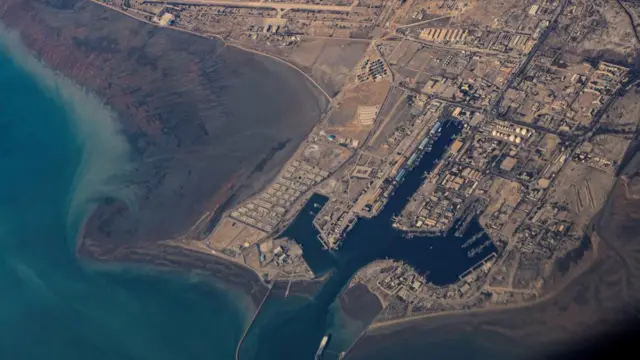
    The strike hit a transmitter in Bandar Abbas, a port city lying on the southern coast of Iran next to the Strait of Hormuz.

    A security guard stationed at the Persian Gulf Radio and Television Center was killed, Tasnim says.

    It blamed the US and Israel for the strike, which also left another person injured.

    The claims were not immediately independently verified.

    n aerial view of the Iranian shores and Port of Bandar Abbas in the strait of Hormuz.Image source, Reuters
    Image caption,

    The port at Bandar Abbas sits on the Strait of Hormuz

  6. Asian stock markets tumblepublished at 01:11 GMT 23 March
    Breaking

    Major Asian stock markets fell sharply on Monday after the US and Iran threatened to intensify hostilities as the war enters its fourth week.

    Japan's Nikkei 225 was down by 4.8% in early trading, while the Kospi in South Korea was more than 5.5% lower.

    Oil prices fluctuated, with Brent crude about 0.8% lower at $111.25 (£83.48) a barrel and US traded oil was broadly flat at $98.18.

  7. A reminder of the US objectives for its war with Iranpublished at 00:39 GMT 23 March

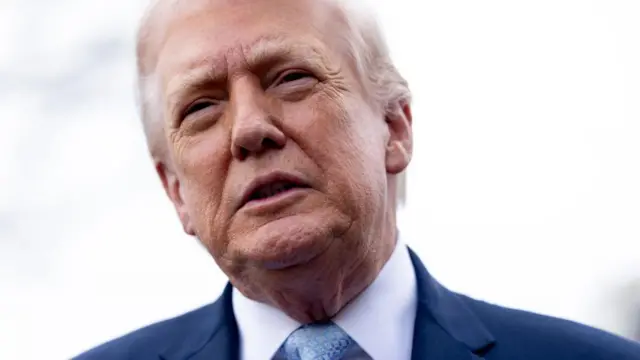
    US President Trump wears a blue suit with a light blue tieImage source, EPA/Shutterstock

    Here's a quick reminder of what US President Donald Trump and his defence secretary Pete Hegseth have said are the US plans for the war with Iran.

    Trump listed his objectives for the war in the Middle East in a post on his social media site Truth Social on Friday, as he said the US was considering "winding down" its military efforts.

    He said the US was getting close to "completely degrading" Iran's missile capability and destroying its defence industrial base.

    He adds that the US wants to eliminate Iran's navy and air force as well as its anti aircraft weaponry.

    Trump also said Iran should never be allowed to get close to nuclear capability and that the US would protect its Middle East allies "at the highest level".

    Meanwhile, US Defense Secretary Pete Hegseth said the US objectives had not changed since it first launched strikes on Iran on 28 February.

    He told reporters the ​objectives remained to destroy Iran's missile launchers, its defence industrial base and its navy, and to never allow Iran to get a nuclear weapon.

  8. Trump's deadline for Iran to unblock Hormuz loomspublished at 00:10 GMT 23 March

    We are about 24 hours away from US President Donald Trump's deadline for Iran to re-open the Strait of Hormuz – one of the world's busiest oil shipping channels.

    Trump yesterday posted on his Truth Social platform saying the US would "obliterate" Iranian power plants if Tehran did not unconditionally re-open the waterway.

    Trump posted at 23:44 GMT on 21 March. That means Iran has until 23:44 GMT on 23 March (03:14 in Tehran on 24 March), to open the Strait.

    Tehran has since said it would target US-linked oil fields in the Gulf Region if it were attacked.

  9. Americans urged to exercise increased caution 'worldwide'published at 23:42 GMT 22 March

    The US State Department has issued an updated caution to Americans across the world due to the ongoing tensions in the Middle East.

    Writing on X, the department calls on Americans "worldwide, and especially in the Middle East, to exercise increased caution".

    "Periodic airspace closures may cause travel disruptions. US diplomatic facilities, including outside the Middle East, have been targeted," it says.

    "Groups supportive of Iran may target other US interests overseas or locations associated with the United States and/or Americans throughout the world."

  10. Why is Israel targeting Lebanon's bridges?published at 23:14 GMT 22 March

    Earlier, we reported that Lebanese President Joseph Aoun condemned "Israel's targeting and destruction of infrastructure and vital facilities in southern Lebanon, particularly the Qasmiyeh bridge over the Litani River and other bridges".

    The BBC's Middle East correspondent Hugo Bachega assesses the reasoning behind Israel's focus on Lebanon's bridges.

  11. UAE responding to missile threat - emergency authoritypublished at 22:50 GMT 22 March
    Breaking

    The United Arab Emirates (UAE)'s National Emergency Crisis and Disaster Management Authority says the country's air defence systems are "currently responding to a missile threat".

    Writing on X, it urges the public to "remain in a safe location".

  12. Postpublished at 22:44 GMT 22 March

    This Flourish post cannot be displayed in your browser. Please enable Javascript or try a different browser.

  13. Strait of Hormuz - why is it significant?published at 22:20 GMT 22 March

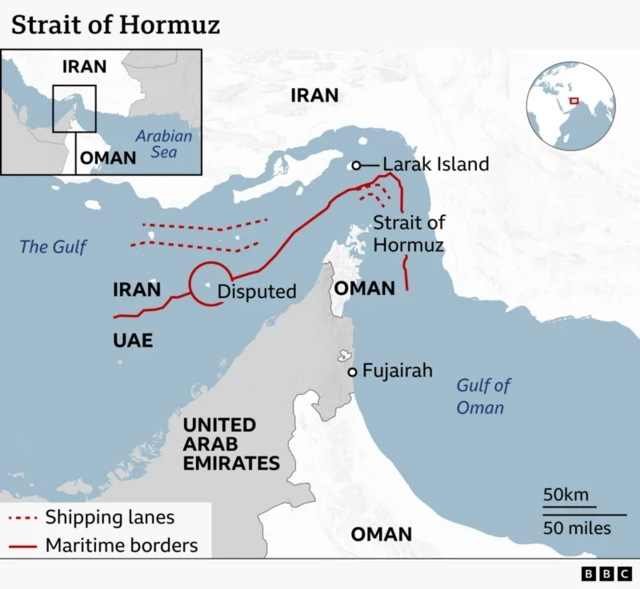
    Map of the Middle East, zoomed in on southern Iran, UAE and Oman. In red, maritime borders between the three countries in the Strait of Hormuz. In red dotted line are shipping lanes

    As a reminder, Iran has effectively blocked the Strait of Hormuz, one of the world's busiest oil shipping channels, since the US and Israel attacked the country on 28 February.

    Bounded to the north by Iran and to the south by Oman and the United Arab Emirates (UAE), the waterway - only about 50km (31 miles) wide at its entrance and exit, and about 33km wide at its narrowest point - connects the Gulf with the Arabian Sea.

    About 20% of the world's oil and liquefied natural gas (LNG) usually passes through the strait, with oil coming not only from Iran but other Gulf states such as Iraq, Kuwait, Qatar, Saudi Arabia and the UAE.

    What is the impact of closing the strait?

    About 3,000 ships usually sail through the strait each month but this has dramatically decreased recently, with Iran threatening to attack tankers and other ships.

    At least 21 vessels have been hit or targeted, or have reported attacks, since the start of the war, according to an AFP news agency tally on 18 March.

    Global fuel prices have soared in the wake of the war. Crude oil has risen above $100 a barrel - up almost 70% this year and nearly 50% from a year ago.

    You can read more about why the Strait of Hormuz matters so much here.

  14. Starmer and Trump had phone call to discuss Strait of Hormuzpublished at 21:58 GMT 22 March

    UK PM Keir Starmer and US President Donald Trump have spoken by phone this evening.

    A Downing Street spokesperson says: “The leaders discussed the current situation in the Middle East, and in particular, the need to reopen the Strait of Hormuz to resume global shipping.

    “They agreed that reopening the Strait of Hormuz was essential to ensure stability in the global energy market.

    “They agreed to speak again soon.”

  15. US embassy in Jerusalem offering chartered buses out of Israelpublished at 21:45 GMT 22 March

    The US embassy in Jerusalem is offering chartered buses to Amman, Jordan, beginning on Monday.

    The embassy says the bus service will be offered to US citizens looking to leave Israel. The buses will travel to Jordan International Airport, it says.

    "Departures are currently available from the Jerusalem area and the Tel Aviv area. Travelers are responsible for booking their onward travel, including flights from the Amman airport," the embassy says.

  16. Israel says campaign against Hezbollah in Lebanon will be 'prolonged'published at 21:19 GMT 22 March

    The IDF has said that its chief of general staff, Eyal Zamir, has approved plans to continue Israel's campaign against Hezbollah.

    "The campaign against Hezbollah has only just begun - at the end of the campaign in Iran, Hezbollah will be left alone and isolated," Zamir says in a statemenet. "The campaign against Hezbollah is a prolonged one, and we are prepared for it."

    "We are now preparing to advance the targeted ground operations and strikes, according to an organized plan," Zamir adds.

    "We will not stop until the threat is pushed away from the border and long-term security is ensured for the residents of northern Israel."

  17. Trump's ambassador to UN asked if US would bomb nuclear power plantpublished at 21:00 GMT 22 March

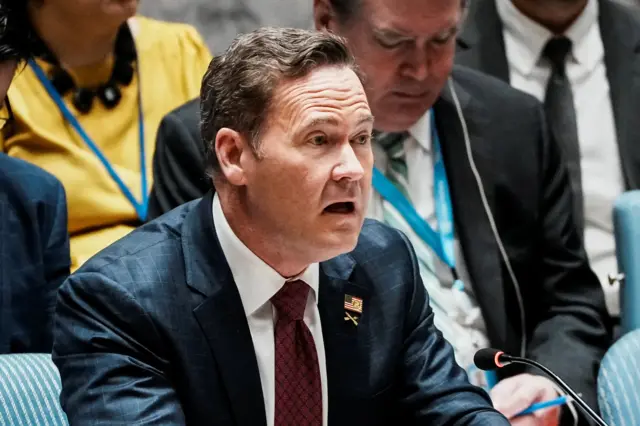
    Ambassador Mike Waltz mid-speech during a session of the United Nations. He's sitting down, wearing a dark grey suit, white shirt and patterned burgundy tie, two pins pinned to his left lapelImage source, Reuters

    Earlier today, US Ambassador to the United Nations Mike Waltz told CBS's Face the Nation that no option is "off the table" when it comes to Iran - including bombing a nuclear power plant.

    Asked about Trump's threat to "obliterate" Iran's energy infrastructure, Waltz says: "Well, I would never take anything off the table for the president, certainly not on national television.

    "I think the important point here is to understand the IRGC, a declared terrorist organisation, not only by us but in a number of European countries, controls a huge swath of Iran's critical infrastructure, their economy and certainly many of their governing institutions.

    "And so to the extent we are degrading their military capability and their defence industrial base, all options should be on the table, and the president has made that very clear."

  18. Analysis

    In Lebanon, people worry Israel is seeking to isolate the south to create a buffer zonepublished at 20:41 GMT 22 March

    Hugo Bachega
    Middle East correspondent, in Beirut

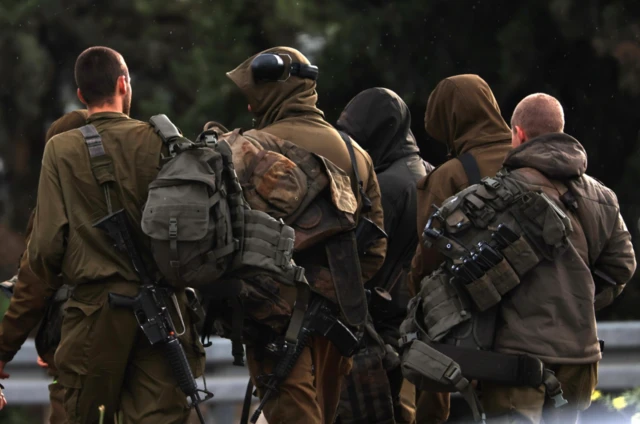
    Five Israeli soldiers in military fatigues carrying weapons and equipment walk on a road, their backs to the cameraImage source, EPA

    The Israeli military says plans for the expansion of ground and air attacks against the Lebanese armed group Hezbollah have been approved, amid fears in Lebanon that Israel is preparing a large-scale ground invasion of the country.

    Israel has intensified its campaign against Hezbollah, an Iranian-backed militia and political party, after the group fired rockets into Israel earlier this month amid the war between the US and Israel against Iran.

    Since then, more than 1,000 people have been killed in Lebanon, according to the Lebanese health ministry, including at least 118 children and 40 health workers.

    More than a million people have been displaced, which could lead to a major humanitarian crisis.

    News of the expanded operation came after a statement by the defence minister, Israel Katz, who said Israeli forces had been instructed to destroy the crossings over the Litani river that were being used by Hezbollah to send reinforcements.

    The river is about 30km (19 miles) from the Lebanon-Israel border, and the bridges are also used by civilians.

    In Lebanon, many worry that Israel is planning to isolate the south – the heartland of the Shia community and of Hezbollah – from the rest of the country ahead of an operation to occupy some areas and create a so-called buffer zone.

    Lebanon's government has vowed to disarm Hezbollah, which was created in the 1980s in response to Israel's occupation of Lebanon during the 15-year Lebanese civil war. But, so far, the group has refused to discuss the future of its weapons.

    President Aoun, a former army chief, had ruled out using force, warning that this could exacerbate sectarian divisions and lead to violence.

    Read my full analysis here

  19. IDF spokesman says 'several more weeks' of fighting still to comepublished at 20:15 GMT 22 March

    In a statement to media a little earlier, IDF spokesman Brig Gen Effie Defrin says that there are "weeks of fighting" ahead against Iran and Hezbollah in Lebanon.

    "We are expected to face several more weeks of fighting against Iran and Hezbollah," Defrin says.

    "With each passing day, we are weakening the terror regime more and more. We will not allow the terror regime and its proxies to pose a threat to the State of Israel."

  20. There are important caveats to consider when discussing Iranian missile capabilitiespublished at 19:53 GMT 22 March

    Joe Inwood
    World news correspondent

    The suggestion that Iranian missiles could - theoretically - reach European capitals will no doubt cause concern for the continent.

    “It complicates the job of missile defence across that area,” says Justin Crump of intelligence company Sibylline. “It certainly focuses thinking of European capitals.”

    There are, however, important caveats.

    Iran will have a very limited stock of these missiles. Launching them takes time, making them vulnerable to US and Israeli strikes.

    On top of that, Crump says they are incredibly inaccurate at the sort of range needed to target Europe.

    For him, the key lesson from the attempted strike on Diego Garcia may not be about the capability of the missiles, but of the forces firing them.

    “Iran is still able to surprise the US and Israel after three weeks of bombing. Their forces may be degraded, but they are not on the ropes."