Summary

  • The US has confirmed it has lifted its naval blockade of Iranian ports, as the Iran deal comes into effect

  • Meanwhile, Iran's supreme leader, in a written message, says he initially disagreed with the deal, but allowed it to go ahead after assurances from the Iranian president

  • Mojtaba Khamenei also says that US President Trump came to the agreement "out of desperation"

  • Earlier, US Vice-President JD Vance said the 60-day period to reach a final agreement with Iran had begun

  • He defends the deal, saying that Iran will not receive money or sanctions relief unless it meets obligations from the agreement

  • The 14-point memorandum of understanding says the Strait of Hormuz will reopen and sets out a $300bn plan for Iran's "reconstruction" - here's what's in the deal

  1. Oil prices continue downward trajectory following signing of agreementpublished at 08:28 BST 18 June

    Shanaz Musafer
    BBC business reporter

    Oil prices have continued to fall this morning after the US and Iran signed a Memorandum of Understanding last night.

    Apart from a brief spike on Wednesday, oil has been dropping since it emerged at the weekend that the two countries had agreed a framework deal to end the war and reopen the key Strait of Hormuz shipping route.

    Brent crude, the global benchmark, began the week trading at about $86.80.

    It’s currently trading at $77.90, down about 1.6% on the day.
  2. The Memorandum of Understanding's 14 core points - in 300 wordspublished at 08:19 BST 18 June

    The US-Iran agreement to extend the ceasefire centres around these 14 core points:

    1. "The immediate and permanent termination of military operations on all fronts, including in Lebanon"

    2. US and Iran to "respect each other’s sovereignty and territorial integrity and to refrain from interfering in each other’s internal affairs"

    3. They "commit to negotiating and achieving the final deal in maximum 60 days, extendable with mutual consent"

    4. Immediately, the US "will begin the removal of its naval blockade... and will fully end the naval blockade within 30 days"

    5. In the Strait of Hormuz, Iran "will make arrangements using its best efforts for the safe passage of commercial vessels with no charge, for 60 days"

    6. The US undertakes "with regional partners to develop a definitive, mutually agreed plan with at least USD $300 billion for the reconstruction and economic development of" Iran

    7. US to "terminate all types of sanctions against" Iran

    8. Iran "reaffirms that it shall not procure or develop nuclear weapons", but other parts of the programme are still to be negotiated. The two parties "agreed to discuss the issue of enrichment and other mutually agreed matters related to the Islamic Republic of Iran’s nuclear needs"

    9. Pending the final deal, the US and Iran "agree to maintain the status quo"

    10. Upon signing, and until the termination of sanctions, US Treasury will "issue waivers for the export of Iranian crude oil, petroleum products, and derivatives, and all associated services"

    11. US undertakes "to make fully available for use the frozen or restricted funds and assets" of Iran

    12. "An executive mechanism will be established to monitor the successful implementation" of this memorandum

    13. After signing - subject to implementation of points 1, 4, 5, 10 and 11 - the US and Iran "will start negotiations regarding the final deal exclusively on the other paragraphs"

    14. "The final deal will be endorsed by a binding UNSC (United Nations Security Council) resolution"

  3. Iran says new talks in Switzerland 'under consideration'published at 08:04 BST 18 June

    A new round of talks in Switzerland "remains under consideration", Iran's Foreign Ministry spokesperson Esmaeil Baqaei has said.

    "Discussions are expected to continue through diplomatic channels and mediation efforts in the coming hours," a statement from the official social media account for the government adds.

    Meanwhile, the Swiss government has indicated that representatives from the US and Iran will meet in Switzerland tomorrow for initial talks, according to a statement reported by the Reuters news agency.

    "As things stand, the plan is still for the US and Iran, along with mediators Pakistan and Qatar and other involved countries, to meet tomorrow at Buergenstock for initial negotiations about implementing the agreement," the statement reads.

    "No further information is currently available regarding the schedule and details of this meeting."

    As a reminder, the official signing of the deal had been scheduled to take place in Switzerland on Friday - but an electronic version of the deal has already been signed by both countries and Trump signed a hard copy of the agreement yesterday.

  4. Deal includes end of military operations in Lebanonpublished at 07:49 BST 18 June

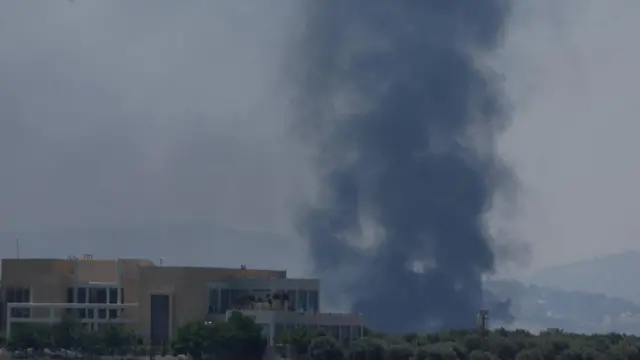
    Smoke billows from southern Lebanon seen over buildings in foregroundImage source, Reuters
    Image caption,

    Smoke billows from southern Lebanon after reports of strikes yesterday

    The first paragraph of the US-Iran agreement notes that the US and allies will declare an "immediate and permanent" termination of military operations on "all fronts" - including Lebanon.

    It has been a sticking point throughout the conflict, with Hezbollah, the Iran-backed armed group which operates from Lebanon, and Israel accusing each other of breaking ceasefire pledges.

    Iran's Foreign Ministry spokesperson Esmail Baghaei said on Telegram earlier that if Israel continues to attack Lebanon, it will be considered a breach of the memorandum. According to Iranian state TV, he also said that the continued presence of Israel's military in Lebanon would be a "violation" of the deal to end the war.

    The Israeli military carried out new strikes in southern Lebanon yesterday, and today said a soldier had died in an "incident" in southern Lebanon.

    Speaking at the G7 Summit in France yesterday, US President Donald Trump said peace in Lebanon is "something we will have to work on", but that "the big deal is the Iran deal".

    The Israeli government has yet to publicly respond to the US and Iran deal signing.

    Lebanon was drawn into the war on 2 March, when Hezbollah launched rockets into Israel, saying it was in retaliation for the killing of Iran's supreme leader.

    Israel responded by launching a bombing campaign across Lebanon and carrying out ground military operations in the country's south.

  5. Deal comes ahead of scheduled meeting on Fridaypublished at 07:24 BST 18 June

    Media caption,

    Moment Trump signs Iran deal at Palace of Versailles

    The memorandum of understanding, which is now in effect, was signed by the US and Iran on Wednesday.

    It came ahead of a scheduled meeting in Switzerland, with US and Iranian representatives, which had been expected on Friday.

    Iran's Speaker of the Parliament Mohammad Bagher Ghalibaf and US Vice-President JD Vance were both expected to attend the signing.

    It is not clear whether that will now go ahead.

    Meanwhile, both sides have committed within the current agreement to negotiating for a lasting agreement within a provisional deadline of 60 days.

    That, however, can be extended and when asked yesterday, Trump told reporters "it could take longer".

  6. Reopening the Strait of Hormuz among points agreed between US and Iranpublished at 07:08 BST 18 June

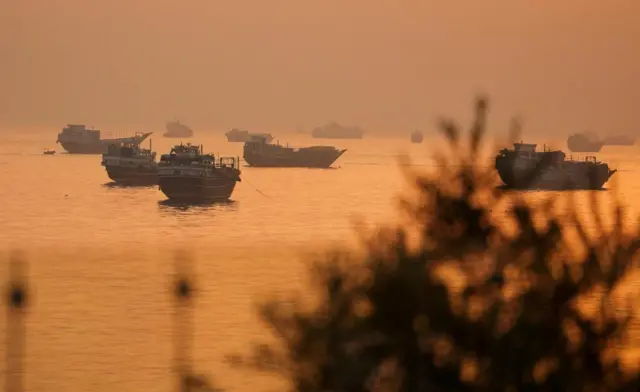
    Vessels at the Strait of Hormuz the sun is setting and gives an orange tone to the pictureImage source, Reuters

    As we've been reporting, a US-Iran agreement to extend a ceasefire has come into effect and centres around 14 core points.

    Among those will be the reopening of the Strait of Hormuz.

    The US has said it will begin removing its naval blockade - with the agreement outlining that the blockade is set to end fully within 30 days.

    Iran, separately, will "make arrangements using its best efforts" to allow safe passage of commercial vessels through the Strait without charges for 60 days.

    Among other points, Iran has agreed to not procure or develop a nuclear weapon while the US will terminate all economic sanctions against Iran.

    The two countries have agreed to commit to working towards a final deal in a "maximum" of 60 days - this deadline is extendable if there is mutual consent.

    Our White House reporter has unpicked the agreement in more detail.

  7. Deal is signed - but distrust remains between Iran and USpublished at 07:01 BST 18 June

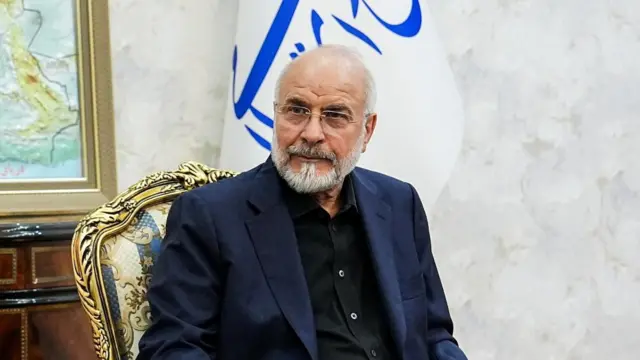
    Iranian Parliament Speaker Mohammad Bagher GhalibafImage source, Iranian Parliament Speaker Office/Reuters
    Image caption,

    Iranian Parliament Speaker Mohammad Bagher Ghalibaf said that even if there is a final peace agreement, "it is still not trustworthy"

    The memorandum of understanding between the US and Iran has been signed. But distrust remains between the two countries - and both warn that hostilities could resume.

    As details of the deal were revealed at the G7 summit in France, President Donald Trump warned the US would "bomb the hell" out of Iran if it didn't abide by the terms of the deal.

    And Iran's parliamentary speaker, and key negotiator, Mohammad Bagher Ghalibaf, who agreed the deal with the Trump administration, told Iranian media his distrust of the US remained, and Iran's "finger is on the trigger".

  8. New US-Iran agreement in effect after signing last nightpublished at 06:56 BST 18 June

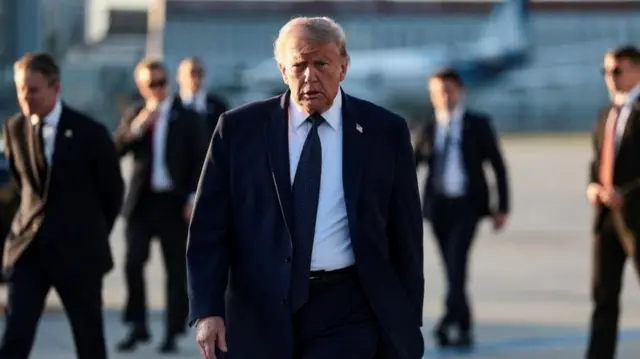
    Trump walks towards the cameraImage source, Reuters

    Late last night, US President Donald Trump and Iran's Masoud Pezeshkian signed an initial deal to end the war, extending the current ceasefire for another 60 days.

    The so-called Memorandum of Understanding was signed by Trump while he attended a dinner hosted by French President Emmanuel Macron at the end of the G7 summit.

    The 14-point agreement says that Iran has agreed to not procure or buy a nuclear weapon, and also proposes a $300 billion fund for the "reconstruction and economic development" of the country - although the US is not required to contribute.

    However, there are a number of issues which as of yet remain unresolved, including the key issue of Iran's nuclear programme, which are still to be negotiated over an extendable 60-day period.

  9. Trump caps off G7 summit with late-night Iran deal signing at Versaillespublished at 00:35 BST 18 June

    Anthony Zurcher
    North America correspondent, travelling with the president

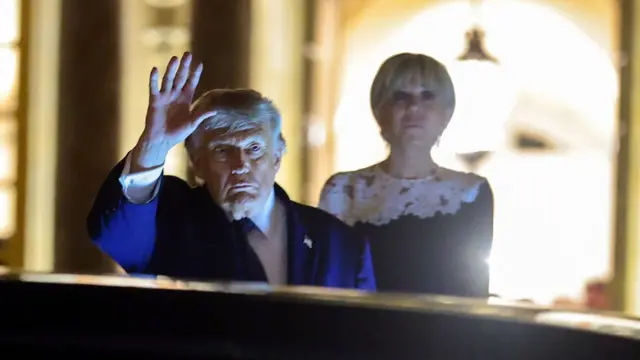
    Donald Trump waves to reporters as he leaves Versailles, with Brigitte Macron behind himImage source, Getty Images

    After Donald Trump's long day at the G7 summit in Evian-les-Bains, France - attending a morning plenary session, meeting with President Abdel El-Sisi of Egypt and Prime Minister Narendra Modi of India, and giving a news conference on the US's agreement with Iran - the US president took a short flight to Paris.

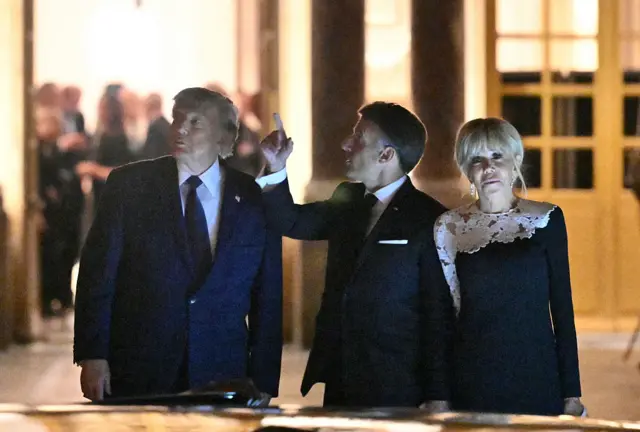
    Then, it was time for dinner at the historic Versailles Palace with French President Emannuel Macron and French first lady Brigitte Macron - which didn’t start until 22:00 local time (21:00 BST), in true European fashion.

    At some point, the president took time out from his meal to sign the memorandum of understanding with Iran.

    It is after midnight now, and the American and French presidents have just left the opulent estate, as those of us in the White House's travelling press pool follow along in vans for the 20-minute drive back to Paris’s Orly airport.

    With an approximately seven-hour flight still ahead, the 80-year-old president may not arrive back in Washington until just hours before dawn, as the clock ticks on the US and Iran's agreed-upon - but extendable - 60 days to come to a more permanent deal.

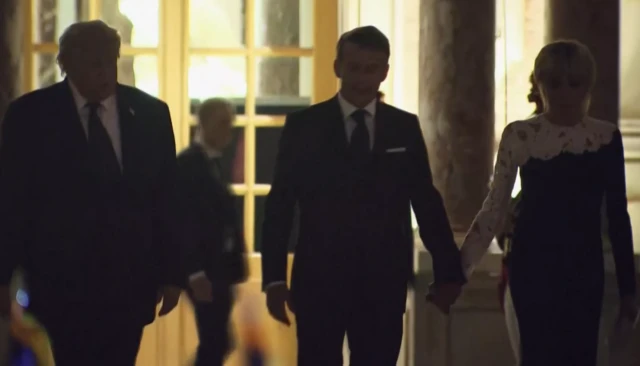
    Donald Trump, Emmanuel Macron and Brigitte Macron leave VersaillesImage source, Getty Images
  10. Israel attacks on Lebanon would breach deal, Iran sayspublished at 00:29 BST 18 June

    Iranian Foreign Ministry spokesperson, Esmail Baghaei, says on Telegram that if Israel continues to attack Lebanon, it will be considered a breach of the memorandum.

    Israeli forces carried out new strikes in southern Lebanon on Wednesday, state media says, despite renewed criticism from Trump of Israel's actions in the country.

    Both Israel and Hezbollah have carried out attacks against each other since the US-Iran agreement was announced on Sunday night.

  11. Iran to charge ships crossing Strait of Hormuzpublished at 00:21 BST 18 June

    Iran's parliamentary speaker, Mohammad Bagher Ghalibaf, says in an interview that aired on state TV that the Strait of Hormuz "will not return to pre-war conditions".

    He adds: "Iran has the right to sovereignty over the Strait of Hormuz and of course we will receive a fee for services."

    The country will charge ships crossing the key passage after 60 days.

    In the longer-term, the deal signed by Trump notes that Iran will work with Oman and other Gulf states to set up a "broader" agreement on how to manage the Strait of Hormuz.

    The US believes that Iran will assert its rights "aggressively", but that the Gulf states would "never" accept a future in which there is a tolling system in place, the official said.

    You can read more about the agreement here.

  12. Trump: 'It's signed. Signed in Versailles'published at 00:13 BST 18 June
    Breaking

    Donald Trump leaves the palace in the darkness, alongside Macron and his wifeImage source, Reuters

    Donald Trump has just left the Palace of Versailles in France, where he was having dinner with French President Emmanuel Macron after the G7 summit.

    Asked about the deal before getting into the presidential motorcade, Trump told reporters: "It's signed. Signed in Versailles. Just signed it."

  13. Trump signs US-Iran dealpublished at 23:40 BST 17 June

    We can bring you a bit more information now about how the so-called memorandum of understanding has come into effect.

    US President Donald Trump attended a post-G7 dinner at the Palace of Versailles in France on Wednesday night.

    Also on Wednesday night, Trump signed the Iran document, the White House tells the BBC. It has also been signed by Iranian President Masoud Pezeshkian, according to the White House.

    The signing by the two leaders comes after Iranian parliamentary speaker Mohammad Bagher Ghalibaf and US Vice-President JD Vance electronically signed the agreement on Sunday, the White House explains.

    Earlier, both Trump and Iranian officials indicated that there would be a formal signing ceremony sometime later this week. It's unclear whether that will still go ahead now.

  14. Agreement takes effect, says White Housepublished at 23:10 BST 17 June
    Breaking

    The agreement between the US and Iran is now in effect, the White House tells the BBC, kick-starting the extendable 60-day period for the US and Iran to come to a more final deal.

  15. US-Iran agreement details revealed as Trump addresses G7 in Francepublished at 22:29 BST 17 June

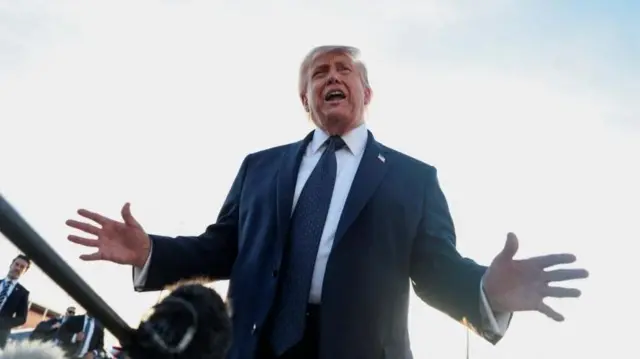
    Donald Trump is pictured speaking in front of a bank of microphones, gesturing with his hands.Image source, Reuters

    Senior US officials have revealed the contents of the memorandum of understanding between the Trump administration and Iran ahead of an expected signing ceremony in Switzerland on Friday.

    The key parts of the agreement include Iran's inability to ever have a nuclear weapon; traffic returning to the Strait of Hormuz, which will remain toll-free for at least 60 days; the lifting of US sanctions; and an end to hostilities, including in Lebanon.

    The details were revealed while Trump spoke at the G7 summit in France, where he said the US would "bomb the hell" out of Iran if it didn't abide by the terms of the deal.

    In a later retort, Iran's parliamentary speaker and key negotiator Mohammad Bagher Ghalibaf, who agreed the deal with the Trump administration, told state media his distrust of the US remained, and Iran's "finger is on the trigger".

    Our Washington correspondent writes the agreement leaves all the key questions around Iran’s nuclear programme to the final negotiations.

    Arriving in Paris ahead of a state dinner with French President Emmanuel Macron at Versailles, Trump said the allotted 60-day negotiation period was not a hard deadline for Iran.

    As for Friday, while US Vice-President JD Vance was originally slated to be present at the ceremony, Trump hinted that he "might" stick around.

  16. Analysis

    Three key things that stand out from the US-Iran dealpublished at 22:08 BST 17 June

    Gary O'Donoghue
    Chief North America correspondent

    Around a dozen ships are shown in the water, with golden light suggesting it is around sunset.Image source, Reuters
    Image caption,

    Vessels at the Strait of Hormuz, as seen from Musandam, Oman, on Tuesday - the waterway has been a key sticking point between the US and Iran

    We’ve had the most extraordinary briefing call with some senior US officials here in Washington, and they read out – verbatim – what they say is the text of the memorandum of understanding with Iran.

    There are three key things that stood out from it for me:

    On the nuclear question, the senior officials say Iran has promised not to develop or procure a nuclear weapon. Donald Trump has made that his number one condition for a deal ever since the start of the war in February. They also said that Iran's enriched uranium will be "down-blended" – meaning diluted – on site, under the auspices of the International Atomic Energy Agency (IAEA). Originally, the US had demanded that it was removed from the country, so that’s new.

    On the question of the reopening of the Strait of Hormuz, the senior officials said that there would be no charges for ships going through for 60 days. After that, it's up to Iran and its neighbours to negotiate what happens. That leaves open the possibility of charges in the future, where there were no charges before the conflict.

    Then there's the controversial $300bn reconstruction fund. President Trump had described that as "fake news", but it is in the document. The senior officials insisted America doesn't need to pay "a cent" towards that –and it will depend on Iran “behaving", as they put it.

    This agreement will be scrutinised line by line over the coming days. And the big question will be, what exactly did the US get out of its war with Iran?

    Media caption,

    Three key takeaways from US-Iran deal

  17. Iran's top negotiator says country's 'finger on the trigger', and distrust of US remainspublished at 21:52 BST 17 June

    Iran's top negotiator Mohammad Bagher Ghalibaf, who agreed the deal with the Trump administration, says his distrust of the US remains, and Iran's "finger is on the trigger".

    In comments made to IRGC-linked news outlet Fars, Ghalibaf - Iran's parliamentary speaker - says that even if there is a final peace agreement, "it is still not trustworthy".

    "Our finger is on the trigger, and if the enemy does not understand the language of logic, we will enter again with the language of power," he says.

    Ghalibaf's comments come after Trump said the US would "bomb the hell" out of Iran if it didn't stick to the terms of the deal.

  18. Trump says strike on Iranian school remains under investigationpublished at 21:34 BST 17 June

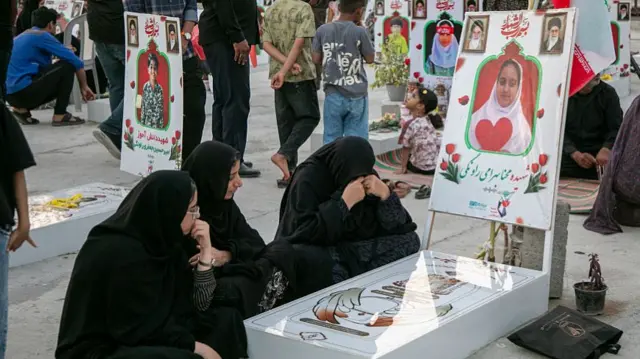
    Women mourners dressed in black are shown gathered around memorial posters showing the faces of children who died in the strike.Image source, Getty Images

    Here are some more lines now from US President Donald Trump's press conference earlier.

    Trump was asked whether he had an update on the investigation into a strike near a primary school in southern Iran where Iranian authorities said 168 people, including around 110 children, were killed.

    He described it as a "strange question" to ask, before saying the strike remains under investigation.

    Trump continued: "What about the thousands of people that were killed by Iran? Mistakes are made, war is nasty, but I know it is under investigation."

    He went on to say that the reporter should ask Defense Secretary Pete Hegseth for a further update.

    For context: Experts previously told the BBC that a US Tomahawk missile hit a military base near a primary school in southern Iran where Iranian authorities said 168 people, including around 110 children, on 28 Feb.

    You can read more about that strike in our BBC Verify report.

  19. Israel's presence in Lebanon violates deal - Iranian foreign ministrypublished at 21:25 BST 17 June

    The continued presence of Israel in Lebanon would be a "violation" of the deal to end the war, Iran's foreign ministry says.

    According to Iranian state TV, foreign ministry spokesperson Esmail Baghaei says "necessary measures" will be taken if Israel continues to "occupy" Lebanon.

    Lebanon has emerged as a key sticking point in the deal - Israel says it is not included, while Lebanese President Joseph Aoun says his country's talks with Israel are "independent" to the US-Iran deal.

    But Iran and mediator Pakistan insist a ceasefire in Lebanon remains central to the memorandum of understanding set to be signed by US and Iranian officials as early as tomorrow.

    A US version of the deal - shared with the BBC by senior officials - calls for the "immediate and permanent termination of military operations on all fronts, including in Lebanon".

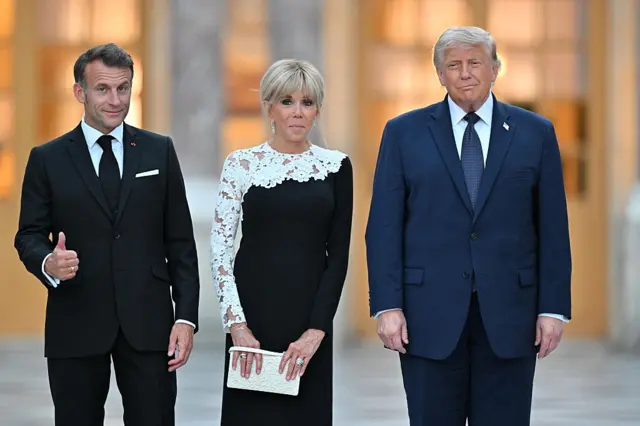
  20. Emmanuel and Brigitte Macron greet Trump at Versaillespublished at 21:09 BST 17 June

    Emmanuel and Brigitte Macron pose with Donald Trump at the Palace of Versailles.Image source, Getty Images

    Donald Trump has arrived at Versailles for a state dinner hosted by Emmanuel and Brigitte Macron.

    The event follows the US president's speech at the G7 summit in which he spoke at length about his deal with Iran.

    Earlier, the French president also addressed the summit in Évian, in which he lauded US unity with Europe's support for Ukraine.