Summary

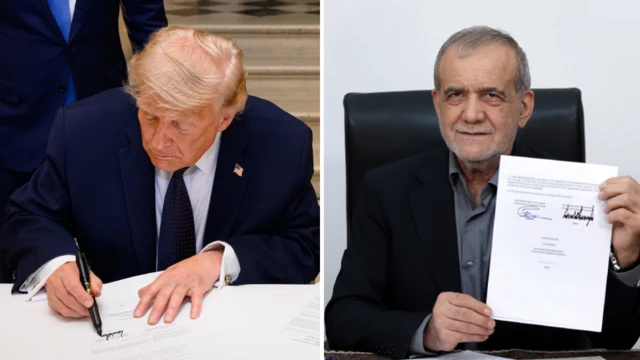
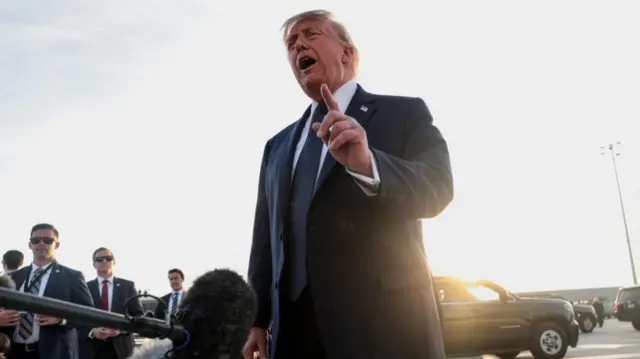
  • Donald Trump has warned that the Iran deal - set to be formally signed on Friday in Switzerland - is "not final"

  • He says the US could resume attacks if the agreement doesn't work out - "If they don't behave, we'll go right back to dropping bombs right smack in the middle of their head, OK?"

  • The deal between the US and Iran has not been revealed - and the White House says one reported version "does not reflect the language" of the actual agreement

  • The US president was speaking during the final day of the G7 summit in France. French President Emmanuel Macron is now speaking, with Trump up shortly afterwards - you can watch live on this page

  • Earlier, G7 leaders called for a "robust" agreement to follow the Iran deal

  1. White House official says US media reported deal 'does not reflect language of actual MoU'published at 15:57 BST

    Paul Adams
    Diplomatic correspondent

    The White House director of communications, Steven Cheung, says a document, published by CNN, purporting to represent the text of the Memorandum of Understanding between Iran and the US "does not reflect the language of the actual MOU".

    But the CNN version is identical to one published earlier by Bloomberg. It may not reflect the exact wording of the text due to be signed at a ceremony in Switzerland on Friday, but it offers some insights into a document designed to end the war and kick off two months of detailed negotiations.

    The US will lift its naval blockade of Iranian ports, while Iran will "take steps" to ensure the movement of merchant ships through the Strait of Hormuz.

    The language on the all-important nuclear issue is vague. Tehran will "reiterate" its promise never to develop a nuclear weapon, a pledge Iran has made many times in the past. All other nuclear issues "will be adequately addressed in a final agreement".

    While international sanctions on Iran will stay in place, the US will issue waivers for the export of Iranian oil as soon as the MoU is signed and billions of dollars of frozen Iranian assets will be made available as talks progress.

  2. Macron calls UK and France defence commitment for shipping an "offer on the table"published at 15:52 BST

    Macron then turns to the conflict in Iran.

    He welcomes the agreement between the US and Iran, saying it will bring an end to economic instability.

    "We've agreed that toll-free passage through the Strait of Hormuz is the keystone of this agreement, and that starts as of now," he says.

    Macron adds that the defence commitment put together by the UK and France to help shipping return to normal is an "offer on the table", and says about 20 countries "have already fully committed to commit to this kind of operation".

  3. Ukraine forces advancing and Russia moving backwards, Macron sayspublished at 15:48 BST

    Emmanuel MacronImage source, Reuters

    Macron says the G7 summit in Evian has seen significant discussions on Ukraine and Iran, with nine declarations adopted unanimously by G7 leaders.

    The French president begins with Ukraine, saying there was general agreement among G7 leaders to provide more support for Ukraine and boost its air defence capabilities.

    He says G7 members agreed that the "balance of power" between Russia and Ukraine has changed, with Ukrainian forces now "moving forwards... and Russia backwards".

    Macron says Donald Trump acknowledged it was important to mobilise the US defence industry to provide more weapons for Ukraine.

    There was also agreement to "step up the sanctions" being placed on Russia, he says.

  4. Macron speaking now - watch livepublished at 15:32 BST

    French President Emmanuel Macron's news conference has started.

    You can watch live at the top of this page.

  5. Indian PM raises deaths of sailors in US Gulf strikepublished at 15:28 BST

    U.S. President Donald Trump attends a bilateral meeting with Indian Prime Minister Narendra Modi during the G7 Summit in Evian-les-Bains, FranceImage source, Reuters

    Outrage erupted in India last week after three sailors were killed in a US strike on a tanker the US said was violating its blockade of Iranian ports.

    The US also struck two other ships in the Gulf last week, all with Indian crew on board.

    After a bilateral meeting with US President Donald Trump, Indian Prime Minister Narendra Modi says he has emphasised "the importance of freedom of navigation".

    "Their safety is of utmost importance to us," he says, referring to Indian seafarers who keep global shipping routes running.

    Asked if he has condolences for the families affected, Trump says: "I heard about that. It’s a rough profession... we love all of those people, they’re great people."

  6. Trump and Modi speaking - watch livepublished at 15:14 BST

    US President Donald Trump and India's Narendra Modi are meeting on the sidelines of the G7 summit.

    You can watch them take questions from the press in the live stream above by clicking watch live.

    We're still waiting for the news conference from French President Emmanuel Macron, which has been delayed. After that, we're expecting a news conference from Donald Trump.

  7. Trump calls G7 trip 'great success'published at 15:12 BST

    US President Donald TrumpImage source, Reuters

    US President Donald Trump has just posted on Truth Social, calling his G7 trip a "great success".

    "The trip was a Great Success but, mostly what people wanted to talk about, is the fact that Iran will not have a Nuclear Weapon, and that the Strait of Hormuz will immediately be opened!" he writes.

    Trump also mentions the US economy, saying the stock market has surged and oil prices have gone down "because of the settlement".

    He adds that he will hold a news conference in 45 minutes, then head to Versailles for dinner with French and other European leaders, before returning to the US.

    • As a reminder - the full text of the US-Iran deal still hasn't been made public
  8. Text of deal will be published on Friday 'at the latest', Vance sayspublished at 15:01 BST

    U.S. Vice President JD Vance walks as he arrives at Joint Base Andrews, Maryland, U.S.Image source, Reuters

    US Vice-President JD Vance has told CBS News, the BBC's US partner, that the text of the US-Iran deal will be released on Friday "at the latest".

    He says Qatari and Pakistani negotiators have asked the US to hold off publishing the full text "for a little while".

    "We're actually trying to push them to get it out today, because we want to tell the American people what's in this deal," Vance says.

    Asked about reports that the deal includes a $300bn (£223.7bn) reconstruction fund for Iran, the vice-president says "none of those things flow to Iran unless Iran fundamentally changes how it behaves with the world".

  9. Unclear if Lebanon included in deal as Israel launches more strikespublished at 14:38 BST

    Smoke rises in southern Lebanon, as seen from the Israeli side of the Israel-Lebanon border, in northern IsraelImage source, Reuters
    Image caption,

    Smoke rises in southern Lebanon after strikes earlier today

    One of the main sticking points in the US-Iran deal is the conflict between Israel and Lebanon.

    It's still not clear whether Lebanon is included in the deal, but Israeli forces launched new strikes in southern Lebanon earlier today, according to Lebanese state media.

    The Israeli military has not yet commented, but has previously said it was targeting the Iran-backed armed group Hezbollah.

    Lebanese President Joseph Aoun says his country's talks with Israel are "independent" of the US-Iran deal, but welcomes "any country that helps us, including Iran".

    Donald Trump has called on Israel to "be more responsible" in Lebanon, but also described it as a "minor war" that would not affect the US's agreement with Iran.

    Meanwhile, a joint statement by G7 leaders - including Trump - published today says it supports "an immediate robust ceasefire" in Lebanon and Beirut's efforts to "achieve the disarmament of Hezbollah".

    • We're still waiting for Macron's news conference - when it starts, you can watch live at the top of the page
  10. US-Iran deal to be formally signed in Switzerland on Fridaypublished at 14:15 BST

    US Vice President JD VanceImage source, REU
    Image caption,

    US Vice-President JD Vance is expected to attend the signing of the deal

    While we wait for Macron to speak, here’s a reminder that the memorandum of understanding between the US and Iran is set to be formally signed in the Swiss resort of Bürgenstock on Friday.

    Iran's Speaker of the Parliament Mohammad Bagher Ghalibaf and US Vice-President JD Vance are both expected to attend the signing.

    The text of the deal has not yet been published.

    A new round of negotiations on reaching a final peace deal - covering issues such as Iran's nuclear material - is expected to begin the same day as the signing.

    Mohammad Bagher GhalibafImage source, Reuters
    Image caption,

    Mohammad Bagher Ghalibaf has been the top negotiator in the Iran-US talks

  11. Macron to speak at G7 summitpublished at 13:59 BST

    French President Emmanuel Macron will be holding a news conference shortly at the G7 summit.

    We’ll bring you the key points, and you can watch live by pressing play at the top of the page.

  12. Tehran selling deal with US as victory – but for Iranians it was necessitypublished at 13:47 BST

    Amir Azimi
    Senior News Editor – Persian Service

    Meanwhile, how does Iran view the deal with the US?

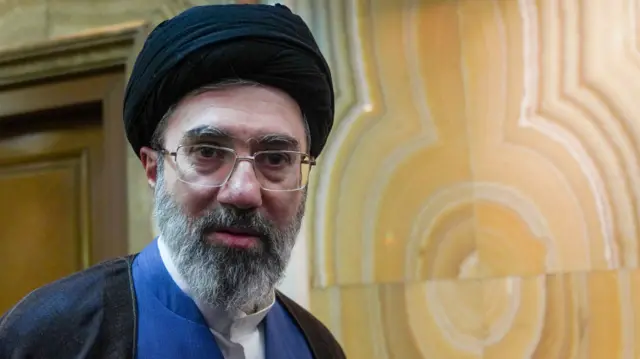
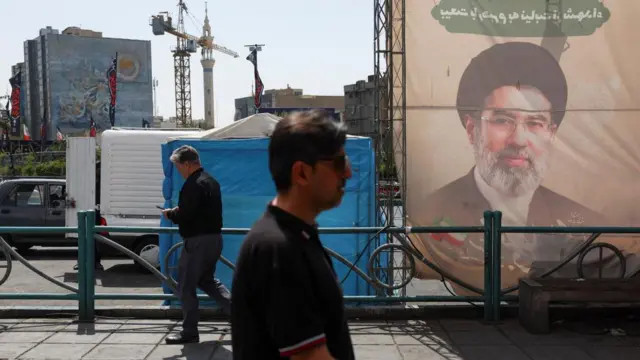
    Iran's leadership is trying to present its emerging memorandum of understanding (MoU) with the US not as a retreat, but as the result of resistance and victory. That is not an easy argument to make.

    The country has just gone through a damaging war, the economy is under severe pressure, and parts of the Islamic Republic's own support base have spent months denouncing any compromise with Washington.

    There are also Iranians, both inside the country and abroad, who see the crisis not as a moment for diplomacy, but as an opportunity for regime change.

    This is the divided political landscape in which Tehran is now trying to sell the deal.

    A machine operates near a residential building, which was damaged in a U.S. and Israeli strike in March, in Tehran, Iran June 7, 2026Image source, Reuters
    Image caption,

    A machine works near a residential building damaged in a US and Israeli strike in Tehran

  13. Strait of Hormuz - why is it significant?published at 13:37 BST

    Vessels at the Strait of HormuzImage source, Reuters

    Earlier we brought you a post on what the apparent text of the US-Iran deal says about the Strait of Hormuz.

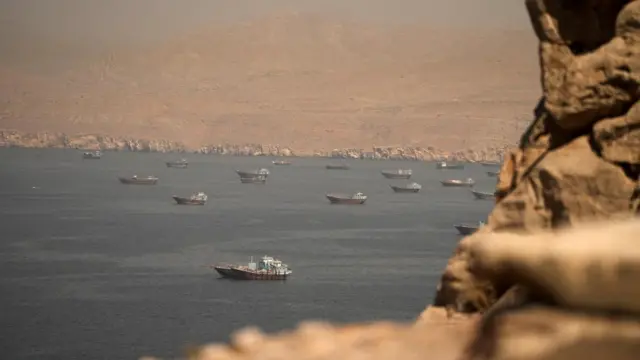
    The waterway has been a key focus in the conflict. Bounded to the north by Iran and to the south by Oman and the United Arab Emirates (UAE), the strait - only about 50km (31 miles) wide at its entrance and exit, and about 33km wide at its narrowest point - connects the Gulf with the Arabian Sea.

    About 20% of the world's oil and liquefied natural gas (LNG) usually passes through the strait, with oil coming not only from Iran but also from other Gulf states such as Iraq, Kuwait, Qatar, Saudi Arabia and the UAE.

    About 3,000 ships usually sail through the strait each month, but this has dramatically decreased after Iran threatened to attack tankers and other ships.

    This Flourish post cannot be displayed in your browser. Please enable Javascript or try a different browser.

  14. Analysis

    Trump denies deal offers Iran too many concessionspublished at 13:17 BST

    Jon Donnison
    Reporting from Jerusalem

    Facing criticism from Israel and hawks within his own Republican Party, US President Donald Trump pushed back on the idea his deal had made too many concessions to Iran. He said if Tehran didn’t behave the US would go “right back to dropping bombs right smack in the middle of their head”.

    To the surprise of some, the memorandum of understanding is reported to contain the lifting of oil and petrochemical sanctions on Iran with immediate effect, putting billions of dollars back into the country’s economy.

    Three Iranian oil tankers have passed through the US blockade in the Strait of Hormuz for the first time in two months.

    Iran has accused Israel of multiple breaches of the ceasefire in Lebanon, warning this could see the agreement collapse, while Lebanese media has reported Israeli shelling in the south of the country.

  15. BBC Verify

    What does the apparent text of the deal say about the Strait of Hormuz?published at 13:07 BST

    By Ben Chu

    The apparent text of the deal, as reported by Bloomberg, external, states Iran "will immediately take steps to ensure that the movement of merchant ships from the Gulf to the Sea of Oman and vice versa is resumed within 30 days to the pre-war volume".

    An indicator of this pre-war volume comes from ship-tracking data published by the International Monetary Fund (IMF), which shows a daily average of 94 merchant ship transits across the Strait of Hormuz last year.

    Since the conflict began on 28 February, the daily average number of vessel transits has been just six, according to the IMF data, though a number have been crossing with their radio transponders turned off so the true figure will likely be somewhat higher.

    This week US President Donald Trump has said the Strait of Hormuz will be "permanently toll-free", but Iran’s foreign ministry is reported to have said there will be "fees" for using the strait which will be "charged in exchange for the services that are provided".

    The reported US-Iran agreement text makes no reference to either tolls or fees.

  16. 'I'm the boss': What has Trump said at the G7 summit?published at 13:00 BST

    President Trump at the G7 summit.Image source, Reuters

    On the US-Iran deal

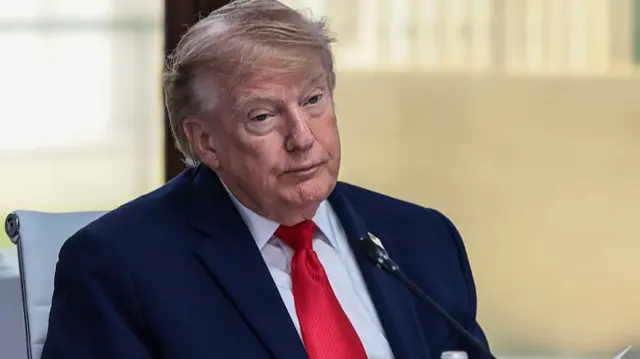
    President Trump said the proposed agreement with Iran is not final.

    Speaking at a meeting with Egypt’s President Abdul Fattah al-Sisi on Wednesday, he said: "If I don't like it, we'll go back to shooting at them, dropping bombs on their head... if they don't behave, we'll go right back to dropping bombs right smack in the middle of their head, OK?"

    He also reiterated that the US is not investing in Iran. It comes after reports that the US was prepared to allow an investment fund for Iran in exchange for Tehran’s agreement to a final settlement.

    On Tuesday, the US president also said that "Iran will never have a nuclear weapon" under the deal.

    On Israel

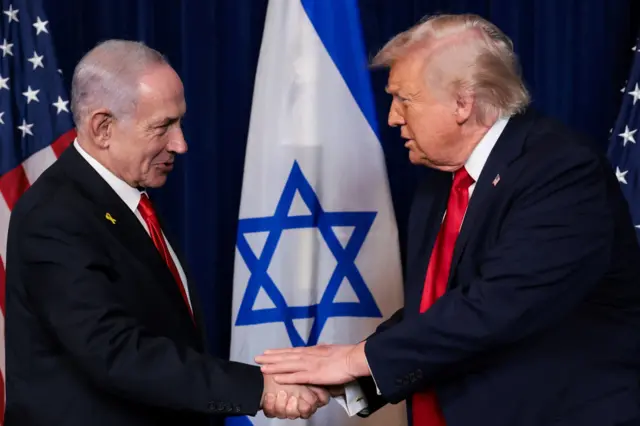
    In a joint meeting at the summit with the Emir of Qatar, President Trump criticised the Israeli Prime Minister Benjamin Netanyahu, saying he has to be "more responsible with respect to Lebanon". Israel has been fighting Hezbollah for "too long and too many people are being killed."

    Both Israel and Hezbollah have carried out attacks against each other since the US-Iran agreement was announced on Sunday night.

    On Ukraine

    Also on Tuesday Trump said he had a very good meeting with Ukraine's President Volodymyr Zelensky and that Russia should "make a deal".

    He added that "soon we will be able” to reimpose sanctions on Russian oil.

  17. What are we expecting today?published at 12:42 BST

    As the G7 summit comes to a close in France, several countries are set to hold news conferences.

    French President Emmanuel Macron, who is hosting this year's summit, will speak at 15:00 local time (14:00 BST / 13:00 GMT).

    US President Donald Trump will hold his own news conference later in the afternoon.

    Both Starmer and Trump are expected to leave France after today's events.

  18. G7 leaders urge robust agreement to follow Iran dealpublished at 12:37 BST

    Brazil's First Lady Janja Lula da Silva, Brazil's President Luiz Inacio Lula da Silva, France's President Emmanuel Macron, French President's wife Brigitte Macron, US President Donald Trump, India's Prime Minister Narendra Modi, European Commission President Ursula von der Leyen, European Commission President's husband Heiko von der Leyen, (2nd row From L) European Council President Antonio Costa, Japan's Prime Minister Sanae Takaichi, wife of Switzerland's President Caroline Merotto, Switzerland's President Guy Parmelin, South Korea's President Lee Jae-myung, British Prime Minister's wife Victoria Starmer, Britain's Prime Minister Keir Starmer Canada's Prime Minister Mark Carney, British economist and Canadian Prime Minister's wife Diana Carney pose for a family photograph during a gala dinner as part of the G7 summit, in Evian, eastern France.Image source, Getty Images
    Image caption,

    World leaders, including Starmer and his G7 counterparts, gather for a so-called family photo at the summit in France

    Before US President Donald Trump said the deal with Iran was "not final", a joint statement from the G7 countries - including the US - called for a "robust" follow-on agreement.

    The G7 countries - US, Canada, UK, France, Germany, Italy and Japan - say they "recognise the breakthrough" in the Middle East and that they "support and are ready to contribute" to the implementation of the deal.

    "We strongly support a robust and comprehensive diplomatic follow-on agreement to the Memorandum of Understanding secured by President Trump that can bring peace and security for all in the region," the statement says.

    The statement on geopolitical issues, external also covers other areas, including the war in Ukraine, North Korea's nuclear and ballistic missile programme, and tensions in the East and South China Seas and across the Taiwan Strait.

  19. A quick guide to the G7published at 12:24 BST

    German Chancellor Friedrich Merz, British Prime Minister Keir Starmer, U.S. President Donald Trump and President of France Emmanuel Macron talking around a table.Image source, Getty Images

    The G7 (Group of Seven) is an organisation of the world's seven largest so-called "advanced" economies, which dominate global trade and the international financial system.

    They are: Canada, France, Germany, Italy, Japan, the UK and the United States.

    This year's summit is being held in the French town of Évian-les-Bains, and today is the final of three days.

    Other leaders have also attended including Ukrainian President Zelensky and Egypt's President Abdul Fattah al-Sisi - who Trump met a short while ago when he said the deal with Iran was "not final".

  20. What we know about the US-Iran dealpublished at 12:14 BST

    Strait of Hormuz shipping lanImage source, reut
    Image caption,

    The deal will re-open the vital Strait of Hormuz shipping lane, pictured on 14 June

    Trump has just said the deal to bring an end to the war Iran is not final.

    It was agreed between the US and Iran, with mediator Pakistan, on Sunday. The contents of the agreement - referred to as a memorandum of understanding - have not yet been published.

    On Monday, President Trump said "the deal is all signed" and the full text will be published "pretty soon".

    It will extend a ceasefire for another 60 days, during which the sides will negotiate details of a final agreement.

    The Strait of Hormuz will re-open toll-free as part of the deal, Trump has said, and the US blockade of Iran's ports will come to an end.

    Technical talks on Iran's nuclear programme are also expected to begin this week, US officials said.

    But the agreement is not a peace deal, the BBC's international editor Jeremy Bowen explains. It defers the thorniest issues such as Iran's nuclear programme and the level of sanctions relief to future negotiations.

    There are also questions over what exactly the deal means for the war between Israel and Hezbollah in Lebanon. Iran insists it must be part of the deal.

    The US and Iran are scheduled to sign the deal in the Swiss resort of Bürgenstock on Friday.