Summary

  • Our live coverage of the Iran war continues on a new live page. Follow this link for the latest updates.

  • In Jerusalem, sirens sounded and there were booms in the skies above, as families celebrated the first night of Eid - Iranian state TV has confirmed it fired four salvos of missiles in quick succession, writes our correspondent there

  • Elsewhere in the region, Saudi Arabia and Bahrain both say they have intercepted and destroyed drones

  • Iran's foreign minister earlier warned that Tehran would act with "zero restraint" if there were further attacks on its infrastructure

  • Prime Minister Benjamin Netanyahu has said Israel "acted alone" in strikes on Iran's South Pars, part of the world's largest natural gas field. He added Trump was not "dragged" into the war with Iran - here's the context

  1. US Navy's most advanced aircraft carrier heads to Greece for repairs after firepublished at 21:19 GMT 18 March
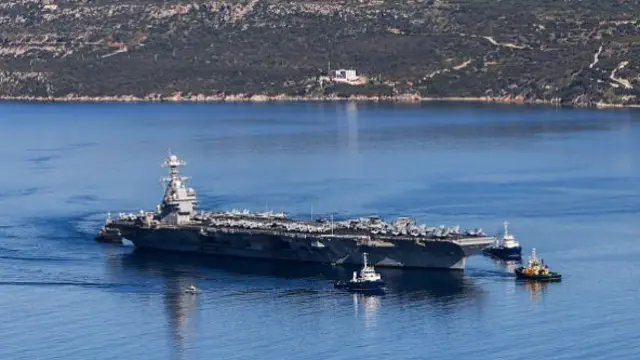
    The US Navy aircraft carrier USS Gerald R Ford departed Souda Bay, Greece, on 26 FebruaryImage source, Getty Images
    Image caption,

    The US Navy aircraft carrier USS Gerald R Ford departed Souda Bay, Greece, on 26 February

    Tthe USS Gerald R Ford is preparing to leave the Red Sea for repairs in Crete after a fire on board injured sailors and caused significant damage, US officials have said.

    It will travel to a US Navy base on the island for pierside repairs, authorities said, after a blaze broke out in the laundry facility last week and took hours to extinguish.

    The vessel has been deployed for nearly nine months, and was sent to the region as part of US operations linked to the war with Iran.

    Read more: US aircraft carrier to sail to Crete for repairs after fire on board

  2. Israel says it's carrying out air strikes in northern Iran 'for the first time'published at 21:07 GMT 18 March

    The Israeli military says it has started airstrikes on targets in northern Iran.

    "A short while ago, the Israeli Air Force, acting on navy and IDF intelligence, began striking targets in northern Iran for the first time during Operation Roaring Lion," a brief message on its official Telegram says.

  3. White House suspends 1920 shipping law as oil prices climbpublished at 21:05 GMT 18 March

    Natalie Sherman
    New York business reporter

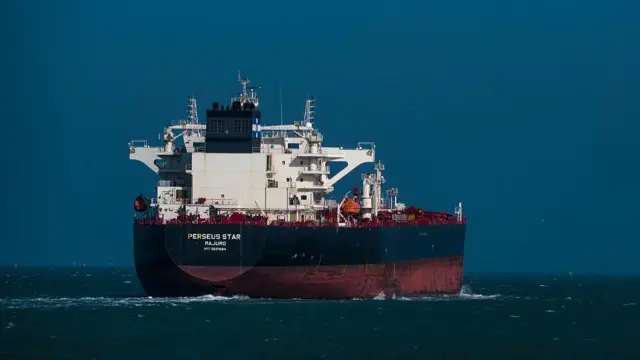
    The Perseus Star crude oil tanker departs the Port of Corpus Christi in Corpus Christi, Texas, USImage source, Bloomberg via Getty Images

    A little earlier the White House said it is loosening a law designed to boost US shipbuilding, as it tries to shield the US from spiking oil prices.

    Press Secretary Karoline Leavitt said the administration would suspend the Jones Act - a 1920 law that requires American-made ships be used to transport goods between US ports – for 60 days.

    She said the waiver would allow "vital resources like oil, natural gas, fertiliser, and coal to flow freely".

    It’s a striking decision given the Trump administration’s previous focus on reviving shipbuilding – even considering new fees on foreign-made ships – and a sign of just how much pressure the White House is under to show it is responsive to rising prices at the pump.

    How much difference it will actually make is unclear. Maritime groups upset about the move say the effect will be minimal, noting that oil prices, not shipping costs, are behind the price spike.

  4. Qatar orders two Iranian diplomats and their staff to leave the countrypublished at 20:52 GMT 18 March

    Qatar's foreign ministry has ordered Iran's military and security attaches along with their staff to leave the country.

    It follows an earlier attack on Qatar's industrial Ras Laffan area.

    Those named "persona no grata" by Qatar have 24 hours to leave the country, the foreign ministry says, saying it follows repeated Iranian attacks.

    In a statement posted on social media, it says that if Iran continues "hostile" action then Qatar will have to take additional measures to protect itself.

  5. Saudi Arabia 'thwarting attempt to attack gas facilities in eastern region'published at 20:32 GMT 18 March

    Saudi Arabia's foreign ministry says it is "thwarting an attempt to attack one of the gas facilities in the eastern region with a second drone".

    It follows reports that five drones were destroyed as they attempted to approach energy facilities in the same region.

    Elsewhere near the capital Riyadh, Saudi Arabia authorities say four residents have been injured by falling shrapnel after a ballistic missile was intercepted.

  6. In pictures: The ongoing conflict in the Middle Eastpublished at 20:29 GMT 18 March

    In the last few hours Iran confirmed that Israel has killed its minister of intelligence, Ismail Khatib, in an overnight strike. Here's a snapshot of the ongoing conflict in the Middle East:

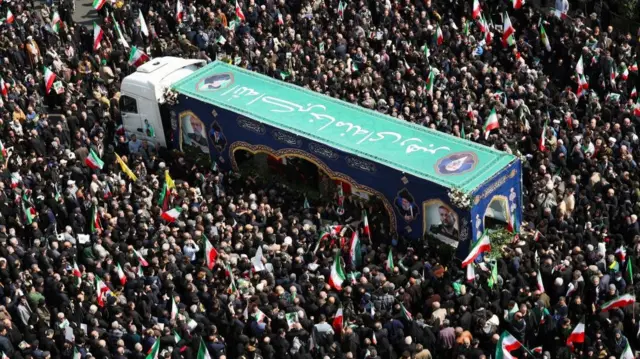
    People gather around the coffin of Iranian security chief Ali Larijani during a funeral for Larijani and victims of the IRIS Dena warship at Enghelab Square, amid the U.S.-Israeli conflict with Iran, in Tehran, Iran, March 18, 2026.Image source, Reuters
    Image caption,

    In Iran, hundreds of people gathered at a funeral for the country's security chief, Ali Larijani, who was killed in Israeli strikes on Tuesday

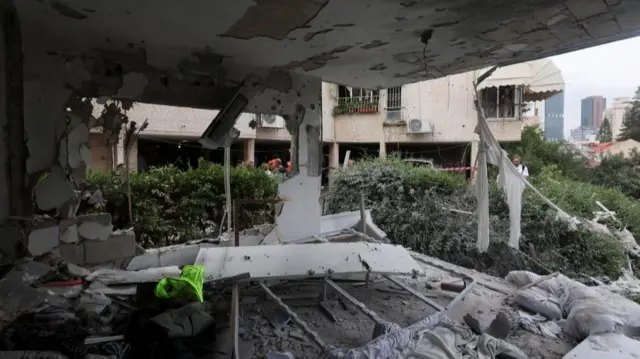
    A damaged building at an impact site, following a barrage of missiles launched from Iran, amid the U.S.-Israeli conflict with Iran, in Ramat Gan, Israel, March 18, 2026Image source, Reuters
    Image caption,

    And Iranian missiles have continued to target Israel, this time damaging a building in Ramat Gan

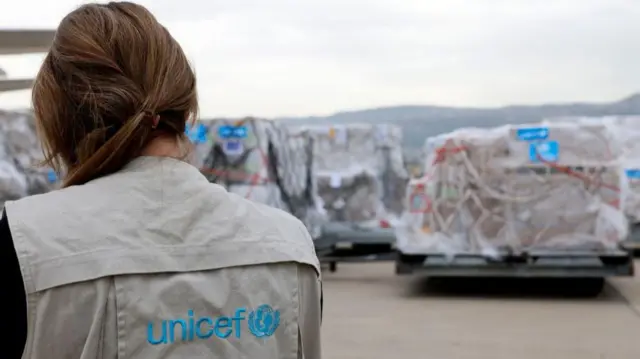
    Medical aid provided by UNICEF is unloaded at Beirut's International Airport, Lebanon, 18 March 2026. A plane loaded with 35.8 tons of medical aid was sent from UNICEF to support Lebanon for displaced families who fled their homes amid continuing Israeli airstrikes in the countryImage source, EPA
    Image caption,

    The war has also spilled over into Lebanon. At least 886 people, including 111 children, have been killed since 2 March, Lebanese authorities say. On Wednesday, Unicef unloaded medical aid at Beirut's international airport to support the country in the ongoing conflict

  7. Iranian women's football team members 'welcomed' by officialspublished at 20:22 GMT 18 March

    Dan Johnson
    reporting from Turkey-Iran border

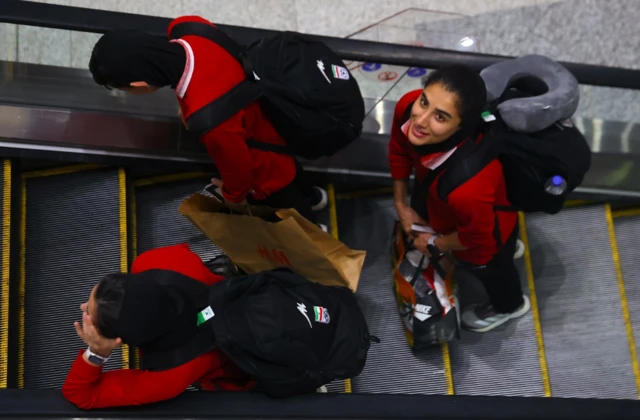
    Members of the Iranian women's soccer team head to the immigration counters inside Kuala Lumpur International Airport in Sepang, MalaysiaImage source, EPA
    Image caption,

    Iranian women's national football team head to the immigration counters inside Kuala Lumpur International Airport on 16 March

    Five members of Iran's national women's football team who dropped their bids for Australian asylum have returned to the country with the rest of the squad.

    We are told by state media the returning footballers were “welcomed” by officials and members of the public.

    What lies beyond the border is unknown.

    The stages of this complicated journey have mirrored what many Iranians say they have wrestled with as this conflict has unfolded.

    In the first few days, when the players declined to sing their national anthem, people dared to hope the Islamic leadership might fall - in their silence many heard defiance against a crumbling regime.

    The offer of asylum in Australia came as many Iranians confronted a similar dilemma - to seek sanctuary overseas or stay close to home with family and what’s familiar.

    That toughest of decisions - in the spotlight of the world’s media - has been confronted under the threat of punishment from a regime stubbornly clinging to power.

    Two members of the team opted to remain in Australia and must reflect from afar - on their own prospects, and those of their nation.

    What’s the right move? When to go? Where’s the safest place? Can opposition be voiced in any form without crushing reprisals?

    These difficult questions have united Iran’s female footballers and its ordinary population in the course of this conflict. Now, together, they face an uncertain future.

  8. Analysis

    Gulf ties fray after Iran hits critical Qatari infrastructurepublished at 20:11 GMT 18 March

    Frank Gardner
    Security correspondent reporting from Doha, Qatar

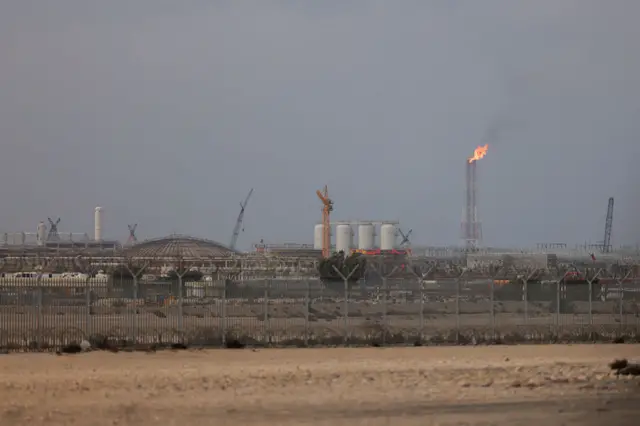
    Qatar Energy's operating facilities on March 3, 2026 in Ras Laffan Industrial City, QatarImage source, Getty Images
    Image caption,

    Ras Laffan Industrial City on 3 March

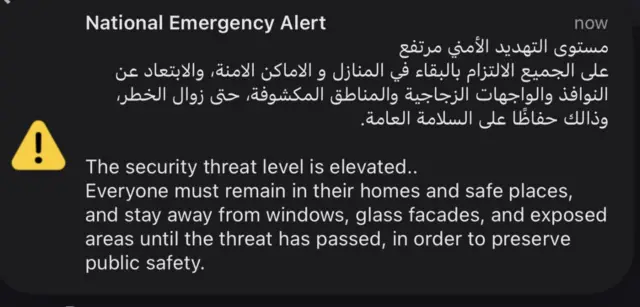
    The moment my phone vibrated this evening with the shrill security alert from the Qatari government I suspected this may be connected to the promised missile strike by Iran on its neighbours.

    Ras Laffan, where fire crews have been battling to put out a fire after it was indeed struck, is the crown jewels of gas infrastructure for Qatar and not surprisingly, the government here is furious.

    Until this war began 18 days ago Qatar enjoyed reasonably good relations with its neighbour across the Gulf: the Islamic Republic.

    The two countries amicably shared the giant South Pars gas field that has helped propel this small Gulf state towards unparalleled wealth. Qatari ministers have visited Tehran and the Qataris are known to have been among those arguing strongly against this war.

    Iran has repaid them with ballistic missiles and explosive drones. Trust between the Arab Gulf states and the Islamic Republic is at an all-time low.

    A screenshot of the alert message sent in Qatar
    Image caption,

    A screenshot of the alert message sent in Qatar

  9. No casualties after Iran hits UAE airbase housing British and Australian troops, officials saypublished at 20:01 GMT 18 March

    Britain's Ministry of Defence says there were no casualties or damage to property after Iran struck a military base in the United Arab Emirates that is home to British and Australian officers.

    Officials did not comment on number of personnel or type of equipment housed at the Al Minhad Air Base due to security concerns.

    In March 2024, The Princess Royal officially opened Donnelly Lines, a permanent UK military facility on the base, south of Dubai. An RAF notice at the time said the new facility would house accommodation and welfare facilities for British troops.

    Australia has maintained a presence at the base since 2003, according to a parliamentary report. Prime Minister Anthony Albanese says their personnel are also safe but there was some property damage.

    "There was minor damage to an accommodation block and a medical facility due to a small fire that was created as a result of that projectile hitting a road leading up to that base," Albanese says.

  10. Saudi Arabia says four injured in Riyadh by shrapnel after interceptionspublished at 19:44 GMT 18 March

    Four residents have been injured by falling shrapnel from a ballistic missile which was intercepted over Riyadh, Saudi Arabia authorities say.

    The Civil Defence says danger alerts for the capital and Al-Kharj have now been lifted.

    "Avoid gathering or filming, stay away from hazardous areas, and report any danger," it says.

  11. Ras Laffan fire brought under control with no injuries, Qatar sayspublished at 19:37 GMT 18 March
    Breaking

    Qatar's interior ministry says the fire in Ras Laffan has been brought under control, and no injuries have been reported.

    In a separate update, Qatar's defence ministry says five missiles were launched at the country from Iran through the day.

    It says four of these were intercepted, while the other fell in Ras Laffan Industrial City, causing the fire that has since been brought under control.

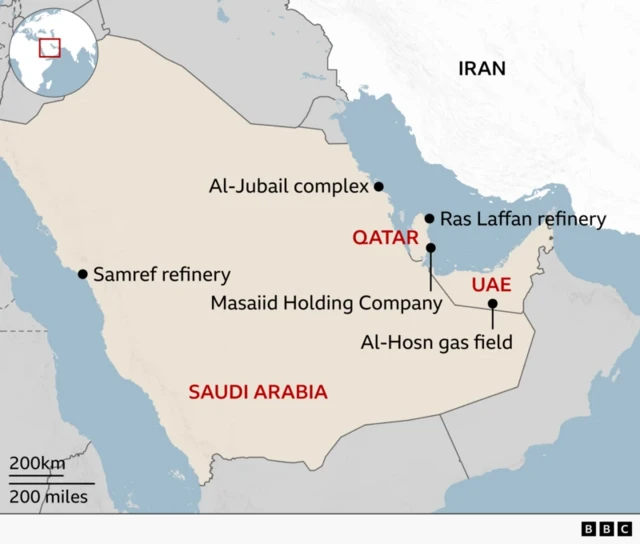
    A map of the Gulf region highlighting five energy facilities in the Gulf that have been threatened by Iran: the Al‑Jubail complex in the northeast of Saudi Arabia and the Samref refinery on the Red Sea coast of Saudi Arabia; the Ras Laffan refinery and the Masaiaid Holding Company in Qatar; and the Al‑Husn gas field in the UAE
  12. Iranian President warned of 'consequences beyond control' before Qatar strikepublished at 19:24 GMT 18 March

    Masoud PezeshkianImage source, Getty Images
    Image caption,

    Masoud Pezeshkian

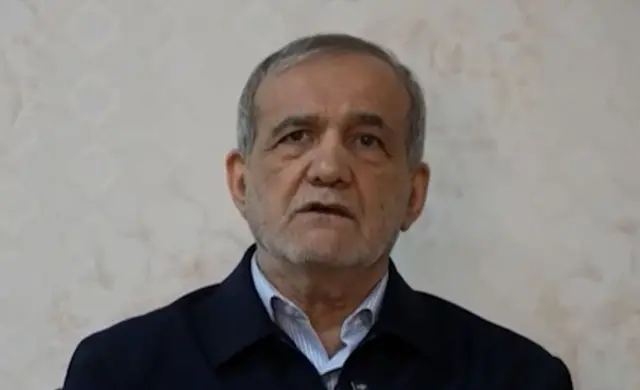
    In the last hour, Iranian President Masoud Pezeshkian warned of "consequences beyond control" after an attack on its South Pars gas field.

    Pezeshkian said the situation "could lead to consequences beyond control, the scope of which would engulf the entire world".

    Iran now appears to be responding to that strike on South Pars, with Qatar reporting a fire and "extensive damage" in the area of Ras Laffan - home to a refinery which Iran had said was a target.

    Qatar's foreign ministry called the missile strike on Ras Laffan "brazen" and said the "Iranian side continues its escalatory policies that are pushing the region toward the abyss".

  13. Qatar calls Iran a 'direct threat' to the regionpublished at 19:08 GMT 18 March

    Qatar says the "brazen" missile attacks at Ras Laffan Industrial City are a "direct threat to its national security and the stability of the region".

    "The Iranian side continues its escalatory policies that are pushing the region toward the abyss and drawing in countries that are not parties to this crisis into the circle of conflict," the country's foreign ministry wrote on social media.

    The statement added that Qatar "reserves its right to respond" and that it will "not hesitate to take all necessary measures to protect its sovereignty, security, and the safety of its citizens".

  14. 'Extensive damage' from missile attacks, Qatar petroleum company sayspublished at 18:52 GMT 18 March

    Qatar's state-owned petroleum company says missiles have struck Ras Laffan Industrial City, an area with a major oil-processing site.

    "Emergency response teams were deployed immediately to contain the resulting fires, as extensive damage has been caused," QatarEnergy wrote on social media.

    All personnel are accounted for and there are no casualties at this time, the statement said.

  15. UK defence minister says 'huge' number of lives saved by British downing dronespublished at 18:43 GMT 18 March

    Jonathan Beale
    Defence correspondent

    UK forces in the Middle East have now brought down more than 40 Iranian drones.

    RAF and Royal Navy fast jets stationed in the region have flown more than 650 hours in defensive operations.

    The defence minister Al Carns said they’d been doing an amazing job, saying there had been "a huge amount of lives saved at the behest of British forces".

  16. IDF says more than 200 targets have been hit today in Iranpublished at 18:38 GMT 18 March

    The Israeli Defense Forces says its fighter jets have hit more than 200 targets in western and central Iran in the last day.

    Targets include sites used to store and launch ballistic missiles, air defence systems, ballistic missile launchers, and weapon production sites, the IDF says.

  17. Qatar dealing with fire at Ras Laffan - an area Iran had warned it would targetpublished at 18:31 GMT 18 March
    Breaking

    The Qatari government says its civil defence is dealing with a fire in the area of Ras Laffan, which is home to a refinery that Iranian state media had earlier said was a target and should be evacuated.

  18. Tense exchange as US senator pushes for answers on what threat Iran posedpublished at 18:18 GMT 18 March

    Daniel Bush
    Washington correspondent

    Director of National Intelligence Tulsi Gabbard testifies during the Senate Select Intelligence CommitteeImage source, Getty Images
    Image caption,

    US Director of National Intelligence Tulsi Gabbard

    Under questioning from Senate Democrats, Director of National Intelligence Tulsi Gabbard stopped short of endorsing Donald Trump’s claim that Iran posed an imminent threat to the US.

    Gabbard’s testimony to the Senate Intelligence Committee underscored the delicate balancing act senior administration officials are playing as the war drags into its third week - and as signs suggest there’s growing opposition to the war within Trump's Republican Party.

    In her prepared remarks, Gabbard used Trump’s oft-repeated assertion that Iran’s nuclear programme was “obliterated” by US strikes last year. But Gabbard added that “there has been no efforts since then to try to rebuild their enrichment capability".

    Later Gabbard declined multiple times to say if she believed Iran presented an “imminent threat” to the US before Trump launched the war last month - something Trump has claimed as one of the reasons he decided to attack Iran.

    “It is not the intelligence community’s responsibility to determine what is and isn’t an imminent threat. That is up to the president,” Gabbard said.

    Democratic Senator Jon Ossoff replied: “You’re evading a question because to provide a candid response to the committee would contradict a statement by the White House."

    The tense exchange highlighted Gabbard’s awkward position on Iran.

    During Trump’s first term in office Gabbard was a vocal opponent of US military intervention in Iran, reflecting the broader opposition to American entanglements abroad in the Republican base.

  19. Saudi defences intercept four ballistic missiles over Riyadhpublished at 17:59 GMT 18 March

    Saudi Arabia's Ministry of Defence says it intercepted and destroyed four missiles which it said were "launched towards Riyadh".

    The General Directorate of Saudi Civil Defence posted on social media that "initial assessments indicate no damage or injuries".

    It warns that debris has scattered in areas across the capital city.

    "Avoid gathering or filming, stay away from hazardous areas, and report any danger," the post says.

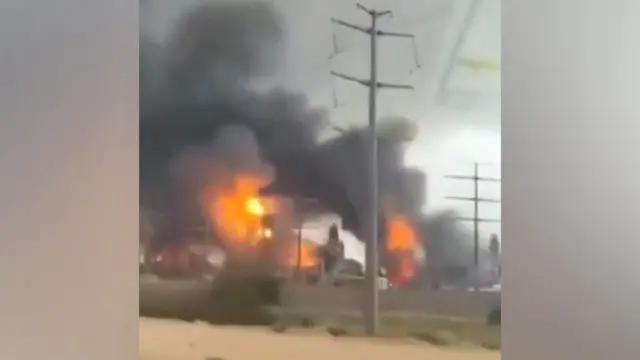
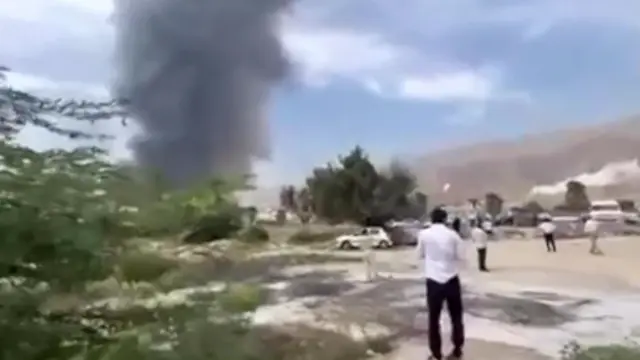
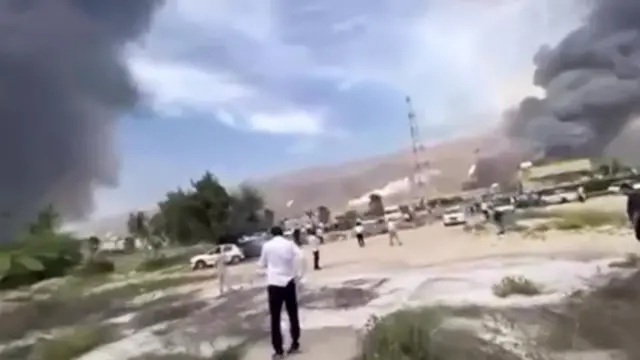
  20. Images show thick black smoke rising at South Pars gas facilitypublished at 17:50 GMT 18 March

    As we've been reporting, Iran says facilities linked to its South Pars gas field have been attacked.

    The BBC has verified a video which shows smoke billowing from the site.

    Earlier today, Iranian media reported that work was ongoing to control the fire.

    Flames and smoke billow into the air
    A man watches on in the distance as thick black acrid smoke billows into the air
    A man watches on in the distance as thick black acrid smoke billows into the air