Summary

  • Our live coverage of the Iran war continues on a new live page. Follow this link for the latest updates.

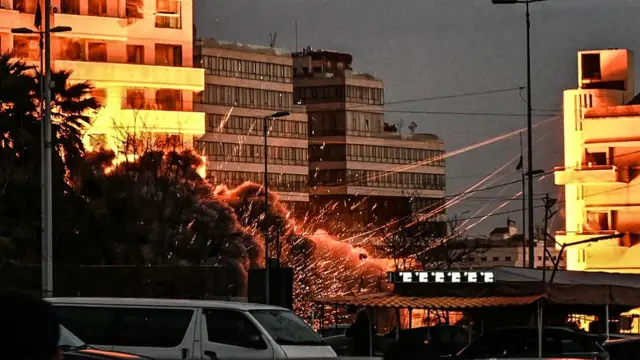
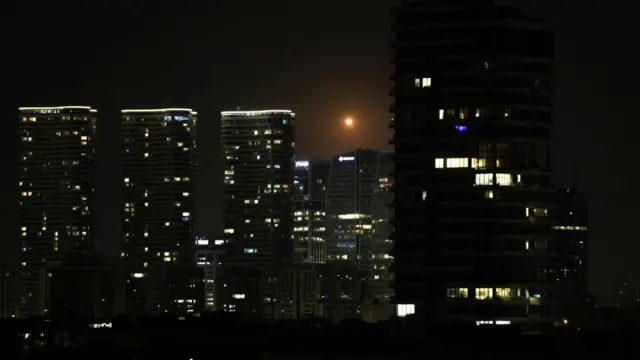
  • In Jerusalem, sirens sounded and there were booms in the skies above, as families celebrated the first night of Eid - Iranian state TV has confirmed it fired four salvos of missiles in quick succession, writes our correspondent there

  • Elsewhere in the region, Saudi Arabia and Bahrain both say they have intercepted and destroyed drones

  • Iran's foreign minister earlier warned that Tehran would act with "zero restraint" if there were further attacks on its infrastructure

  • Prime Minister Benjamin Netanyahu has said Israel "acted alone" in strikes on Iran's South Pars, part of the world's largest natural gas field. He added Trump was not "dragged" into the war with Iran - here's the context

  1. IDF says Khatib killed in 'targeted strike' on Tehranpublished at 12:28 GMT 18 March
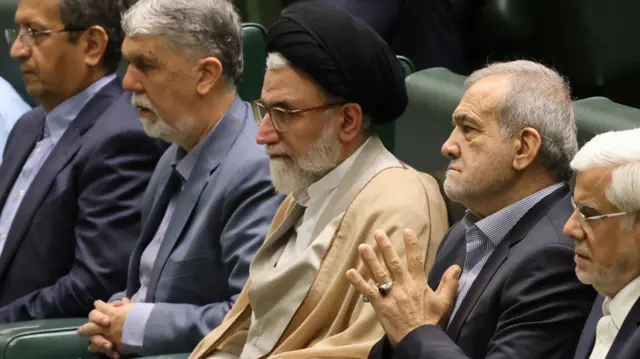
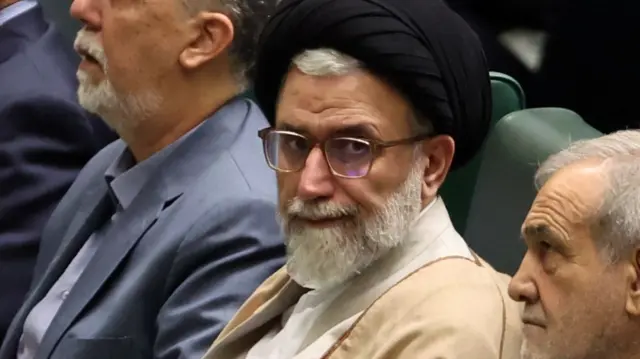
    Iran's then-Minister of Intelligence Esmail Khatib (C) sits with Iran's then-President Masoud Pezeshkian (C-R) before a speech to members of parliament in the capital Tehran, on August 17, 2024Image source, Getty Images
    Image caption,

    Israel says it has killed Iran's Intelligence Minister Esmaeil Khatib (centre)

    The Israel Defense Forces (IDF) has just released more detail on the killing of Iran's intelligence minister Esmaeil Khatib - in a "targeted strike" on Tehran - announced earlier by Israel's defence minister.

    It says Khatib's Ministry of Intelligence played a key role in supporting the regime’s "repression and terrorist activities", and that he himself played a "significant role" in the "arrest and killing of protesters" during a recent crackdown on demonstrations in Iran.

    "His elimination joins dozens of other eliminations of senior commanders of the Iranian terrorist regime... and significantly degrades the regime’s command and control structures," the IDF adds.

    Iran has not yet commented on reports of Khatib's death.
  2. A recap of strikes across Middle East overnight and todaypublished at 12:13 GMT 18 March

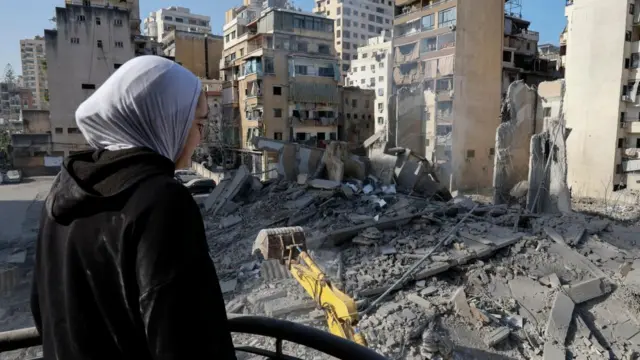
    Woman wearing a grey hijab and black hoodie has her back to the camera and looks out over a pile of rubble and a digger going through it, which was a building destroyed in strikesImage source, EPA
    Image caption,

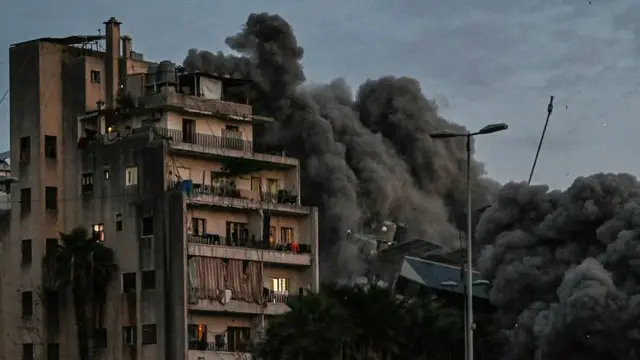
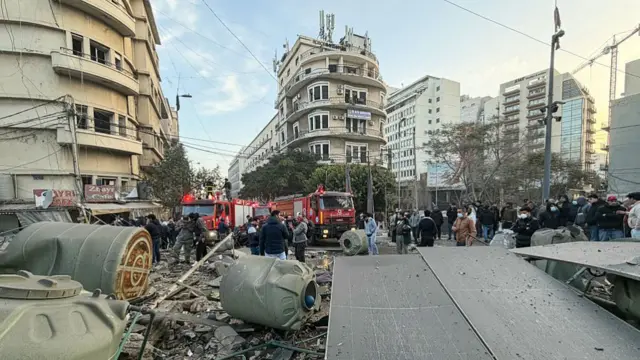
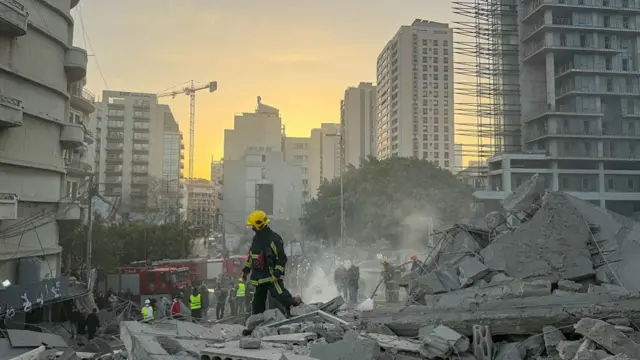
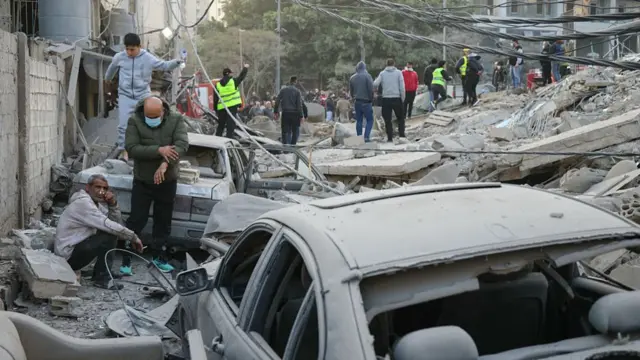
    Israeli strikes in Beirut continued overnight, reducing buildings in the city centre to rubble

    Beirut: Israel launched strikes on the centre of the Lebanese capital overnight, killing at least ten people and injuring 27, according to the health ministry.

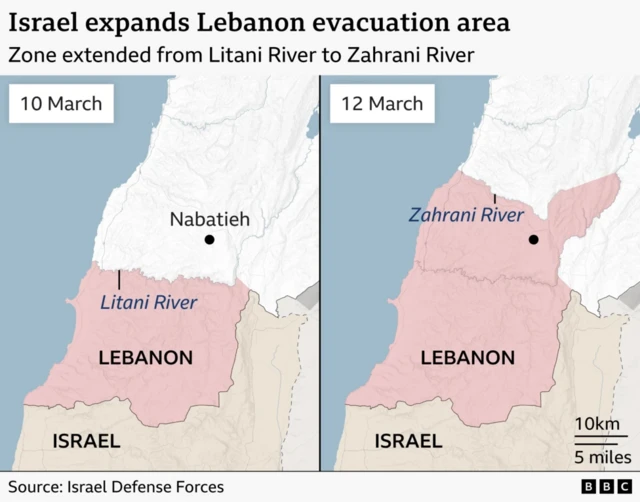
    Elsewhere in Lebanon: The Israel Defence Forces (IDF) issued an evacuation order for southern Lebanon. It later said it would attack crossings over the Litani river this afternoon.

    Iran: Iranian media reported that a petrochemical complex on the South Pars gas field had been hit. Separately, Israel said it had killed Iranian Intelligence Minister Esmail Khatib in a strike on Tehran. There was no immediate confirmation from Iran.

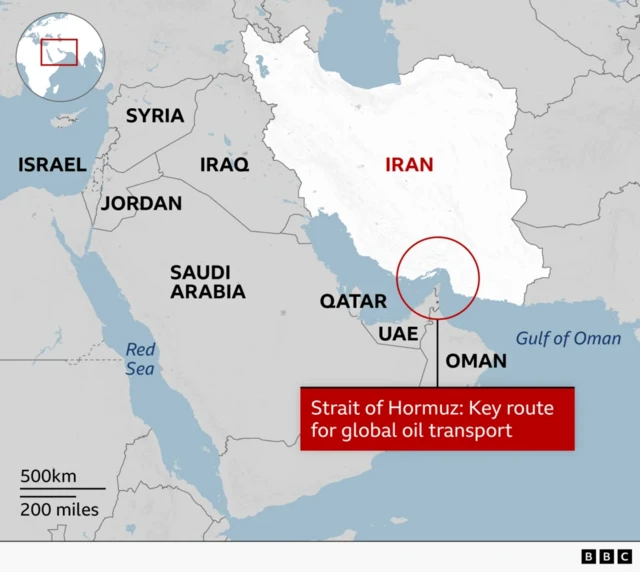
    Strait of Hormuz: The US military reported it has struck Iranian missile sites along the key oil shipping channel, where numerous vessels have been attacked since the US and Israel attacked Iran on 28 February.

    The UAE, Qatar, Kuwait and Saudi Arabia: All said they had responded to attacks this morning, including Saudi Arabia, which announced it had shot down two drones heading for its embassy district. Air alerts were also triggered in Bahrain.

    Iraq: Footage authenticated by BBC Verify shows what appears to be a blast near the US embassy in Baghdad. Reuters reported that the complex was hit by a drone.

    Israel: Strikes killed two people in their 70s in a city near Tel Aviv. More recently, the IDF said Iran had launched missiles towards Israel.

  3. Iran media says complex on world's largest natural gas field hitpublished at 11:51 GMT 18 March

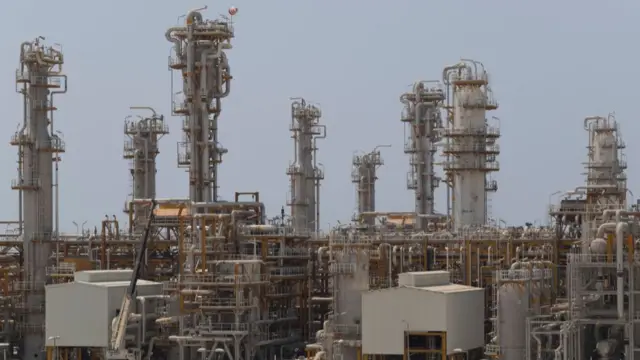
    A view of the phase 19 of the South Pars gas field in Assalooyeh on Iran's Persian Gulf coast 1,400 km (870 miles) south of Tehran on August 23, 2016.Image source, Getty Images
    Image caption,

    Iranian facilities on the South Pars gas field, pictured in 2016

    Iran's petrochemical complex on the South Pars gas field has been hit by airstrikes, according to the Islamic Revolutionary Guard Corps (IRGC) affiliated news agency, Tasnim.

    The facility is on fire and rescue and fire departments are at the scene, according to a Telegram alert from the semi-official Fars News Agency.

    South Pars is part of the world largest natural gas field, with both Qatar and Iran operating facilities on it.

    Tasnim reports that the attack occurred earlier on Wednesday.

  4. BBC Verify

    Verified footage shows blast near US embassy in Baghdadpublished at 11:33 GMT 18 March

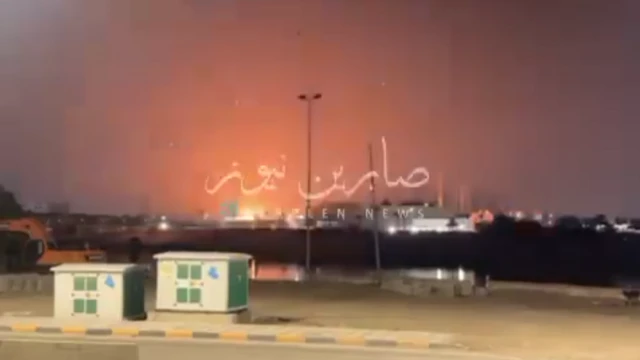
    A screenshot from a video showing an explosion across a river in the distance

    By Shayan Sardarizadeh

    Footage shared on social media overnight and authenticated by BBC Verify shows what appears to be a blast near the US embassy in the Iraqi capital of Baghdad.

    The video, which was filmed from the southern bank of the Tigris river facing towards the city’s so-called Green Zone, shows an explosion followed by a fireball in the distance.

    While it is hard to determine the precise location of the blast, the point of view of the clip suggests the impact was close to the US embassy compound.

    According to the Reuters news agency, the US embassy was targeted by a drone attack and the sound of an explosion was heard in the area.

    There were no reports of casualties or damage, it added.

    The US embassy in Baghdad has been the target of multiple attacks since the start of the Israeli-US war with Iran.

  5. Fresh wave of missiles launched by Iran towards Israel - IDFpublished at 11:18 GMT 18 March

    Iran has launched a fresh wave of missiles towards Israel, according the Israel Defense Forces (IDF).

    It says its air defences are working to intercept the attack, and has urged residents who have received an emergency alert to their phones to take shelter.

  6. IDF says it will attack river crossings in southern Lebanonpublished at 11:07 GMT 18 March

    The Israel Defence Forces (IDF) says it will attack crossings on the Litani River in southern Lebanon this afternoon.

    In a statement on X, IDF spokesperson Avichai Adraee says this is due to "Hezbollah's activities and the transfer of terrorist elements into southern Lebanon under the protection of the civilian population".

    He says the military will attack the crossings "to prevent the transfer of reinforcements and weapons" and ordered residents to "continue moving to the area north of the Zahrani River and refrain from any movement southward that could endanger your lives.

    Earlier, the IDF renewed its evacuation order for residents south of the Zahrani River, about 40km from the border.

  7. Analysis

    A powerful example of the damage Iran's cluster munitions can inflictpublished at 10:47 GMT 18 March

    Lucy Williamson
    Middle East correspondent, reporting from Ramat Gan

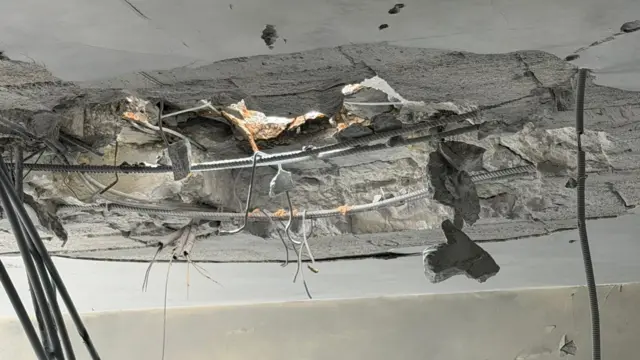
    A large hole in the ceiling of he apartment ringed with broken concrete and twisted metal rods

    In a top floor apartment in Ramat Gan - a city near Tel Aviv - a large hole ringed with broken concrete and twisted metal rods marks where an Iranian cluster bomb punched through the roof of an elderly couple’s apartment last night, killing both of them.

    Neighbours said the husband had mobility problems, and that the couple had not entered the safe room when the alarm sounded.

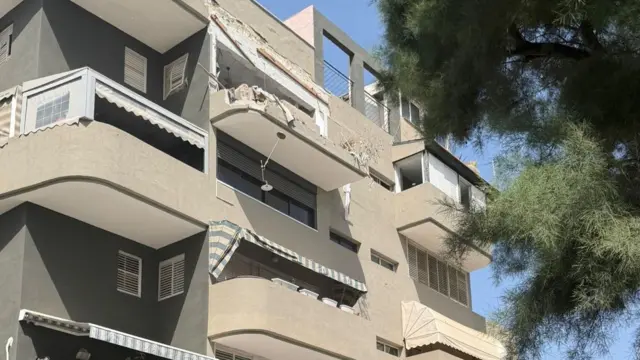
    The apartment is now a powerful example of the damage these small bombslets can do. Large shrapnel holes are splattered across the back walls, and the front of the apartment has been completely destroyed, leaving the grey dust-filled living space open to the street outside.

    A next-door neighbour, Sigal Amir, said when she had emerged from her own safe room after the attack, she saw the couple’s front door hanging by its hinges, and the apartment itself full of smoke and ash-covered debris.

    Israel’s air defences have shot down most of the missiles sent towards residential areas, and Israel’s military says it has destroyed more than 70% of Iran’s ballistic missile launchers.

    Iran has increasingly switched to using missiles carrying cluster-munitions – which are designed to spread bomblets over a wide area, and are harder to intercept.

    A view of the buildings facade, showing a blown-out apartment
  8. Who is Esmail Khatib?published at 10:37 GMT 18 March

    Ghoncheh Habibiazad
    Senior reporter, BBC Persian

    Esmail Khatib was appointed as Iran’s intelligence minister by the late former president, Ebrahim Raisi, back in 2021.

    He studied Islamic jurisprudence under multiple high-ranking clerics, including Iran’s late Supreme Leader Ayatollah Ali Khamenei.

    He has held senior posts in the ministry of intelligence and the Office of the Supreme Leader.

    He was sanctioned by the US Treasury for his role as head of Iran's Ministry of Intelligence “for engaging in cyber-enabled activities against the United States and its allies” in 2022.

    Khatib is reported to have joined the Islamic Revolutionary Guard Corps (IRGC) in 1980, shortly after the 1979 Islamic Revolution.

  9. Israel says it has killed Iran's intelligence ministerpublished at 10:31 GMT 18 March
    Breaking

    Iranian current Intelligence Minister and nominee for the same position Esmaeil Khatib attends a Parliament session for the presentation of Iranian President Masoud Pezeshkin's cabinet picks, at the Iranian Parliament in Tehran, Iran, 17 August 2024.Image source, EPA-EFE/REX/Shutterstock

    Israel's Defence Minister Israel Katz says Iran's Intelligence Minister Esmail Khatib has been killed.

    "Last night Iran's Intelligence Minister Khatib was also eliminated," Katz says in a statement.

    Iran has not yet commented.

  10. Iranian footballers being driven back to Iran from Turkeypublished at 10:15 GMT 18 March

    Dan Johnson
    Reporting from Van, Turkey, near the Iran border

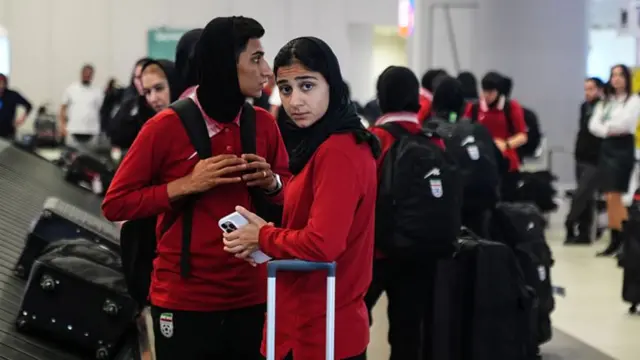
    Members of the Iran womenâs national football team arrive at Istanbul Airport as they travel back to their country after competing in the 2026 AFC Womenâs Asian Cup in Australia, in Istanbul, Turkiye, on March 17, 2026.Image source, Getty Images
    Image caption,

    The Iranian team arrived in Istanbul on Tuesday before flying to Igdir near the Iranian border on Wednesday

    The Iranian women’s football team landed in Igdir, in the east of Turkey, around noon local time (09:00 GMT) and are now being driven to the Iranian border crossing at Gurbulak.

    They were seen arriving in Istanbul on Tuesday, wearing their national tracksuits, after a long journey flying from Australia via Malaysia and Oman.

    Turkish media reports that after clearing customs and passport control they left the airport last night under police escort heading to a hotel.

    Seven women initially claimed asylum in Australia after the team declined to sing the Iranian national anthem ahead of their opening Asia Cup match.

    Five then changed their minds and decided to return to Iran with the rest of the team. Human rights groups say they may have been pressured by threats against their families.

  11. UN's maritime organisation holds special meeting in Londonpublished at 09:54 GMT 18 March

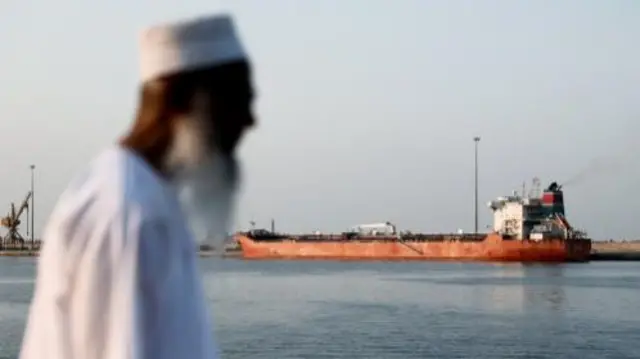
    A tanker in the background, and a man walks, blurred, in the foregroundImage source, Reuters
    Image caption,

    The Callisto tanker sits anchored in Port Sultan Qaboos on 12 March

    An extraordinary session of the UN's International Maritime Organization (IMO) is being held in London this morning.

    It comes after the head of the organisation, Arsenio Dominguez, said that military escorts are not a long-term solution to opening up the Strait of Hormuz, the world's busiest oil shipping channel.

    Concerns are growing for the thousands of seafarers stranded in the Gulf. Today's meeting will focus on what can be done to protect their safety and wellbeing.

    At least eight seafarers have been killed by the fighting since the Israeli-US war with Iran began. Dominguez has said he fears further "collateral damage".

    IMO regulations require ships to be "sufficiently and efficiently manned" and vessels in the Gulf remain potential targets.

    This meeting may lead to a statement condemning what's happening - but only an end to the fighting can truly protect those who remain stranded at sea.

  12. Israel says Beirut strikes targeted Hezbollah's 'financial arm'published at 09:46 GMT 18 March

    Fireball rises are Israeli strikes on BeirutImage source, Getty Images

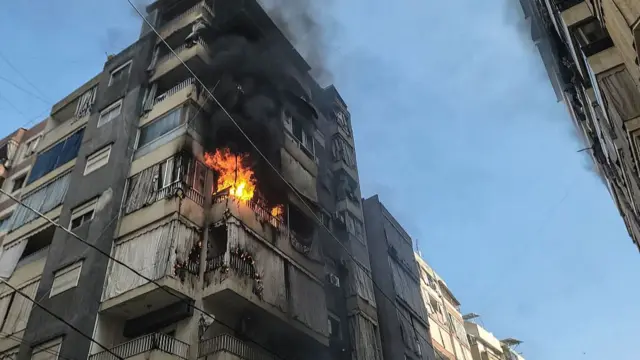
    Israel says its strikes in Beirut overnight - which Lebanon says killed at least 10 people and injured another 27 - were targeting the financial arm of Hezbollah.

    The Israel Defense Forces (IDF) says it hit assets of al-Quard al-Hasan, which it claims funds Hezbollah's military and payroll.

    It also says its air force and navy carried out overnight attacks on "command centres" in southern Lebanon.

    On Tuesday, it says it struck weapon storage sites that had been "deliberately embedded" within the civilian regions of the Lebanese city of Tyre.

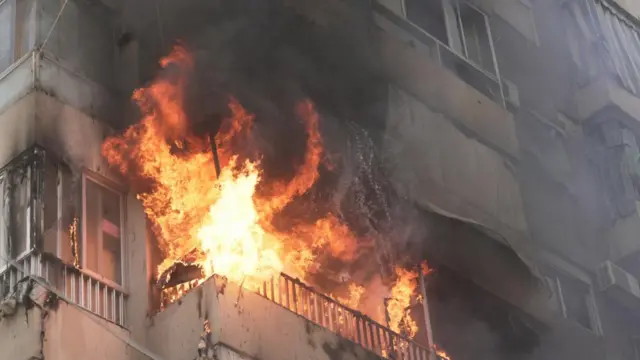
    Fire rises from a damaged apartment block in Beirut overnightImage source, Getty Images
  13. Beirut death tolls rises to 10 following Israeli strikes - state mediapublished at 09:27 GMT 18 March

    Smoke rises after Israeli strikes on BeirutImage source, Getty Images

    The death toll from Israel's overnight strikes in Beirut has risen to 10 from six, according to Lebanon's state-run National News Agency.

    Citing the nation's health ministry, it reports that the total number of wounded from the strikes has also risen to 27 - up from the 24.

  14. Funeral to be held for top Iranian officials killed in strikespublished at 09:08 GMT 18 March

    Ali Larijani speaking to the pressImage source, Getty Images
    Image caption,

    Larijani is the most senior Iranian official to have been killed since Supreme Leader Ayatollah Ali Khamenei

    A funeral for Iranian security chief Ali Larijani and Gholamreza Soleimani, the head of the paramilitary Basij force, will be held in Tehran today, reports the Islamic Revolutionary Guard Corps (IRGC) affiliated news agency, Tasnim.

    The ceremony, which is set to begin at 13:30 local time in Tehran's Enghelab Square, is also being held for the 84 sailors killed when the US sank Iranian warship the Iris Dena with a torpedo on 4 March.

    Iran announced on Tuesday that both Larijani and Soleimani had been killed in Israeli strikes, with Iranian army chief Amir Hatami threatening "decisive" retaliation following the deaths.

  15. Trump has 'completely misunderstood' Nato, says former UK diplomatpublished at 08:50 GMT 18 March

    US President Donald Trump in a suit and tieImage source, EPA

    US President Donald Trump has accused Nato members of making a "foolish mistake" by refusing to help secure the Strait of Hormuz, through which about one-fifth of the world's oil passed pre-war.

    Speaking in the Oval Office on Tuesday, Trump said he had been informed by most allies that they did not want to get involved in the conflict.

    "We don't need any help" from Nato, but "they should've been there", he said, calling their reluctance to send mine-sweeping vessels to the Gulf "unfair".

    Lord Peter Ricketts, a former permanent representative to Nato and ex-chair of the UK's National Security Council, tells BBC Radio 5 Live this morning that Trump has "completely misunderstood Nato", which was "set up as a defensive alliance".

    "[This] a war of US choosing. We were not consulted on it. And it was never part of the Nato deal that allies had to follow America into any war that it chose to undertake.

    He adds: "What he means, of course, is that if we are going to support Nato countries in your area, then we expect your support everywhere else." This is "a wake-up call to all European countries" to work more closely together.

    A locator graphic showing the location of the Strait of Hormuz in relation to Iran and other Gulf states
    Image caption,

    Only a handful of vessels carrying Iranian oil have managed to pass through the Strait since hostilities began on 28 February

  16. Bunker busters a sign US thinks Iran keeping weapons deep undergroundpublished at 08:23 GMT 18 March

    Chris Partridge
    Weapons analyst

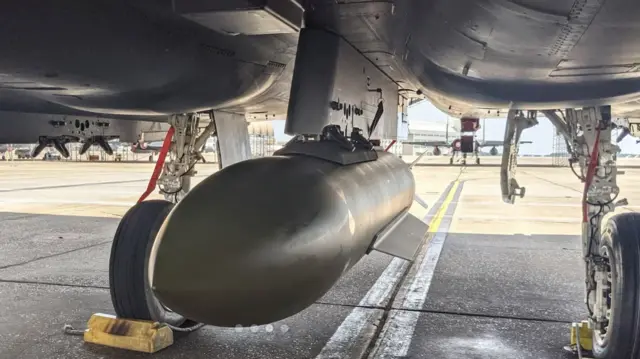
    FILE PICTURES OF GBU-72Image source, USAF
    Image caption,

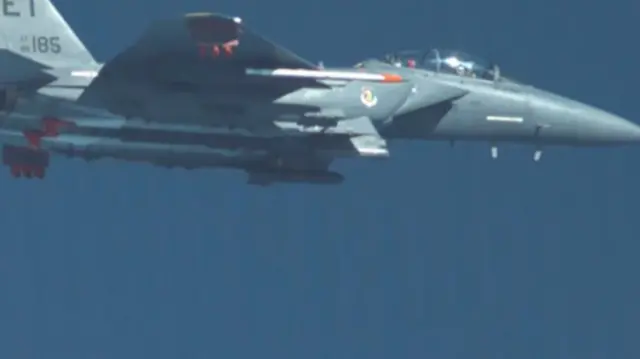
    The GBU-72 bunker buster can be carried by the F-15E Strike Eagles

    News that the US is using 5,000lb (2270kg) bunker busters is further evidence that it thinks Iran keeps many of its weapons buried deep underground.

    US Central Command (Centcom) did not specify which penetrators it used against what it called hardened Iranian missile sites along Iran’s coastline near the Strait of Hormuz.

    But there are two known variants that fit the criteria: the GBU (Guided Bomb Unit)-28 laser-guided bomb and the newer GBU-72 Advanced 5K Penetrator. The latter is the one more likely to have been deployed.

    First tested in 2021, the bomb is a large Joint Direct Attack Munition (JDAM) free-fall precision munition guided to target by satellites and Inertial Navigation System.

    FILE PICTURES OF GBU-72Image source, USAF

    At the time of testing, the US Air Force (USAF) said the GBU-72 was "developed to overcome hardened deeply buried target challenges and designed for both fighter and bomber aircraft".

    “The weapon design and its projected effectiveness were developed using advanced modeling and simulation techniques and processes before the first warhead was forged,” it added.

    Despite its large size, the GBU-72 can be carried by F-15E Strike Eagles, giving military planners greater flexibility in deployment by not relying on B1-Bs, for example, that operate out of RAF Fairford in England.

    Both the US and Israel have pounded Iran’s missile and drone infrastructure, but Tehran’s weapons still pose a significant threat.

    Yesterday, the Islamic Revolutionary Guard Corps said it had targeted Tel Aviv in Israel with Khorramshahr 4 and Qadr missiles - both of which carry multiple warheads - in a statement read on state TV. Footage on social media strongly suggests cluster munitions are being used by Iran.

  17. Iran executes man accused of spying for Israel during 12-day warpublished at 08:17 GMT 18 March

    Ghoncheh Habibiazad
    Senior reporter, BBC Persian

    Iranian media reports that a man described as an “Israeli spy” was executed today.

    The man, identified as Koroush Keyvani, was arrested during the 12-day war with Israel in June 2025, accused of passing images and information about the country’s “sensitive sites” to the Israeli intelligence agency, Mossad, according to a report by the Islamic Revolutionary Guard Corps affiliated news agency, Tasnim.

    It reports that Keyvani was initially identified by Israeli security in Sweden in 2023 after clicking on an online advertisement for group trips.

    The report states that he was then recruited by a Mossad officer, and, after two years of training in six European countries and in Tel Aviv, he was sent to Iran to carry out operations.

    The BBC cannot independently verify the claims and accusations in Tasnim’s report.

  18. Israel says 192 in hospital following Iranian strikespublished at 07:57 GMT 18 March

    Streaks of fire and light cross the night sky as an Israeli interceptor strikes an Iranian missile amid the U.S.-Israeli conflict with Iran, over Tel AvivImage source, Reuters
    Image caption,

    It follows Iranian strikes that killed a man and a women in their 70s in Tel Aviv overnight

    Israel's health ministry says 192 people have been injured and taken to hospital in the past 24 hours.

    The health ministry says four of those injured are in "moderate" condition, while 177 are being treated for "minor injuries". It is not clear what condition the remaining 11 people are in.

    It adds that 3,727 people have been admitted to hospital since the beginning of the conflict.

  19. IDF renews evacuation order for southern Lebanonpublished at 07:30 GMT 18 March

    The Israel Defence Forces (IDF) has issued another evacuation order for residents of southern Lebanon who are south of the Zahrani river, about 40km from the border.

    Israel's military last week expanded its evacuation order for southern Lebanon, telling civilians to immediately move north of the river, about 40km from the border.

    In a statement on X, IDF spokesperson Avichai Adraee said: "Hezbollah terrorist activities are forcing the IDF to operate forcefully against them in that area, and they have no intention of harming you...

    "To ensure your safety we urge you to move immediately to the area north of the Zahrani River. Remaining south of the Zahrani River could endanger you and the lives of your families."

    It follows a wave of Israeli strikes on Lebanon overnight and into this morning.

    A graphic showing the change in the evacuation zone
  20. Buildings reduced to rubble in central Beirutpublished at 07:25 GMT 18 March

    New images show the extent of damage following Israeli strikes on central Beirut overnight.

    Lebanon's health ministry has so far reported that at least six were killed and 24 injured in the attacks.

    Flames engulf a building following an Israeli air strike in BeirutImage source, Reuters
    Building reduced to rubble in central Beirut following Israeli strikes overnightImage source, Getty Images
    Building reduced to rubble in central Beirut following Israeli strikes overnightImage source, Getty Images
    Building reduced to rubble in central Beirut following Israeli strikes overnightImage source, Getty Images